In an effort to reduce the growing backlog of book reviews I owe this platform, below are mini reviews of two excellent books I read a couple of years ago.
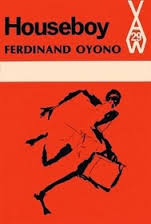
Houseboy by Ferdinand Oyono
Date Read: September 22nd 2017
Published: 1991
Publisher: Heinemann
Pages: 122
The Blurb
This book is written in the form of a diary kept by Toundi, an innocent Cameroonian houseboy who is fascinated and awed by the white world, the world of his masters.
Review – ★★★★★ (5 stars)
*sigh* Oyono’s Houseboy is such a painful, humorous, tragic tale.
Toundi – the main character (the houseboy), is naïve of the realities of his world in the French colony of Cameroon. While he’s is a good natured boy with a pure heart, the French exploitation of native Cameroonians cause the demise of Toundi (this isn’t a spoiler, trust me!).
This book really highlighted how fearful French colonialists were of native Cameroonians and Black Africans, in general. They were so fearful, insecure, ignorant and mentally fragile that they constantly exerted their supposed superiority over natives with hateful, brutal abuse. Toundi’s innocence gave this novel so much humor. The ways he misunderstood the lifestyle of white people was hilarious and sad at the same time. The ways the natives spoke about the French gave me some good laughs as well.
No, it can’t be true, I told myself, I couldn’t have seen properly. A great chief like the Commandant uncircumcised… I was relieved by this discovery. It killed something inside me… I knew I should never be frightened of this Commandant again.(pg. 28)
This was actually the 1st African novel I’ve ever read (I was initially in love with African-American fiction before I ever started reading books by African writers… well, besides Anansi stories). My Mom encouraged (or forced?) me to read Houseboy back when I was about thirteen years old. Back then, I didn’t enjoy this book at all and found it difficult to understand the myriad of proverbial phrases this story is blessed with. Today, I finally appreciate this novel as a superb, underrated classic within the African Writer’s Series.
★★★★★ (5 stars) – Amazing book, I loved it. Absolutely recommend!
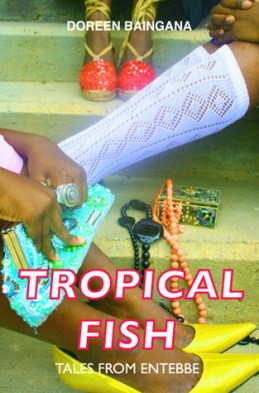
Tropical Fish: Tales from Entebbe by Doreen Baingana
Date Read: September 16th 2016
Published: 2008
Publisher: Cassava Republic Press
Pages: 158
The Blurb
In her fiction debut, Doreen Baingana follows a Ugandan girl as she navigates the uncertain terrain of adolescence. Set mostly in pastoral Entebbe with stops in the cities Kampala and Los Angeles, Tropical Fish depicts the reality of life for Christine Mugisha and her family after Idi Amin’s dictatorship.
Three of the eight chapters are told from the point of view of Christine’s two older sisters, Patti, a born-again Christian who finds herself starving at her boarding school, and Rosa, a free spirit who tries to “magically” seduce one of her teachers. But the star of Tropical Fish is Christine, whom we accompany from her first wobbly steps in high heels, to her encounters with the first-world conveniences and alienation of America, to her return home to Uganda.
As the Mugishas cope with Uganda’s collapsing infrastructure, they also contend with the universal themes of family cohesion, sex and relationships, disease, betrayal, and spirituality. Anyone dipping into Baingana’s incandescent, widely acclaimed novel will enjoy their immersion in the world of this talented newcomer.
Review –★★★★ (4 stars)
After reading Doreen Baingana’s short story entitled ‘Tropical Fish’ in African Love Stories: An Anthology at the beginning of 2016, I knew I had to find her book.
I loved how nuanced this collection of interlocking stories were. Readers get a good feel of life in Entebbe, Uganda during Idi Amin’s ruling. I enjoyed the three sisters: Patti, Rosa and Christine Mugisha. I had wanted more insight into Patti’s life; she had a gentle, holier-than-thou demeanor that I wished was explored more. Rosa’s chapters were quite hilarious and poetic. I admired Baingana’s uncommon perspective on HIV/AIDS and sex through Rosa’s promiscuous lifestyle. Christine’s life (the youngest sister) is more closely followed in this book – from her days as a little girl playing in her parents’ bedroom to when she is twenty-nine years old and a recent ‘returnee’ from the States.
Baingana’s attention to the littlest things/feelings/observations we overlook in our daily lives made me love this collection. The writing was not overly descriptive; the commentary was witty, clever and overall, the exploration of life in Entebbe and the US was just heartfelt. I’m very fond of Baingana’s writing and it’s no wonder she was the winner of the Commonwealth Writers’ Prize for Best First Book in the Africa region and has garnered other literary awards for her writing. I hope she writes a new novel very soon.
★★★★ (4 stars) – Great book. Highly recommend!
Purchase Tropical Fish: Tales from Entebbe on Amazon
What books are you excited to read this year? Below are 80 new African, African-American and Caribbean books that look very promising. This is just a snippet of the books 2019 has to offer!
Please click on the images to read the blurbs and/or to purchase the books.
Fiercely told, this is a timely coming-of-age story, told in verse about the journey to self-acceptance. Perfect for fans of Sarah Crossan, Poet X and Orangeboy.
A boy comes to terms with his identity as a mixed-race gay teen – then at university he finds his wings as a drag artist, The Black Flamingo. A bold story about the power of embracing your uniqueness. Sometimes, we need to take charge, to stand up wearing pink feathers – to show ourselves to the world in bold colour.
The story of an estranged mother and daughter separated by a thousand miles, the mother’s shadowy past as an itinerant blues singer, and her daughter’s mental illness and recruitment into a radical political group.
Check out my book review of Mathis’s debut novel – The Twelve Tribes of Hattie. I’m really looking forward to this new novel!!
Nudibranch is Irenosen Okojie’s second collection of short stories, a follow up to Speak Gigantular which was shortlisted for the 2016 Jhalak Prize and 2017 Edge Hill Short Story Prize.
The collection focuses on offbeat characters caught up in extraordinary situations – a mysterious woman of the sea in search of love arrives on an island inhabited by eunuchs; dimensional-hopping monks navigating a season of silence face a bloody reckoning in the ruins of an abbey; an aspiring journalist returning from a failed excursion in Sydney becomes what she eats and a darker, Orwellian future is imagined where oddly detached children arrive in cycles and prove to be dangerous in unfamiliar surroundings.
The Fraud is inspired by the real events on North West London (Smith’s childhood home that she has chronicled in most of her novels, most notably NW) from the 1830s to the 1870s.
Do you listen to music when you read? If you do, what kind of music goes well with the books you read?
I like many different genres of music – Neo-soul / Soul (think Raphael Saadiq, Georgia Muldrow, Jill Scott, Bilal, Erykah Badu, D’Angelo, Sade etc), Jazz (think Robert Glasper, Thelonious Monk, John Coltrane etc), Rap/Hip hop (think The Roots, J-Hus, Kendrick Lamar, A Tribe Called Quest, Noname, Sa-Ra, J Dilla etc), R&B (think Faith Evans, The Internet, Moonchild, Res, The Foreign Exchange etc), Highlife (think Ebo Taylor, Osibisa, Kwadwo Antwi), Afrobeats (think Wizkid, Tiwa Savage, R2Bees, KiDi, Davido, Simi), I could go on and on!
I prefer reading in silence, but when I listen to music while reading, I like to listen to music without any words (especially not Rap), just so the words being sung don’t jumble with the words I read. Music has always been a form of storytelling. I love vibing to the beats and rhythms of music, but once I pay close attention to the lyrics of a song, I’m opened up to a new world.
Lately I’ve been trying to figure out what songs or albums would go well with some of the great novels, short story collections, magazines, poems I’ve read in recent years. I asked Hakeem Adam (who’s knowledge in ALL things Black culture and the arts is vast!), the founder of Dandano – a Digital platform dedicated to the distilled love of African Film and Music, to help me pair some great songs and albums to great literature.
Enjoy our final pairings below!
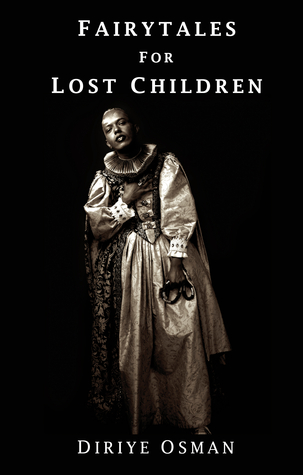
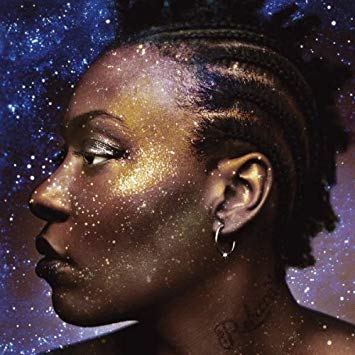
Fairytales for Lost Children by Diriye Osman – Comfort Woman by Me’shell Ndegeocello
In this phenomenal collection of eleven stories, Brit-Somali writer & visual artist – Diriye Osman, incorporates lots of Neo-Soul (my ultimate favorite music genre) and old school Hip-Hop music into his stories. He refers to Me’shell Ndegeocello’s 2003 soul album, Comfort Woman in about three of the stories, so I just had to purchase her album after I read this collection!
•
‘Come smoke my herb
Make your heart like the ocean
Your mind like the clear blue sky’
(lyrics from Come Smoke My Herb from album- Comfort Woman)
•
The song Come Smoke My Herb in particular pairs excellently with Osman’s liberating collection. The dreamy instrumentals take you to another planet with Me’shell’s soothing voice. Comfort Woman is such a ‘feel good’ album that can be played back-to-back to help anyone relax and feel free! In the same way, readers around the world will find solace in Fairytales for Lost Children as Diriye Osman’s stories speak on being true to yourself, following your heart and the universal human need to love one another, regardless of sexual orientation, race, occupation, religion – by Darkowaa.
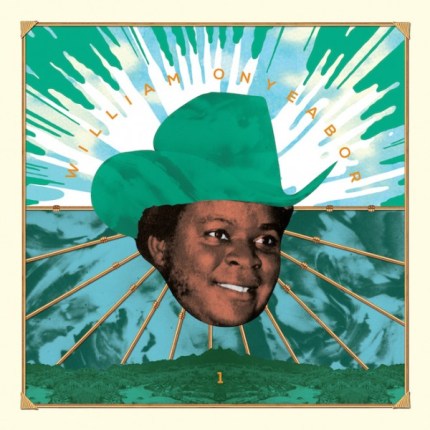
Blackass by Igoni Barret – Fantastic Man by William Onyeabor
William Onyaebor, despite being a mystery man is one of the most brilliant African electronic musicians. His story is weird and almost unbelievable, but not as unbelievable as Ignoi Barret’s Blackass. The Lagosian remix of Kafka’s Metamorphoses is the kind of book you love and hate and love all at the same time. The writer engages the simple mechanics of Kafka’s classic to engineer a riveting story about race and colorism in modern Nigerian society. Similarly, William Onyaebor also transformed the not so simple mechanics of the Moog synthesizer to redefine how electronic music was created.
In both pieces of art, there exists this mystery that marries them – where William Onyeabor’s brilliance and life in general has been a source of fuel for myth makers in the music world, Ignoni Barret’s main character lives an even greater myth, defying logic yet remaining real enough for us to identify with and appreciate – by Hakeem Adam, founder of Dandano.
No Disrespect by Sister Souljah – The Miseducation of Lauryn Hill by Lauryn Hill
Sister Souljah’s memoir, No Disrespect (published in 1995) and Lauryn Hill’s debut solo album, The Miseducation Of Lauryn Hill (released in 1998) are both classics, in my opinion! My dad got me Lauryn Hill’s album back in year 2000 and I’ve kept it safe ever since! Hill’s album pairs well with Souljah’s memoir as they both speak on love found and love lost while exploring the growing pains & joys of Black womanhood.
While songs like Ex Factor and Forgive Them Father deal with heartbreak and betrayal, Souljah vividly takes readers through bitter heartbreaks as she vicariously lives through her mother’s numerous, toxic relationships as well as her own heartbreaks from the married men she naively entertained. More intimate tracks like Nothing Even Matters feat (my favorite!) D’Angelo pair well with Souljah’s bold, explicit descriptions of her physical features and her intimate interactions with the men who miseducate her on love and life – by Darkowaa.
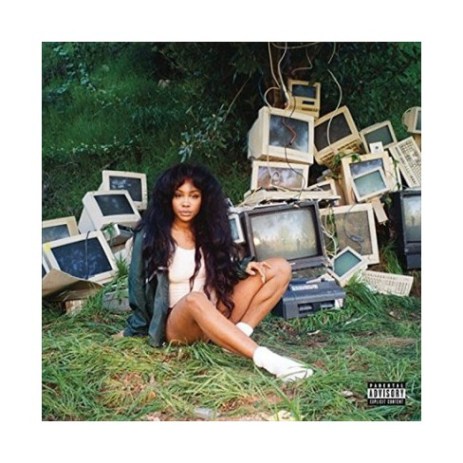
One thing Emezi’s debut Freshwater and SZA’s Ctrl album have in common is how angsty their masterpieces are.
Akwaeke Emezi and SZA’s work may not be for everyone, but I personally found solace in reading/listening to how prevalent anxiety and insecurity are among women my age (late twenties). While Emezi explores the difficulties of loving and accepting oneself in Freshwaterthrough Ada’s character, the songs on SZA’s Ctrl openly speak on the many issues we 20-something women face in the dating world today, growing pains, vulnerability, self-esteem, self love (or lack thereof) and femininity, which I truly resonate with. SZA’s relatable messages coupled with catchy melodies are what keep me going back to re-listen to songs like 20 Something, Supermodel, Broken Clocks, Gina etc.
‘How could it be?
20 something, all alone still
Not a phone in my name
Ain’t got nothin’, runnin’ from love
Only know fear
That’s me, Ms. 20 Something
Ain’t got nothin’, runnin’ from love
Wish you were here, oh’
•
‘Why I can’t stay alone just by myself?
Wish I was comfortable just with myself
But I need you, but I need you, but I need you’
Both Emezi and SZA do a great job of bolding exploring how we all battle with ‘other selves’ within us – in the form of our blended temperaments, alter egos and moods, through embracing vulnerability – by Darkowaa.
As The Crow Flies by Véronique Tadjo – Find Your Free by Ria Boss
There is something beautiful about the technique of vignetting, especially in literature, by presenting a glimpse of an image and allowing the reader to wander. In Véronique Tadjo’s deeply poetic collection of vignettes that is As the Crow Flies, you flip through these loosely knit images around love and loss.
In some way, Ria Boss’ debut EP – Find Your Free, also presents sonic vignettes that could easily flow in the same rhythm as the stories in Tadjo’s book. The deeply soulful singer/songwriter bares out intimate truths about life, love and survival. Her lyrics weave trinkets of poetic gold as she creates a warm and fuzzy mood to aid her own healing. Just like in Tadjo’s book, Ria’s vignettes are layered, revealing more detail, the harder you interact with the songs – by Hakeem Adam, founder of Dandano.
What are some of your favorite book-music pairings? I’d love some book-music pairing recommendations, or any good music you think goes well with reading!
Do you listen to music when you read? If you do, what kind of music goes well with the books you read?
I like many different genres of music – Neo-soul / Soul(think Raphael Saadiq, Georgia Muldrow, Jill Scott, Bilal, Erykah Badu, D’Angelo, Sade etc), Jazz (think Robert Glasper, Thelonious Monk, John Coltrane etc), Rap/Hip hop (think The Roots, J-Hus, Kendrick Lamar, A Tribe Called Quest, Noname, Sa-Ra, J Dilla etc), R&B (think Faith Evans, The Internet, Moonchild, Res, SZA, The Foreign Exchange etc),Highlife (think Ebo Taylor, Osibisa, Kwadwo Antwi), Afrobeats (think Wizkid, Tiwa Savage, R2Bees, KiDi, Davido, Simi), I could go on and on!
I prefer reading in silence, but when I listen to music while reading, I like to listen to music without any words (especially not Rap), just so the words being sung don’t jumble with the words I read. Music has always been a form of storytelling. I love vibing to the beats and rhythms of music, but once I pay close attention to the lyrics of a song, I’m opened up to a new world.
Lately I’ve been trying to figure out what songs or albums would go well with some of the great novels, short story collections, magazines, poems I’ve read in recent years. I asked Hakeem Adam (who’s knowledge in ALL things Black culture and the arts is vast!), the founder of Dandano – a Digital platform dedicated to the distilled love of African Film and Music, to help me pair some great songs and albums to great literature.
Enjoy our pairings below and stay tuned for Part 2!
Behold The Dreamers by Imbolo Mbue – Immigrant Chronicles by M.anifest & Green Card by Wanlov the Kubolor
The African immigrant story is dominant in 21st century African fiction, manifesting in different ways, but mostly pointing towards the American Dream. In Behold The Dreamers, Imbolo Mbue looks to center the disillusionment of the American Dream among African immigrants. The novel asks the dreamer to wake up and think of home.
Ghanaian rappers M.anifest and Wanlov the Kubolor were both dreamers and like the characters in Behold The Dreamers, they were also forced to think of home after being sold a dream. On both their debut albums, Immigrant Chronicles and Green Card, they chronicle such experiences.
Both albums speak strongly to the hefty emotional and psychological cost involved in buying into the American Dream. Smallest Time, off Green Card for instance, could easily make the score for the novel as the song oozes with a yearning for a familiar home. M.anifest also does similar on Coming To America on his album. Despite the glaring threads that link these works of art, what makes them perfect companions is how thematically they do try to present an honest perspective, without being irresponsible in those narratives – by Hakeem Adam, founder of Dandano.
Period Pain by Kopano Matlwa – A Seat at the Table (more specifically the songs ‘Cranes in the Sky’ and ‘Weary’) by Solange
In Period Pain (the UK edition is called Evening Primrose), we follow Chaba – a junior doctor in South Africa who is struggling to work in under-resourced hospital conditions; but she’s also dealing with family troubles and her own health issues (severe menorrhagia, depression, sexual abuse) while trying to aid in the fight against xenophobia in the nation. South African writer – Kopano Matlwa’s writing in this superb novel reminded me of Solange’s songs Weary and Cranes in the Sky from the album, A Seat at the Table:
‘I’m weary of the ways of the world
Be weary of the ways of the world’
•
‘I tried to let go my lover
Thought if I was alone then maybe I could recover
To write it away or cry it away
Don’t you cry baby
Away’
While Period Pain may seem depressing with Chaba constantly feeling weary about her new life as a doctor, it’s actually a very humorous, enjoyable book! It was refreshing to be able to relate to Chaba’s experiences in the hospital, as some of them mirrored mine during my medical and surgery rotations at school. In the same vein, while Solange’s A Seat at the Table is an album that boldly speaks on the despair, self-care, fury and pride of Black folk in America (especially in the interludes), there is light and hope by the end of the album – by Darkowaa.
I read Period Pain back in January and will post the review soon!
The Famished Road by Ben Okri – Water No Get Enemy by Fela Kuti
Ben Okri’s The Famished Road is a bewitchingly brilliant novel, blurring the spiritual boundary of African realities. Very few pieces of music can touch it terms of stylistic and thematic quality, but Fela Kuti’s Water No Get Enemy comes close.
With rousing horns complementing the temperate drum loops and eerie mellow piano scales, the song feels mystical in its energy yet, it’s one of the few calm cuts from Fela’s discography. The lengthy instrumental intro is also a great way to set the mood as you wade into The Famished Road. Fela’s verse at the tail of the song about the power of water seems to mirror the power shown by Azaro, the spirit child in Ben Okri book – by Hakeem Adam, founder of Dandano.
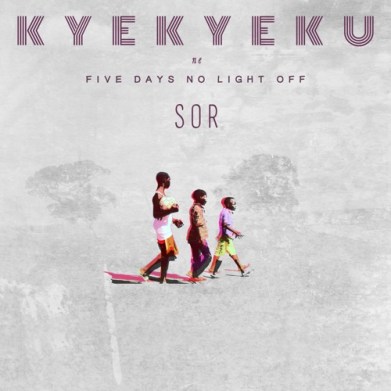
A Small Place by Jamaica Kincaid – Sor (more specifically the song ‘Afro Aid Problem’) by Kyekyeku
A Small Place is an important book and a wake up call. It reveals a lot of truth, exposes the unsatisfactory leadership of her native island (well, I don’t know if the government of Antigua has changed much today) and ties all the complex issues Antigua faces to our imperfect human nature.
Kincaid’s small book pairs excellently with the song, Afro Aid Problem from the album Sor, by my favorite Ghanaian highlife & folk artist – Kyekyeku. Kyekyeku playfully laments over the many economic problems we Africans face, over harmonious sounds of trumpets, guitar strings, bass guitar, the keyboard & background vocals from his band – by Darkowaa.
‘They take your money and give it back to you and then they call it aid.
They take your money and give it back to you and then they call it grant.
Ghana Must Go by Taiye Selasi – Afropolitan Dreams by Blitz the Ambassador
The concept of an ‘Afropolitan’ is not without its flaws. In some sense, it represents the idea of floating in no definite space with not a single identity as an African. In Ghana Must Go, Taiye Selasi uses certain characters to expand on this philosophy of ‘Afropolitanism,’ which she herself practices.
On Afropolitan Dreams by Blitz the Ambassador, he attempts to construct a scope of the range of sonic identities that an ‘Afropolitan’ can identify with. Blitz takes you through his experiences between Africa and the diasporas showing how his African identity can manifest in different ways. In some ways, this album could be a loosely-knit b-side to Ghana Must Go, presenting you with the thoughts and emotions that Taiye Selasi and her characters do not speak of directly – by Hakeem Adam, founder of Dandano.
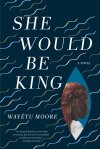
Wayétu Moore’s powerful debut novel, She Would Be King, reimagines the dramatic story of Liberia’s early years through three unforgettable characters who share an uncommon bond. Gbessa, exiled from the West African village of Lai, is starved, bitten by a viper, and left for dead, but still she survives. June Dey, raised on a plantation in Virginia, hides his unusual strength until a confrontation with the overseer forces him to flee. Norman Aragon, the child of a white British colonizer and a Maroon slave from Jamaica, can fade from sight when the earth calls him. When the three meet in the settlement of Monrovia, their gifts help them salvage the tense relationship between the African American settlers and the indigenous tribes, as a new nation forms around them.
Moore’s intermingling of history and magical realism finds voice not just in these three characters but also in the fleeting spirit of the wind, who embodies an ancient wisdom. “If she was not a woman,” the wind says of Gbessa, “she would be king.” In this vibrant story of the African diaspora, Moore, a talented storyteller and a daring writer, illuminates with radiant and exacting prose the tumultuous roots of a country inextricably bound to the United States. She Would Be King is a novel of profound depth set against a vast canvas and a transcendent debut from a major new author.
She Would Be King is a beautiful mélange of historical fiction, magical realism and coming-of-age. Moore skillfully develops the three main characters of this novel: Gbessa – a Vai girl who is cursed and exiled to the forest; June Dey – the child of the strongest rebel on the Emerson plantation in Virginia; Norman Aragon – the child of Nani who was a gifted Jamaican Maroon and a British anthropologist/colonizer (such a terrible man!) . These three characters are guided by the wind and use their gifts – which are considered curses to ordinary people, to save present-day Liberia from its many hidden troubles. I always knew Liberia was the land where some freed slaves and freeborn African Americans made a living, but I had no idea freed slaves from the Caribbean also settled in present-day Liberia, making the nation a flavorful melting pot of indigenous and Diaspora folk.
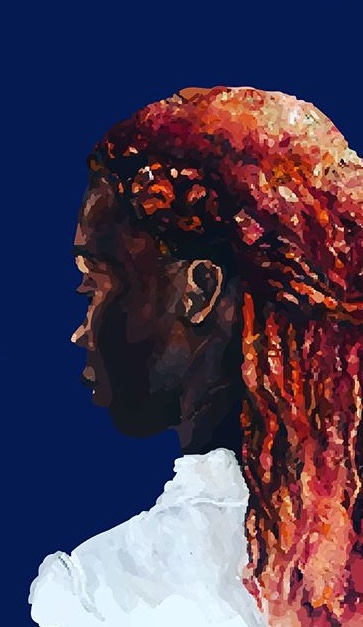
The first three chapters of this debut explore these three main characters. I loved delving into the characters’ storylines and witnessing their evolution through the years. While African-American June Dey and Jamaican Norman play key roles in the establishment of Liberia through their gifts, Gbessa is the shero of this novel (this is not a spoiler, relax!) . Gbessa, who is described as a dark-skinned woman with wild red long hair, grows immensely in this story, to the point where her layered identities begin to haunt her. I’m itching to discuss Gbessa’s evolution, but unfortunately it would require divulging spoilers – and that wouldn’t be right!
Wayétu Moore’s writing felt light and magical in this debut. While reading, my heart raced as I could feel Gbessa’s loneliness and isolation, June Dey’s anger and power, Norman’s intelligence and bravery. The many issues in this story come together beautifully as Moore explores the legacies of slavery and colonialism as well as love, friendship, womanhood and independence. The sisterhood between Gbessa and Maisy – the wonderful woman who plays an immense role in Gbessa’s ‘civilization’ was so heartfelt!
I enjoyed the brotherhood between June Dey and Norman, but I wished their relationship was explored more. These men spent most of their time fighting invaders so there wasn’t enough dialogue between them. Also, it took me a while to finish this book thanks to school work, but also because I got bored of June Dey and Norman’s chapters, which were heavy with magical realism and lots of action. It wasn’t easy keeping up with the wordiness of their fighting scenes which required me to imagine all of their complex, superhero stunts. I really just desired some more depth to June Dey and Norman’s relationship and their connection to the settlement of Monrovia.
What I loved most about this novel was reading about the tensions between members of the indigenous tribes and former enslaved African Americans/ free-borns from the United States. I always knew these two groups had difficulty in seeing eye-to-eye, even in present day Liberia, but I didn’t realize how deep that tension was.
“But… some of them don’t think all of us the same. Some of them think… some of then think they smarter and better fit to lead than those who were already here”pg. 173.
The phrase ‘All My Skinfolk ain’t Kinfolk’ gnawed at me as I read how the African American settlers blatantly disregarded indigenous Liberians. It was eye-opening (and disappointing) to witness how settlers from the US treated indigenous folk similar to the ways slave masters treated them back in the US. Imperialist white-supremacist capitalist patriarchy emigrated with the African American settlers to Monrovia, where they imposed their power and discriminated against the natives. Indigenous folk had little say in the governing of their land, as the mayors and key thinkers of Monrovia were predominently the African American settlers. I had to do quite a bit of outside reading on Liberian history and the role of the American Colonization Society (ACS) in Monrovia’s complete independence. It was so intriguing to read on the motives of this society and I think I now understand why the election of Liberia’s current president- George Weah, was such a big deal.
There’s so much to say about this book! While I’d like some clarity on the use of language (pidgin) in the novel and Gbessa’s (unrealistic) infatuation with her childhood friend – Safua, this debut is pretty solid. I’d love to know what Liberians and Liberian-Americans think of this novel, as they would probably better understand the nuances of the story. I can confidently say I will read anything by Wayétu Moore, and that this debut is a lovely ode to the country of Liberia and Liberian womanhood, through Gbessa’s complex characterization.
[Today is pub day! Special thanks to Graywolf Press and Wayétu Moore for an Advanced Review Copy of this debut]
I’ve been listening to quite a few audiobooks lately. As an avid consumer of numerous podcasts, audiobooks – especially essay collections and non-fiction (read by the author), act as extended podcast episodes for me! Below are 4 mini reviews of the audiobooks I’ve enjoyed thus far.
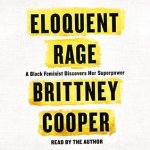
Eloquent Rage: A Black Feminist Discovers Her Superpower by Brittney Cooper
Date Read: April 28th 2018
Published: 2018
Narrated by: Brittney Cooper
Length: 6hrs 57mins
The Blurb
So what if it’s true that Black women are mad as hell? They have the right to be. In the Black feminist tradition of Audre Lorde, Brittney Cooper reminds us that anger is a powerful source of energy that can give us the strength to keep on fighting.
Far too often, Black women’s anger has been caricatured into an ugly and destructive force that threatens the civility and social fabric of American democracy. But Cooper shows us that there is more to the story than that. Black women’s eloquent rage is what makes Serena Williams such a powerful tennis player. It’s what makes Beyoncé’s girl power anthems resonate so hard. It’s what makes Michelle Obama an icon.
Eloquent Rage keeps us all honest and accountable. It reminds women that they don’t have to settle for less. When Cooper learned of her grandmother’s eloquent rage about love, sex, and marriage in an epic and hilarious front-porch confrontation, her life was changed. And it took another intervention, this time staged by one of her homegirls, to turn Brittney into the fierce feminist she is today. In Brittney Cooper’s world, neither mean girls nor fuckboys ever win. But homegirls emerge as heroes. This book argues that ultimately feminism, friendship, and faith in one’s own superpowers are all we really need to turn things right side up again.
Review – ★★★★★ (5 stars)
I honestly don’t know how to review this book. There are updates I shared on Goodreads of my rough thoughts after some of the chapters I enjoyed. All I can say is: Dr. Brittney Cooper is my shero! That is all.
Tears We Cannot Stop: A Sermon to White America by Michael Eric Dyson
Date Read: May 16th 2017
Published: 2017
Narrated by: Michael Eric Dyson
Length: 5hrs 32mins
The Blurb
Short, emotional, literary, powerful—Tears We Cannot Stop is the book that all Americans who care about the current and long-burning crisis in race relations will want to read.
As the country grapples with racist division at a level not seen since the 1960s, one man’s voice soars above the rest with conviction and compassion. In his 2016 New York Times op-ed piece “Death in Black and White,” Michael Eric Dyson moved a nation. Now he continues to speak out in Tears We Cannot Stop—a provocative and deeply personal call for change. Dyson argues that if we are to make real racial progress we must face difficult truths, including being honest about how black grievance has been ignored, dismissed, or discounted.
Review – ★★★★★ (5 stars)
Excellent, excellent, excellent – from beginning to end! I love how Prof. Dyson takes his time to break everything down to white folk – who are the target audience of this book. I’m glad I listened to this via audiobook, because Dyson was very entertaining while performing his words. He has a wonderful, melodic (and sometimes superfluous) way with words that made this an excellent listen. This book is in the form of a sermon and almost every other sentence is quotable; so it was challenging to listen to this book while driving, because I’d always want to add a note to certain clips of chapters as reminders to transcribe the quotes when writing a review (one disadvantage of audiobooks). But I loved Dyson’s bold, fearless approach to enlightening white America of ALL the mess they’ve caused and still remain silent about.
When I started listening, I wondered if Dyson would address the ways white America relates to Black Americans and Black immigrants – i.e: folks from Africa and the Caribbean, and he indeed addresses this towards the end of the book. While Black people from Africa and the Caribbean don’t carry the same intricate baggage of slavery as Black Americans, in the United States, we are all just Black to the white man. Dyson addressing these facts in the book made me think of how divisive we (Black people) tend to be in our communities, and how it only hurts us.
Towards the end of the book, Dyson gives a plethora of recommendations for readers to educate themselves on race in America. Some of his recommendations of writers to read include – Classics: Audre Lorde, Barbara Smith, bell hooks, Michelle Wallace, Kimberly Crenshaw, Patricia Hill Collins, W.E.B. DuBois, Ralph Ellison, Alice Walker, Angela Davis, Maya Angelou, Barack Obama; Gifted Black Voices In Media: Ta’Nehisi Coates, Clint Smith, Henry Louis Gates Jr, Brittney Cooper, Eve Ewing, Wesley Lowrey; Ambassadors Of Truth: Peggy McIntosh (she came to my college to speak when I was in my junior year. It was such an honor to be in her presence!), Tim Wise and many more!
I really hope white folks are purchasing and reading this book, because it was carefully written for them.
Born a Crime: Stories from a South African ChildhoodbyTrevor Noah
Date Read: January 17th 2018
Published: 2016
Narrated by: Trevor Noah
Length: 8hrs 44mins
The Blurb
Born a Crime is the story of a mischievous young boy who grows into a restless young man as he struggles to find himself in a world where he was never supposed to exist. It is also the story of that young man’s relationship with his fearless, rebellious, and fervently religious mother—his teammate, a woman determined to save her son from the cycle of poverty, violence, and abuse that would ultimately threaten her own life.
The stories collected here are by turns hilarious, dramatic, and deeply affecting. Whether subsisting on caterpillars for dinner during hard times, being thrown from a moving car during an attempted kidnapping, or just trying to survive the life-and-death pitfalls of dating in high school, Trevor illuminates his curious world with an incisive wit and unflinching honesty. His stories weave together to form a moving and searingly funny portrait of a boy making his way through a damaged world in a dangerous time, armed only with a keen sense of humor and a mother’s unconventional, unconditional love.
Review –★★★★ (4 stars)
What more can be said about Born A Crime? Everybody and their grandmother has read this book.
I started the book in November (2017) but got side tracked. If I had listened to this book in 3 sittings, I might have given the book 5 stars because it was really enjoyable when I first started. Nevertheless, Trevor Noah is a very compelling storyteller – listening to him re-enact South African accents/languages and imitate various characters was such a treat. But what a stubborn child this boy was!
To me, this book is an ode to his phenomenal mother, who I truly admire. The ending of this book was deeply emotional and brought me to tears… Born A Crime had the right blend of South African racial history, humor and life lessons.
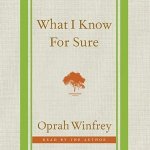
Date Read: July 31st 2017 & (re-read) June 23rd 2018
Published: 2014
Narrated by: Oprah Winfrey
Length: 3hrs 53mins
The Blurb
As a creative force, student of the human heart and soul, and champion of living the life you want, Oprah Winfrey stands alone. Over the years, she has made history with a legendary talk show – the highest-rated program of its kind, launched her own television network, become the nation’s only African-American billionaire, and been awarded both an honorary degree by Harvard University and the Presidential Medal of Freedom. From all her experiences, she has gleaned life lessons―which, for fourteen years, she’s shared in O, The Oprah Magazine’s widely popular “What I Know For Sure” column, a monthly source of inspiration and revelation.
Review – ★★★★★ (5 stars)
Listening to Oprah is probably the best way you can consume this candid, uplifting book. I grew up watching & hearing Oprah’s voice on television, so obviously it didn’t take much for me to decide to experience this collection full of wisdom, via audio.
Hearing Oprah read her words gives you so much clarity and seriously puts things into perspective. I think I’ll make it a point to re-listen to this book at the beginning of every new year. It’ll help get my mind right and remind me of the things I NEED to fall back on, like – praying, taking the time to be present and feel myself breathe, making a conscious effort to see the good in everything, enjoying life, being full of gratitude and doing unto others as I would have them do unto me. What I Know For Sure reminds you that life isn’t as difficult as we make it seem, if we choose to live life full of gratitude.
My thoughts of these books are on Goodreads (they do not cohere to the Black focus of this blog, so reviews won’t be posted here). Kindly click on the titles to be redirected to my thoughts on them.
The next audiobook I have lined up is – Dreams From My Father by Barack Obama. I hope to read along with the physical copy of the book (which was actually a gift to my Dad, from 9 years ago).
I’d love more recommendations! Which audiobooks have you enjoyed thus far?
On the surface, Niru leads a charmed life. Raised by two attentive parents in Washington, D.C., he’s a top student and a track star at his prestigious private high school. Bound for Harvard in the fall, his prospects are bright. But Niru has a painful secret: he is queer—an abominable sin to his conservative Nigerian parents. No one knows except Meredith, his best friend, the daughter of prominent Washington insiders—and the one person who seems not to judge him.
When his father accidentally discovers Niru is gay, the fallout is brutal and swift. Coping with troubles of her own, however, Meredith finds that she has little left emotionally to offer him. As the two friends struggle to reconcile their desires against the expectations and institutions that seek to define them, they find themselves speeding toward a future more violent and senseless than they can imagine. Neither will escape unscathed.
In the tradition of Junot Diaz’s The Brief Wondrous Life of Oscar Wao and Chimamanda Ngozi Adichie’s Americanah, Speak No Evil explores what it means to be different in a fundamentally conformist society and how that difference plays out in our inner and outer struggles. It is a novel about the power of words and self-identification, about who gets to speak and who has the power to speak for other people. As heart-wrenching and timely as his breakout debut, Beasts of No Nation, Uzodinma Iweala’s second novel cuts to the core of our humanity and leaves us reeling in its wake.
◊◊
Review –★★★ (3 stars)
Speak No Evil wasn’t really a novel I was keen to read when I published the 2018 New Releases To Anticipate at the beginning of this year. Once the book was finally released in March, my interest grew after I watched a couple of BookTubers discuss the book, so I decided to buy a copy.
Hmmm, where do I even begin to share my thoughts on this book? For the first 60 pages of the novel, I was preoccupied with Uzodinma Iweala’s audacity to write a novel based on a young gay Nigerian-American (named Niru), who was Harvard-bound. A lot of Niru’s family life seemed to mirror some of Iweala’s real life, so I kept on wondering if Speak No Evil was a fictionalized take on his personal life? Iweala’s personal life is none of our business, but I was slightly distracted while reading because I assumed Iweala was a heterosexual and hence felt it wasn’t his place to write on LGBTQ experiences. I felt the same way about his debut, Beast of No Nation – what does he know about the plight of child soldiers? But hey… writers can write on whatever they desire, as long as it fosters important conversations, right?
What a stressful book this was! Speak No Evil isn’t just about an eighteen year old’s mental and emotional journey of coming out as gay – it’s also about what it means to be a 1st generation American of African heritage (I understood a lot of Niru’s ‘struggles’ with his Nigerian parents); it’s about being a typical teenager and feeling inadequate, thanks to familial pressures and parental scrutiny via sibling comparisons; it’s about how being a Christian and being gay mess with your mind and torture your psyche daily; it’s about what it means to be a young black boy in a high school full of privileged white kids who have the luxury to be flippant about everything; it’s about how white ‘allies’ are actually the enemy – Meredith (she’s Niru’s best friend who had the hots for him, even after he confided in her that he wasn’t attracted to girls); it’s about how white lies cost black lives via police brutality. I didn’t expect these tough themes to feature in this little book, so it all took me by surprise.
I don’t think Iweala did a great job of developing the characters in this novel. Niru’s brother- OJ, was mentioned about 500 times in the story, but he only made an appearance at the end. OJ’s character felt so empty, I wondered why he had to be part of the story. Throughout the novel, I couldn’t picture Niru or any of the other characters’ faces or physiques in my mind. Iweala concentrated more on thoroughly describing Niru’s upperclass lifestyle, his church environment, the surroundings of the impromptu trip to Nigeria, his high school, Meredith’s house. Perhaps it wasn’t Iweala’s intention to focus on character development, but it would have filled some of the void I felt while reading the novel.
The novel is divided into two parts. Part 1 focuses on Niru – his family life (his father was such a domineering, toxic man… but he meant well), school life with his track team and church. I enjoyed Part 1 immensely; I especially loved Niru’s short-lived love interest with Damian. Part 2 focuses on Niru’s best friend – Meredith, who embodies America’s idea of what a white ally is. I detested Part 2 of this book, mostly because I truly disliked Meredith. I’m still trying to figure out if it was Iweala’s intention to portray Meredith as an innocent white girl who was oblivious to the plight of black folks, or if the motive of Part 2 was to highlight Meredith’s rich, dysfunctional family life as a means to validate why she was a terrible friend who perpetuated the issues we (ie: Black women and Black people in general) have with white women in America.
All you people do, wherever you are in this world, is just bring death and destruction, you bring nothing good – Niru’s Dad to Meredith and her family (pg. 201)
This is definitely a good book, but I give it 3 stars because: 1) The latter part of the novel mirrors the current horrors we witness on social media via police brutality – which is DEEPLY upsetting to read; 2) I don’t know how I feel about Iweala writing on the gay experience. I know it’s important to separate the writer from their work, but I think I’d fully appreciate Niru’s coming out experience in this novel if I had some context on the writer’s life in that realm; 3) Meredith’s section of the book – Part 2, was truly annoying.
♦ [Part 2 of this novel actually reminded me of Season 4 of the show- Orange Is The New Black, when Poussey was killed by the daft, rookie prison guard. After Poussey’s death, the episode went on to highlight the prison guard’s family/background to prove how much of a hard worker and innocent man he was. It further trivialized the prison guard’s actions and devalued black lives, especially as he wasn’t charged for the crime]. ♦
My main take-away from Speak No Evil is that we need to stop making excuses for white people and the harm they cause us black folks. WHITE LIES COST BLACK LIVES (as seen on page 196).
★★★ (3 stars) – Good book. I recommend it, I guess.
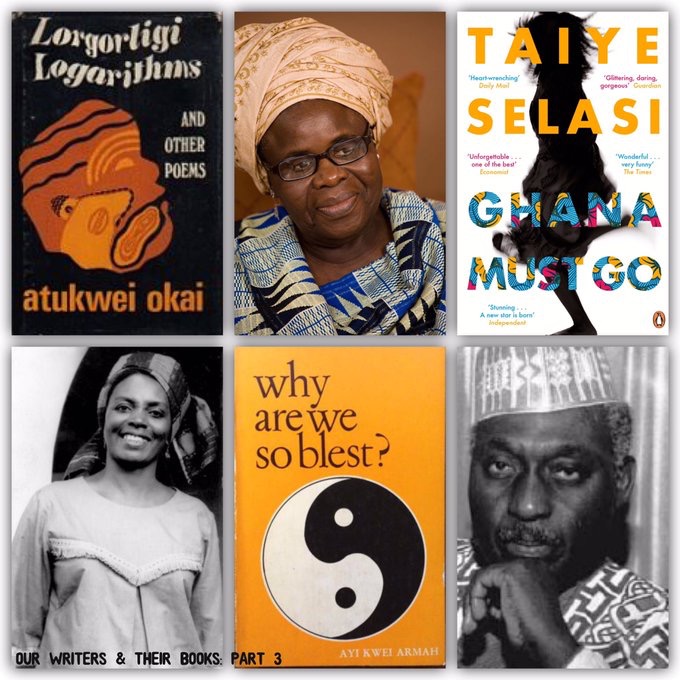
Once again, the month of March is here! Ghana gained independence in March, so I like to dedicate this month to celebrating Ghanaian writers and their work. In the African literature scene, Ghanaian writers and their books are seriously underrated. As a reader of Ghanaian heritage, I enjoy discovering new Ghanaian writers and learning about our pioneer writers. If we don’t celebrate our own, who will?
Last year on African Book Addict!we celebrated 75 Ghanaian writers and their books in a 3-part series. This month, (more like this month), I’ll be in conversation with some of the writers highlighted in last year’s series! This week is the last installment of the conversations I have with writers of Ghanaian descent.
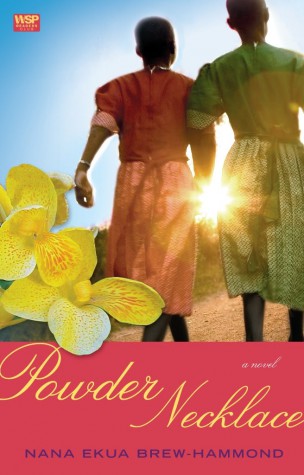
This week, I chat with Nana Ekua Brew-Hammond – author of Powder Necklace, which was published in 2010. I enjoyed Powder Necklace back in 2013, before the creation of this book blog (hence no book review on the site). Since my 2018 reading intentions are to re-read some novels and indulge in more work by Ghanaian writers, I shall be re-reading and reviewing Nana Ekua’s coming-of-age debut this year. Enjoy this fun book chat where Nana Ekua talks about what she learned about herself while writing her debut, how she feels about the future of Ghanaian literature, the Black writers who influence her work, new projects that will be published soon & more!
To protect her daughter from the fast life and bad influences of London, her mother sent her to school in rural Ghana. The move was for the girl’s own good, in her mother’s mind, but for the daughter, the reality of being the new girl, the foreigner-among-your-own-people, was even worse than the idea.
During her time at school, she would learn that Ghana was much more complicated than her fellow ex-pats had ever told her, including how much a London-raised child takes something like water for granted. In Ghana, water “became a symbol of who had and who didn’t, who believed in God and who didn’t. If you didn’t have water to bathe, you were poor because no one had sent you some.”
After six years in Ghana, her mother summons her home to London to meet the new man in her mother’s life—and his daughter. The reunion is bittersweet and short-lived as her parents decide it’s time that she get to know her father. So once again, she’s sent off, this time to live with her father, his new wife, and their young children in New York—but not before a family trip to Disney World.
I remember reading your debut novel, Powder Necklace back in 2013 and resonating with it on so many levels. At the time, I hadn’t read a book that accurately articulated the many issues I had with myself and others (mostly Ghanaians) after I moved to Ghana at the age of 10, so I thank you! Why was it important for you to write the story?
NEBH: Thank you! I’m so glad to know Powder Necklace resonated with you. It was important to me to write Powder Necklace because I had so many misconceptions about Ghana before I went to live and school there at 12.
My parents had pumped it up as this utopia where kids never misbehaved, and would threaten to send my siblings and me there whenever we didn’t act right. Meanwhile, it felt like American news programs of the early ‘80s were conflating the Ethiopian famine with all of Africa. Add that to the Save the Children commercials starring Sally Struthers that were repeatedly on air, and it seemed as if Africa was a Land of Flies and Kwashiorkor-Stricken Children. No wonder some of my classmates in the States thought anyone from Africa was a “Booty Scratcher.”
With Powder Necklace, I wanted to share the slice of Africa I experienced in Ghana. Yes, there was poverty, but there was also wealth and both stations were far more complicated than depicted in American media or even by family. Everything and everyone I encountered was far more nuanced.
I also felt like there weren’t many contemporary books for Black kids who weren’t African-American—at least I hadn’t come across many growing up. In the ‘90s, when Black literature was experiencing a wave with books by Terry McMillan, E. Lynn Harris, Bebe Moore Campbell, J. California Cooper, April Sinclair, et al, most centered on the African-American experience. I wanted Powder Necklace to speak to the experience of being Black and African in the diaspora.
Did you learn anything about yourself while writing Powder Necklace?
NEBH: I did. Powder Necklace was inspired by my experience getting sent to school in Ghana at 12. It fundamentally changed my personality and intensified my faith in God, but I had not fully dealt with the resentment and anger I felt from being tricked into staying in Ghana. As I began to write the book, I realized how much I had suppressed about the experience. I was surprised by how painful it was to revisit the isolation and fear I felt as a kid when it sunk in that I would be in Ghana without my parents for years, at a boarding school two hours’ drive from my home in Accra.
I had also been hazed by many of my schoolmates during my time at school. In my mind they were all villains, but as I wrote, and had the distance to see myself as a character in a bigger story, I could see the cultural chauvinism I brought to my interactions with my fellow students and still held in some ways.
Three years ago, I read a compelling essay of yours in Mosaic Literary Magazine – ‘The African Renaissance’, where you discussed the trajectory of African literature over the years and the interrogation of ‘authentic’ African identity tagged to stories and writers. Some writers dislike being ‘pigeon-holed’ and labeled as ‘African writer’ or ‘Black writer.’ How do you prefer to be identified as a writer?
NEBH: I appreciate being identified as an “African writer” or “Black writer” because I am proud of my Africanness and my Blackness. It took me a long time to get here. I had to get over years of cultural indoctrination designed to make me feel ashamed of my dark skin, and my Ghanaian name and origin—and now that I have, I refuse to have my identity erased or downgraded by anyone, including myself.
The only reason being labeled an “African” or a “Black” writer can pigeonhole is because mainstream culture is infected with racist notions about what it means to be African and Black, and the powers that be have a track record of allowing only certain types of narratives by Black people to see the light of day. By standing proudly in my identity and working to tell authentic stories, I am defying the idea that we should be ashamed of who we are and forcing people to see that no race or ethnicity can be narrowed down to one story or experience.
Do you remember the first book you read by a Ghanaian writer? If so, what book was it and how was the experience? After working on the #GHat60 project last year, I was amazed at the great number of Ghanaian writers doing amazing work. How do you feel about the future of Ghanaian literature?
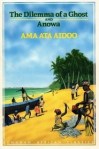
NEBH: The first book I read by a Ghanaian writer was a play—Ama Ata Aidoo’s The Dilemma of a Ghost. I immediately connected with her story of a Ghanaian man bringing his African-American wife home to Ghana and the clash they were dealing with because I was going through a similar experience as I read it at school in Ghana.
I think the future of Ghanaian literature is limitless. Writers like Kofi Akpabli, Nana-Ama Danquah, Nana Awere Damoah, Esi Edugyan, Martin Egblewogbe, Boakyewaa Glover, Yaa Gyasi, Ayesha Harruna Attah, Lesley Lokko, Cheryl Ntumy, Nii Ayikwei Parkes, Kwei Quartey, Taiye Selasi, and yourself are not only writing a diversity of stories, but many are creating opportunities and support systems for other writers.
Nana Awere Damoah has started the Ghana-based online bookstore BookNook, which should make it easier for readers in Ghana to get their hands on books by Ghanaian authors. Together with Kofi Akpabli, Nana Awere Damoah also goes around Ghana producing open mic nights. Martin Egblewogbe co-founded Writers Project Ghana and co-hosts a radio show on Ghana’s Citi FM that features Ghanaian writers as well as writers from all over the continent.
You have your blog, which promotes African authors, and there are other sites focused on African literature too like Nana-Ama Kyerematen’s AfriDiaspora and Ainehi Edoro’s Brittle Paper. Plus, there are writing contests geared toward young Ghanaians like the #360WritersChallenge, which is aimed at university students and the Blooming Minds Young Writers Award for children, not to mention the proliferation of prizes that have cropped up in the last five years geared toward African writers including the Miles Morland Writing Scholarship.
Right now, Ghanaian writers of any age and stage can find encouragement, support, and inspiration among peers and promoters. If this continues—and I believe it will if we as writers and lovers of literature remain vigilant about creating and supporting individuals, initiatives, and institutions that support us—there’s no reason Ghana can’t be home to a proliferation of powerful literary voices generation after generation.
What have you been reading and loving lately? And who are some of your favorite Black writers and influencers of your work?
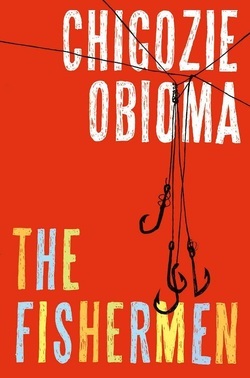
NEBH: I recently devoured Baruch Sterman’s The Rarest Blue. I know I’m so so late on The Life of Pi, but I finally read it and absolutely loved it. Currently, I’m in the middle of Chigozie Obioma’s The Fishermen.
My favorite Black writer is Buchi Emecheta. Reading her work, it’s clear how much empathy she had for her characters, and she had a gift for pacing. In addition to Ms. Emecheta, there are so many Black writers I aspire to be as honest and fearless as in my writing, including Zadie Smith and Chimamanda Ngozi Adichie. Both women are such astute and commanding storytellers.
I love the care Ayesha Harruna Attah gives to the tiniest details. NoViolet Buluwayo has a fierce way with words that I deeply admire. I so appreciate the poetry of Taiye Selasi’s style. And Ama Ata Aidoo is a legend. Her commitment to telling nuanced stories of Ghanaian lives, particularly Ghanaian women’s lives, has set the benchmark for contemporary Ghanaian writers.
I enjoyed your short story – Mama Africa, which was published in the Africa39 Anthology (2014) and I’m excited to see that you’ll be featured in Everyday People: The Color of Life – a Short Story Anthology this summer (August 2018). Do you have a new novel or collection of stories currently in the works to be published soon?
NEBH: Thank you for reading and following my work! I have finished a second novel that I’m really eager to get out into the world. I don’t have a publication date yet, or a publisher, but I’m confident I will soon. In the meantime, I’m working on another novel, a children’s book series, and a literary project for Ghanaian writers. I also have a short story in the forthcoming anthology Accra Noir.
Thanks so much for taking the time to participate in this book chat!
SPECIAL THANKS TO: Ayesha Harruna Attah and Nana Ekua Brew-Hammond for participating in this fun miniseries of book chats! Also, thank you to all the readers of the book blog who have enjoyed these book chats with writers of Ghanaian descent. #ReadGhanaian!
Check out the 75 Ghanaian writers that were highlighted in last year’s 3-part series below:
 Date Read: September 22nd 2017


 Date Read: September 16th 2016


 ,
, 






























 African Book Addict!