Reading Goals for 2016

Happy New Year, everyone! We are in the year 2016 – how crazy is that? I’m grateful I made it to 2016 and I’m quite excited for the awesome year ahead!

I will be participating in the (2016) Goodreads Reading Challenge, as usual.

But this year, I don’t have a set goal of books to read. I’m just going to read what I can and see how far I go. As my second degree, I mentioned before that I’m currently in a 6 year dental medicine/surgeon program (class of 2020…sigh, I know!) in Accra, so I’m usually busy with school work. I tend to read the bulk of my books during the one month Christmas break and Summer break (which is about 2 months). Since I read sparingly during the school year, once Christmas or Summer break rolls along, I usually binge-read and sometimes knock out 3 books in a month, depending on my mood.

During the school year, when I have time I usually reach for the slim African Writers Series (AWS) books or short story collections. A story or two a day or just allocating 1 hour of my time to sit back and read is necessary, as I can’t be studying all the time haha. I plan on keeping this reading habit I’ve cultivated. But I do have some goals I’d like to achieve this year…

I have 4 reading goals for 2016:

  • To read a wider array of African novels. I tend to go for West African (Nigerian, Ghanaian), Kenyan and Zimbabwean fiction. I want to make a conscious effort to explore this year! More South African, Congolese, Botswana, Sierra Leonian, Namibian, Egyptian, Somalian, Mozambican fiction – anything that’s different from what I’m used to. Of course I’ll continue to read what I like, but a little more African novel diversity would be more inclusive and a fun learning experience!
  • To read more poetry. I’m not really a lover of poetry, but I’ve come across some engaging, fun and comprehendible poetry collections that I’d like to enjoy this year, for a change.
  • To read at least 1 African romance novel and/or 1 African thriller novel. When it comes to African romance fiction, I’m eyeing the chic lit/romance series from Ankara Press as well as novels by authors Nana Prah and Kiru Taye. I’m not very familiar with the thriller genre, but Liberian author Hawa Golakai’s thriller novel – The Lazarus Effect is one I’d love to read. Ghanaian author Boakyewaa Glover also has a thriller called The Justice that has been on my radar as well. We’ll see!
  • Last but not least, I’d love to give back. Instead of always talking about books, why not give some away and share? I’d like to do 2 or 3 giveaways this year – YES, I want to turn you all into African book addicts too. *Fingers crossed* 🙂

No pressure though! Reading is personal, for everyone. For me, reading is a hobby where I enjoy myself and learn new things in the process; it’s never been a competition on how many books to read – quality over quantity. I hope I can achieve these goals by the end of the year – I would be proud. With these goals set, I think I’ll be reading with a purpose this year!

Have you set any reading goals and habits for 2016? Does school, work or other life happenings affect your goals? Please do share!

Stay tuned for more reviews/book discussions and other bookish stuff throughout the year!

2015 Recap & My Top 5!

Hey everyone!

I hope the holiday season has been relaxing thus far. 2015 is almost over! I ended up reading 26 books this year (and I turned 26 years old this year too, haha. It’s a coincidence, I promise). The break down of my 2015 reading experience is as follows:

Longest book read: A Deeper Love Inside: The Porsche Santiaga Story by Sister Souljah – 432 pages.

Shortest book read: We Should All be Feminists by Chimamanda N. Adichie  – 32 pages.

Screen Shot 2015-12-28 at 9.07.18 PMAfrican literature: 10 books

Caribbean literature: 2 books

African-American/Black literature: 11 books

Other: 3 books (these are non-African diaspora books. I read books written by – Mitch Albom, Lena Dunham, Jhumpa Lahiri)

14 women writers ; 6 men writers 

I read multiple books (two each) by the following authors: Amma Darko, Maya Angelou, Ngūgī wa Thiong’o, Alice Walker, Chinua Achebe and Nayyirah Waheed. 


Top 5 favorite books of 2015

  1. The Fishermen by Chigozie Obioma
  2. You Can’t Keep a Good Women Down by Alice Walker
  3. The Trouble with Nigeria by Chinua Achebe
  4. salt. by Nayyirah Waheed
  5. Dreams In a Time of War by Ngūgī wa Thiong’o

These books took a toll on my emotions the most! If you’ve read my reviews for these 5 books, you know exactly why they are my top 5! And didn’t I say The Fishermen would win many awards? So far Obioma’s debut novel was shortlisted for the Man Booker Prize (this is a big deal!) alongside other nominations, and won the 2015 Emerging Voices Award. There are probably more awards it’s won that I’m missing out! I’m not surprised by the success of The Fishermen, it is well deserved – #iToldYouSo!

Reviews for all the books read this year are in the Book Reviews section of the book blog. [Some missing reviews (4 of them) will be posted in 2016].


I also attended quite a number of book readings, thanks to Writers Project of Ghana and some invitations I received to attend readings. Below are pictures of my favorite reading events this year:

In my 2014 recap, I mentioned that my favorite book for 2014 was Binyavanga Wainaina’s memoir, One Day I Will Write About This Place. I was elated to finally meet him when he came to Accra! Unfortunately, Binyavanga recently suffered from a series of strokes and is receiving medical care in India. I pray he has a speedy recovery, so we can all enjoy his fun-loving spirit soon. Let’s keep him in our prayers!


Finally, this year I joined in a partnership with AFREADA !

AFREADA is an online literary magazine, featuring original stories from emerging writers across the Continent.”

If you write short stories or you love photography, definitely submit your work to AFREADA! And if you are a lover of original, African short stories – visit the website! There are some lovely stories written by talented writers from all over the continent, as well as photo stories AND book reviews by me! Visit http://www.afreada.com, and thank me later. 

It has been a fulfilling year! What were your favorite books of 2015? And what were some of your fave bookish events? Please do share!

I’m truly grateful to everyone who frequents this book blog and for the great discussions (agreements, disagreements and recommendations) we have in the comments section. I also enjoyed commenting on various blogs as well! I really appreciate the support and love shown here from you all. I’m excited for all I have to share in 2016. God bless 🙂

Pig Tails ‘n Breadfruit: A Culinary Memoir by Austin Clarke

Date Read: July 22nd 2015

Published: April 2000 (was re-released in 2014)

Publisher: The New Press

Pages: 248

Austin Clarke

The Blurb

Praised as “masterful” by the New York Times and “uncommonly talented” by Publishers Weekly and winner of the 1999 Martin Luther King Jr. Achievement Award, Austin Clarke has a distinguished reputation as one of the preeminent Caribbean writers of our time. In Pig Tails ’n Breadfruit, he has created a tantalizing “culinary memoir” of his childhood in Barbados. Clarke describes how he learned traditional Bajan cooking—food with origins in the days of slavery, hardship, and economic grief—by listening to this mother, aunts, and cousins talking in the kitchen as they prepared each meal.

Pig Tails ’n Breadfruit is not a recipe book; rather, each chapter is devoted to a detailed description of the ritual surrounding the preparation of a particular native dish—Oxtails with Mushrooms, Smoked Ham Hocks with Lima Beans, or Breadfruit Cou-Cou with Braising Beef. Cooking here, as in Clarke’s home, is based not on precise measurements, but on trial and error, taste and touch. As a result, the process becomes utterly sensual, and the author’s exquisite language artfully translates sense into words, creating a rich and intoxicating personal memoir.

◊◊

Review – ★★★ (3 stars)

Since today is Thanksgiving Day (in the U.S) and some of you will be feasting in honor of this day of giving thanks, I thought this would be the perfect time to post my review of the culinary memoir, Pig Tails ‘n Breadfruit and talk about food!

Barbados born, scholar and writer Austin Clarke takes readers on a ride to explore different Barbadian (or Bajan) foods and aspects of Barbadian culture in Pig Tails ‘n Breadfruit. It was insightful to read about the origins of various Bajan meals from the days of slavery and how people of different socio-economic backgrounds cooked differently with different ingredients (or as Clarke says ‘ingreasements’). Austin Clarke’s mother who was known to be a superb cook, is the real MVP of this memoir and she proudly cooked all the meals Clarke enjoyed sans measuring cup and cookbook:

Cooking food is not characterized by strict attention to ounces and grams, cups and liters. A pinch of this and a pinch of that added to a pot, at first by trial and error, and then perfected through history and constant usage, from one generation to the next, is the way I remember food being cooked… It is ironical to be suggesting a book about food cooked in Barbados, because in every self-respecting Barbadian household the woman (who does most of the cooking, whether she is wife, daughter or maid) would not be caught dead with a cookbook. To read a cookbook would suggest that she has not retained what her mother taught her; that she does not know how to cook; that she does not know how to take care of her man… (page 3).

Readers go back to Clarke’s childhood when he used to watch his mother and aunts cook meals like: Oxtails with mushrooms; ‘Priviledge’ (also known as ‘slave food’; contrived from a mixture of random foodstuff. Clarke actually had the privilege of eating this popular meal with the president of Barbados and other members of his cabinet during his stay at Duke University as a professor); ‘Cou-Cou’ (a doughy mélange of cornmeal, okra, fish, peppers); ‘Pepperpot’ (a stewed meat dish, spiced with cinnamon and peppers); ‘Swank’ (a molasses & water drink) and ‘Pelau’ (rice pilaf).

Meats like mutton, lamb, beef, chicken, flying fish and pork make up a large component of Bajan foods and every part of a pig is eaten – from the snout to the tail! Once Clarke moved to Canada to further his education (as a college student), and later to teach in various universities in the United States, he grew homesick and longed for these meals as well the Caribbean sun. From the way the scrumptious meals and the atmosphere of Barbados are described in this novel, who wouldn’t be homesick?

Clarke uses a lot of dialect in his writing as he expects readers to be familiar with the meanings of some dialect words. Even though this was a light read, the heavy use of dialect required me to concentrate in order to fully understand what Austin Clarke was writing, which was not easy as he usually went off on a tangent while he discussed the origins of foods. I think this book would have been more engaging for me if Clarke included pictures of the meals he discussed and maybe even some recipes. I found myself bugging some of my Caribbean friends with questions, as well as Googling and YouTubing most of the meals mentioned in this book. Pig Tails ‘n Breadfruit is an insightful book but not as engaging as I had anticipated. This is more of a 2.75 stars rating for me.

But I have a question: do African culinary memoirs exist? If they do, please let me know of some good ones! I would absolutely love to read an engaging culinary memoir/novel on Kenyan, Malawian, Ghanaian, Eritrean, Rwandan, South African, Ivorian, Liberian, Zambian, Congolese, Moroccan… AFRICAN food! There are so many different foods available on the continent, and we all use different cooking techniques and ingredients! I wish our foods were showcased more. Maybe the more we write on our own foods, the more our foods would be recognized and cooked worldwide.

Every time I watch Top Chef, the chefs mostly cook Asian (Korean, Thai, Japanese, Chinese), Italian, Greek, French and of course various American dishes. Back in 2012, on an episode from Season 5 of Top Chef, one of the chefs (Chef Carla Hall) made fufu* and the meal turned out looking far from the fufu us West Africans know it as haha! It would be great to have our foods taken seriously. In Pig Tails ‘n Breadfruit, Austin Clarke did an admirable job at revering the foods of his native land – Barbados. Maybe one day an African culinary memoir/novel (not just a recipe book) would be published and foods from the motherland would be put on a pedestal as well. I hope so. 

fufu* – Fufu is a West African dish that consists of pounded boiled yam, cassava, plantain or coco-yam tubers; usually pounded into a dough-like consistency and eaten with soup.

Happy Thanksgiving everyone! Eat an extra plate for me!

★★★ (3 stars) – Good book. I recommend it, I guess.

IMG_1059

Purchase Pig Tails ‘n Breadfruit on Amazon

The Twelve Tribes of Hattie by Ayana Mathis

Date Read: August 5th 2015

Published: 2013

Publisher: Hutchinson

Pages: 241

ayana mathis

The Blurb

A debut of extraordinary distinction: Ayana Mathis tells the story of the children of the Great Migration through the trials of one unforgettable family.

In 1923, fifteen-year-old Hattie Shepherd flees Georgia and settles in Philadelphia, hoping for a chance at a better life. Instead, she marries a man who will bring her nothing but disappointment and watches helplessly as her firstborn twins succumb to an illness a few pennies could have prevented. Hattie gives birth to nine more children whom she raises with grit and mettle and not an ounce of the tenderness they crave. She vows to prepare them for the calamitous difficulty they are sure to face in their later lives, to meet a world that will not love them, a world that will not be kind. Captured here in twelve luminous narrative threads, their lives tell the story of a mother’s monumental courage and the journey of a nation.

Beautiful and devastating, Ayana Mathis’s The Twelve Tribes of Hattie is wondrous from first to last—glorious, harrowing, unexpectedly uplifting, and blazing with life. An emotionally transfixing page-turner, a searing portrait of striving in the face of insurmountable adversity, an indelible encounter with the resilience of the human spirit and the driving force of the American dream, Mathis’s first novel heralds the arrival of a major new voice in contemporary fiction.

◊◊ 

Review – ★★★★★ (5 stars)

I randomly bought The Twelve Tribes of Hattie (the UK edition) in 2014 from my local bookstore. I didn’t even plan on reading the book this year, but it was smiling at me from my bookshelf, so I finally decided to pick it up!

Hattie, a ‘high yellow’ girl from Georgia escapes Jim Crow to Philadelphia with her mother and sisters in hope of a better life in the North. Hattie and her forbidden boyfriend, August Shepherd (also a Georgia native) get married and she gives birth to twins – Philadelphia and Jubilee at the age of seventeen. Due to the harsh winter in Philadelphia and poor living conditions, Hattie’s twins catch pneumonia and eventually die, only three months after their birth. The death of the twins, August’s poor paying job and Hattie’s helplessness up North taint her soul and morph her into a cold, resentful, miserable woman. Despite their strained relationship (as a result of infidelity from both parties), Hattie and August have nine children over the years. This book follows the Shepherds – Hattie, her children and grandchild from 1948 to the 1980’s.

The Twelve Tribes of Hattie was a wonderful page-turner! I honestly do not have any issues with this book because it was simply an excellent read. I read each chapter as a short story, since each chapter focused on one of Hattie’s nine children, intertwined with Hattie and her husband August’s history. Each chapter had its own twists and turns as readers got acquainted with Hattie’s children and whatever issues they faced in their lives.

I loved that all of Hattie’s children had diverse lives and they all faced real joys and pain: Floyd dealt with conflicting homosexual desires; Six found solace in religion and preaching; Billups was molested as a child; Franklin was a soldier in Vietnam and battled with alcoholism; Alice was a controlling middle-class housewife who was perpetually on tranquilizing medication (given to her by her doctor husband); Ruthie may or may not be August’s daughter; Baby Ella was reluctantly sent to live with Hattie’s barren sister in Georgia as Hattie was struggling to make ends meet; Bell was self-destructive – mentally and physically and Cassie was schizophrenic. Cassie’s daughter, Sala (Hattie’s granddaughter) is the last one of Hattie’s brood and readers witness her desires to become a born-again Christian, at the tender age of 10. Hattie’s demeanor definitely played an important role in the future of her children’s lives. Yes, Hattie may seem to be an unlovable, stern, sometimes cold woman – but I understood her character.

One thing I found intriguing was that Hattie and her children were described to be ‘the color of the inside of an almond’, which suggests that they were a light-skinned, black family in Philadelphia. August was described as the color of cinnamon – which is obviously darker than the color of the inside of an almond. Clearly, Jim Crow did not discriminate – whether you were dark or light-skinned, all black people faced discrimination and endured hardships; readers ultimately witness this in the lives of all the characters.

Some readers of this novel feel that Mathis’s development of the characters was brief and that there is little or no interaction between the children in the various chapters. This was not a problem for me. As I mentioned before, I read each chapter as a short story and was content with Mathis’s depiction of all the characters – they all felt very real! Apparently, new writer – Angela Flournoy’s 2015 debut novel, The Turner House (which is a recent finalist for the 2015 National Book Award – winner will be announced tomorrow!) is a similar, ‘better’ historic novel compared to The Twelve Tribes of Hattie. I haven’t read Flournoy’s novel yet, but I finished The Twelve Tribes of Hattie feeling satisfied. Be prepared for a long, powerful ride.

NoteThe Twelve Tribes of Hattie is adult fiction. Ideally, readers should be 18 years and older to indulge.

★★★★★ (5 stars) – Amazing book, I loved it. Absolutely recommend!

IMG_1403

Purchase The Twelve Tribes of Hattie on Amazon

Classics: Things Fall Apart by Chinua Achebe & Matigari by Ngūgī wa Thiong’o

Hey everyone! Below are mini reviews of two classics written by two, brilliant, African literature pioneer writers. I enjoyed these books over the summer 🙂

Things Fall Apart by Chinua Achebe

Date re-Read: July 12th 2015 (previously read in 2007)

Published: January 2010 (originally published in 1958)

Publisher: Penguin Books

Pages: 152

Things Fall Apart

The Blurb

Things Fall Apart tells two intertwining stories, both centering on Okonkwo, a “strong man” of an Ibo village in Nigeria. The first, a powerful fable of the immemorial conflict between the individual and society, traces Okonkwo’s fall from grace with the tribal world. The second, as modern as the first is ancient, concerns the clash of cultures and the destruction of Okonkwo’s world with the arrival of aggressive European missionaries. These perfectly harmonized twin dramas are informed by an awareness capable of encompassing at once the life of nature, human history, and the mysterious compulsions of the soul.

◊◊

Review –★★★★ (4 stars)

What more can I say about this book? Everyone and their grandparents have read this classic. Most readers hated Okonkwo – the main character, for valid reasons. Who would have thought this true-blooded chauvinist would ultimately take his own life? Killing yourself is a cowardly, weak move, no? Despite Okonkwo’s brashness and overt disdain for females and all things ‘womanly’, I understood him, so I appreciated him.

It’s hard not to resent the British colonizers for the damage they caused Africa in the past. The British came with full force, masked in Christianity and denied natives of the African continent control over their own land. Change is never easy, but I guess sometimes it’s necessary? Many harmful indigenous practices which were revered prior colonization have been abolished for example – the killing of twins and thankfully, many other practices that were tagged with superstitious beliefs. Things Fall Apart gives readers a lot to think about: gender inequality, superstition, tradition versus modernity, masculinity versus femininity etc. I’m glad I re-read this during the summer. It was refreshing to reconnect with this masterpiece that Achebe wrote back in 1958. Things Fall Apart will always be a solid 4.5 stars for me.

★★★★ (4 stars) – Great book. Highly recommend!

Purchase Things Fall Apart from Amazon

IMG_1057

Matigari by Ngūgī wa Thiong’o

Date Read: August 11th 2015

Published: June 1989 (originally published in 1986)

Publisher: Heinemann (African Writers Series)

Pages: 175

Matigari

The Blurb

Who is Matigari? Is he young or old; a man or fate; dead or living… or even a resurrection of Jesus Christ? These are the questions asked by the people of this unnamed country, when a man who has survived the war for independence emerges from the mountains and starts making strange claims and demands.

Matigari is in search of his family, to rebuild his home and start a new and peaceful future, but his search becomes a quest for truth and justice as he finds the people still dispossessed and the land he loves ruled by corruption, fear and misery. Rumors spring up that a man with superhuman qualities has risen to renew the freedom struggle. The novel races towards its climax as Matigari realizes that words alone cannot defeat the enemy. He vows to use the force of arms to achieve his true liberation.

Lyrical and hilarious in turn, Matigari is a memorable satire on the betrayal of human ideals and on the bitter experience of post-independence African society.

◊◊

Review – ★★★★ (4 stars)

Matigari is the ultimate African post-colonial, social justice novel. And of course, Ngūgī wa Thiong’o executes the storyline brilliantly with the strength and courage of character,  Matigari ma Njiruungi – a patriot who goes to great lengths to ensure there is justice for the oppressed in a (fictitious) nation. Matigari ensures there is justice for the oppressed with the help of an orphan and a former prostitute and readers follow this team on their brave, almost rebellious journey to peace and justice. Matigari is a satirical novel. Ngūgī wa Thiong’o uses some elements of magical realism and lots of Christian allegory which are very symbolic in this novel.

But I don’t think this book is for everyone. It can be quite dry and may be too ‘political’ for some readers. Matigari was not a fast/easy read for me: I started reading it in May and finished it in August. But if you appreciate African oral literature and post-colonial literary works – read this! It is indeed powerful.

Favorite quotes:

“The true seeker of truth never loses hope. The true seeker of real justice never tires. A farmer does not stop planting seeds just because of the failure of one crop. Success is born of trying and trying again. Truth must seek justice. Justice must seek the truth. When justice triumphs, truth will reign on earth” pg. 84 [one of Matigari’s many meditations].

“Pregnancies are the result of the evil and wild desires. I shall ask the government to ban dreams and desires of that kind for a period of about two years. Fucking among the poor should be stopped by a presidential decree!” (HILARIOUS!) pg. 120 [said a member of parliament – a typical man in power, guilty of squandering government money].

★★★★ (4 stars) – Great book. Highly recommend!

Purchase Matigari from Amazon

TBR Book Tag!

Hey everyone. The lovely Zezee of book blog Zee With Books tagged me to participate in the TBR (to-be-read) tag. Below are my responses to the questions, enjoy!

How do you keep track of your TBR pile?

  • Goodreads has been quite helpful in keeping track of the books on my TBR. But some books on my bookshelf need to be read too. So just the sight of those books remind me of their existence.

Is your TBR mostly print or e-book?

  • PRINT! I prefer physical books. I like to believe I’m building a collection (for the next generation to enjoy as well). Plus, just seeing my (physical) books on the bookshelf makes me proud for some reason! Buying books is an investment and I like to make references to the books from time to time. I have a few e-books, but they usually aren’t books I’m truly passionate about OR they are not available in physical copy yet.

How do you determine which book from your TBR to read next?

  • It depends on my mood and what is available to me at the time. Most of the books on my TBR on Goodreads haven’t even been purchased yet and some probably won’t ever be haha. I read whatever my heart/mood desires at the time and pick it off my bookshelf; it is random.


A book that has been on your TBR the longest?

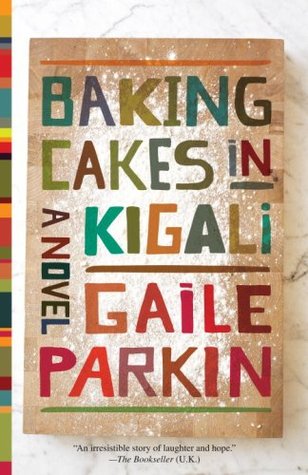
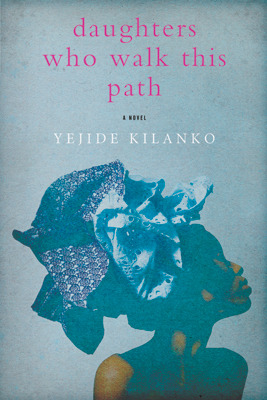
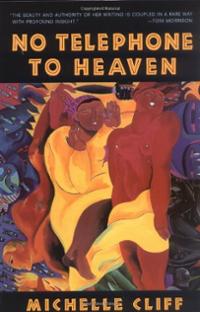
  • I had to choose 4! I finally got a (signed) copy of Fine Boys this summer, as I mentioned in my 2015 Summer Book Haul post. Daughters Who Walk This Path, Baking Cakes in Kigali and No Telephone to Heaven have also been on my TBR for a while! I haven’t purchased any of them yet, so I don’t know when I’ll read them.

 A book you recently added to your TBR? 


A book on your TBR strictly because of its beautiful cover?

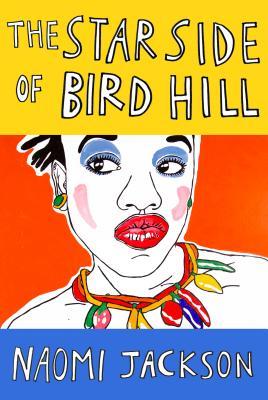
  • I chose 4 books. The book cover for Hiding in Plain Sight looks so beautiful in print if you ever see it, I promise! I love the art work for the Ivorian graphic novel series, Aya of Yop City and I hope to purchase the series in the future. The painting of Nnedi Okorafor’s cover for Kabu Kabu is truly a piece of art- look at those strokes! And of course, the sassy covergirl on Naomi Jackson’s The Star Side of Bird Hill cover is everything (and so me)!

A book on your TBR that you never plan on reading?

Mema

  • I randomly bought Mema by Daniel Mengara from my local bookstore last year. I thought it would be an interesting read, as the author is from Gabon- a country that’s more or less absent in the African Literature scene. But so far, I’ve found the first few pages of the book to be extremely dry. For all you know, this book will probably be quite amazing if I give it a chance, but I doubt I’ll ever read Mema anytime soon. Sorry, not sorry!


An unpublished book on your TBR that you’re excited for?


A book on your TBR that everyone recommends to you?

Frantz Fanon


A book on your TBR that everyone has read but you?


A book on your TBR that you’re dying to read?


How many books are in your Goodreads TBR shelf?

  • I have 97 books in my Goodreads TBR shelf. But on my bookshelf at home, I have about 50 books I haven’t read yet. But who is counting? No pressure here!

This was a cool stress-reliever post for me! Thanks Zezee for including me in on the fun.

I tag:

and whoever else reads this post. Join in on the fun, you might spot new book recommendations!

We Need New Names by NoViolet Bulawayo

Date Read: June 28th 2015

Published: June 2013

Publisher: Chatto & Windus

Pages: 290

68.Noviolet-Bulawayo-We-Need-New-Names

 The Blurb

Darling and her friends live in a shanty called Paradise – which of course is no such thing. It isn’t all bad, though. There’s mischief and adventure, games of Find bin Laden, stealing guavas, singing Lady Gaga at the tops of their voices.

They dream of the paradises of America, Dubai, Europe, where Madonna and Barack Obama and David Beckham live. For Darling, that dream will come true. But, like the thousands of people all over the world trying to forge new lives far from home, Darling finds this new paradise brings its own set of challenges – for her and also for those she’s left behind.

◊◊

Review – ★★ (2 stars)

NoViolet Bulawayo’s short story, “Hitting Budapest” rightly won the Caine Prize in 2011 and this story is actually the first chapter of her novel, We Need New Names. I remember back in 2013, We Need New Names was very popular but I was obsessed with Adichie’s Americanah so I was in no rush to indulge in Bulawayo’s book at the time. Also, some friends who read the book told me that We Need New Names was boring, and now I understand where they were coming from.

We Need New Names is a coming-of-age story about a ten year old Zimbabwean girl named Darling and her life in the shanty town, ironically called Paradise; as well as her life in the USA after she escapes political violence to reside with her aunt Fostalina, in Michigan. Readers are introduced to Darling’s friends who also live in Paradise: Chipo (an eleven year old who is pregnant with her grandfather’s child), Sbho, Stina, Bastard and Godknows. It was quite heartbreaking to read on how Darling and her friends searched for guavas to satisfy their perpetual hunger. On the other hand, it was humorous to witness Darling and her friends argue and quarrel over trivial matters as they embarked on their adventures and games.

But to be honest, after the third chapter I was tired of the shanty life storyline. There seemed to be no plot in this novel and I was struggling to enjoy the story. I started to enjoy We Need New Names more once Darling moved to Michigan (which happens after page 150). But some stuff Darling was getting into after she moved to the U.S was absurd to me, for example, her keen interest in watching pornography with her friends. That part of the book was awkward and probably unnecessary…

Towards the end of the book, I was sick of the plethora of stereotypes NoViolet Bulawayo dumped onto the pages. In Zimbabwe, all the people and the living conditions in the shanty town were heavily stereotyped. The poverty-porn in this book is so blatant it almost seems intentional. I know poverty and the gap between the rich and the poor is terribly wide in Zimbabwe, but the lack of a solid plot in this book made it hard to ignore the excessiveness of the sad living conditions. All the people Darling encountered in Michigan were stereotyped too – especially Mr. Eliot’s (her aunt’s former employer) daughter who just had to be white, rich, spoiled, in an Ivy League school, had an eating disorder (bulimia), was depressed and had a cute dog that donned designer-dog fashions. Why did the people Darling encounter have to be tagged with all the stereotypes associated with their race, sexual orientation, nationality?

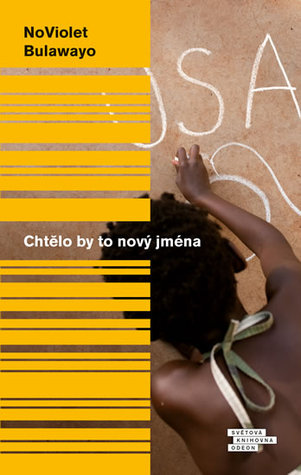
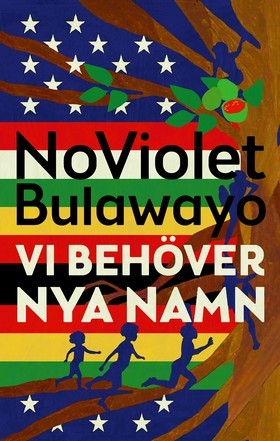
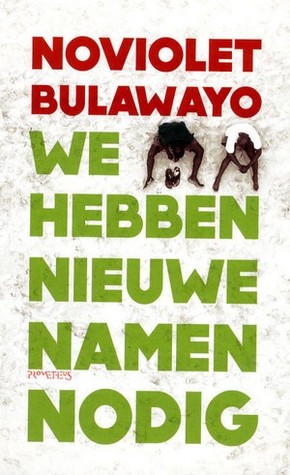
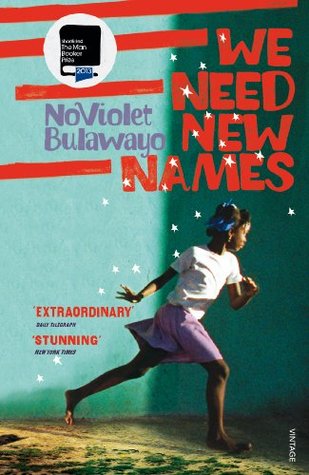
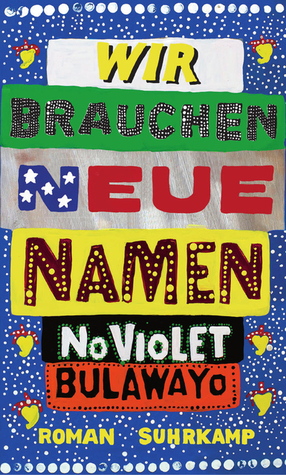
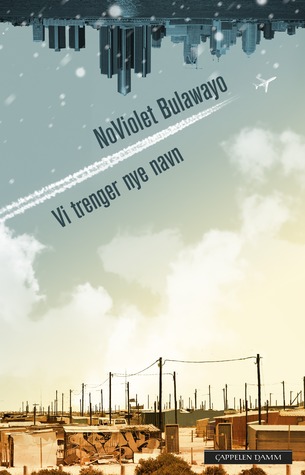
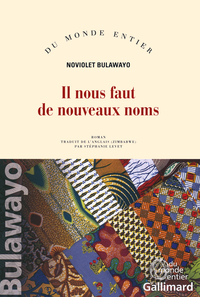
We Need New Names has been translated into many languages! Check out the book covers below.

My favorite chapter is entitled, ‘How They Lived,’ where NoViolet Bulawayo speaks generally on the African immigrant experience in the West. It seemed pretty spot-on and I enjoyed the commentary on the struggles Africans face in raising their kids abroad, naming their kids, sending money back to family in Africa, assimilating etc.

I have a feeling this book was nominated for several awards because this is what the West loves – to read a story on African struggles with excessive stereotypes (this is just MY opinion!). Don’t get me wrong, there is a uniqueness to this book, especially in the writing style. I wouldn’t say this was written ‘beautifully’ as everyone claims, but it is surely unique.

I commend NoViolet Bulawayo for using her native language (I’m assuming it’s Shona) in many parts of the book. Words in Shona and native slang are not italicized or defined at the back of the book – readers have to decipher on their own what ‘kaka’, ‘tikoloshe’ and other native Zimbabwean (slang) words mean, and I love that. I also enjoyed how Darling’s english changed from her time in Zimbabwe to her stay in the U.S. Since Darling is the narrator of this story, the diction in the book gradually changes from broken Zimbabwean-English to ‘Standard’ English, as Darling starts to sound more ‘American’ in her speech. It was amusing (even though I was cringing) to read on how Darling would practice her American accent by imitating the pronunciation of words from the television shows she watched. Other than that, this book was a struggle for me to get into and I found myself rolling my eyes a lot! If I wasn’t buddy-reading this with a friend, I would have given up after the first 30 pages.

Other African literature book bloggers loved this book! Mary of Mary Okeke Reads and Osondu of Incessant Scribble enjoyed We Need New Names. Check out their reviews to get more positive perspectives on this novel.

This was not my cup of tea, but it might be yours! Give it a try if you don’t have anything else to read.

★★ (2 stars) – Thumbs down.

Purchase We Need New Names from Amazon

Challenge Update (summer); Currently Reading

Hey everyone!

Summer is basically over (this year, the first day of Fall is Wednesday – September 23rd) and real life is back in full effect :(. In my last challenge update I stated that I planned on reading at least 15 books this year. As the summer rolled along I realized that I would surpass this goal, so I challenged myself to read 20 books this year…. and I ended up surpassing that as well! During the summer I read 9 books; some were light reads, others were more on the heavy side. I enjoyed most of my summer reads to the point where my reading-tank is quite full… and I may be experiencing a reading slump!

Books I read during the summer: 

May 23rd 2015: The Misadventures of Awkward Black Girl by Issa Rae

June 4th 2015: The Fishermen by Chigozie Obioma

June 10th 2015: The Color Purple by Alice Walker

June 28th 2015: We Need New Names by NoViolet Bulawayo

July 8th 2015: Krik? Krak! by Edwidge Danticat

July 12th 2015: Things Fall Apart by Chinua Achebe (re-read)

July 22nd 2015: Pig Tails ‘n Breadfruit by Austin Clarke

August 5th 2015: The Twelve Tribes of Hattie by Ayana Mathis

Aug 11th 2015: Matigari by Ngugi wa Thiong’o

Reviews for the rest of the books will be posted as the months go by!

Interpreterofmaladiescover

I’m slowly reading my 22nd book of the year – Interpreter of Maladies by Indian-American author, Jhumpa Lahiri. I’m a mood-reader so I’m currently in the mood to enjoy a non-African literature novel this month, and so far, I like Lahiri’s work! I’m quite behind on the Lahiri bandwagon, but oh well! I recently found her books (Interpreter of Maladies and The Namesake) at a used bookshop in Accra called Ghana Book Trust. There were so many gems in that bookshop and I ended up buying 15 books! Majority of the books I purchased are from my favorite genres (African Lit, African-American/ Black Lit, Caribbean Lit) and are classics. They were cheap too – 3 Ghana cedis (GHC) per book! Check them out below:


IMG_1492

[Books not shown in the picture above that I also bought are: The Namesake by Jhumpa Lahiri, To Be Young, Gifted and Black by Lorraine Hansberry and When I was Puerto Rican by Esmeralda Santiago]

Lots of good books added to my bookshelf :). Have you read any of them?

What books did you enjoy during the Summer? What are you currently reading? Please do share!