The Twelve Tribes of Hattie by Ayana Mathis

Date Read: August 5th 2015

Published: 2013

Publisher: Hutchinson

Pages: 241

ayana mathis

The Blurb

A debut of extraordinary distinction: Ayana Mathis tells the story of the children of the Great Migration through the trials of one unforgettable family.

In 1923, fifteen-year-old Hattie Shepherd flees Georgia and settles in Philadelphia, hoping for a chance at a better life. Instead, she marries a man who will bring her nothing but disappointment and watches helplessly as her firstborn twins succumb to an illness a few pennies could have prevented. Hattie gives birth to nine more children whom she raises with grit and mettle and not an ounce of the tenderness they crave. She vows to prepare them for the calamitous difficulty they are sure to face in their later lives, to meet a world that will not love them, a world that will not be kind. Captured here in twelve luminous narrative threads, their lives tell the story of a motherโ€™s monumental courage and the journey of a nation.

Beautiful and devastating, Ayana Mathisโ€™s The Twelve Tribes of Hattie is wondrous from first to lastโ€”glorious, harrowing, unexpectedly uplifting, and blazing with life. An emotionally transfixing page-turner, a searing portrait of striving in the face of insurmountable adversity, an indelible encounter with the resilience of the human spirit and the driving force of the American dream, Mathisโ€™s first novel heralds the arrival of a major new voice in contemporary fiction.

โ—Šโ—Šย 

Review โ€“ โ˜…โ˜…โ˜…โ˜…โ˜… (5 stars)

I randomly bought The Twelve Tribes of Hattie (the UK edition) in 2014 from my local bookstore. I didn’t even plan on reading the book this year, but it was smiling at me from my bookshelf, so I finally decided to pick it up!

Hattie, a โ€˜high yellowโ€™ girl from Georgia escapes Jim Crow to Philadelphia with her mother and sisters in hope of a better life in the North. Hattie and her forbidden boyfriend, August Shepherd (also a Georgia native) get married and she gives birth to twins โ€“ Philadelphia and Jubilee at the age of seventeen. Due to the harsh winter in Philadelphia and poor living conditions, Hattieโ€™s twins catch pneumonia and eventually die, only three months after their birth. The death of the twins, Augustโ€™s poor paying job and Hattieโ€™s helplessness up North taint her soul and morph her into a cold, resentful, miserable woman. Despite their strained relationship (as a result of infidelity from both parties), Hattie and August have nine children over the years. This book follows the Shepherds โ€“ Hattie, her children and grandchild from 1948 to the 1980โ€™s.

The Twelve Tribes of Hattie was a wonderful page-turner! I honestly do not have any issues with this book because it was simply an excellent read. I read each chapter as a short story, since each chapter focused on one of Hattie’s nine children, intertwined with Hattie and her husband August’s history. Each chapter had its own twists and turns as readers got acquainted with Hattieโ€™s children and whatever issues they faced in their lives.

I loved that all of Hattie’s children had diverse lives and they all faced real joys and pain: Floyd dealt with conflicting homosexual desires; Six found solace in religion and preaching; Billups was molested as a child; Franklin was a soldier in Vietnam and battled with alcoholism; Alice was a controlling middle-class housewife who was perpetually on tranquilizing medication (given to her by her doctor husband); Ruthie may or may not be August’s daughter; Baby Ella was reluctantly sent to live with Hattie’s barren sister in Georgia as Hattie was struggling to make ends meet; Bell was self-destructive โ€“ mentally and physically and Cassie was schizophrenic. Cassieโ€™s daughter, Sala (Hattie’s granddaughter) is the last one of Hattieโ€™s brood and readers witness her desires to become a born-again Christian, at the tender age of 10. Hattieโ€™s demeanor definitely played an important role in the future of her children’s lives. Yes, Hattie may seem to be an unlovable, stern, sometimes cold woman – but I understood her character.

One thing I found intriguing was that Hattie and her children were described to be โ€˜the color of the inside of an almondโ€™, which suggests that they were a light-skinned, black family in Philadelphia. August was described as the color of cinnamon – which is obviously darker than the color of the inside of an almond. Clearly, Jim Crow did not discriminate – whether you were dark or light-skinned, all black people faced discrimination and endured hardships; readers ultimately witness this in the lives of all the characters.

Some readers of this novel feel that Mathisโ€™s development of the characters was brief and that there is little or no interaction between the children in the various chapters. This was not a problem for me. As I mentioned before, I read each chapter as a short story and was content with Mathisโ€™s depiction of all the characters โ€“ they all felt very real! Apparently, new writer – Angela Flournoyโ€™s 2015 debut novel, The Turner House (which is a recent finalist for the 2015 National Book Award – winner will be announced tomorrow!) is a similar, โ€˜betterโ€™ historic novel compared to The Twelve Tribes of Hattie. I havenโ€™t read Flournoyโ€™s novel yet, but I finished The Twelve Tribes of Hattie feeling satisfied. Be prepared for a long, powerful ride.

NoteThe Twelve Tribes of Hattie is adult fiction. Ideally, readers should be 18 years and older to indulge.

โ˜…โ˜…โ˜…โ˜…โ˜… (5 stars) โ€“ Amazing book, I loved it. Absolutely recommend!

IMG_1403

Purchase The Twelve Tribes of Hattie on Amazon

Classics: Things Fall Apart by Chinua Achebe & Matigari by Ngลซgฤซ wa Thiongโ€™o

Hey everyone! Below are mini reviews of two classics written by two, brilliant, African literature pioneer writers. I enjoyed these books over the summer ๐Ÿ™‚

Things Fall Apart by Chinua Achebe

Date re-Read: July 12th 2015 (previously read in 2007)

Published: January 2010 (originally published in 1958)

Publisher: Penguin Books

Pages: 152

Things Fall Apart

The Blurb

Things Fall Apart tells two intertwining stories, both centering on Okonkwo, a โ€œstrong manโ€ of an Ibo village in Nigeria. The first, a powerful fable of the immemorial conflict between the individual and society, traces Okonkwoโ€™s fall from grace with the tribal world. The second, as modern as the first is ancient, concerns the clash of cultures and the destruction of Okonkwo’s world with the arrival of aggressive European missionaries. These perfectly harmonized twin dramas are informed by an awareness capable of encompassing at once the life of nature, human history, and the mysterious compulsions of the soul.

โ—Šโ—Š

Review โ€“โ˜…โ˜…โ˜…โ˜… (4 stars)

What more can I say about this book? Everyone and their grandparents have read this classic. Most readers hated Okonkwo โ€“ the main character, for valid reasons. Who would have thought this true-blooded chauvinist would ultimately take his own life? Killing yourself is a cowardly, weak move, no? Despite Okonkwoโ€™s brashness and overt disdain for females and all things ‘womanly’, I understood him, so I appreciated him.

It’s hard not to resent the British colonizers for the damage they caused Africa in the past. The British came with full force, masked in Christianity and denied natives of the African continent control over their own land. Change is never easy, but I guess sometimes itโ€™s necessary? Many harmful indigenous practices which were revered prior colonization have been abolished for example – the killing of twins and thankfully, many other practices that were tagged with superstitious beliefs. Things Fall Apart gives readers a lot to think about: gender inequality, superstition, tradition versus modernity, masculinity versus femininity etc. Iโ€™m glad I re-read this during the summer. It was refreshing to reconnect with this masterpiece that Achebe wrote back in 1958. Things Fall Apart will always be a solid 4.5 stars for me.

โ˜…โ˜…โ˜…โ˜… (4 stars) โ€“ Great book. Highly recommend!

Purchase Things Fall Apart from Amazon

IMG_1057

Matigari by Ngลซgฤซ wa Thiongโ€™o

Date Read: August 11th 2015

Published: June 1989 (originally published in 1986)

Publisher: Heinemann (African Writers Series)

Pages: 175

Matigari

The Blurb

Who is Matigari? Is he young or old; a man or fate; dead or living… or even a resurrection of Jesus Christ? These are the questions asked by the people of this unnamed country, when a man who has survived the war for independence emerges from the mountains and starts making strange claims and demands.

Matigari is in search of his family, to rebuild his home and start a new and peaceful future, but his search becomes a quest for truth and justice as he finds the people still dispossessed and the land he loves ruled by corruption, fear and misery. Rumors spring up that a man with superhuman qualities has risen to renew the freedom struggle. The novel races towards its climax as Matigari realizes that words alone cannot defeat the enemy. He vows to use the force of arms to achieve his true liberation.

Lyrical and hilarious in turn, Matigari is a memorable satire on the betrayal of human ideals and on the bitter experience of post-independence African society.

โ—Šโ—Š

Review – โ˜…โ˜…โ˜…โ˜… (4 stars)

Matigari is the ultimate African post-colonial, social justice novel. And of course, Ngลซgฤซ wa Thiong’o executes the storyline brilliantly with the strength and courage of character,  Matigari ma Njiruungi – a patriot who goes to great lengths to ensure there is justice for the oppressed in a (fictitious) nation. Matigari ensures there is justice for the oppressed with the help of an orphan and a former prostitute and readers follow this team on their brave, almost rebellious journey to peace and justice. Matigari is a satirical novel. Ngลซgฤซ wa Thiong’o uses some elements of magical realism and lots of Christian allegory which are very symbolic in this novel.

But I don’t think this book is for everyone. It can be quite dry and may be too ‘political’ for some readers. Matigari was not a fast/easy read for me: I started reading it in May and finished it in August. But if you appreciate African oral literature and post-colonial literary works – read this! It is indeed powerful.

Favorite quotes:

โ€œThe true seeker of truth never loses hope. The true seeker of real justice never tires. A farmer does not stop planting seeds just because of the failure of one crop. Success is born of trying and trying again. Truth must seek justice. Justice must seek the truth. When justice triumphs, truth will reign on earthโ€ pg. 84 [one of Matigariโ€™s many meditations].

โ€œPregnancies are the result of the evil and wild desires. I shall ask the government to ban dreams and desires of that kind for a period of about two years. Fucking among the poor should be stopped by a presidential decree!โ€ (HILARIOUS!) pg. 120 [said a member of parliament – a typical man in power, guilty of squandering government money].

โ˜…โ˜…โ˜…โ˜… (4 stars) โ€“ Great book. Highly recommend!

Purchase Matigari from Amazon
TBR Book Tag!

Hey everyone. The lovely Zezee of book blog Zee With Books tagged me to participate in the TBR (to-be-read) tag. Below are my responses to the questions, enjoy!

How do you keep track of your TBR pile?

  • Goodreads has been quite helpful in keeping track of the books on my TBR. But some books on my bookshelf need to be read too. So just the sight of those books remind me of their existence.

Is your TBR mostly print or e-book?

  • PRINT! I prefer physical books. I like to believe I’m building a collection (for the next generation to enjoy as well). Plus, just seeing my (physical) books on the bookshelf makes me proud for some reason! Buying books is an investment and I like to make references to the books from time to time. I have a few e-books, but they usually aren’t books I’m truly passionate about OR they are not available in physical copy yet.

How do you determine which book from your TBR to read next?

  • It depends on my mood and what is available to me at the time. Most of the books on my TBR on Goodreads haven’t even been purchased yet and some probably won’t ever be haha. I read whatever my heart/mood desires at the time and pick it off my bookshelf; it is random.


A book that has been on your TBR the longest?

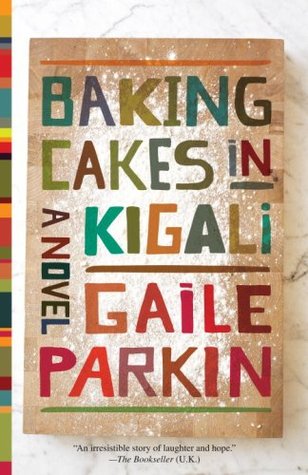
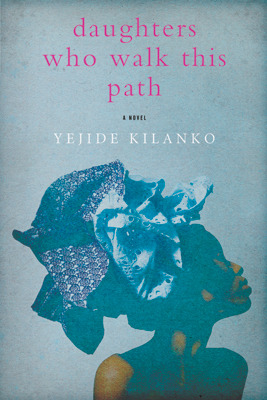
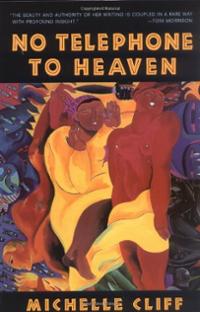
  • I had to choose 4! I finally got a (signed) copy of Fine Boys this summer, as I mentioned in my 2015 Summer Book Haul post. Daughters Who Walk This Path, Baking Cakes in Kigali and No Telephone to Heaven have also been on my TBR for a while! I haven’t purchased any of them yet, so I don’t know when I’ll read them.

 A book you recently added to your TBR? 


A book on your TBR strictly because of its beautiful cover?

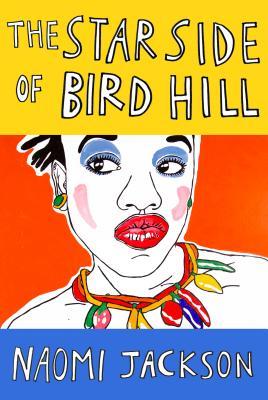
  • I chose 4 books. The book cover for Hiding in Plain Sight looks so beautiful in print if you ever see it, I promise! I love the art work for the Ivorian graphic novel series, Aya of Yop City and I hope to purchase the series in the future. The painting of Nnedi Okorafor’s cover for Kabu Kabu is truly a piece of art- look at those strokes! And of course, the sassy covergirl on Naomi Jackson’s The Star Side of Bird Hill cover is everything (and so me)!

A book on your TBR that you never plan on reading?

Mema

  • I randomly bought Mema by Daniel Mengara from my local bookstore last year. I thought it would be an interesting read, as the author is from Gabon- a country that’s more or less absent in the African Literature scene. But so far, I’ve found the first few pages of the book to be extremely dry. For all you know, this book will probably be quite amazing if I give it a chance, but I doubt I’ll ever read Mema anytime soon. Sorry, not sorry!


An unpublished book on your TBR that you’re excited for?


A book on your TBR that everyone recommends to you?

Frantz Fanon


A book on your TBR that everyone has read but you?


A book on your TBR that you’re dying to read?


How many books are in your Goodreads TBR shelf?

  • I have 97 books in my Goodreads TBR shelf. But on my bookshelf at home, I have about 50 books I haven’t read yet. But who is counting? No pressure here!

This was a cool stress-reliever post for me! Thanks Zezee for including me in on the fun.

I tag:

and whoever else reads this post. Join in on the fun, you might spot new book recommendations!

We Need New Names by NoViolet Bulawayo

Date Read: June 28th 2015

Published: June 2013

Publisher: Chatto & Windus

Pages: 290

68.Noviolet-Bulawayo-We-Need-New-Names

ย The Blurb

Darling and her friends live in a shanty called Paradise โ€“ which of course is no such thing. It isnโ€™t all bad, though. Thereโ€™s mischief and adventure, games of Find bin Laden, stealing guavas, singing Lady Gaga at the tops of their voices.

They dream of the paradises of America, Dubai, Europe, where Madonna and Barack Obama and David Beckham live. For Darling, that dream will come true. But, like the thousands of people all over the world trying to forge new lives far from home, Darling finds this new paradise brings its own set of challenges โ€“ for her and also for those sheโ€™s left behind.

โ—Šโ—Š

Review โ€“ โ˜…โ˜… (2 stars)

NoViolet Bulawayoโ€™s short story, โ€œHitting Budapestโ€ rightly won the Caine Prize in 2011 and this story is actually the first chapter of her novel, We Need New Names. I remember back in 2013, We Need New Names was very popular but I was obsessed with Adichieโ€™s Americanah so I was in no rush to indulge in Bulawayo’s book at the time. Also, some friends who read the book told me that We Need New Names was boring, and now I understand where they were coming from.

We Need New Names is a coming-of-age story about a ten year old Zimbabwean girl named Darling and her life in the shanty town, ironically called Paradise; as well as her life in the USA after she escapes political violence to reside with her aunt Fostalina, in Michigan. Readers are introduced to Darling’s friends who also live in Paradise: Chipo (an eleven year old who is pregnant with her grandfather’s child), Sbho, Stina, Bastard and Godknows. It was quite heartbreaking to read on how Darling and her friends searched for guavas to satisfy their perpetual hunger. On the other hand, it was humorous to witness Darling and her friends argue and quarrel over trivial matters as they embarked on their adventures and games.

But to be honest, after the third chapter I was tired of the shanty life storyline. There seemed to be no plot in this novel and I was struggling to enjoy the story. I started to enjoy We Need New Names more once Darling moved to Michigan (which happens after page 150). But some stuff Darling was getting into after she moved to the U.S was absurd to me, for example, her keen interest in watching pornography with her friends. That part of the book was awkward and probably unnecessary…

Towards the end of the book, I was sick of the plethora of stereotypes NoViolet Bulawayo dumped onto the pages. In Zimbabwe, all the people and the living conditions in the shanty town were heavily stereotyped. The poverty-porn in this book is so blatant it almost seems intentional. I know poverty and the gap between the rich and the poor is terribly wide in Zimbabwe, but the lack of a solid plot in this book made it hard to ignore the excessiveness of the sad living conditions. All the people Darling encountered in Michigan were stereotyped too – especially Mr. Eliot’s (her aunt’s former employer) daughter who just had to be white, rich, spoiled, in an Ivy League school, had an eating disorder (bulimia), was depressed and had a cute dog that donned designer-dog fashions. Why did the people Darling encounter have to be tagged with all the stereotypes associated with their race, sexual orientation, nationality?

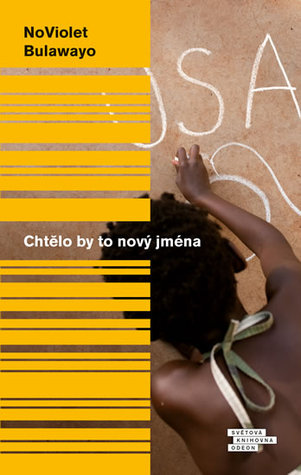
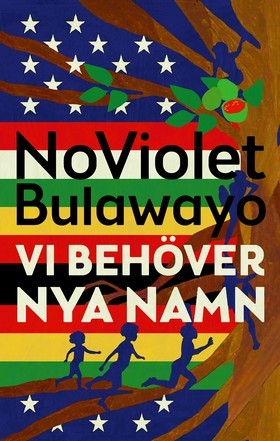
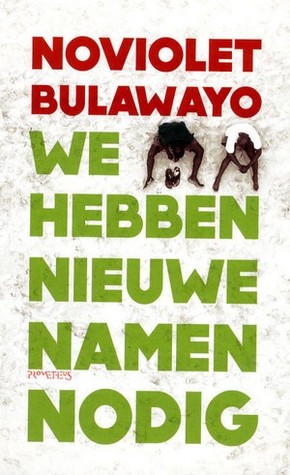
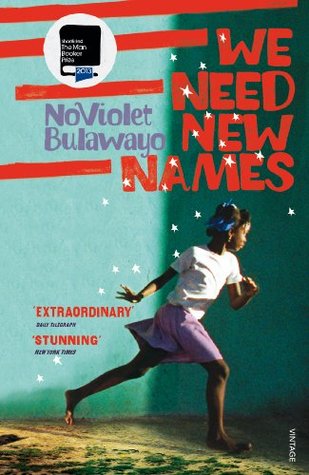
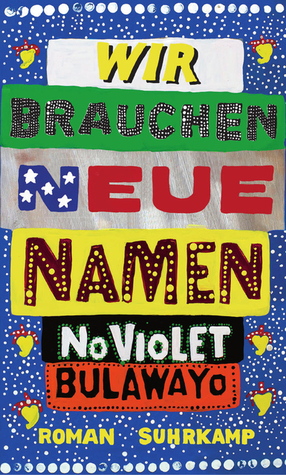
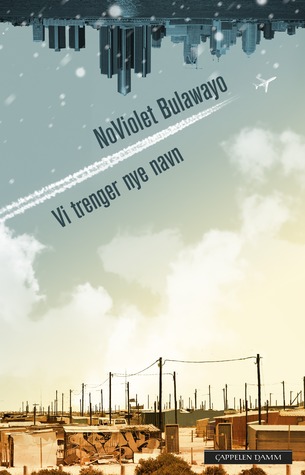
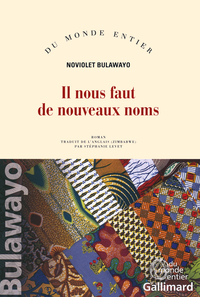
We Need New Names has been translated into many languages! Check out the book covers below.

My favorite chapter is entitled, ‘How They Lived,’ where NoViolet Bulawayo speaks generally on the African immigrant experience in the West. It seemed pretty spot-on and I enjoyed the commentary on the struggles Africans face in raising their kids abroad, naming their kids, sending money back to family in Africa, assimilating etc.

I have a feeling this book was nominated for several awards because this is what the West loves – to read a story on African struggles with excessive stereotypes (this is just MY opinion!). Don’t get me wrong, there is a uniqueness to this book, especially in the writing style. I wouldn’t say this was written ‘beautifully’ as everyone claims, but it is surely unique.

I commend NoViolet Bulawayo for using her native language (I’m assuming it’s Shona) in many parts of the book. Words in Shona and native slang are not italicized or defined at the back of the book – readers have to decipher on their own what ‘kaka’, ‘tikoloshe’ and other native Zimbabwean (slang) words mean, and I love that. I also enjoyed how Darling’s english changed from her time in Zimbabwe to her stay in the U.S. Since Darling is the narrator of this story, the diction in the book gradually changes from broken Zimbabwean-English to ‘Standard’ English, as Darling starts to sound more ‘American’ in her speech. It was amusing (even though I was cringing) to read on how Darling would practice her American accent by imitating the pronunciation of words from the television shows she watched. Other than that, this book was a struggle for me to get into and I found myself rolling my eyes a lot! If I wasn’t buddy-reading this with a friend, I would have given up after the first 30 pages.

Other African literature book bloggers loved this book! Mary of Mary Okeke Reads and Osondu of Incessant Scribble enjoyed We Need New Names. Check out their reviews to get more positive perspectives on this novel.

This was not my cup of tea, but it might be yours! Give it a try if you donโ€™t have anything else to read.

โ˜…โ˜… (2 stars) โ€“ Thumbs down.

Purchase We Need New Names from Amazon

Challenge Update (summer); Currently Reading

Hey everyone!

Summer is basically over (this year, the first day of Fall is Wednesday – September 23rd) and real life is back in full effect :(. In myย last challenge update I stated that I planned on reading at least 15 books this year. As the summer rolled along I realized that I would surpass this goal, so I challenged myself to read 20 books this year…. and I ended up surpassing that as well! During the summer I read 9 books; some were light reads, others were more on the heavy side. I enjoyed most of my summer reads to the point where my reading-tank is quite full… and I may be experiencing a reading slump!

Books I read during the summer:ย 

May 23rd 2015: The Misadventures of Awkward Black Girl by Issa Rae

June 4th 2015: The Fishermen by Chigozie Obioma

June 10th 2015: The Color Purple by Alice Walker

June 28th 2015: We Need New Names by NoViolet Bulawayo

July 8th 2015: Krik? Krak! by Edwidge Danticat

July 12th 2015:ย Things Fall Apart by Chinua Achebe (re-read)

July 22nd 2015:ย Pig Tails ‘n Breadfruit by Austin Clarke

August 5th 2015: The Twelve Tribes of Hattie by Ayana Mathis

Aug 11th 2015: Matigari by Ngugi wa Thiong’o

Reviews for the rest of the books will be posted as the months go by!

Interpreterofmaladiescover

I’m slowly reading my 22nd book of the year –ย Interpreter of Maladies by Indian-American author, Jhumpa Lahiri. I’m aย mood-reader so I’m currently in the mood to enjoy a non-African literature novel this month, and so far, I like Lahiri’s work! I’m quite behind on the Lahiri bandwagon, but oh well! I recently found her books (Interpreter of Maladies and The Namesake) at a used bookshop in Accra called Ghana Book Trust. There were so many gems in that bookshop and I ended up buying 15 books! Majority of the books I purchasedย are from my favorite genres (African Lit, African-American/ Black Lit, Caribbean Lit) and are classics. They were cheap too – 3 Ghana cedis (GHC) per book! Check them out below:


IMG_1492

[Books not shown in the picture above that I also bought are: The Namesake by Jhumpa Lahiri, To Beย Young, Gifted and Black by Lorraine Hansberry and When I was Puerto Rican by Esmeralda Santiago]

Lots of good books added to my bookshelf :). Have you read any of them?

What books did you enjoy during the Summer? What are you currently reading? Please do share!

Beasts of No Nation by Uzodinma Iweala… the film?

Yes, yes, yes! Uzodinma Iweala’s debut novel, Beasts of No Nation: A Novel (2005)ย is being adapted for the big screenย and will be showing in select theaters (in the U.S) and available worldwide on Netflix next month – October 16th 2015!ย Beasts of No Nation: A novelย (which is a title adopted from Fela Kuti’s 1989 album) was released 10 years ago, but the haunting novel is still on the minds of readers who’ve enjoyed the book! Have you read Beasts of No Nation: A novelย yet?
Beasts of No Nationย 

Check out the synopsis:ย 

In this stunning debut novel, Agu, a young boy in an unnamed West African nation, is recruited into a unit of guerrilla fighters as civil war engulfs his country. Haunted by his father’s own death at the hands of militants, Agu is vulnerable to the dangerous yet paternal nature of his new commander. While the war rages on, Agu becomes increasingly divorced from the life he had known before the conflict startedโ€”a life of school friends, church services, and time with his family still intact.

In a powerful, strikingly original voice that vividly captures Agu’s youth and confusion, Uzodinma Iweala has produced a harrowing, inventive, and deeply affecting novel.

Beasts of No Nation: A Novel has been required reading for a Political Science class: African Politics (PSCI 0202) at my alma mater, Middlebury College. I never registered for that class butย I decided to start reading the book on my own back in 2011, and never finished it as I was busyย with finals at the time. When I was theย President of the African Students’ Association at Middlebury – UMOJA, we invited Iweala to our ‘Touch of Africa Week’ where he gave an enlightening talk on “What, Who is an ‘Authentic’ African?” After the talk weย discussed his novel Beasts of No Nation, African identityย and other topics pertaining to our beloved continent over dinner at a professor’s house. Check out the (grainy) pictures below:


I’m excited and proud of Uzo! It must beย every author’s dream to haveย their novel made into a film – it’s a big deal! I’m still fascinated at Iweala’s ability to embody the sentiments of a child soldier in the novel, since his background of being a Harvard graduate seems far from the unfortunate struggle of being a child victim of civil war. That takes real talent and a vivid imagination! I will definitely finish reading Beasts of No Nation: A Novel before I watch the film. Films don’t usually capture the essence of the books they are based on. However, I’m confidentย this film adaptation will do Beasts of No Nation: A Novelย justice. The film is set in the Eastern Region of Ghana and is directed by Emmy Award winnerย Cary Fukunaga.ย Golden Globe Award winning actor, Idris Elba plays the main warlord in the film and the talented Ghanaian actress,ย Ama K. Abebrese plays the child soldier – Agu’s mother. With all that talent in one film, I have faith that it will be superb!

Check out the trailer for the film below:

BeastsOfNoNationPoster1 BeastsOfNoNationPoster2

Purchase Beasts of No Nation: A Novel onย Amazon

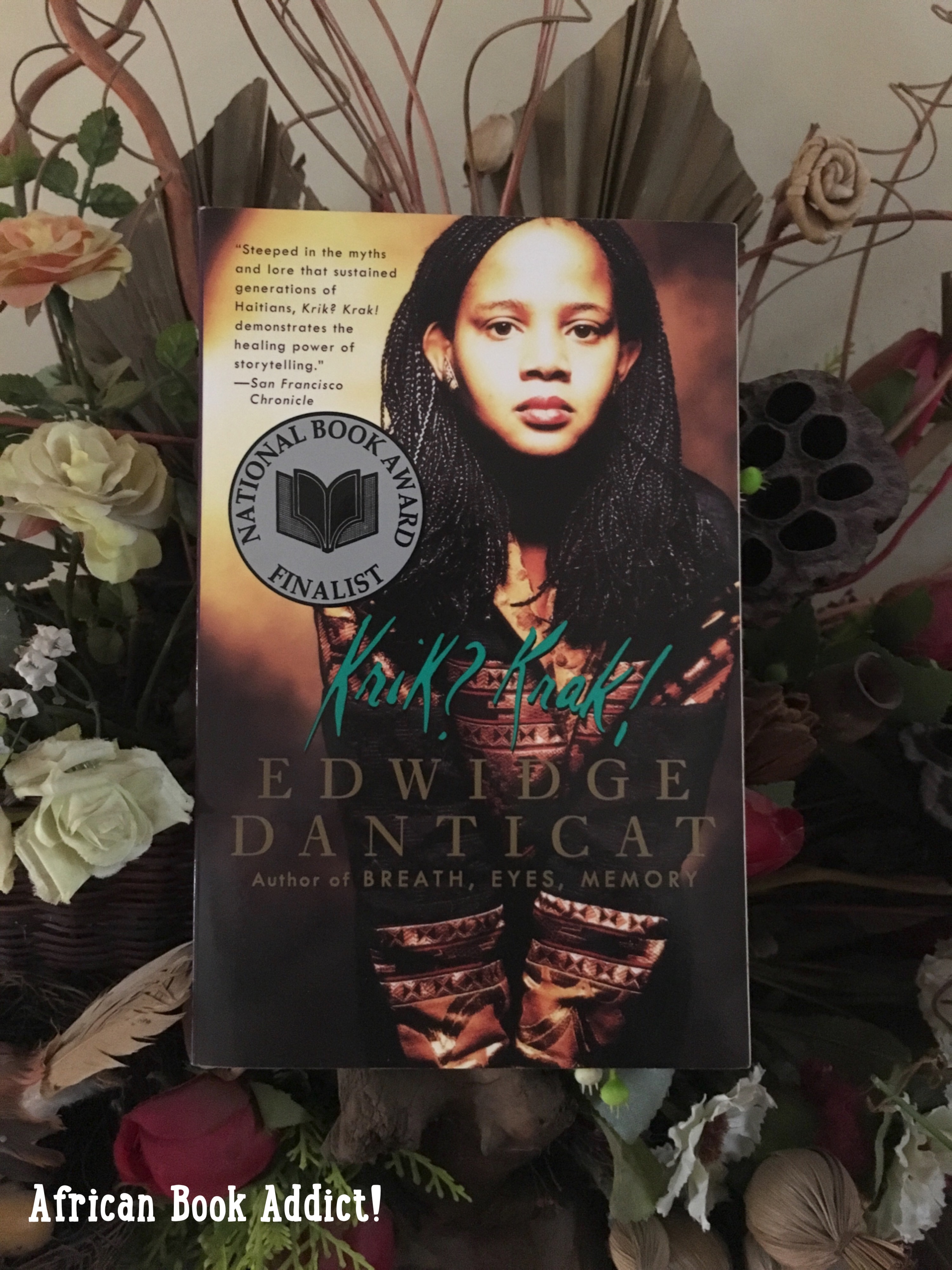
Krik? Krak! by Edwidge Danticat

Date Read: July 8th 2015

Published: 1996

Publisher: Vintage Books

Pages: 224

Edwidge Danticat

The Blurb

At an astonishingly young age, Edwidge Danticat has become one of our most celebrated new writers. She is an artist who evokes the wonder, terror, and heartache of her native Haiti โ€“ and the enduring strength of Haitiโ€™s women โ€“ with a vibrant imagery and narrative grace that bear witness to her peopleโ€™s suffereing and courage.

When Haitians tell a story, they say “Krik?” and the eager listeners answer “Krak!” In Krik? Krak!ย Danticat establishes herself as the latest heir to that narrative tradition with nine stories that encompass both the cruelties and the high ideals of Haitian life. They tell of women who continue loving behind prison walls and in the face of unfathomable loss; of a people who resist the brutality of their rulers through the powers of imagination. The result is a collection that outrages, saddens, and transports the reader with its sheer beauty.

โ—Šโ—Š

Review โ€“  โ˜…โ˜…โ˜…โ˜… (4 stars)

Reading Krik? Krak! was a pleasant experience! It was the perfect summer read, especially since most of the short stories in this collection take place in Haiti – the island with the indigo blue skies and the sandy beaches. It is very evident that Danticat wrote this collection from her heart and I felt her love for the island in every story. All nine stories have a calm nature to them and they read smoothly. These stories were truly engaging and I loved that they all seemed interconnected with one another and had some sort of realistic twist. Danticatโ€™s effortless talent in storytelling is wonderfully showcased in this collection and my favorite stories were:

Between the Pool and the Gardenias – This was a crazy story! A housemaid finds and keeps an abandoned baby and decides to name the baby, Rose. After a couple of days, she realizes that the baby is emitting a strong stenchโ€ฆbecause it is dead and rotting! This story startled me and I loved it.

The Missing Peace – This is a story about a precocious, brave, fourteen year old named ‘Lamort’ by her grandmother (‘Lamort’ means ‘death’ โ€“ because after she was born, her mother died. Quite eerie). I love how Lamort finds her own voice by the end of this story, grรขce ร  her forbidden friendship with an American journalist who visits the island.

Caroline’s Wedding – This was an interesting tale of a Haitian family residing in New York City. The adult daughters in this family โ€“ Gracina and Caroline, live with their widowed mother. Their mother is very bitter that her last child – Caroline (who was born without her left forearm) is marrying a Bahamian and not a Haitian. Meanwhile, as Gracina tries to placate her motherโ€™s resentment, she learns more about her parentsโ€™ marriage and starts to have strange dreams about her deceased father.

Epilogue: Women Like Us – This piece was a solid conclusion to the collection of stories. I’m assuming this was a true account on the struggles Danticat experienced in convincing her family of her desire to become a writer instead of the stereotypical housewife or cook most women in her family pride themselves and aspire to.

I learned a great deal about Haiti from this collection and Danticat expertly highlights the hardships Haiti has faced and how these trials have affected its citizens. I’m actually still researching things from the book to learn more, for example: the coup d’etats Haiti faced in 1988 and 1991, Papa Doc Duvalier (Haiti’s ex-president – Franรงois Duvalier) and his role in Haiti’s development etc. Krik? Krak! was an enlightening read from the diaspora and I will definitely be reading more of Danticat’s work soon. Edwidge Danticat’s books have been on my to-read list for a while now and I must say, fellow book blogger – Shannon from Reading Has Purpose (check out her book blog!), made me even more eager to indulge in Danticat’s work, as she is a huge fan and speaks highly of her novels! I think the next book I read by Danticat will be her first novel (1994), Eyes, Breath, Memory.

โ˜…โ˜…โ˜…โ˜… (4 stars) โ€“ Great book. Highly recommend!

Purchase Krik? Krak! from Amazon

The Misadventures of Awkward Black Girl by Issa Rae

Date Read: May 25th 2015

Published: January 2015

Publisher: 37 INK / ATRIA books

Pages: 204

Issa Rae

The Blurb

Being an introvert in a world that glorifies cool isnโ€™t easy. But when Issa Rae, the creator of the Shorty Award โ€“ winning hit series The Misadventures of Awkward Black Girl, is that introvert โ€“ whether sheโ€™s navigating love, the workplace, friendships, or โ€˜rappingโ€™ โ€“ It sure is entertaining. Now, in this debut collection written in her witty and self-deprecating voice, Rae covers everything from cyber-sexing in the early days of the Internet to deflecting unsolicited comments on weight gain, from navigating the perils of eating out alone and public displays of affection to learning to accept yourself โ€“ natural hair and all.

Reflective of the millennial experience yet wholly universal, The Misadventures of Awkward Black Girl is a book no one โ€“ awkward or cool, black, white (or other) โ€“ will want to miss.

โ—Šโ—Š

Review – โ˜…โ˜…โ˜…โ˜… (4 stars)

I love Jo-Issa (aka: Issa Rae) even more after reading this book! I wouldn’t call this book a memoir… its more like a collection of essays where Issa Rae talks about her life happenings. From the reviews Iโ€™ve seen on Goodreads, some readers seemed disappointed that this book wasnโ€™t as funny as they had expected, since Issa Rae is hilarious on Youtube. I started this book with no expectations at all; I am simply a fan who wanted to support Issa Rae’s brand, and I must say I was not disappointed! I learned a lot about Issa Rae from The Misadventures of Awkward Black Girl: Issa Rae is fluent in French, she grew up in Maryland, Los Angeles and Senegal, she went to Stanford University, she has 4 siblings (they are the Diop 5!) and her father is a Senegalese doctor in Los Angeles.

My favorite chapter, entitled ‘Halfrican’, is where Issa Rae talks about her (half) Senegalese heritage and upbringing (in the United States and frequently in Dakar, Senegal). I commend Issa Rae for writing a chapter on her father โ€“ entitled โ€˜African Dadโ€™, where she discusses her family dynamics and the divorce of her parents. She really poured her heart out in some of these chapters, and I was impressed! Another thing I like about this book is how Issaโ€™s claim to fame โ€˜awkwardnessโ€™ lingers throughout every chapter, even as she candidly discusses her college experiences (where she produced and directed four theatrical productions), love life, experiences of being a black actress/writer and weight issues (once you read the book, you will understand what I mean by this).

It was great to finally read a narrative of a black woman, who is of a privileged background. The โ€˜started from the bottomโ€™, impoverished childhood narrative most people of color claim is not generic to all people of color. Some black folks actually grew up well-off, and that is perfectly okay! The Misadventures of Awkward Black Girl was a great jump-start to my summer reading as it was enjoyable, light-hearted and of course some bits were hilarious – duh, it’s Issa Rae!

More on Issa Rae

With her own unique flare and infectious sense of humor, Issa Raeโ€™s content has garnered more than 20 million views and hundreds of thousands of YouTube subscribers (and counting). In addition to making Glamour magazineโ€™s โ€™35 Under 35โ€™ list as well as Forbesโ€™s โ€˜30 Under 30โ€™ list, and winning the Shorty Award for best Web Show for her hit series The Misadventures of Awkward Black Girl, Issa Rae has worked on web content for Pharrell Williams, Tracey Edmonds, and numerous others. Issa has received national attention with major media outlets, including the New York Times, CNN, Elle, Seventeen, Rolling Stone, VIBE, Fast Company, MSNBC, Essence, Fader and more.

Issa Rae 2

If you are not familiar with Issa Rae, please watch her YouTube web-series: The Misadventures of AWKWARD Black Girl and have a good laugh. I eagerly look forward to Issa Rae’s future projects and her breakthrough to television!

 โ˜…โ˜…โ˜…โ˜… (4 stars) โ€“ Great book. Highly recommend!

IMG_0517

Purchase The Misadventures of Awkward Black Girl on Amazon