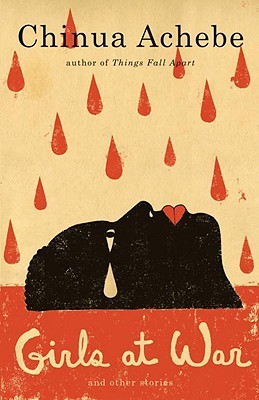
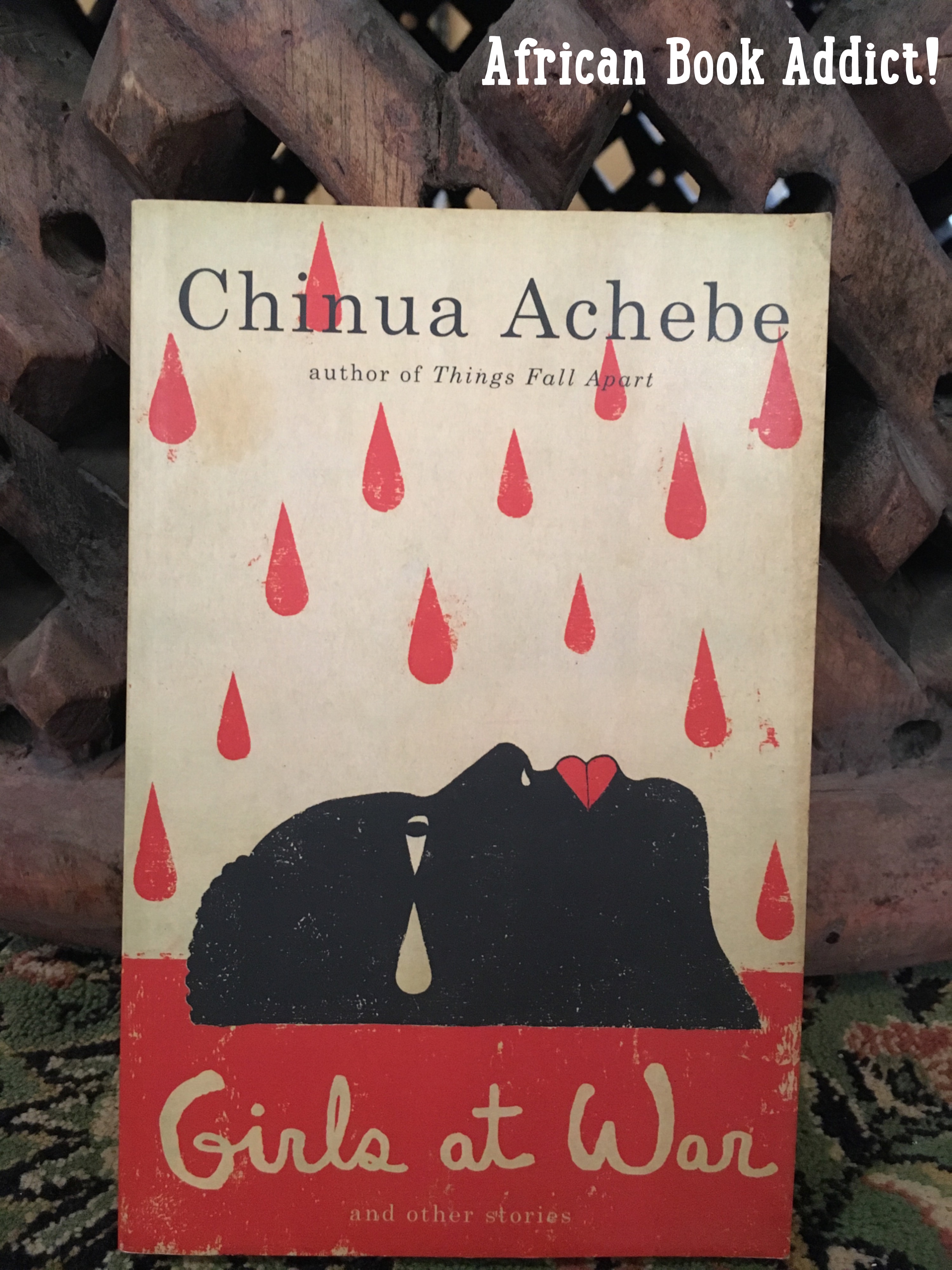
Girls at War and Other Stories by Chinua Achebe

Date Read: August 5th 2014

Published: September 1991

Publisher: First Anchor Books

Pages: 121
37775

The Blurb

Full of characteristic energy and authenticity, the stories in this classic collection capture the remarkable talent of one of the world’s most acclaimed writers and storytellers.

Here we read of an ambitious farmer who is suddenly shunned by his village when a madman exacts his humiliating revenge; a young nanny who is promised an education by her well-to-do employers, only to be cruelly cheated out of it; and in three fiercely observed stories about the Nigerian civil war, we are confronted with the economic ethnic, cultural and religious tensions that continue to rack modern Africa. Displaying an astonishing range of experience, Chinua Achebe deftly takes us inside the heart and soul of people whose pride and ideals must compete with the simple struggle to survive.

◊◊

Review – ★★★ (3 stars)

This is a decent collection of stories by Achebe.

My favorite stories were:

The Madman‘ – a tale of a once prominent man in a village who is humiliated by a vengeful madman. What a shameful but hilarious story!

Marriage is a Private Affair‘ – a story of a loving couple who are trying to convince their relatives of their forbidden love, as they are from different ethnic groups. I liked how Achebe wrote on the challenges of intermarriages between people of different ethnic groups especially as it is a problem we still face in Africa today.

Girls at War‘ – a tragic love story during the civil war in Nigeria. The story is centered on the short-lived romance between a militia girl and the Minister of Justice, living on the edge during the dangerous times of the civil war.

I don’t think I enjoyed reading this collection of short stories. Achebe’s writing style and storytelling manner were phenomenal as usual, but I wasn’t really interested in the subject matter of most of the stories. To be honest, I purchased the book because I loved the book cover design! And I must say, I still like the book cover design more than the stories, hahaa! But I do recommend this book- especially to the die-hard Chinua Achebe fans…this would be a fast read for you.

★★★ (3 stars) – Good book. I recommend it, I guess.
Purchase Girls at War and Other Stories on Amazon
Currently Reading

I recently finished reading ‘The Spider King’s Daughter’ by Chibundu Onuzo and I loved it! A review will be posted soon!

*sigh* But (dental) school is in session and I know my reading will slow down. I’ve already surpassed by reading goal for this year- which was 12 books. Right now I’m on book 15, so at least I was able to complete my reading challenge!

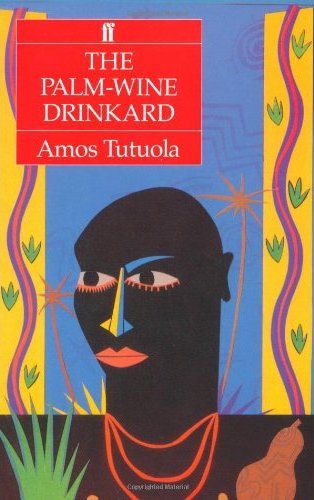
I’m currently reading: The Palm-Wine Drinkard by Amos Tutuola

palm wine drinkard (1)

This is a small book (about 125 pages). So hopefully it won’t take me ages to finish reading and will also be a fun distraction from my school workload 🙂

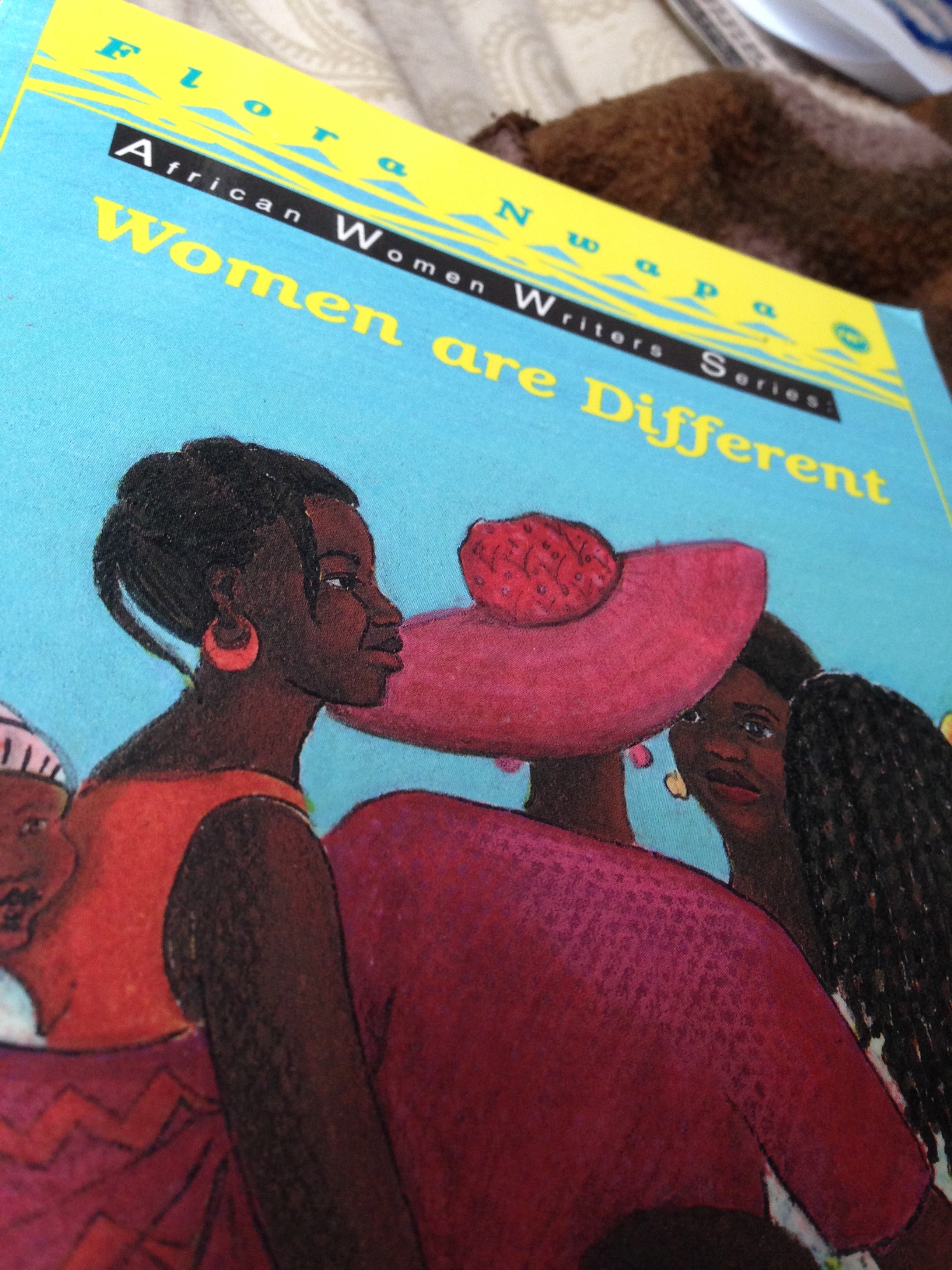
Women Are Different by Flora Nwapa

Date Read: June 10th 2014

Published: 1992

Publisher: Africa World Press (African Women Writers Series)

Pages: 138

The Blurb

Women are Different is the moving story of a group of Nigerian women, from their schooldays together through the trials and tribulations of their adult lives. Through their stories we see some of the universal problems faced by women everywhere: the struggle for financial independence and a rewarding career, combined with the need to bring up a family, often without a man.

◊◊

Review – ★★ (2 stars)

This book was quite painful to read… the details of the storyline were superfluous, Nwapa’s writing style wasn’t great and there were too many characters to keep track of in the book. Furthermore, there were spelling and grammatical errors in my copy of the book (I have the African Women Writer Series- First Africa World Press, edition 1992).

I love that Flora Nwapa sought out to enlighten readers on the lives of Nigerian women from the 1940’s to the 1970’s- after the Biafran war, but I did not enjoy the writing style. It was written in third-person, but quite shabbily. The sentence structures were very simple and I felt like I was reading a child’s novel.

I will commend Nwapa for raising various issues women faced in Nigeria, like: arranged marriages, child marriages, poverty, the importance of girl-child education, prostitution, spinsterhood, betrayed love etc. Nwapa portrayed all of these issues through the lives of Dora, Rose, Agnes and Comfort from their high school days to their late motherhood days. The girls’ different personalities and opinions on life were basically a microcosm of the opinions and lives of other women in Nigeria. I enjoyed Comfort’s character the most, as she was vivacious and fearless- typical of Nigerian women!

But several parts of the novel were dragged out. For example: the food strike in the girls’ secondary school went on for about ten pages; Dora complaining to Rose about her wayward daughter’s failed marriage dragged on for another ten pages; Agnes’ prostitute daughter’s plight went on forever as well.

The girls’ lives did not end up how they wished it would romantically, but they were quite successful, strong women by the end of the novel.

I initially wanted to purchase Nwapa’s popular novel, Efuru but after reading this simple book that took me 18 days to complete, I think I will pass. I love African literature and I admire Flora Nwapa for being one of the pioneering African women writers, but unfortunately I do not recommend this book.

BUT!! Another African literature book blogger, Mary Okeke, loved this novel! Check out her positive review of Women Are Differenthere.

★★ (2 stars) – Thumbs down. I do not recommend this.

IMG_5964

Purchase Women Are Different on Amazon

Currently Reading

I just finished Leila Aboulela’s book “Minaret”. I wasn’t really impressed with how the story concluded, but a review on that book will be coming soon.

I’m currently reading: Sozaboy: A Novel in Rotten English

sozaboy

The book is written in pidgin english, so it flows differently. But I’m enjoying it so far 🙂

Every Day Is For The Thief by Teju Cole

Date Read: June 26th 2014

Published: March 25th 2014 (originally published in Nigeria by Cassava Republic Press in 2007)

Publisher: Random House Publishing Group

Pages: 176

9780812995787_p0_v2_s260x420

The Blurb

A young Nigerian living in New York City goes home to Lagos for a short visit, finding a city both familiar and strange. In a city dense with story, the unnamed narrator moves through a mosaic of life, hoping to find inspiration for his own. He witnesses the “yahoo yahoo” diligently perpetrating email frauds from an Internet café, longs after a mysterious woman reading on a public bus who disembarks and disappears into a bookless crowd, and recalls the tragic fate of an eleven-year-old boy accused of stealing at a local market. 

Along the way, the man reconnects with old friends, a former girlfriend, and extended family, taps into the energies of Lagos life—creative, malevolent, ambiguous—and slowly begins to reconcile the profound changes that have taken place in his country and the truth about himself.
In spare, precise prose that sees humanity everywhere, interwoven with original photos by the author, Every Day Is For The Thief is a wholly original amalgamation of fiction, memory, art, and travel writing. Originally published in Nigeria in 2007, this revised and updated edition is the first time this unique book has been available outside Africa. You’ve never read a book like Every Day Is For The Thief because no one writes like Teju Cole.

◊◊

 Review – ★★★★ (4 stars)

“Every day is for the thief, but one day is for the owner” is a Yoruba proverb that Teju Cole adopted to capture the essence of this travelogue, Every Day Is For The Thief. The protagonist of this travelogue is a Nigerian born, now naturalized American psychiatry student who lives in New York. His calm demeanor gives the book a progressive, logical flow as readers hear his thoughts. I actually read the book thinking the protagonist was Teju Cole himself… just because readers are not given much detail on the protagonist- like his name, his stature or his age. Since the novel isn’t plot driven, each chapter is a vignette where the nameless protagonist discusses different experiences of his trip to Lagos during his Christmas vacation.

A lot of the Nigerian experiences and adventures Cole writes about are common in Ghana, but not as severe! The corruption heavily practiced by the police, the hustle and bustle of the city with zooming okadas (motorcycles) on pot-holed roads, the regular power outages, the wide social and economic disparities and increased armed robbery cases in the suffering economy are all prevalent in Ghana as well.

Certain parts of the book wowed me: the widespread of internet frauds conducted in Internet cafes by ‘yahoo yahoo’ boys, the burning of a child thief in a car tire, the gangs that roam the streets of Lagos demanding thousands of naira while being ever-ready to maim citizens were pretty wild! These incidents may seem exaggerated and fictitious but I believe these things actually occur in Lagos, since I’ve heard similar stories from some Nigerian friends. After reading this novel, non-Nigerians may think twice before visiting Lagos because it was written as if Nigerians are always living on the edge of danger!

I loved how the protagonist was a ‘returnee’ as he had been away from Lagos for fifteen years. He sort of returned to Lagos as a stranger with his assimilated Western ways (of democracy). This allowed him to share his shock in the craziness and delight in being back home with a wide array of readers- both foreign and fellow Africans. The protagonist’s fluid identity will help readers unfamiliar with Nigeria to take in Lagos from an insider, yet outsiders’ lens.

This is a suitable book for anyone who would love to learn about the rambunctious nation of Nigeria! Teju Cole expertly discusses and simplifies some of the complex issues the country faces such as corruption, government issues, the oil sector, the health sector etc. Some people may be even more apprehensive about visiting the nation after reading jaw-dropping descriptions, but I’m still keen on visiting Nigeria- Abuja to be precise!

★★★★ (4 stars) – Great book. Highly recommend!

IMG_6302

Purchase Every Day Is For The Thief on Amazon