African Love Stories: An Anthology edited by Ama Ata Aidoo

Date Read: January 23rd 2016

Published: 2006

Publisher: Ayebia Publishing

Pages: 249

aidoo

The Blurb

African love stories? Is that not some kind of anomaly? This radical collection of short stories, most published in this edition for the first time, aims to debunk the myth about African women as impoverished helpless victims. With origins that span the continent, it combines budding writers with award-winning authors; the result is a melting pot of narratives from intriguing and informed perspectives.

These twenty odd tales deal with challenging themes and represent some of the most complex of love stories. Many are at once heart breaking yet heart warming and even courageous. In Badoe’s hilarious ‘The Rival’, we encounter a 14 -year-old girl who is determined to capture her uncle’s heart. His wife, she decided would just have to go. Mr. Mensah the uncle is all of sixty years old.

Crafted by a stellar cast of authors that includes El Saadawi, Ogundipe, Magona, Tadjo, Krog, Aboulela, Adichie, Oyeyemi, wa Goro, Atta, Manyika and Baingana, there is hardly any aspect of women’s love life untouched. From labour pains to burials, teenagers to octogenarians, and not to mention race-fraught and same-sex relationships, the human heart is all out there: beleaguered and bleeding, or bold, and occasionally triumphant.

โ—Šโ—Š

Review – โ˜…โ˜…โ˜…โ˜…โ˜… (5 stars)

I think I have a soft spot for anthologies. Anthologies help me discover new writers. African Love Stories: An Anthology is the second African womenโ€™s anthology Iโ€™ve enjoyed. In 2014, I reviewed Opening Spaces: Contemporary African Womenโ€™s Writing edited by Yvonne Vera (1999) and was thrilled by the diverse stories and cast of African women writers. I even took interest in the writers who were unfamiliar to me at the time, like Leila Aboulela and Lรญlia Momplรฉ.

I know what you were thinking when you saw the title, โ€˜African Love Storiesโ€™ – no, this is not a collection of sappy, romantic, unrealistic, happily-ever-after tales. African Love Stories: An Anthology is a collection of 21 contemporary short stories laden with breathtaking originality. The stories speak on: the issues inter-racial couples face, a womanโ€™s wrath when she discovers her lover is married, the lengths a village boy goes to rescue his wife-to-be, domestic violence, a child born out-of-wedlock who is scorned at her fatherโ€™s funeral, same-sex relationships, sisterhood, a motherโ€™s love, sacrifice and so much more. There are layered complexities in all 21 stories and the writers skillfully consummate each short tale such that readers ponder and cherish them, even days after enjoying the stories.

The women writers and the stories of this anthology span across the African continent โ€“ from Egypt to South Africa. Well-known authors such as: Nawal El Saadawi, Veronique Tadjo, Chimamanda N. Adichie, Leila Aboulela, Sindiwe Magona, Sefi Atta, Monica Arac de Nyeko, Helen Oyeyemi amongst others, are featured in the anthology. But I expected more diversity with respect to the countries represented in this collection. I didnโ€™t expect a lot of the stories (11 of them) to be written by Nigerian women – this is not a bad thing, donโ€™t get me wrong! I just wish there was a better mix of countries represented, as was in Opening Spaces: Contemporary African Womenโ€™s Writing edited by Yvonne Vera (1999). (Iโ€™m not comparingโ€ฆ but Iโ€™m comparing haha)

Anyways, I enjoyed all the stories from this collection (well, except two) and my faves were:

“Something Old, Something New” by Leila Aboulela (Sudan) โ€“ This is a story that chronicles the events that occur prior to a wedding between a young, muslim, dark-skinned Sudanese woman of the diaspora and a white, muslim man from Edinburgh. During their trip to Khartoum for the ceremony, several events occur that threaten their impending wedding. I really admire the calm manner of Aboulela’s storytelling, especially in this tale.

“The Rival” by Yaba Badoe (Ghana) โ€“ The Rival has got to be the most absurd story Iโ€™ve ever read! In this story, a wife tries her best to keep her marriage from falling apart by the twisted, affectionate love of her husbandโ€™s niece. Since when did nieces start falling for their uncles and dreaming of being the โ€˜madamโ€™ of the house? How awkward! Yaba Badoe created a masterpiece with this strange story.

“Tropical Fish” by Doreen Baingana (Uganda) โ€“ University student – Christine, finds herself sleeping with a British expat who exports fish to the UK. The story takes us through the inner thoughts of Christine as she tries to find herself โ€“ because she truly seems lost. I was disgusted and at times mad at Christine for tolerating the intolerable in this story. I loved how Doreen Baingana kept me on the edge of my seat while reading this! (I have Doreen Bainganaโ€™s novel Tropical Fish which this story is an excerpt from, and Iโ€™m excited to read it soon!)

“Needles of the Heart” by Promise Ogochukwu (Nigeria) โ€“ I enjoyed the easy, simple nature in the writing of this story. A woman marries a man who she discovers is a chronic abuser. She constantly finds herself making excuses for her husband, even while she suffers on hospital beds from his fury. The ending of the story had me wondering if the author actually condones domestic violence… This story is pretty scary, but holds a great message if you read in-between the lines.

The editor, Ama Ata Aidoo urges readers to enjoy this collection slowly:

Dear reader, it is highly recommended that you take these stories one at a time, so that you meet these African women properly and individually, and listen to them and their hearts: whether Sudanese, Kenyan, Ghanaian, Nigerian or Zimbabweanโ€ฆ (pg. xiv)

and I totally concur with her. I read these stories slowly and savored them. Why rush through such a rich anthology? Thatโ€™s no fun!

Even though this anthology was published in 2006 – about 10 years ago, I believe the content is ever so relevant to this day. I wholeheartedly recommend this collection to everyone. These contemporary stories may be set in countries in Africa, but the theme of love is universal to all!

โ˜…โ˜…โ˜…โ˜…โ˜… (5 stars) โ€“ Amazing book, I loved it. Absolutely recommend!
IMG_3007

Purchase African Love Stories: An Anthology on Amazon


GIVEAWAY ALERT!

February is the month of love, and Iโ€™d like to give away one brand new copy of this lovely anthology! Enter the giveaway below to stand a chance at winning African Love Stories: An Anthology. The winner will be announced a day after Valentineโ€™s Day โ€“ so you have about 10 days to try your luck!

a Rafflecopter giveaway

Giveaway TERMS & CONDITIONS:

  • Giveaway starts Feb 4th 2016 at 12am GMT & ends Feb 15th 2016 at 12am GMT (Greenwich Mean Time)
  • This is an international giveaway – it is open to everyone, worldwide.
  • You must be 18 years and older to participate in this giveaway.
  • The winner will be selected by Random.org, through Rafflecopter and will be notified by email.
  • The winner will have 48 hours to respond to the email before a new winner is selected.
  • If you are the lucky winner of the book, Darkowaa will be shipping your prize to you directly.
  • Once the winner is notified via email, providing shipping details will go to Darkowaa only and will only be used for the purpose of shipping the prize to the winner.
  • The item offered in this giveaway is free of charge, no purchase is necessary.
  • If there are any questions and concerns about this giveaway, please email: africanbookaddict@gmail.com

Good luck, everyone!

Update: This giveaway has ended. Thanks to those who participated! Congrats to the winner! 

Classics: Things Fall Apart by Chinua Achebe & Matigari by Ngลซgฤซ wa Thiongโ€™o

Hey everyone! Below are mini reviews of two classics written by two, brilliant, African literature pioneer writers. I enjoyed these books over the summer ๐Ÿ™‚

Things Fall Apart by Chinua Achebe

Date re-Read: July 12th 2015 (previously read in 2007)

Published: January 2010 (originally published in 1958)

Publisher: Penguin Books

Pages: 152

Things Fall Apart

The Blurb

Things Fall Apart tells two intertwining stories, both centering on Okonkwo, a โ€œstrong manโ€ of an Ibo village in Nigeria. The first, a powerful fable of the immemorial conflict between the individual and society, traces Okonkwoโ€™s fall from grace with the tribal world. The second, as modern as the first is ancient, concerns the clash of cultures and the destruction of Okonkwo’s world with the arrival of aggressive European missionaries. These perfectly harmonized twin dramas are informed by an awareness capable of encompassing at once the life of nature, human history, and the mysterious compulsions of the soul.

โ—Šโ—Š

Review โ€“โ˜…โ˜…โ˜…โ˜… (4 stars)

What more can I say about this book? Everyone and their grandparents have read this classic. Most readers hated Okonkwo โ€“ the main character, for valid reasons. Who would have thought this true-blooded chauvinist would ultimately take his own life? Killing yourself is a cowardly, weak move, no? Despite Okonkwoโ€™s brashness and overt disdain for females and all things ‘womanly’, I understood him, so I appreciated him.

It’s hard not to resent the British colonizers for the damage they caused Africa in the past. The British came with full force, masked in Christianity and denied natives of the African continent control over their own land. Change is never easy, but I guess sometimes itโ€™s necessary? Many harmful indigenous practices which were revered prior colonization have been abolished for example – the killing of twins and thankfully, many other practices that were tagged with superstitious beliefs. Things Fall Apart gives readers a lot to think about: gender inequality, superstition, tradition versus modernity, masculinity versus femininity etc. Iโ€™m glad I re-read this during the summer. It was refreshing to reconnect with this masterpiece that Achebe wrote back in 1958. Things Fall Apart will always be a solid 4.5 stars for me.

โ˜…โ˜…โ˜…โ˜… (4 stars) โ€“ Great book. Highly recommend!

Purchase Things Fall Apart from Amazon

IMG_1057

Matigari by Ngลซgฤซ wa Thiongโ€™o

Date Read: August 11th 2015

Published: June 1989 (originally published in 1986)

Publisher: Heinemann (African Writers Series)

Pages: 175

Matigari

The Blurb

Who is Matigari? Is he young or old; a man or fate; dead or living… or even a resurrection of Jesus Christ? These are the questions asked by the people of this unnamed country, when a man who has survived the war for independence emerges from the mountains and starts making strange claims and demands.

Matigari is in search of his family, to rebuild his home and start a new and peaceful future, but his search becomes a quest for truth and justice as he finds the people still dispossessed and the land he loves ruled by corruption, fear and misery. Rumors spring up that a man with superhuman qualities has risen to renew the freedom struggle. The novel races towards its climax as Matigari realizes that words alone cannot defeat the enemy. He vows to use the force of arms to achieve his true liberation.

Lyrical and hilarious in turn, Matigari is a memorable satire on the betrayal of human ideals and on the bitter experience of post-independence African society.

โ—Šโ—Š

Review – โ˜…โ˜…โ˜…โ˜… (4 stars)

Matigari is the ultimate African post-colonial, social justice novel. And of course, Ngลซgฤซ wa Thiong’o executes the storyline brilliantly with the strength and courage of character,  Matigari ma Njiruungi – a patriot who goes to great lengths to ensure there is justice for the oppressed in a (fictitious) nation. Matigari ensures there is justice for the oppressed with the help of an orphan and a former prostitute and readers follow this team on their brave, almost rebellious journey to peace and justice. Matigari is a satirical novel. Ngลซgฤซ wa Thiong’o uses some elements of magical realism and lots of Christian allegory which are very symbolic in this novel.

But I don’t think this book is for everyone. It can be quite dry and may be too ‘political’ for some readers. Matigari was not a fast/easy read for me: I started reading it in May and finished it in August. But if you appreciate African oral literature and post-colonial literary works – read this! It is indeed powerful.

Favorite quotes:

โ€œThe true seeker of truth never loses hope. The true seeker of real justice never tires. A farmer does not stop planting seeds just because of the failure of one crop. Success is born of trying and trying again. Truth must seek justice. Justice must seek the truth. When justice triumphs, truth will reign on earthโ€ pg. 84 [one of Matigariโ€™s many meditations].

โ€œPregnancies are the result of the evil and wild desires. I shall ask the government to ban dreams and desires of that kind for a period of about two years. Fucking among the poor should be stopped by a presidential decree!โ€ (HILARIOUS!) pg. 120 [said a member of parliament – a typical man in power, guilty of squandering government money].

โ˜…โ˜…โ˜…โ˜… (4 stars) โ€“ Great book. Highly recommend!

Purchase Matigari from Amazon

Beasts of No Nation by Uzodinma Iweala… the film?

Yes, yes, yes! Uzodinma Iweala’s debut novel, Beasts of No Nation: A Novel (2005)ย is being adapted for the big screenย and will be showing in select theaters (in the U.S) and available worldwide on Netflix next month – October 16th 2015!ย Beasts of No Nation: A novelย (which is a title adopted from Fela Kuti’s 1989 album) was released 10 years ago, but the haunting novel is still on the minds of readers who’ve enjoyed the book! Have you read Beasts of No Nation: A novelย yet?
Beasts of No Nationย 

Check out the synopsis:ย 

In this stunning debut novel, Agu, a young boy in an unnamed West African nation, is recruited into a unit of guerrilla fighters as civil war engulfs his country. Haunted by his father’s own death at the hands of militants, Agu is vulnerable to the dangerous yet paternal nature of his new commander. While the war rages on, Agu becomes increasingly divorced from the life he had known before the conflict startedโ€”a life of school friends, church services, and time with his family still intact.

In a powerful, strikingly original voice that vividly captures Agu’s youth and confusion, Uzodinma Iweala has produced a harrowing, inventive, and deeply affecting novel.

Beasts of No Nation: A Novel has been required reading for a Political Science class: African Politics (PSCI 0202) at my alma mater, Middlebury College. I never registered for that class butย I decided to start reading the book on my own back in 2011, and never finished it as I was busyย with finals at the time. When I was theย President of the African Students’ Association at Middlebury – UMOJA, we invited Iweala to our ‘Touch of Africa Week’ where he gave an enlightening talk on “What, Who is an ‘Authentic’ African?” After the talk weย discussed his novel Beasts of No Nation, African identityย and other topics pertaining to our beloved continent over dinner at a professor’s house. Check out the (grainy) pictures below:


I’m excited and proud of Uzo! It must beย every author’s dream to haveย their novel made into a film – it’s a big deal! I’m still fascinated at Iweala’s ability to embody the sentiments of a child soldier in the novel, since his background of being a Harvard graduate seems far from the unfortunate struggle of being a child victim of civil war. That takes real talent and a vivid imagination! I will definitely finish reading Beasts of No Nation: A Novel before I watch the film. Films don’t usually capture the essence of the books they are based on. However, I’m confidentย this film adaptation will do Beasts of No Nation: A Novelย justice. The film is set in the Eastern Region of Ghana and is directed by Emmy Award winnerย Cary Fukunaga.ย Golden Globe Award winning actor, Idris Elba plays the main warlord in the film and the talented Ghanaian actress,ย Ama K. Abebrese plays the child soldier – Agu’s mother. With all that talent in one film, I have faith that it will be superb!

Check out the trailer for the film below:

BeastsOfNoNationPoster1 BeastsOfNoNationPoster2

Purchase Beasts of No Nation: A Novel onย Amazon

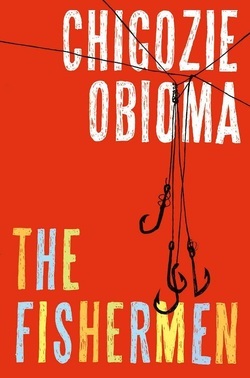
The Fishermen by Chigozie Obioma

Date Read: June 4th 2015

Published: April 2015

Publisher: Little, Brown and Company

Pages: 304

The Fishermen

ย The Blurb

In a Nigerian town in the mid-1990โ€™s, four brothers encounter a madman whose mystic prophecy of violence threatens the core of their close-knit family.

Told from the point of view of nine-year-old Benjamin, the youngest of four brothers, The Fishermen is the Cain and Abel-esque story of the unforgettable childhood in 1990s Nigeria, in the small town of Akure. When their strict father has to travel to a distant city for work, the brothers take advantage of his extended absence to skip school and go fishing. At the omnious, forbidden nearby river, they meet a dangerous local madman who persuades the oldest of the boys that he is destined to be killed by one of his siblings.

What happens next is an almost mythic even whose impact โ€“ both tragic and redemptive โ€“ will transcend the lives and imaginations of the bookโ€™s characters and its readers.

โ—Šโ—Š

Reviewโ€“ โ˜…โ˜…โ˜…โ˜…โ˜… (5 stars)

The Fishermen is a dark, haunting, mythical story about brotherhood, love and madness. Ikenna, Boja, Obembe and Ben are four of six children of the Agwu family in Akure, Nigeria. Ikenna, who is 15 years old is the leader of the pack. Boja is the adventurous 14-year-old, Obembe is the book smart 11-year-old and Ben โ€“ who is the innocent narrator of this lyrical tale, is 9 years old. Once their father is assigned to work at a new location of the Central Bank of Nigeria, quite far away from his home, disorder slowly overtakes this family. I believe the absence of the boysโ€™ father is the root of all the evil things that occur in this story. How crazy is it that the prophecy of the neighborhood madman Abulu, who the boys encounter on one of their forbidden fishing adventures to the Omi-Ala river, could be the catalyst for all the twists and turns that the Agwu family endures?

When you think things are getting better and the craziness of this story plateaus, something pops up! I feel like I know/knew Ikenna, Boja, Obembe and Ben – their love and brotherhood are so dear to me, I don’t know why! I felt helpless during many parts of this story. At certain parts I just had to close the book, sit stillโ€ฆ and pray. I desperately wanted to help Ikenna. I wanted to whisper into his ear and reassure him that his brothers loved him so much and that nobody was out to kill him. I wanted to goad Boja to have more patience with Ikenna since he (Ikenna) was going through a dark, miserable phase in his life where his faith and confidence were shaken.

Chigozie Obioma wrote about these boys in such a tender way that evoked lots of emotions in me. Obioma actually wrote this novel as a tribute to his own brothers and he discusses this more in interviews with Michigan Quarterly Review and Bookanista. I believe Obioma does a great job at painting the picture of a typical Nigerian household in The Fishermen. He captures classic Nigerian idiosyncrasies through the characters, for example: the way the boys’ mother would shout ‘Chineke!’ (which is an Igbo word that means ‘God!’) whenever she was startled; or how she would vigorously tie her wrapper whenever she was frustrated with the boys; or how their chauvinistic father would shout ‘my friend!’ whenever he was irritated and demanded quick responses from the boys and their mother. If you’ve ever watched a Nollywood film, you would definitely appreciate these entertaining gestures!

The power of Obioma’s lyrical writing style is augmented by his metaphors, which are mostly rooted in animism. This may seem corny, but trust me – it certainly works in making the characters and different incidents in the story feel too realโ€ฆ and every word counts! References to Chinua Achebeโ€™s novel Things Fall Apart, M.K.O Abiola โ€“ a popular Nigerian political figure, alongside other contemporary happenings (during 1997) made this all the more a satisfying and realistic read. I’m super proud of this author and I wish him nothing but more success! This has been the best book I’ve read all summer and maybe even this year.

Side note: After reading this book, Iโ€™ve had second thoughts about my desire to give birth to only boys โ€“ as if I even have a choice, am I God? haha. But I’ve come to the realization that raising boys (and children in general) is truly a challenge. Parental guidance is needed at all times!

The Fishermen needs more attention in the blogosphere! I’m still trying to digest some stuff from the book and I would love to discuss The Fishermen in detail with anyone who has already read it. Iโ€™m waiting for my Mom to finish reading the book so we can discuss the ending which slightly threw me off. I hope bookworms around the world catch on and rave about this book as much as they did Adichie’s Americanah. I expect The Fishermen to win some literary awards soon.

Chigozie Obioma definitely took fiction to another level with this book. Please, please pick this up if you get a chance!

โ˜…โ˜…โ˜…โ˜…โ˜… (5 stars) โ€“ Amazing book, I loved it. Absolutely recommend!

IMG_0634

Purchase The Fishermen on Amazon

And the 2015 Caine Prize winner isโ€ฆ

Its that time of year again! In about two weeks, the 2015 Caine Prize winner will be announced!

For those who are not familiar, the Caine Prize for African Writing, which was first awarded in 2000 is an award โ€œopen to writers from anywhere in Africa for work published in English. Its focus is on the short story, reflecting the contemporary development of the African story-telling traditionโ€ (source).

Some notable winners of the Caine Prize include:

  • Leila Aboulela, from Sudan (2000)โ€“ author of novels Minaret, Lyrics Alley amongst other works. 
  • Binyavanga Wainaina, from Kenya (2002)โ€“ founding editor of Kwani?, author of novel, One Day I Will Write About This Place and the essay โ€œHow To Write About Africaโ€ found in various literary magazines.
  • Yvonne A. Owuor, from Kenya (2003)โ€“ author of the novel, Dust.
  • E.C Osondu, from Nigeria (2009) โ€“ author of the novel, Voice of America: stories.
  • NoViolet Bulawayo, from Zimbabwe (2011) โ€“ author of the novel, We Need New Names. 

This year, the Caine Prize shortlist comprises of five talented young writers with unique short stories (left to right):

caine prize for african writing 2015
  • Elnathan John (Nigeria) for โ€œFlyingโ€ in Per Contra (Per Contra, International, 2014)
    Shortlisted in 2013 for โ€œBayan Layiโ€
    Read “Flying”
  • Masande Ntshanga (South Africa) for โ€œSpaceโ€ in Twenty in 20 (Times Media, South Africa, 2014)
    Read “Space”
  • Namwali Serpell (Zambia) for โ€œThe Sackโ€ in Africa39 (Bloomsbury, London, 2014)
    Shortlisted in 2010 for โ€œMuzunguโ€
    Read “The Sack”
  • F. T. Kola (South Africa) for โ€œA Party for the Colonelโ€ in One Story (One Story, inc. Brooklyn, New York City, 2014)
    Read “A Party for the Colonel”
  • Segun Afolabi (Nigeria) for โ€œThe Folded Leafโ€ in Wasafiri (Wasafiri, London, 2014)
    Caine Prize winner 2005 for โ€œMonday Morningโ€
    Read “The Folded Leaf”

(The biographies for the shortlisted candidates can be found โ€“ here).

To be honest, I was a bit disappointed that this year’s countries shortlist was more of a dichotomy between Nigeria and South Africa. I expected a more diverse pool of stories to enjoy. But hey! Its the stories that matter, right?

I read Namwali Serpell’s story ‘The Sack‘, as it is one of the short stories in the Africa39 anthology that I own. I don’t know how I feel about her story…It’s a little confusing to me! From what I gather, the story is about the protagonist (I don’t know if this is a boy or girl) having nightmares about being killed, while the men he/she lives with use a young black orphan to go fishing and later debate whether the orphan should live with them or not. There also seems to be a feud between the men in the house, as one is elderly and seems to be sick and grumpy. Humph! If anyone has read the story and understands it, please do explain!

My favorite story so far is โ€˜Flyingโ€™ by Elnathan John. โ€˜Flyingโ€™ is how a short story should be: simple yet moving. The story is about Tachio โ€“ a JSS3 (9th grade) dorm leader of a refuge home/school, who believes he can fly once he falls asleep. This feeling of flying brings him peace and joy. He shares his joy of flying with his friend Samson, but is deemed mad. Once Tachio tells foul-mouthed Aunty Ketura, who is the founder of Kachiro Refuge Home, she appreciates his belief of flying and assumes Tachio was a bat, vulture or eagle in his past life. Since Tachio is the dorm leader, he frequently cleans Aunty Keturaโ€™s office and later finds the drawer where she keeps all the records of the boys and girls in the home. Finding out that some of his friends were initially found near trash cans, in market places and in toilets, makes Tachio (who was born in a hospital) feel like he has an edge over his classmates who have no idea of their origins. The story ends with the sudden death of Aunty Ketura, which shocks the whole school, especially Tachio. But the strange presence of a big brown chicken with a limp on their school compound gives Tachio solace, as he believes Aunty Ketura has been incarnated into this bird.

Elnathanโ€™s use of metaphors in comparing human appearances to animals gave the story some spice. I mostly appreciated how readers can get the full scope of Tachioโ€™s wavering feelings of being a dorm leader, wanting to be mischievous with his friends, to wanting to please Aunty Ketura, seeking advice and comfort from Aunty Ketura etc. Iโ€™m yet to read the last three stories on the shortlist, but โ€˜Flyingโ€™ is the most enjoyable story to me thus far. Itโ€™s simple, understandable and moving.

Which story is your favorite? Who do you think will win the Caine Prize this year?

The winner will be announced on the 6th of July at the Weston Library, Oxford, England. Good luck to all the shortlisted candidates!

The Trouble with Nigeria by Chinua Achebe

Date Read: April 5th 2015

Published: 1983

Publisher: Heinemann

Pages: 68

Chinua Achebe

The Blurb

The eminent African novelist and critic, here addresses Nigeria’s problems, aiming to challenge the resignation of Nigerians and inspire them to reject old habits which inhibit Nigeria from becoming a modern and attractive country. In this famous book now reprinted, he professes that the only trouble with Nigeria is the failure of leadership, because with good leaders Nigeria could resolve its inherent problems such as tribalism; lack of patriotism; social injustice and the cult of mediocrity; indiscipline; and corruption.

โ—Šโ—Š

Review – โ˜…โ˜…โ˜…โ˜…โ˜… (5 stars)

โ€œThe trouble with Nigeria is simply a failure of leadershipโ€ฆThe Nigerian problem is the unwillingness or inability of its leaders to rise to the responsibility, to the challenge of personal example which are the hallmarks of true leadership.โ€ pg. 1

The title, The Trouble with Nigeria should actually be called ‘The Trouble with Africa’. In this short book, Achebe questions the motives of the leaders and citizens of Nigeria. Achebe systematically breaks this book into ten chapters, where he discusses the various problems Nigeria was facing in 1983. Some of these chapters are entitled: Tribalism, Indiscipline, Corruption, False Image of Ourselves, Social Injustice and the Cult of Mediocrity, amongst others.

This book is simply brilliant. It is short and straight to the point! Everyone should read this, especially African politicians and people in positions of power. But do African politicians read? A myriad of books in the African Literature genre mirror the happenings of society. Authors use their amazing talent and writing abilities to articulate the faults of our leaders and societies through their stories/fictitious characters. Do the leaders of our societies read these books to hear how the layman feels about the conditions of their nations? Do they care? Even though this book was written in 1983, most of the issues Achebe discusses hold true to Ghana, and other African countries as well- even in present day 2015. Corruption, indiscipline, tribalism, lack of patriotism, illiteracy and greed are killing administrations in several African nations. We honestly need to do better as a people and this book explains why with boldness, style and sharp wit. I loved this! Thank you Chinua Achebe.

My favorite quotes from The Trouble with Nigeria:

โ€œNigerians are what they are only because their leaders are not what they should be.โ€ pg. 10

โ€œA true patriot will always demand the highest standards of his country and accept nothing but the best for and from his people. He will be outspoken in condemnation of their short-coming without giving way to superiority, despair or cynicism. That is my idea of a patriot.โ€ pg. 16

โ€œLook at our collapsing public utilities, our inefficient and wasteful parastatals and state-owned companies… If you want electricity, you buy your own generator; if you want water, you sink your own bore-hole; if you want to travel, you set up your own airline. One day soon, said a friend of mine, you will have to build your own post office to send your letters!โ€ pg. 20 (Yes, this holds true to Ghana as well, especially issues of electricity *sigh*).

โ€œI must now touch, however briefly, on the grace undermining of national discipline which the siren mentality of Nigerian leaders fosters. In all civilized countries the siren is used in grave emergencies by fire engines, ambulances and the police in actual pursuit of crime. Nigeria, with its remarkable genius of travesty, has found a way to turn yet another useful invention by serious-minded people elsewhere into a childish and cacophonous instrument for the celebration of status.โ€ pg. 34 (Sadly, this is a daily occurrence in Ghana as well. Especially during rush hour).

โ€œMy frank and honest opinion is that anybody who can say that corruption in Nigeria has not yet become alarming is either a fool, a crook or else does not live in this country.โ€ pg. 37 (This guy was bold, sheesh!)

“Knowledgeable observers have estimated that as much as 60 percent of the wealth of its nation is regularly consumed by corruption. I have no doubt that defenders of our system would retort: Mere rumor! Where is the proof? No one can offer โ€˜satisfactoryโ€™ proof for the simple reason that nobody issues a receipt for a bribe or for money stolen from the public till.” pg. 41

โ˜…โ˜…โ˜…โ˜…โ˜… (5 stars) โ€“ Amazing book, I loved it. Absolutely recommend!

img_6478

Purchase The Trouble With Nigeria on Amazon

The Palm-Wine Drinkard by Amos Tutuola

Date Read: February 3rd 2015

Published: 1952

Publisher: Faber and Faber

Pages: 125

tutuola001

The Blurb 

*no blurb*

 โ—Šโ—Š

Review โ€“ โ˜…โ˜…โ˜… (3 stars)

The unnamed, naive Palm-Wine Drinkard, who likes to call himself โ€˜Father of gods Who Could Do Anything in This Worldโ€™ is the narrator of this story and he takes readers through his peculiar adventures with his wife, in search for their dead palm-wine tapster. The Palm-Wine Drinkardโ€™s tapster mysteriously falls from a palm tree as he is tapping palm wine for the Drinkard and dies. Deeply saddened by this great loss (in the plenitude of palm wine the tapster used to collect), the Palm-Wine Drinkard starts his quest to find his dead tapster. His search to find the tapster commences a crazy, frightful journey filled with evil spirits, demons and other strange, supernatural creature encounters. This is basically an African fantasy book.

I hated this book, initially. The horrid descriptions had me cringing and I found some stuff quite demonic (I couldn’t read this at night before bed because I was afraid I’d dream of some of the weird-ass creatures from the book). This book reminded me of the ‘Ananse the Spider’ folktales, but The Palm-Wine Drinkard is a more extreme and exaggerated type of folktale! The story-line got better when I gave this book a second try after abandoning it for sometime. Amos Tutuola is a great writer with a freaky imagination.

Excerpts with strange, cringe-worthy descriptions:

“When I completed three and a half years in that town, I noticed that the left hand thumb of my wife was swelling out as if it was a buoy, but it did not pain her. One day, she followed me to the farm in which I was tapping the palm-wine, and to my surprise when the thumb that swelled out touched a palm-tree throne, the thumb bust out suddenly and there we saw a male child came out of it and at the same time that the child came out from the thumb, he began to talk to us as if he was ten years of age.” pg. 31 (What the heck? Gross)

“As we sat down under this tree and were thinking about that nightโ€™s danger, there we saw a ‘Spirit of Prey’, he was big as a hippopotamus, but he was walking upright as a human-being; his both legs had two feet and tripled his body, his head was just like a lionโ€™s head and every part of his body was covered with hard scales, each of these scales was the same in size as a shovel or hoe, and all curved towards his body.” pg. 54 (Urgh! This stressed me out)

But Tutuolaโ€™s ability to have me cringing in my seat as I read some of the demonic encounters the Palm-Wine Drinkard faced is a testament of his tangible writing skill- his way with words and his imagination are quite wild! Another thing I liked about this book was the English and writing style. The writing may seem to be in pidgin or broken English, but I learned that it’s actually a transliteration of Yoruba (a Nigerian language). The transliteration of Yoruba to English was quite enjoyable to read and gave the book a different flair I rarely get from other Nigerian novels.

Give this book a try if you like out-of-this-world, surreal stuff. African literature enthusiasts swear by this book and I understand why- Amos Tutuola is an extraordinary storyteller.

โ˜…โ˜…โ˜… (3 stars) โ€“ Good book. I recommend it, I guess.

Purchase The Palm-Wine Drinkard on Amazon

Olikoye by Chimamanda Ngozi Adichie

Olikoye

This is a simple short story, packed with positive vibes! In Olikoye, Adichie writes on the importance of vaccinations. The story appeals to your emotions and gives hope on the future of health care in Africa. I had a constant smile on my face as I read this.

Olikoye is about a woman in labor, reminiscing and telling a nurse a story her father once told her on how the Minister of Health in Nigeria saved the lives of several babies by introducing vaccines into hospitals. I hope African health practitioners in Africa AND abroad are inspired by this story, as there is so much more they can do to continue to save lives of the people of Africa.

Moreover, I really appreciated the union of literature and health care in this story. I rarely see this cross over in African writing and I found it refreshing, especially as I am now in dental school. I hope African authors can temporarily ditch the usual colonization, post-colonialism, immigration, forbidden romance, poverty themes and maybe branch a little more into issues on health care.

Read Olikoye – HERE.