African Love Stories: An Anthology edited by Ama Ata Aidoo

Date Read: January 23rd 2016

Published: 2006

Publisher: Ayebia Publishing

Pages: 249

aidoo

The Blurb

African love stories? Is that not some kind of anomaly? This radical collection of short stories, most published in this edition for the first time, aims to debunk the myth about African women as impoverished helpless victims. With origins that span the continent, it combines budding writers with award-winning authors; the result is a melting pot of narratives from intriguing and informed perspectives.

These twenty odd tales deal with challenging themes and represent some of the most complex of love stories. Many are at once heart breaking yet heart warming and even courageous. In Badoe’s hilarious ‘The Rival’, we encounter a 14 -year-old girl who is determined to capture her uncle’s heart. His wife, she decided would just have to go. Mr. Mensah the uncle is all of sixty years old.

Crafted by a stellar cast of authors that includes El Saadawi, Ogundipe, Magona, Tadjo, Krog, Aboulela, Adichie, Oyeyemi, wa Goro, Atta, Manyika and Baingana, there is hardly any aspect of women’s love life untouched. From labour pains to burials, teenagers to octogenarians, and not to mention race-fraught and same-sex relationships, the human heart is all out there: beleaguered and bleeding, or bold, and occasionally triumphant.

โ—Šโ—Š

Review – โ˜…โ˜…โ˜…โ˜…โ˜… (5 stars)

I think I have a soft spot for anthologies. Anthologies help me discover new writers. African Love Stories: An Anthology is the second African womenโ€™s anthology Iโ€™ve enjoyed. In 2014, I reviewed Opening Spaces: Contemporary African Womenโ€™s Writing edited by Yvonne Vera (1999) and was thrilled by the diverse stories and cast of African women writers. I even took interest in the writers who were unfamiliar to me at the time, like Leila Aboulela and Lรญlia Momplรฉ.

I know what you were thinking when you saw the title, โ€˜African Love Storiesโ€™ – no, this is not a collection of sappy, romantic, unrealistic, happily-ever-after tales. African Love Stories: An Anthology is a collection of 21 contemporary short stories laden with breathtaking originality. The stories speak on: the issues inter-racial couples face, a womanโ€™s wrath when she discovers her lover is married, the lengths a village boy goes to rescue his wife-to-be, domestic violence, a child born out-of-wedlock who is scorned at her fatherโ€™s funeral, same-sex relationships, sisterhood, a motherโ€™s love, sacrifice and so much more. There are layered complexities in all 21 stories and the writers skillfully consummate each short tale such that readers ponder and cherish them, even days after enjoying the stories.

The women writers and the stories of this anthology span across the African continent โ€“ from Egypt to South Africa. Well-known authors such as: Nawal El Saadawi, Veronique Tadjo, Chimamanda N. Adichie, Leila Aboulela, Sindiwe Magona, Sefi Atta, Monica Arac de Nyeko, Helen Oyeyemi amongst others, are featured in the anthology. But I expected more diversity with respect to the countries represented in this collection. I didnโ€™t expect a lot of the stories (11 of them) to be written by Nigerian women – this is not a bad thing, donโ€™t get me wrong! I just wish there was a better mix of countries represented, as was in Opening Spaces: Contemporary African Womenโ€™s Writing edited by Yvonne Vera (1999). (Iโ€™m not comparingโ€ฆ but Iโ€™m comparing haha)

Anyways, I enjoyed all the stories from this collection (well, except two) and my faves were:

“Something Old, Something New” by Leila Aboulela (Sudan) โ€“ This is a story that chronicles the events that occur prior to a wedding between a young, muslim, dark-skinned Sudanese woman of the diaspora and a white, muslim man from Edinburgh. During their trip to Khartoum for the ceremony, several events occur that threaten their impending wedding. I really admire the calm manner of Aboulela’s storytelling, especially in this tale.

“The Rival” by Yaba Badoe (Ghana) โ€“ The Rival has got to be the most absurd story Iโ€™ve ever read! In this story, a wife tries her best to keep her marriage from falling apart by the twisted, affectionate love of her husbandโ€™s niece. Since when did nieces start falling for their uncles and dreaming of being the โ€˜madamโ€™ of the house? How awkward! Yaba Badoe created a masterpiece with this strange story.

“Tropical Fish” by Doreen Baingana (Uganda) โ€“ University student – Christine, finds herself sleeping with a British expat who exports fish to the UK. The story takes us through the inner thoughts of Christine as she tries to find herself โ€“ because she truly seems lost. I was disgusted and at times mad at Christine for tolerating the intolerable in this story. I loved how Doreen Baingana kept me on the edge of my seat while reading this! (I have Doreen Bainganaโ€™s novel Tropical Fish which this story is an excerpt from, and Iโ€™m excited to read it soon!)

“Needles of the Heart” by Promise Ogochukwu (Nigeria) โ€“ I enjoyed the easy, simple nature in the writing of this story. A woman marries a man who she discovers is a chronic abuser. She constantly finds herself making excuses for her husband, even while she suffers on hospital beds from his fury. The ending of the story had me wondering if the author actually condones domestic violence… This story is pretty scary, but holds a great message if you read in-between the lines.

The editor, Ama Ata Aidoo urges readers to enjoy this collection slowly:

Dear reader, it is highly recommended that you take these stories one at a time, so that you meet these African women properly and individually, and listen to them and their hearts: whether Sudanese, Kenyan, Ghanaian, Nigerian or Zimbabweanโ€ฆ (pg. xiv)

and I totally concur with her. I read these stories slowly and savored them. Why rush through such a rich anthology? Thatโ€™s no fun!

Even though this anthology was published in 2006 – about 10 years ago, I believe the content is ever so relevant to this day. I wholeheartedly recommend this collection to everyone. These contemporary stories may be set in countries in Africa, but the theme of love is universal to all!

โ˜…โ˜…โ˜…โ˜…โ˜… (5 stars) โ€“ Amazing book, I loved it. Absolutely recommend!
IMG_3007

Purchase African Love Stories: An Anthology on Amazon


GIVEAWAY ALERT!

February is the month of love, and Iโ€™d like to give away one brand new copy of this lovely anthology! Enter the giveaway below to stand a chance at winning African Love Stories: An Anthology. The winner will be announced a day after Valentineโ€™s Day โ€“ so you have about 10 days to try your luck!

a Rafflecopter giveaway

Giveaway TERMS & CONDITIONS:

  • Giveaway starts Feb 4th 2016 at 12am GMT & ends Feb 15th 2016 at 12am GMT (Greenwich Mean Time)
  • This is an international giveaway – it is open to everyone, worldwide.
  • You must be 18 years and older to participate in this giveaway.
  • The winner will be selected by Random.org, through Rafflecopter and will be notified by email.
  • The winner will have 48 hours to respond to the email before a new winner is selected.
  • If you are the lucky winner of the book, Darkowaa will be shipping your prize to you directly.
  • Once the winner is notified via email, providing shipping details will go to Darkowaa only and will only be used for the purpose of shipping the prize to the winner.
  • The item offered in this giveaway is free of charge, no purchase is necessary.
  • If there are any questions and concerns about this giveaway, please email: africanbookaddict@gmail.com

Good luck, everyone!

Update: This giveaway has ended. Thanks to those who participated! Congrats to the winner! 

Beasts of No Nation by Uzodinma Iweala… the film?

Yes, yes, yes! Uzodinma Iweala’s debut novel, Beasts of No Nation: A Novel (2005)ย is being adapted for the big screenย and will be showing in select theaters (in the U.S) and available worldwide on Netflix next month – October 16th 2015!ย Beasts of No Nation: A novelย (which is a title adopted from Fela Kuti’s 1989 album) was released 10 years ago, but the haunting novel is still on the minds of readers who’ve enjoyed the book! Have you read Beasts of No Nation: A novelย yet?
Beasts of No Nationย 

Check out the synopsis:ย 

In this stunning debut novel, Agu, a young boy in an unnamed West African nation, is recruited into a unit of guerrilla fighters as civil war engulfs his country. Haunted by his father’s own death at the hands of militants, Agu is vulnerable to the dangerous yet paternal nature of his new commander. While the war rages on, Agu becomes increasingly divorced from the life he had known before the conflict startedโ€”a life of school friends, church services, and time with his family still intact.

In a powerful, strikingly original voice that vividly captures Agu’s youth and confusion, Uzodinma Iweala has produced a harrowing, inventive, and deeply affecting novel.

Beasts of No Nation: A Novel has been required reading for a Political Science class: African Politics (PSCI 0202) at my alma mater, Middlebury College. I never registered for that class butย I decided to start reading the book on my own back in 2011, and never finished it as I was busyย with finals at the time. When I was theย President of the African Students’ Association at Middlebury – UMOJA, we invited Iweala to our ‘Touch of Africa Week’ where he gave an enlightening talk on “What, Who is an ‘Authentic’ African?” After the talk weย discussed his novel Beasts of No Nation, African identityย and other topics pertaining to our beloved continent over dinner at a professor’s house. Check out the (grainy) pictures below:


I’m excited and proud of Uzo! It must beย every author’s dream to haveย their novel made into a film – it’s a big deal! I’m still fascinated at Iweala’s ability to embody the sentiments of a child soldier in the novel, since his background of being a Harvard graduate seems far from the unfortunate struggle of being a child victim of civil war. That takes real talent and a vivid imagination! I will definitely finish reading Beasts of No Nation: A Novel before I watch the film. Films don’t usually capture the essence of the books they are based on. However, I’m confidentย this film adaptation will do Beasts of No Nation: A Novelย justice. The film is set in the Eastern Region of Ghana and is directed by Emmy Award winnerย Cary Fukunaga.ย Golden Globe Award winning actor, Idris Elba plays the main warlord in the film and the talented Ghanaian actress,ย Ama K. Abebrese plays the child soldier – Agu’s mother. With all that talent in one film, I have faith that it will be superb!

Check out the trailer for the film below:

BeastsOfNoNationPoster1 BeastsOfNoNationPoster2

Purchase Beasts of No Nation: A Novel onย Amazon

The Housemaid by Amma Darko

Date Read: May 7th 2015

Published: 1998

Publisher: Heinemann (African Writerโ€™s Series)

Pages: 107

the housemaid

The Blurb

A dead baby and bloodstained clothes are discovered near a small village. Everyone is ready to comment on the likely story behind the abandoned infant. The men have one opinion, the women another. As the story rapidly unfolds it becomes clear that seven different women played their part in the drama. All of them are caught in a web of superstition, ignorance, greed and corruption.

โ—Šโ—Š

Review – โ˜…โ˜…โ˜… (3 stars)

I bought The Housemaid back in 2008, but finally gave this book a chance and finished reading it in May of this year. This is such a messy, messy story- but in a good way! This novel tells a story of how a poor family in a Ghanaian village decides to jilt a rich businesswoman in the city, by using their daughter – who becomes a housemaid, to attempt to steal this rich woman’s wealth. As usual, Amma Darko tackles a lot of social issues in this novel and this is why I respect her as a writer. Darko explores issues of socio-economic differences between the rich and the poor, city life versus village life, feminism, spinsterhood, gender roles, religious beliefs and superstition. I liked how the story was consummated at the end, even though this novel consists of a series of crazy events.

But I was a little disappointed with Amma Darkoโ€™s writing style in this novel. The writing was choppy and too colloquial for my liking. It was quite annoying to spot basic grammatical errors and the misusage of words like โ€˜yourโ€™ and โ€˜you’reโ€™ in some chapters. Nonetheless, the social issues addressed in this book made me appreciate the story. Amma Darko’s novel Beyond the Horizon is still a gem and a more meticulously written book than The HousemaidThe Housemaid is more of a 2.5 stars rating for me.

โ˜…โ˜…โ˜… (3 stars) โ€“ Good book. I recommend it, I guess.

Purchase The Housemaid on Amazon

All Godโ€™s Children Need Traveling Shoes by Maya Angelou

Date Read: April 29th 2015

Published: 1991 (first published in 1986)

Publisher: Vintage Books

Pages: 208

Angelou1

 The Blurb

In 1962 the poet, musician, and performer Maya Angelou claimed another piece of her identity by moving to Ghana, joining a community of โ€œRevolutionist Returneesโ€ inspired by the promise of pan-Africanism. All Godโ€™s Children Need Traveling Shoes is her lyrical and acutely perceptive exploration of what it means to be an African-American on the mother continent, where color no longer matters but where American-ness keeps asserting itself in ways both puzzling and heartbreaking. As it build on the personal narrative of I Know Why The Caged Bird Sings and Gather Together In My Name, this book confirms Maya Angelouโ€™s stature as one of the most gifted autobiographers of our time.

 โ—Šโ—Š

Review – โ˜…โ˜…โ˜…โ˜… (4 stars)

All Godโ€™s Children Need Traveling Shoes is book five of Maya Angelou’s autobiography series. I read books one, two and three when I was younger; I’ll dig through my Mom’s old books and read book four soon! Check out the books in her autobiography series – here.

This autobiography takes place in Ghana (mostly Accra) in the 1960’s, shortly after Ghana’s independence in 1957. In All Godโ€™s Children Need Traveling Shoes, Maya Angelou joins a community of disenfranchised African-Americans/Negro Americans (they called themselves the ‘Revolutionist Returnees’) on their quest to explore, understand and aid the Motherland in any way they can. While in Ghana, Angelou finds a job as an administrator at the University of Ghana – Legon and at a local newspaper as a journalist. Angelou takes us through the different conversations and interactions she has with the kind-hearted Ghanaians during her stay. I loved how most Ghanaians made her feel at home; Ghanaians are very hospitable โ€“ especially to foreigners, and this book definitely highlights this fact. My country did me proud in this book! I was glad that Maya Angelou was living with a community of African-Americans, but mostly interacted with Africans throughout her stay in Ghana – there was a good balance.

An interesting part in the book is when Angelou and the other African-Americans protested in front of the American Embassy in Accra on the same day of the March On Washington, lead by Martin Luther King Jr in the United States. The purpose of the March On Washington and the simultaneous protest at the American embassy in Accra were to demand the equal rights of people of all colors, as well as desegregation in the United States. W.E.B DuBois was also in Ghana at the time – he gained Ghanaian citizenship and lived in Ghana during the latter part of his life. My favorite part of the book is when Malcolm X arrives in Ghana and Angelou along with the other ‘Revolutionist Returnees’ do their best to make him feel at home, arrange various talks for him around Accra and even pull some strings for him to meet President Kwame Nkrumah. The historical snapshots in this book are awesome! It was amazing to read about these iconic leaders being regular people while making history, through Angelou’s lens.

Angelou struggled a lot in this book with her identity and facing the facts of the past. It constantly angered her to recollect how Africans sold other Africans into slavery, giving rise to present day African-Americans and other people of African descent in the diaspora. Maya Angelou couldn’t even visit the Elmina Castle โ€“ which housed millions of slaves at the Cape Coast of Ghana, because the dehumanizing ordeals her ancestors endured at this historical venue prior the Trans-Atlantic journey nauseated her. I appreciated her quest to live and understand the ‘black experience’ in Africa – Ghana, which is a place where almost everyone is black. This is truly an informative, fun, fast read, as Angelou articulates her experiences with such ease and humor. This memoir ends on a satisfying note for me. I recommend this to anyone who appreciates Black history and those who wish to travel to the continent of Africa on the quest for his/her identity.

โ˜…โ˜…โ˜…โ˜… (4 stars) โ€“ Great book. Highly recommend!

My Mom’s lovely Maya Angelou collection above. These books are super old!

Purchase All God’s Children Need Traveling Shoes on Amazon

Excerpt from ‘Saturday’s Shadows’ by Ayesha H. Attah

If you were a fan of Harmattan Rain, you would probably love Ayesha Harruna Attah’s second novel, Saturday’s Shadows as well! I recently read an excerpt (8 pages) from the novel and so far, so good ๐Ÿ™‚

Saturday's Shadows

Check out the synopsis of Saturday’s Shadows:

           A thin film exists between sanity and madness, learn the protagonists of Saturdayโ€™s Shadows, as they try to find and hold on to love in the volatile world of 1990s West Africa. After a 17-year military dictatorship, the members of the middle class Avoka family lurch towards destruction as their country is trying to find its footing. The father, Theo, is recruited to write the memoirs of the dictator-turned-president whom he both loathes and reveres. Zahra, matriarch of the Avoka household, rekindles an affair with an old lover and barely keeps her family and sanity together. Theo and Zahraโ€™s son Kojo has just started the boarding school of his dreams but finds out sometimes dreams should remain dreams. Their help, Atsu, a recent transplant from the village, struggles to understand big city living with all its temptationsโ€”money, men, and lustโ€”and a family in which the mother doesnโ€™t possess a single domestic bone. The climate they live in is politically complex, a time so tenuous the country could easily dip back into its military past.

This multi-voiced novel not only paints a picture of these tumultuous changes, but also shows that tenderness can persist even when everything else is being rent apart. Influenced by Naguib Mahfouzโ€™s Palace Walk and William Faulknerโ€™s As I Lay Dying, Saturdayโ€™s Shadows allows its four characters to narrate how they will do almost anything to find themselves.

Read the excerpt from Saturday’s ShadowsHERE.

I purchased Saturday’s Shadows a couple of weeks ago from Vidya Bookstore in Osu, Accra. If you’re in Accra, try and pick it up! The book is also available on Amazon. Expect a review soon.

Check out my review of Harmattan Rainhere.

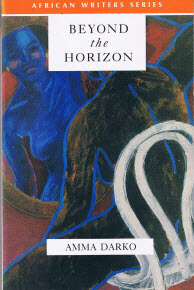
Beyond the Horizon by Amma Darko

Date Read: March 31st 2015

Published: 1995

Publisher: Heinemann (African Writers Series)

Pages: 140

beyond-the-horizon

The Blurb

Gazing at her naked body in the mirror, Mara reflects on her transformation from naรฏve Ghanaian village girl into a prostitute in a German brothel.

Mara has been deceived by her husband, Akobi, into coming to Europe to find a โ€˜Paradiseโ€™ but as the truth about Akobi and her new life unfolds she realizes she is trapped. The expectations of her family in Africa force her to remain, living a lie.

Beyond the Horizon is a gripping and provocative story of the plight of African women in Europe, and the false hopes of those they leave behind.

ย โ—Šโ—Š

Review – โ˜…โ˜…โ˜…โ˜… (4 stars)

Oh what a tragic novel this is! I don’t think Amma Darko gets the shine she rightfully deserves for this book or for her writing in general. Her novel – The Housemaid has been sitting on my bookshelf for years now. I’ll surely read it soon, as I hear its pretty amazing. With that said, Beyond the Horizon is a heart-wrenching masterpiece and a testament to some of the unfair effects of our patriarchal societies.

This is a story of a Ghanaian village girl โ€“ Mara, who enters into an arranged marriage with a man โ€“ Akobi, from the city who works at the Ministries. When Mara finally moves to the city to live in Akobi’s one bedroom shabby shelter, he constantly abuses her. Mara, who is meek, evergreen to city-life and quite stupid (thatโ€™s my opinion, sorry) cooks, cleans their home and even sells various items at the market to support Akobi while tolerating his beatings, sadistic sexual demands and sleeping on a mat on the concrete floor while Akobi enjoys his dried-grass mattress. In my eyes, Mara was Akobiโ€™s slave.

With the help of a โ€˜connectionโ€™ man, Akobi travels to Europe with the intention of working to raise money to advance his social standings in the city. Akobi traveling to Europe brings honor to his village and Maraโ€™s family as he is seen as a man of great prestige. Months after Akobi leaves for Europe, Mara attempts to modernize herself, in the attempt to make Akobi fall in love with her. To Maraโ€™s surprise Akobi later arranges for her to join him in Europe and Mara is more than delighted since she never dreamed that stepping foot in Europe would ever be her fate. Once Mara arrives in Europe (Germany, to be exact) with the aid of the โ€˜connectionโ€™ man, readers witness the manipulative ordeals Mara endures in a foreign land that leave her stranded.

I’m glad I read this book even though Mara frustrated me deeply throughout the story. Mara had no sense of her worth and sadly, her fate was determined by her chosen husband – Akobi, who did not love her. Akobi was a terribly wicked, self-absorbed man who used Mara for everything that she was. I waited so long for Mara to retaliate, to come to her senses and run away, to stop fantasizing about her husband finally loving and appreciating her; but rather, she consistently endured Akobiโ€™s verbal and physical abuse till almost the end of the novel.

Amma Darko skillfully weaves-in a lot of themes throughout this story that make this novel relevant to present day life. Some of these themes are: patriarchy, racism, colorism, domestic violence, pornography, sex exploitation, drug abuse, prostitution, the myths of living abroad (‘Europe is heaven’), immigration, feminism, womanhood, sisterhood (between Mara and Mama Kiosk in the city; between Mara, Vivian and Kaye in Germany), village life versus city life, modernity etc.

I gave Beyond the Horizon 4 stars because Amma Darko does a great job at pulling readersโ€™ emotions with the rawness in her style of writing! She exposes readers to the horrible realities of the helpless victims of male sex exploitation with such expertise โ€“ you would think she was a surviving victim herself. But to be honest, I donโ€™t think this book is for everyone. This is not the type of book you read for pleasure, or to relax and fill a void only enjoyable fictitious literary works satisfy you with. Beyond the Horizon is a depressing novel and wasn’t a fun read for me especially in the beginning as descriptions of domestic abuse were quite harsh. Towards the middle of the storyline, descriptions of (consensual and non-consensual) sexual encounters between Mara and Akobi and other characters in the book made me uncomfortable and slightly upset – for example:

“He was lying on the mattress, face up, looking thoughtfully at the ceiling when I entered. Cool, composed and authoritative, he indicated with a pat of his hand on the space beside him that I should lie down beside him. I did so, more out of apprehension of starting another fight than anything else. Wordlessly, he stripped off my clothes, stripped off his trousers, turned my back to him and entered me. Then he ordered me off the mattress to go and lay on my mat because he wanted to sleep alone.” pg.22

Please note: Men are generally painted as horrendous beings in this novel. Iโ€™m assuming Amma Darko wrote Beyond the Horizon as a feminist narrative because readers surely get a deep understanding of the power men hold in society, as they manipulate, deceive and use aggression in oppressing the rights of women โ€“ in this story and sometimes in reality.

Some provocative quotes from Beyond the Horizon:

โ€œI mean, Akobi beat me a lot at home, yes, but somehow I identified beatings like this with home. That African men also beat their wives in Europe somehow didnโ€™t fit into my glorious picture of European life.โ€ pg. 73

โ€œAt first I didnโ€™t understand, because here, we hear always that African people are hard workers and love work because God made them specially for the hard work of the worldโ€ฆโ€ pg. 99 (this was how a white woman in Germany viewed Africans. My heart skipped a beat reading this).

โ€œWhy couldnโ€™t I take control of my own life, since after all, I was virtually husbandless and, what did my husband care about a womanโ€™s virtue? If I was sleeping with men and charging them for it, it was me giving myself to them. The body being used and misused belonged to me.โ€ pg. 118 (it took Mara several years of beatings and coercions to finally realize she was in control of her own life. *sigh*).

As depressing as Beyond the Horizon is, it is definitely a relevant story that I believe everyone should read – even if reluctantly.

 โ˜…โ˜…โ˜…โ˜… (4 stars) โ€“ Great book. Highly recommend!

IMG_9762

Purchase Beyond the Horizon on Amazon

Challenge Update; Currently Reading

Hello everyone!

As I mentioned before, I’m participating in the Goodreads Reading Challenge for 2015. This year, I plan on reading 15 books (at least). I really admire those who read 40 plus books in a year! Being a dental student, I wonder if I can ever reach such goals…

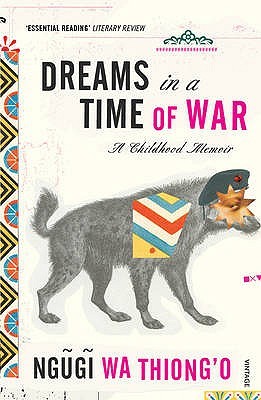
Anyways, I recently finished reading the great Ngลซgฤซ wa Thiong’o ‘s childhood memoir: Dreams In A Time Of War and Amma Darko’s novel, Beyond the Horizon.

NgugiWaThiongo

Don’t you just love the book cover? Ngลซgฤซ wa Thiong’o ‘s book was a very touching memoir – Ngลซgฤซ is a man I truly respect. I plan on reading the second volume of his memoirs – In the House of the Interpreter: A Memoir later this year :).

beyond-the-horizon

Beyond the Horizon by Amma Darko is a compulsory read for an African Studies class I’m currently taking. This book is laden with domestic violence and the main character- Mara, is extremely naive, so it was initially quite a frustrating read. Its a shame that Amma Darko does not get enough shine for her writing. Expect reviews soon!

Other books I’ve read from January till now:

January 12th 2015: We Should All Be Feminists (eBook) by Chimamanda N. Adichie

January 18th 2015: You Canโ€™t Keep A Good Woman Down by Alice Walker

January 28th 2015: A Deeper Love Inside: The Porsche Santiaga Story by Sister Souljah 

February 1st 2015: Wife Type: Her take on real love and healthy relationships (eBook) by Sheri Gaskins (on Goodreads)*

February 3rd 2015: The Palm-Wine Drinkard by Amos Tutuola 

February 16th 2015: Sula by Toni Morrison

February 27th 2015: Not That Kind of Girl: A Young Woman Tells You What Sheโ€™s โ€œLearnedโ€ by Lena Dunham (on Goodreads)*

March 22nd 2015: Dreams in a Time of War: A Childhood Memoir by Ngลซgฤซ wa Thiong’o

March 31st 2015: Beyond the Horizon by Amma Darko

I’m currently on my 10th book:  The Trouble with Nigeria which is a very short, almost history-like book by Chinua Achebe. Since Nigeria recently had their elections, which have been peaceful thus far (thank God!), I thought this would be a good read for the times.

What are y’all currently reading?

Workshop & Reading with Kwei Quartey

On Saturday, Dec 20th, author Kwei Quartey had a workshop and reading session at Totally Youth in North Ridge, Accra which was hosted by Writers Project of Ghana. I only attended the book reading and it was fun! Kwei Quartey read excerpts from his 3 novels of the Inspector Darko Dawson crime series:ย “Wife of the Gods” , “Children of the Street” and his latest novel, “Murder at Cape Three Points”. After the book reading we asked Quartey questions and had short discussions on how he decides the themes of his books- which are mostly in the crime/mystery genre, his experience with good and bad book reviews and his future plans of the Darko Dawson series.

Iโ€™m not a big fan of the crime/mystery/thriller genre, but I love that the Darko Dawson series are based in various regions of Ghana. Readers who have never been to Ghana will definitely get a glimpse of the various sceneries, smells, accents, sounds etc of the nation. Kwei Quartey was truly pleasant, and he seems to really find joy in writing novels. Readers are not obliged to read the series in chronological order, but I think it’s best to do so. I’m particularly interested inย picking up a copy ofย the second book in the series – “Children of the Street” which takes place in the slums of Accra (I think the Korle Bu area of Accra).

Ayesha Harruna Attah, author of “Harmattan Rain” (check out my review of that book – here) also attended the reading and I got to meet her! Her new book, “Saturday’s Shadows” is currently on sale in Europe and will be available for purchaseย in Ghana soon- I hope! I love meeting the authors of the books I adore/of African literature in general. I admire African writers and I will continue to support their work. I feel more connected to Ghana and Africa as a whole through their books and itโ€™s a great feeling ๐Ÿ™‚


Above are pictures of the reading session and shots of me and Kwei Quartey and Ayesha Harruna Attah.

Follow Writers Project of Ghana on Twitter if you are in Ghana, for more info on African author workshops/book readings etc, here ->ย @writersPG.