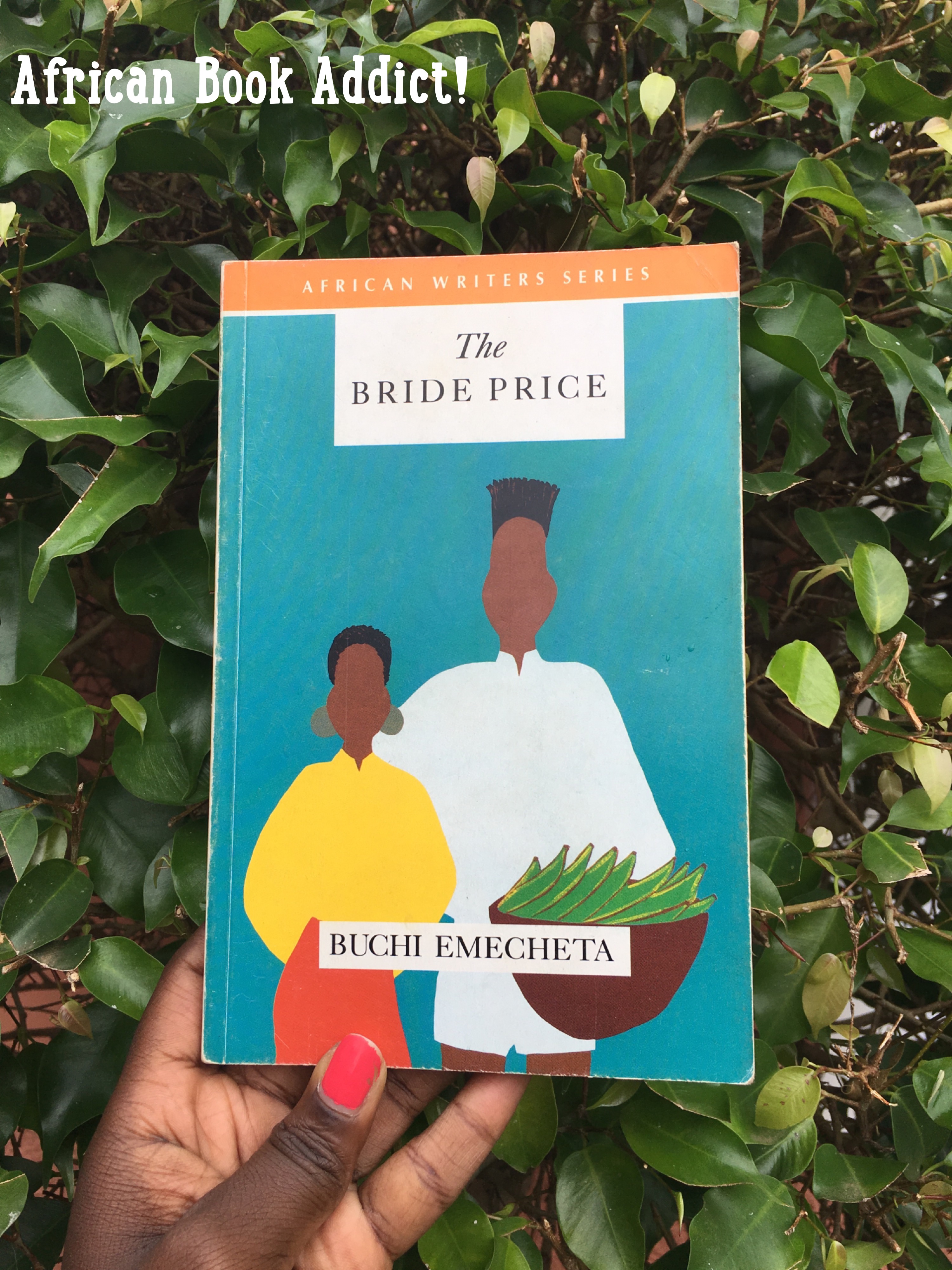
The Bride Price by Buchi Emecheta

Date Read: March 21st 2014

Published: 1995

Publisher: Heinemann (African Writers Series)

Pages: 180

TheBridePrice

The Blurb

‘Always remember that you are mine,’ says Aku-nna’s father before he dies. But as Aku-nna approaches womanhood her ambitious uncle makes plans to marry her off for a high bride price. Caught in a web of tradition, lust and greed, Aku-nna falls for the one young man she is forbidden to love.

◊◊

 Review –  ★★★★ (4 stars)

The Bride Price was a bittersweet read for me. The story is about a girl named Aku-nna who lived a fairly comfortable life in the city of Lagos, Nigeria with her family. But after the sudden death of her father, her family moves to their hometown, a village called Ibuza. Life is very different for Aku-nna in her hometown: by tradition, her mother has to marry her uncle (her father’s oldest brother), her education isn’t seen as a priority, she becomes an introvert, village life is quite mundane and her uncle plans on gaining a large sum of money from her bride price. Aku-nna’s uncle already makes plans to marry her off to the highest bidder once she reaches womanhood, but Aku-nna simply desires to finish her secondary school education, become a teacher and marry the man she falls in love with. Once Aku-nna starts school, she falls in love with one of her teachers, Chike. Aku-nna and Chike keep their love secret, because their love is forbidden in Ibuza. Chike is from a family whose descendants were once slaves hence making him ‘unfit’ to marry Aku-nna according to her family (who are descendants of a noble family).

Old traditions and new missionary ways of life are constantly interrupting Aku-nna and her quiet, confused spirit. Buchi Emecheta portrays the struggles of Nigerian women during colonial times. The roles of the women during this time were very different from the roles of women in Nigeria today. From the novel, women during these days were imprisoned in traditional norms: they were meant to serve their husbands, bear children (preferably sons) and have little say in family affairs.

Since this story occurs during the colonial times of Nigeria it is characteristic that the men in the story dictate the course of Aku-nna’s life. Her schooling, the people she interacts with, her chores at home and who she marries are all controlled by her uncle. If Aku-nna rebels and marries Chike, her life could be in danger, because her acting father must accept her bride price. If the bride price is not accepted and she elopes, it is believed that she would not live to raise her children – this is an old taboo known to Ibuza.

“If a girl wished to live long and see her children’s children, she must accept the husband chosen for her by her people, and the bride price must be paid. If the bride price was not paid, she would never survive the birth of her first child” (pg. 176).

Aku-nna’s life is more or less dependent on her greedy uncle’s need for a high bride price since old traditions require women to have no say in their future marital affairs and superstitious beliefs seem to rule their lives.

Emecheta’s brilliant style of writing and the traditional proverbs she uses allow readers sympathize with Aku-nna and her predicament of being in love with a ‘slave’ and having to marry a man she would never love. This is a classic love story and Emecheta writes about it passionately to the point where her words hold your emotions. The ending of the story was quite shocking and actually had a psychological hold on me for a while. I did not give the book 5 stars because some parts of the story were a bit dragged out due to excessive description. Also, it was a hopeful, yet sad love story to me… I felt hurt by the end! Emecheta seems to like to write on depressing issues because I hear her novel The Joys of Motherhood is also quite blue. Nevertheless, this was a great novel and I loved learning about the roles of Nigerian women and the traditions of the people in Ibuza during the pre-independence era.

★★★★ (4 stars) – Great book. Highly recommend!

Purchase The Bride Price on Amazon

Happiness, Like Water by Chinelo Okparanta

Date read: January 28th 2014

Published: August 13th 2013

Publisher: Mariner Books

Pages: 208


The Blurb 

Here are Nigerian women at home and transplanted to the United States, building lives out of longing and hope, faith and doubt, the struggle to stay and the mandate to leave, the burden and strength of love. Here are characters faced with dangerous decisions, children slick with oil from the river, a woman in love with another despite the penalties. Here is a world marked by electricity outages, lush landscapes, folktales, buses that break down and never start up again. Here is a portrait of Nigerians that is surprising, shocking, heartrending, loving, and across social strata, dealing in every kind of change. Here are stories filled with language to make your eyes pause and your throat catch. Happiness, Like Water introduces a true talent, a young writer with a beautiful heart and a capacious imagination.

◊◊

Review – ★★★★★ (5 stars)

Happiness, Like Water was a pleasure to read. I initially heard of Chinelo Okparanta when her story, ‘America’ was nominated for the Caine Prize in 2013, along with Pede Hollist, Elnathan John, Abubakar A. Ibrahim and the winner, Tope Folarin.

In this collection of ten short stories, Chinelo takes us to and fro from Nigeria to the USA through the tales of Nigerian families and friends, simply living life as they know it. This collection cuts across social status, spirituality, sexuality and skin tones of the characters it highlights. Chinelo tells tales of the struggles of immigrant life, the burden and strength of love, the social pressures of skin lightening (among the Nigerian community in Nigeria/USA), the family pressures of marriage and childbearing, the ‘shame’ and confusion faced by Africans who question their sexualities, domestic abuse and various other issues.

Chinelo’s style of story telling is unique- she occasionally blends authentic folktales to her modern day stories and I often felt as if a friend laden with great imagination was telling me a detailed, unpredictable story in my living room. I could feel the helplessness of some of the characters, taste the garri with akamu dinners and see the zinc roofs shining in the hot Port Harcourt sun, grâce à Chinelo’s tangible writing ability.

Chinelo’s stories are full of life as we get acquainted with her characters and the issues they face. While some of the stories do not have happy endings, the short story entitled Grace, makes me question what ‘happiness’ truly means. According to this story, “Happiness is like water. We’re always trying to grab onto it, but it’s always slipping between our fingers” (pg. 144). Interesting food for thought!

My favorite stories were:

On Ohaeto Street – a funny story on Jehovah’s Witnesses, marriage and the troubles riches bring.

Story, Story!  – a hilarious story of a wicked, childless woman who manipulates innocent members of a church.

Tumours and Butterflies – a liberating tale on a father-daughter relationship that was quite controlling.

Happiness, Like Water is an impressive collection of stories. After reading this, you’ll crave for more.

★★★★★ (5 stars) – Amazing book, I loved it. Absolutely recommend!

IMG_1335

Purchase Happiness, Like Water on Amazon

Goodreads 2014 Reading Challenge!

Hellooo!

At the beginning of the year, I set out to read 12 books – one book a month. I’m currently on my 10th book, and its only June 21st! Hopefully, I’ll end up reading more than 12 books by the end of the year.

For this reading challenge, I plan on reading and reviewing novels from genres that excite me: African, African-American and Caribbean books. If I get my hands on any other genre, I would gladly add it to my challenge.

Thus far I’ve read (in chronological order) :

Currently Reading

Every Day Is For The Thief

I’m also keeping track of the books I read on Goodreads

I will have reviews for each book soon!