Challenge Update (summer); Currently Reading

Hey everyone!

Summer is basically over (this year, the first day of Fall is Wednesday – September 23rd) and real life is back in full effect :(. In myย last challenge update I stated that I planned on reading at least 15 books this year. As the summer rolled along I realized that I would surpass this goal, so I challenged myself to read 20 books this year…. and I ended up surpassing that as well! During the summer I read 9 books; some were light reads, others were more on the heavy side. I enjoyed most of my summer reads to the point where my reading-tank is quite full… and I may be experiencing a reading slump!

Books I read during the summer:ย 

May 23rd 2015: The Misadventures of Awkward Black Girl by Issa Rae

June 4th 2015: The Fishermen by Chigozie Obioma

June 10th 2015: The Color Purple by Alice Walker

June 28th 2015: We Need New Names by NoViolet Bulawayo

July 8th 2015: Krik? Krak! by Edwidge Danticat

July 12th 2015:ย Things Fall Apart by Chinua Achebe (re-read)

July 22nd 2015:ย Pig Tails ‘n Breadfruit by Austin Clarke

August 5th 2015: The Twelve Tribes of Hattie by Ayana Mathis

Aug 11th 2015: Matigari by Ngugi wa Thiong’o

Reviews for the rest of the books will be posted as the months go by!

Interpreterofmaladiescover

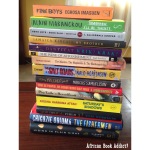
I’m slowly reading my 22nd book of the year –ย Interpreter of Maladies by Indian-American author, Jhumpa Lahiri. I’m aย mood-reader so I’m currently in the mood to enjoy a non-African literature novel this month, and so far, I like Lahiri’s work! I’m quite behind on the Lahiri bandwagon, but oh well! I recently found her books (Interpreter of Maladies and The Namesake) at a used bookshop in Accra called Ghana Book Trust. There were so many gems in that bookshop and I ended up buying 15 books! Majority of the books I purchasedย are from my favorite genres (African Lit, African-American/ Black Lit, Caribbean Lit) and are classics. They were cheap too – 3 Ghana cedis (GHC) per book! Check them out below:


IMG_1492

[Books not shown in the picture above that I also bought are: The Namesake by Jhumpa Lahiri, To Beย Young, Gifted and Black by Lorraine Hansberry and When I was Puerto Rican by Esmeralda Santiago]

Lots of good books added to my bookshelf :). Have you read any of them?

What books did you enjoy during the Summer? What are you currently reading? Please do share!

Beasts of No Nation by Uzodinma Iweala… the film?

Yes, yes, yes! Uzodinma Iweala’s debut novel, Beasts of No Nation: A Novel (2005)ย is being adapted for the big screenย and will be showing in select theaters (in the U.S) and available worldwide on Netflix next month – October 16th 2015!ย Beasts of No Nation: A novelย (which is a title adopted from Fela Kuti’s 1989 album) was released 10 years ago, but the haunting novel is still on the minds of readers who’ve enjoyed the book! Have you read Beasts of No Nation: A novelย yet?
Beasts of No Nationย 

Check out the synopsis:ย 

In this stunning debut novel, Agu, a young boy in an unnamed West African nation, is recruited into a unit of guerrilla fighters as civil war engulfs his country. Haunted by his father’s own death at the hands of militants, Agu is vulnerable to the dangerous yet paternal nature of his new commander. While the war rages on, Agu becomes increasingly divorced from the life he had known before the conflict startedโ€”a life of school friends, church services, and time with his family still intact.

In a powerful, strikingly original voice that vividly captures Agu’s youth and confusion, Uzodinma Iweala has produced a harrowing, inventive, and deeply affecting novel.

Beasts of No Nation: A Novel has been required reading for a Political Science class: African Politics (PSCI 0202) at my alma mater, Middlebury College. I never registered for that class butย I decided to start reading the book on my own back in 2011, and never finished it as I was busyย with finals at the time. When I was theย President of the African Students’ Association at Middlebury – UMOJA, we invited Iweala to our ‘Touch of Africa Week’ where he gave an enlightening talk on “What, Who is an ‘Authentic’ African?” After the talk weย discussed his novel Beasts of No Nation, African identityย and other topics pertaining to our beloved continent over dinner at a professor’s house. Check out the (grainy) pictures below:


I’m excited and proud of Uzo! It must beย every author’s dream to haveย their novel made into a film – it’s a big deal! I’m still fascinated at Iweala’s ability to embody the sentiments of a child soldier in the novel, since his background of being a Harvard graduate seems far from the unfortunate struggle of being a child victim of civil war. That takes real talent and a vivid imagination! I will definitely finish reading Beasts of No Nation: A Novel before I watch the film. Films don’t usually capture the essence of the books they are based on. However, I’m confidentย this film adaptation will do Beasts of No Nation: A Novelย justice. The film is set in the Eastern Region of Ghana and is directed by Emmy Award winnerย Cary Fukunaga.ย Golden Globe Award winning actor, Idris Elba plays the main warlord in the film and the talented Ghanaian actress,ย Ama K. Abebrese plays the child soldier – Agu’s mother. With all that talent in one film, I have faith that it will be superb!

Check out the trailer for the film below:

BeastsOfNoNationPoster1 BeastsOfNoNationPoster2

Purchase Beasts of No Nation: A Novel onย Amazon

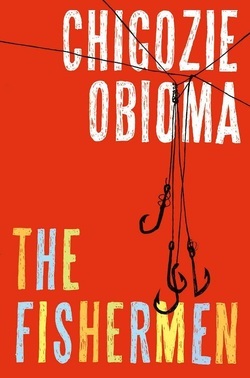
The Fishermen by Chigozie Obioma

Date Read: June 4th 2015

Published: April 2015

Publisher: Little, Brown and Company

Pages: 304

The Fishermen

ย The Blurb

In a Nigerian town in the mid-1990โ€™s, four brothers encounter a madman whose mystic prophecy of violence threatens the core of their close-knit family.

Told from the point of view of nine-year-old Benjamin, the youngest of four brothers, The Fishermen is the Cain and Abel-esque story of the unforgettable childhood in 1990s Nigeria, in the small town of Akure. When their strict father has to travel to a distant city for work, the brothers take advantage of his extended absence to skip school and go fishing. At the omnious, forbidden nearby river, they meet a dangerous local madman who persuades the oldest of the boys that he is destined to be killed by one of his siblings.

What happens next is an almost mythic even whose impact โ€“ both tragic and redemptive โ€“ will transcend the lives and imaginations of the bookโ€™s characters and its readers.

โ—Šโ—Š

Reviewโ€“ โ˜…โ˜…โ˜…โ˜…โ˜… (5 stars)

The Fishermen is a dark, haunting, mythical story about brotherhood, love and madness. Ikenna, Boja, Obembe and Ben are four of six children of the Agwu family in Akure, Nigeria. Ikenna, who is 15 years old is the leader of the pack. Boja is the adventurous 14-year-old, Obembe is the book smart 11-year-old and Ben โ€“ who is the innocent narrator of this lyrical tale, is 9 years old. Once their father is assigned to work at a new location of the Central Bank of Nigeria, quite far away from his home, disorder slowly overtakes this family. I believe the absence of the boysโ€™ father is the root of all the evil things that occur in this story. How crazy is it that the prophecy of the neighborhood madman Abulu, who the boys encounter on one of their forbidden fishing adventures to the Omi-Ala river, could be the catalyst for all the twists and turns that the Agwu family endures?

When you think things are getting better and the craziness of this story plateaus, something pops up! I feel like I know/knew Ikenna, Boja, Obembe and Ben – their love and brotherhood are so dear to me, I don’t know why! I felt helpless during many parts of this story. At certain parts I just had to close the book, sit stillโ€ฆ and pray. I desperately wanted to help Ikenna. I wanted to whisper into his ear and reassure him that his brothers loved him so much and that nobody was out to kill him. I wanted to goad Boja to have more patience with Ikenna since he (Ikenna) was going through a dark, miserable phase in his life where his faith and confidence were shaken.

Chigozie Obioma wrote about these boys in such a tender way that evoked lots of emotions in me. Obioma actually wrote this novel as a tribute to his own brothers and he discusses this more in interviews with Michigan Quarterly Review and Bookanista. I believe Obioma does a great job at painting the picture of a typical Nigerian household in The Fishermen. He captures classic Nigerian idiosyncrasies through the characters, for example: the way the boys’ mother would shout ‘Chineke!’ (which is an Igbo word that means ‘God!’) whenever she was startled; or how she would vigorously tie her wrapper whenever she was frustrated with the boys; or how their chauvinistic father would shout ‘my friend!’ whenever he was irritated and demanded quick responses from the boys and their mother. If you’ve ever watched a Nollywood film, you would definitely appreciate these entertaining gestures!

The power of Obioma’s lyrical writing style is augmented by his metaphors, which are mostly rooted in animism. This may seem corny, but trust me – it certainly works in making the characters and different incidents in the story feel too realโ€ฆ and every word counts! References to Chinua Achebeโ€™s novel Things Fall Apart, M.K.O Abiola โ€“ a popular Nigerian political figure, alongside other contemporary happenings (during 1997) made this all the more a satisfying and realistic read. I’m super proud of this author and I wish him nothing but more success! This has been the best book I’ve read all summer and maybe even this year.

Side note: After reading this book, Iโ€™ve had second thoughts about my desire to give birth to only boys โ€“ as if I even have a choice, am I God? haha. But I’ve come to the realization that raising boys (and children in general) is truly a challenge. Parental guidance is needed at all times!

The Fishermen needs more attention in the blogosphere! I’m still trying to digest some stuff from the book and I would love to discuss The Fishermen in detail with anyone who has already read it. Iโ€™m waiting for my Mom to finish reading the book so we can discuss the ending which slightly threw me off. I hope bookworms around the world catch on and rave about this book as much as they did Adichie’s Americanah. I expect The Fishermen to win some literary awards soon.

Chigozie Obioma definitely took fiction to another level with this book. Please, please pick this up if you get a chance!

โ˜…โ˜…โ˜…โ˜…โ˜… (5 stars) โ€“ Amazing book, I loved it. Absolutely recommend!

IMG_0634

Purchase The Fishermen on Amazon

2015 Summer Book Haul!

IMG_0826

Hey everyone! Since May of this year, I have received the bulk of my book orders from the mail and I’d love to share some of them with you. Please click on the title to go read more about the book on Goodreads.

Tendai HuchuThe Maestro, the Magistrate and the Mathematician by Tendai Huchu 

I’ve read the first 15 pages of this and its decent thus far! I love a book on African (in this case, Zimbabwean) immigrant experiences abroad. But the font in the book is small, so reading this might take a while.


Saturday's Shadows Saturday’s Shadows by Ayesha Harruna Attah

I’m glad this book is thick! I can’t wait to enjoy this story which focuses on the Avoka family. Hopefully I’ll read Saturday’s Shadows before the year ends. Recommendation: check out Ayesha’s first novel- Harmattan Rain.


 Hiding in Plain Sight by Nuruddin Farah Farah

Hiding in Plain Sight is my first novel from Somalia. Nuruddin Farah has written several books and I hope to read more of his work in the future. The cover art is lovely if you see the physical copy. I love the iridescent details! This is on my 2016 *TBR list.


ย Some Love, Some Pain, Sometime: stories by J. California Cooperย 

J. California Cooper

I’ve heard and read nothing but great things about Ms Cooper. I hope I love her work as much as others do! Hopefully I can add her to my favorite African-American pioneer writers: Gwendolyn Brooks, Lorraine Hansberry, Maya Angelou, Richard Wright and Alice Walker.


 The Fishermen by Chigozie Obioma The Fishermen

*sigh* This tale on love, brotherhood and madness has been the best book I’ve read this summer… and maybe all year (expect the book review soon)! Please pick this up if you get the chance. Obioma took fiction to another level with this book.


ย nalo hopkinsonThe Salt Roads by Nalo Hopkinson

I’m not a huge fan of science-fiction, but Nalo Hopkinson seems pretty amazing from what I’ve read/heard. And her stories feature Afro-Caribbean folk, so I’m sure I’ll enjoy this!

ย 


Love is Power or Something Like That by A. Igoni Barrett igoni

I enjoy short stories and I look forward to reading this collection by half-Jamaican & half-Nigerian – A. Igoni Barrett. His latest novel, Blackass was released about two weeks ago!


Samuelsson_Yes-Chef_pbYes, Chef by Marcus Samuelsson

This is a memoir that I’m excited to read! I love Chef Marcus Samuelsson from the Food Network on television and I’d love to read more about his life, especially sinceย he is of Ethiopian heritage. Can’t wait.


Krik? Krak! by Edgwige Danticat Edwidge Danticat

I recently finished reading this short stories collection and I must say, it was a perfect summer read! Edwidge Danticat, who is well-known in the Caribbean Literature sphere ‘reps’ hard for Haiti – and I love it.

ย 


ย fine boysFine Boys by Eghosa Imasuenย 

How cool is the book cover art? I was sooo glad when I finally got my hands on this book! I had been searching for the physical copy since 2013 since it is only available on Kindle (I don’t prefer e-books). So when Imasuen came to Accra last month for a reading hosted by Writers Project Ghana, I  did not hesitate to attend the event, purchase the book and stand in line for it to be signed. #winning!


 My Brother by Jamaica Kincaid My Brother Jamaica Kincaid

Well-known Caribbean writer – Kincaid’s work is always a joy to read as she writes with palpable emotion. This is the third Kincaid novel I own – her books Annie John and Lucy are must reads! I love her writing style and learning more about Antigua from the characters in her novels. Oh, and her books are usually in large fonts, so that’s always wonderful.


MabanckouTomorrowTomorrow I’ll be Twenty by Alain Mabanckou

The cover art of this book made me buy it! Alain Mabanckou is a renowned Congolese writer and I’m curious to read on the twists and turns in this memoir-esque novel. His books are usually written in French; Tomorrow I’ll be Twenty or Demain J’Aurais Vingt Ans originally in French, was translated to English by Helen Stevenson. This novel has been compared to J.D Salinger’s The Catcher in the Rye which I loved when I was 13, so I should enjoy this too! This is high up on my 2016 TBR list.


The Wine of Astonishment by Earl Lovelace Earl Lovelace

Trinidadian author, Earl Lovelace is another big name in Caribbean literature. The Wine of Astonishment is a classic and I’m glad I finally own it. This is the first novel I own from the Caribbean Writers Series.

ย 


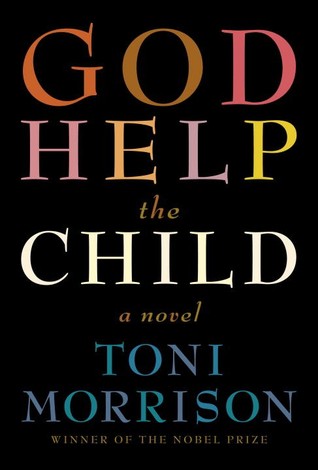
Toni MorrisonGod Help the Child by Toni Morrison

This is ToMo’s latest baby. I’ve seen lots of mixed reviews of this book on Goodreads, so I don’t know when I’ll get to it. Maybe in 2016? (Sula is the only ToMo I’ve read thus far. Meh).


Pig Tails ‘n Breadfruit by Austin Clarke Austin Clarke

Have you ever read a culinary memoir? Well, in Austin Clarke’s book Pig Tails ‘n Breadfruit ‘each chapter is devoted to a detailed description of the ritual surrounding the preparation of a particular native dishโ€”Oxtails with Mushrooms, Smoked Ham Hocks with Lima Beans, or Breadfruit Cou-Cou with Braising Beef.’ This is a (culinary) memoir of Austin Clarke’s childhood in Barbados. Clarke is a preeminent writer of the Caribbean and I’m ready to indulge – literally!


IMG_0825

Have you read any of these? What are you reading this summer? Please let me know!

*TBR : ‘to be read’

And the 2015 Caine Prize winner isโ€ฆ Namwali Serpell!

A big congratulations to Zambia’s Namwali Serpell for winning the 2015 Caine Prize for African Writing!!

Namwali Serpell is the 16th winner of the Caine Prize, which is recognized as Africaโ€™s leading literary award for short stories. The winner was announced last night at a dinner held at the Weston Library, Oxford, England for all the shortlisted candidates.

Namwali Serpell won the ยฃ10,000 prize for her short story, โ€˜The Sackโ€™. Initially I was miffed at how this year’s shortlist was more or less a dichotomy between South Africa and Nigeria, with one story from Zambia. Even though I was more in love with Elnathan’s story ‘Flying‘, I’m happy Zambia won this for once! I look forward to more of Serpell’s work in the future. Her short story, ‘The Sack’ can also be found in the Africa39 anthology which was published in October of last year (2014). Check out Africa39 to read more new short stories by young African writers, under the age of 39!

Namwali Serpell winner

 Read โ€˜The Sackโ€™ by Namwali Serpell – here

The Housemaid by Amma Darko

Date Read: May 7th 2015

Published: 1998

Publisher: Heinemann (African Writerโ€™s Series)

Pages: 107

the housemaid

The Blurb

A dead baby and bloodstained clothes are discovered near a small village. Everyone is ready to comment on the likely story behind the abandoned infant. The men have one opinion, the women another. As the story rapidly unfolds it becomes clear that seven different women played their part in the drama. All of them are caught in a web of superstition, ignorance, greed and corruption.

โ—Šโ—Š

Review – โ˜…โ˜…โ˜… (3 stars)

I bought The Housemaid back in 2008, but finally gave this book a chance and finished reading it in May of this year. This is such a messy, messy story- but in a good way! This novel tells a story of how a poor family in a Ghanaian village decides to jilt a rich businesswoman in the city, by using their daughter – who becomes a housemaid, to attempt to steal this rich woman’s wealth. As usual, Amma Darko tackles a lot of social issues in this novel and this is why I respect her as a writer. Darko explores issues of socio-economic differences between the rich and the poor, city life versus village life, feminism, spinsterhood, gender roles, religious beliefs and superstition. I liked how the story was consummated at the end, even though this novel consists of a series of crazy events.

But I was a little disappointed with Amma Darkoโ€™s writing style in this novel. The writing was choppy and too colloquial for my liking. It was quite annoying to spot basic grammatical errors and the misusage of words like โ€˜yourโ€™ and โ€˜you’reโ€™ in some chapters. Nonetheless, the social issues addressed in this book made me appreciate the story. Amma Darko’s novel Beyond the Horizon is still a gem and a more meticulously written book than The HousemaidThe Housemaid is more of a 2.5 stars rating for me.

โ˜…โ˜…โ˜… (3 stars) โ€“ Good book. I recommend it, I guess.

Purchase The Housemaid on Amazon

The Trouble with Nigeria by Chinua Achebe

Date Read: April 5th 2015

Published: 1983

Publisher: Heinemann

Pages: 68

Chinua Achebe

The Blurb

The eminent African novelist and critic, here addresses Nigeria’s problems, aiming to challenge the resignation of Nigerians and inspire them to reject old habits which inhibit Nigeria from becoming a modern and attractive country. In this famous book now reprinted, he professes that the only trouble with Nigeria is the failure of leadership, because with good leaders Nigeria could resolve its inherent problems such as tribalism; lack of patriotism; social injustice and the cult of mediocrity; indiscipline; and corruption.

โ—Šโ—Š

Review – โ˜…โ˜…โ˜…โ˜…โ˜… (5 stars)

โ€œThe trouble with Nigeria is simply a failure of leadershipโ€ฆThe Nigerian problem is the unwillingness or inability of its leaders to rise to the responsibility, to the challenge of personal example which are the hallmarks of true leadership.โ€ pg. 1

The title, The Trouble with Nigeria should actually be called ‘The Trouble with Africa’. In this short book, Achebe questions the motives of the leaders and citizens of Nigeria. Achebe systematically breaks this book into ten chapters, where he discusses the various problems Nigeria was facing in 1983. Some of these chapters are entitled: Tribalism, Indiscipline, Corruption, False Image of Ourselves, Social Injustice and the Cult of Mediocrity, amongst others.

This book is simply brilliant. It is short and straight to the point! Everyone should read this, especially African politicians and people in positions of power. But do African politicians read? A myriad of books in the African Literature genre mirror the happenings of society. Authors use their amazing talent and writing abilities to articulate the faults of our leaders and societies through their stories/fictitious characters. Do the leaders of our societies read these books to hear how the layman feels about the conditions of their nations? Do they care? Even though this book was written in 1983, most of the issues Achebe discusses hold true to Ghana, and other African countries as well- even in present day 2015. Corruption, indiscipline, tribalism, lack of patriotism, illiteracy and greed are killing administrations in several African nations. We honestly need to do better as a people and this book explains why with boldness, style and sharp wit. I loved this! Thank you Chinua Achebe.

My favorite quotes from The Trouble with Nigeria:

โ€œNigerians are what they are only because their leaders are not what they should be.โ€ pg. 10

โ€œA true patriot will always demand the highest standards of his country and accept nothing but the best for and from his people. He will be outspoken in condemnation of their short-coming without giving way to superiority, despair or cynicism. That is my idea of a patriot.โ€ pg. 16

โ€œLook at our collapsing public utilities, our inefficient and wasteful parastatals and state-owned companies… If you want electricity, you buy your own generator; if you want water, you sink your own bore-hole; if you want to travel, you set up your own airline. One day soon, said a friend of mine, you will have to build your own post office to send your letters!โ€ pg. 20 (Yes, this holds true to Ghana as well, especially issues of electricity *sigh*).

โ€œI must now touch, however briefly, on the grace undermining of national discipline which the siren mentality of Nigerian leaders fosters. In all civilized countries the siren is used in grave emergencies by fire engines, ambulances and the police in actual pursuit of crime. Nigeria, with its remarkable genius of travesty, has found a way to turn yet another useful invention by serious-minded people elsewhere into a childish and cacophonous instrument for the celebration of status.โ€ pg. 34 (Sadly, this is a daily occurrence in Ghana as well. Especially during rush hour).

โ€œMy frank and honest opinion is that anybody who can say that corruption in Nigeria has not yet become alarming is either a fool, a crook or else does not live in this country.โ€ pg. 37 (This guy was bold, sheesh!)

“Knowledgeable observers have estimated that as much as 60 percent of the wealth of its nation is regularly consumed by corruption. I have no doubt that defenders of our system would retort: Mere rumor! Where is the proof? No one can offer โ€˜satisfactoryโ€™ proof for the simple reason that nobody issues a receipt for a bribe or for money stolen from the public till.” pg. 41

โ˜…โ˜…โ˜…โ˜…โ˜… (5 stars) โ€“ Amazing book, I loved it. Absolutely recommend!

img_6478

Purchase The Trouble With Nigeria on Amazon
Excerpt from ‘Saturday’s Shadows’ by Ayesha H. Attah

If you were a fan of Harmattan Rain, you would probably love Ayesha Harruna Attah’s second novel, Saturday’s Shadows as well! I recently read an excerpt (8 pages) from the novel and so far, so good ๐Ÿ™‚

Saturday's Shadows

Check out the synopsis of Saturday’s Shadows:

           A thin film exists between sanity and madness, learn the protagonists of Saturdayโ€™s Shadows, as they try to find and hold on to love in the volatile world of 1990s West Africa. After a 17-year military dictatorship, the members of the middle class Avoka family lurch towards destruction as their country is trying to find its footing. The father, Theo, is recruited to write the memoirs of the dictator-turned-president whom he both loathes and reveres. Zahra, matriarch of the Avoka household, rekindles an affair with an old lover and barely keeps her family and sanity together. Theo and Zahraโ€™s son Kojo has just started the boarding school of his dreams but finds out sometimes dreams should remain dreams. Their help, Atsu, a recent transplant from the village, struggles to understand big city living with all its temptationsโ€”money, men, and lustโ€”and a family in which the mother doesnโ€™t possess a single domestic bone. The climate they live in is politically complex, a time so tenuous the country could easily dip back into its military past.

This multi-voiced novel not only paints a picture of these tumultuous changes, but also shows that tenderness can persist even when everything else is being rent apart. Influenced by Naguib Mahfouzโ€™s Palace Walk and William Faulknerโ€™s As I Lay Dying, Saturdayโ€™s Shadows allows its four characters to narrate how they will do almost anything to find themselves.

Read the excerpt from Saturday’s ShadowsHERE.

I purchased Saturday’s Shadows a couple of weeks ago from Vidya Bookstore in Osu, Accra. If you’re in Accra, try and pick it up! The book is also available on Amazon. Expect a review soon.

Check out my review of Harmattan Rainhere.