Excerpt from ‘Saturday’s Shadows’ by Ayesha H. Attah

If you were a fan of Harmattan Rain, you would probably love Ayesha Harruna Attah’s second novel, Saturday’s Shadows as well! I recently read an excerpt (8 pages) from the novel and so far, so good 🙂

Saturday's Shadows

Check out the synopsis of Saturday’s Shadows:

           A thin film exists between sanity and madness, learn the protagonists of Saturday’s Shadows, as they try to find and hold on to love in the volatile world of 1990s West Africa. After a 17-year military dictatorship, the members of the middle class Avoka family lurch towards destruction as their country is trying to find its footing. The father, Theo, is recruited to write the memoirs of the dictator-turned-president whom he both loathes and reveres. Zahra, matriarch of the Avoka household, rekindles an affair with an old lover and barely keeps her family and sanity together. Theo and Zahra’s son Kojo has just started the boarding school of his dreams but finds out sometimes dreams should remain dreams. Their help, Atsu, a recent transplant from the village, struggles to understand big city living with all its temptations—money, men, and lust—and a family in which the mother doesn’t possess a single domestic bone. The climate they live in is politically complex, a time so tenuous the country could easily dip back into its military past.

This multi-voiced novel not only paints a picture of these tumultuous changes, but also shows that tenderness can persist even when everything else is being rent apart. Influenced by Naguib Mahfouz’s Palace Walk and William Faulkner’s As I Lay Dying, Saturday’s Shadows allows its four characters to narrate how they will do almost anything to find themselves.

Read the excerpt from Saturday’s ShadowsHERE.

I purchased Saturday’s Shadows a couple of weeks ago from Vidya Bookstore in Osu, Accra. If you’re in Accra, try and pick it up! The book is also available on Amazon. Expect a review soon.

Check out my review of Harmattan Rainhere.

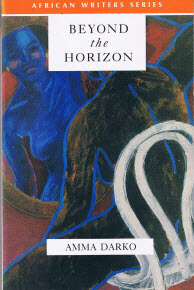
Beyond the Horizon by Amma Darko

Date Read: March 31st 2015

Published: 1995

Publisher: Heinemann (African Writers Series)

Pages: 140

beyond-the-horizon

The Blurb

Gazing at her naked body in the mirror, Mara reflects on her transformation from naïve Ghanaian village girl into a prostitute in a German brothel.

Mara has been deceived by her husband, Akobi, into coming to Europe to find a ‘Paradise’ but as the truth about Akobi and her new life unfolds she realizes she is trapped. The expectations of her family in Africa force her to remain, living a lie.

Beyond the Horizon is a gripping and provocative story of the plight of African women in Europe, and the false hopes of those they leave behind.

 ◊◊

Review – ★★★★ (4 stars)

Oh what a tragic novel this is! I don’t think Amma Darko gets the shine she rightfully deserves for this book or for her writing in general. Her novel – The Housemaid has been sitting on my bookshelf for years now. I’ll surely read it soon, as I hear its pretty amazing. With that said, Beyond the Horizon is a heart-wrenching masterpiece and a testament to some of the unfair effects of our patriarchal societies.

This is a story of a Ghanaian village girl – Mara, who enters into an arranged marriage with a man – Akobi, from the city who works at the Ministries. When Mara finally moves to the city to live in Akobi’s one bedroom shabby shelter, he constantly abuses her. Mara, who is meek, evergreen to city-life and quite stupid (that’s my opinion, sorry) cooks, cleans their home and even sells various items at the market to support Akobi while tolerating his beatings, sadistic sexual demands and sleeping on a mat on the concrete floor while Akobi enjoys his dried-grass mattress. In my eyes, Mara was Akobi’s slave.

With the help of a ‘connection’ man, Akobi travels to Europe with the intention of working to raise money to advance his social standings in the city. Akobi traveling to Europe brings honor to his village and Mara’s family as he is seen as a man of great prestige. Months after Akobi leaves for Europe, Mara attempts to modernize herself, in the attempt to make Akobi fall in love with her. To Mara’s surprise Akobi later arranges for her to join him in Europe and Mara is more than delighted since she never dreamed that stepping foot in Europe would ever be her fate. Once Mara arrives in Europe (Germany, to be exact) with the aid of the ‘connection’ man, readers witness the manipulative ordeals Mara endures in a foreign land that leave her stranded.

I’m glad I read this book even though Mara frustrated me deeply throughout the story. Mara had no sense of her worth and sadly, her fate was determined by her chosen husband – Akobi, who did not love her. Akobi was a terribly wicked, self-absorbed man who used Mara for everything that she was. I waited so long for Mara to retaliate, to come to her senses and run away, to stop fantasizing about her husband finally loving and appreciating her; but rather, she consistently endured Akobi’s verbal and physical abuse till almost the end of the novel.

Amma Darko skillfully weaves-in a lot of themes throughout this story that make this novel relevant to present day life. Some of these themes are: patriarchy, racism, colorism, domestic violence, pornography, sex exploitation, drug abuse, prostitution, the myths of living abroad (‘Europe is heaven’), immigration, feminism, womanhood, sisterhood (between Mara and Mama Kiosk in the city; between Mara, Vivian and Kaye in Germany), village life versus city life, modernity etc.

I gave Beyond the Horizon 4 stars because Amma Darko does a great job at pulling readers’ emotions with the rawness in her style of writing! She exposes readers to the horrible realities of the helpless victims of male sex exploitation with such expertise – you would think she was a surviving victim herself. But to be honest, I don’t think this book is for everyone. This is not the type of book you read for pleasure, or to relax and fill a void only enjoyable fictitious literary works satisfy you with. Beyond the Horizon is a depressing novel and wasn’t a fun read for me especially in the beginning as descriptions of domestic abuse were quite harsh. Towards the middle of the storyline, descriptions of (consensual and non-consensual) sexual encounters between Mara and Akobi and other characters in the book made me uncomfortable and slightly upset – for example:

“He was lying on the mattress, face up, looking thoughtfully at the ceiling when I entered. Cool, composed and authoritative, he indicated with a pat of his hand on the space beside him that I should lie down beside him. I did so, more out of apprehension of starting another fight than anything else. Wordlessly, he stripped off my clothes, stripped off his trousers, turned my back to him and entered me. Then he ordered me off the mattress to go and lay on my mat because he wanted to sleep alone.” pg.22

Please note: Men are generally painted as horrendous beings in this novel. I’m assuming Amma Darko wrote Beyond the Horizon as a feminist narrative because readers surely get a deep understanding of the power men hold in society, as they manipulate, deceive and use aggression in oppressing the rights of women – in this story and sometimes in reality.

Some provocative quotes from Beyond the Horizon:

“I mean, Akobi beat me a lot at home, yes, but somehow I identified beatings like this with home. That African men also beat their wives in Europe somehow didn’t fit into my glorious picture of European life.” pg. 73

“At first I didn’t understand, because here, we hear always that African people are hard workers and love work because God made them specially for the hard work of the world…” pg. 99 (this was how a white woman in Germany viewed Africans. My heart skipped a beat reading this).

“Why couldn’t I take control of my own life, since after all, I was virtually husbandless and, what did my husband care about a woman’s virtue? If I was sleeping with men and charging them for it, it was me giving myself to them. The body being used and misused belonged to me.” pg. 118 (it took Mara several years of beatings and coercions to finally realize she was in control of her own life. *sigh*).

As depressing as Beyond the Horizon is, it is definitely a relevant story that I believe everyone should read – even if reluctantly.

 ★★★★ (4 stars) – Great book. Highly recommend!

IMG_9762

Purchase Beyond the Horizon on Amazon

National Poetry Month 2015 – 3 poems

National (USA) Poetry Month is slowly coming to an end! In honor of this month dedicated to poetry, I’ve decided to showcase some of my favorite poems.

I’m not a huge poetry fan, but below are three poems: (one each) African-American, Caribbean and African poems that I love. Hope you enjoy!


African-American poem

In 2008 during my freshman year of undergrad (Middlebury College), my first year seminar class was on Urban Chicago (shout out to Prof. Will Nash!). We learned a lot about Chicago and read a lot of literature from there as well, including the works of Richard Wright, Ida B. Wells and Gwendolyn Brooks. The poem below was my favorite from Brooks. It’s speaks volumes on society’s warped perceptions of beauty and colorism even among children. Enjoy!


The Ballad of Chocolate Mabbie by Gwendolyn Brooks

It was Mabbie without the grammar school gates.

And Mabbie was all of seven.

And Mabbie was cut from a chocolate bar.

And Mabbie thought life was heaven.

The grammar school gates were the pearly gates,

For Willie Boone went to school.

When she sat by him in history class

Was only her eyes were cool.

It was Mabbie without the grammar school gates

Waiting for Willie Boone.

Half hour after the closing bell

He would surely be coming soon.

Oh, warm is the waiting for joys, my dears!

And it cannot be too long.

Oh, pity the little poor chocolate lips

That carry the bubble of song!

Out came the saucily bold Willie Boone.

It was woe for our Mabbie now.

He wore like a jewel a lemon-hued lynx

With sand-waves loving her brow.

It was Mabbie alone by the grammar school gates.

Yet chocolate companions had she:

Mabbie on Mabbie with hush in the heart.

Mabbie on Mabbie to be.


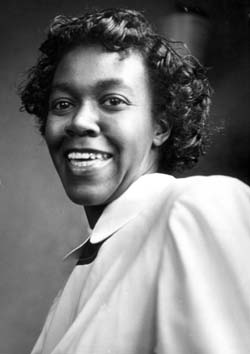
GBrooksGwendolyn Brooks was a Pulitzer Prize-winning poet, professor, and lived in Chicago all her life. This poem was taken from her collection of poems: A Street in Bronzeville (1945).


Caribbean poem: Saint Lucia

The next poem is one I recently stumbled upon by Saint Lucia native, Derek Walcott. I loved it’s calmness and reassurance. Enjoy!


Love After Love by Derek Walcott

The time will come

when, with elation

you will greet yourself arriving

at your own door, in your own mirror

and each will smile at the other’s welcome,


and say, sit here. Eat.

You will love again the stranger who was your self.

Give wine. Give bread. Give back your heart

to itself, to the stranger who has loved you


all your life, whom you ignored

for another, who knows you by heart.

Take down the love letters from the bookshelf,


the photographs, the desperate notes,

peel your own image from the mirror.

Sit. Feast on your life.

derekwalcottDerek Walcott is a Saint Lucian playwright and poet. In 1992 he received the Nobel Prize in Literature, amongst other awards throughout his successful career. Source: http://www.poemhunter.com/poem/love-after-love/ (accessed April 22nd 2015).


African poem: Uganda

My two friends from college – Harrison Kihonge, from Kenya and Motlatsi Nkhahle, from Lesotho used to call me ‘Lapobo’. It used to irritate me because I didn’t know whether ‘Lapobo’ was a compliment or an insult! I finally got them to tell me what ‘Lapobo’ meant and they told me it’s a name/term used in a poem they studied back at their respective United World College (UWC) high schools by Cliff Lubwa p’Chong. Enjoy!


The Beloved by Cliff Lubwa p’Chong

Lapobo,

Tall but not too tall,

Short but not too short,

Lapobo,

Her teeth are not as ash

Nor the colour of maize flour,

Her teeth are as white as fresh milk.

The whiteness of her teeth

When I think of her

Makes food drop from my hand.

Lapobo,

Black but not too black,

Brown but not too brown,

Her skin colour is just between black and brown.

Lapobo,

Her heels have no cracks,

Her palms are smooth and tender to touch,

Her eyes—Ho they can destroy anybody.

Lubwa p’Chong was a playwright and poet from Uganda. This poem can be read in a 1960’s anthology: Poems from East Africa edited by David Cook and David Rubadiri.

 I actually really love this poem! Now I know ‘Lapobo’ surely is not an insult. My friend Harrison Kihonge recently posted it on my Facebook wall, hence my access to the full poem.


What are some of your favorite African-American, Caribbean and/or African poems? Please do share!

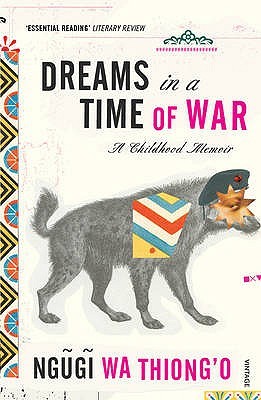
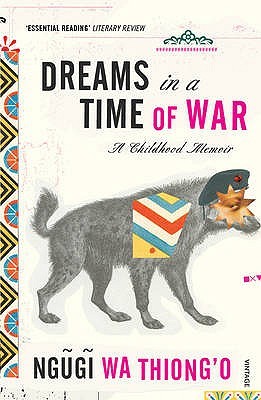
Dreams in a Time of War: A Childhood Memoir by Ngūgī wa Thiong’o

Date Read: March 22nd 2015

Published: 2010

Publisher: Vintage Books

Pages: 256

NgugiWaThiongo

The Blurb

Ngūgī wa Thiong’o is born the fifth child of his father’s third wife, in a family that includes twenty-four children to four different mothers. He spends his 1930s childhood as the apple of his mother’s eye, before attending school to slake what is considered a bizarre thirst for learning.

As he grows up, the wider political social changes occurring in Kenya begin to impinge on the boy’s life in both inspiring and frightening ways. Through the story of his grandparents and parents, and his brothers’ involvement in the violent Mau Mau uprising, Ngūgī deftly etches a tumultuous era, capturing the landscape, the people and their culture, and the social and political vicissitudes of life under colonialism and war.

◊◊

Review  ★★★★ (4 stars)

I didn’t think this book would have such an impact on me. I was a bit emotional by the end of the novel. Every time I read a Kenyan novel, I’m hungry to learn more about the country’s past. This is a very touching memoir. Ngūgī wrote this with such love and care and I admire him a lot – especially his family, which was headed by his resilient mother.

Kenya’s history plays a large role in this book, for obvious reasons. It’s as if Kenya was a separate character on its own, being abused by colonial masters (the British) while tolerating several ethnic group divisions and tensions from its fellow citizens. Commentary on the civil war, Jomo Kenyatta – Kenya’s founding father, Mbiyu Koinange – a highly educated politician and Kenyatta’s right hand man, Mau Mau guerrillas, the politics of the Kenyan educational system, the role of the Indians in Limuru etc are all discussed at length in this memoir. If you are not familiar with Kenyan history, prior knowledge is not necessarily needed to enjoy this book because Ngūgī does a great job at thoroughly explaining various historical events. I was thrilled to read on how Black Americans like Booker T. Washington (through Tuskegee University), Martin Luther King Jr. and Marcus Garvey supported and played vital roles in encouraging Kenyan independence. I loved how there was unity of all peoples of African descent in demanding their freedom from white rule.

Don’t worry- this memoir is not all about politics. Readers get insights into the dynamics of Ngūgī’s polygamous family and the effects the family structure had on him. Family members like his mother, Good Wallace (his older brother), Kabae (one of his half brothers who fought in World War II) were important in shaping Ngūgī into the man he is now, for various (polarizing) reasons. Family units play a huge role in the future of children and this memoir demonstrates this heavily.

Ngūgī’s dedication to following his dreams even during Kenya’s unstable state was truly admirable. He had a passion for learning and thanks to a pact he made with his mother, he vowed to pursue his education – even in the times of war. The vicissitudes of life Ngūgī and his family faced in Kenya during the 1940’s will encourage you to keep fighting to achieve any personal goals or dreams you have. It’s wonderfully inspiring.

I feel like I’m a member of Ngūgī’s family now that I’ve read this! The only problem I had with this book was that there were too many different names to keep up with. Try and read this book in a couple of days in order to keep track of all the names mentioned. If you haven’t read any of this great novelist’s books yet, this could be a great place to start. I absolutely recommend this. Please pick it up if you can!

 ★★★★ (4 stars) – Great book. Highly recommend!

Purchase Dreams in a Time of War: A Childhood Memoir on Amazon

Sula by Toni Morrison

Date Read: February 16th 2015

Published: 1982

Publisher: Plume

Pages: 192

Sula

The Blurb

This rich and moving novel traces the lives of two black heroines from their close-knit childhood in a small Ohio town, through their sharply divergent paths of womanhood, to their ultimate confrontation and reconciliation.

Nel Wright has chosen to stay in the place where she was born, to marry, to raise a family, and become a pillar of the black community. Sula Peace has rejected the life Nel has embraced, escaping to college, submerging herself in city life. When she returns to her roots, it is as a rebel and a wanton seductress. Eventually, both women must face the consequences of their choices. Together, they create an unforgettable portrait of what it means and costs to be a black woman in America.

◊◊

Review – ★★★ (3 stars)

Toni Morrison is a brilliant writer. Some bits of this novel were a bit dry and uninteresting, but Sula is a lovely story.

Sula Peace and Nel Wright were childhood friends from the same (fictional) town – the Bottom, in Ohio in the 1930’s. Nel came from a stable, strict household, while Sula was from a less strict household that did not seriously abide by social conventions. Despite Nel’s mother’s warnings, Nel constantly spent her time with Sula. They were inseparable, shared deep secrets (Chicken Little’s death) and were sometimes mistaken as sisters.

After high school, Sula decided to attend college in Nashville, while Nel immersed herself into motherhood, devoting her life to her husband and her three sons. When Sula returns to the Bottom, 10 years after she graduated, it was obvious that her relationship with Nel was not as intimate as before. Commentary from residents of the Bottom suggested that Sula had become a promiscuous woman who had affairs with married men, but Nel disregarded the gossip and continued to believe in the sisterhood they shared.

I really disliked Sula Peace. She was a selfish, wicked soul. Nel Wright was a bit more innocent and didn’t live for herself – I feel she lived for her husband, her kids, and Sula. I found the demise of Nel and Sula’s sisterhood predictable- especially given their similar YET very different character traits. Other characters like Eva (Sula’s one-legged grandmother), Hannah (Sula’s mother) and Shadrack help consummate the storyline in a way where readers learn life lessons from them. I loved Eva’s character- she symbolized a strong, resilient and almost heartless matriarch in my eyes.

Overall, it is Morrison’s unique writing style that made me appreciate this novel. Sula was not an exciting or extremely intriguing read for me. I’ll rummage through my Mom’s bookshelves and read another Toni Morrison soon. Maybe I’ll read The Bluest Eye or Tar Baby next.

★★★ (3 stars) – Good book. I recommend it, I guess.

Purchase Sula on Amazon

Challenge Update; Currently Reading

Hello everyone!

As I mentioned before, I’m participating in the Goodreads Reading Challenge for 2015. This year, I plan on reading 15 books (at least). I really admire those who read 40 plus books in a year! Being a dental student, I wonder if I can ever reach such goals…

Anyways, I recently finished reading the great Ngūgī wa Thiong’o ‘s childhood memoir: Dreams In A Time Of War and Amma Darko’s novel, Beyond the Horizon.

NgugiWaThiongo

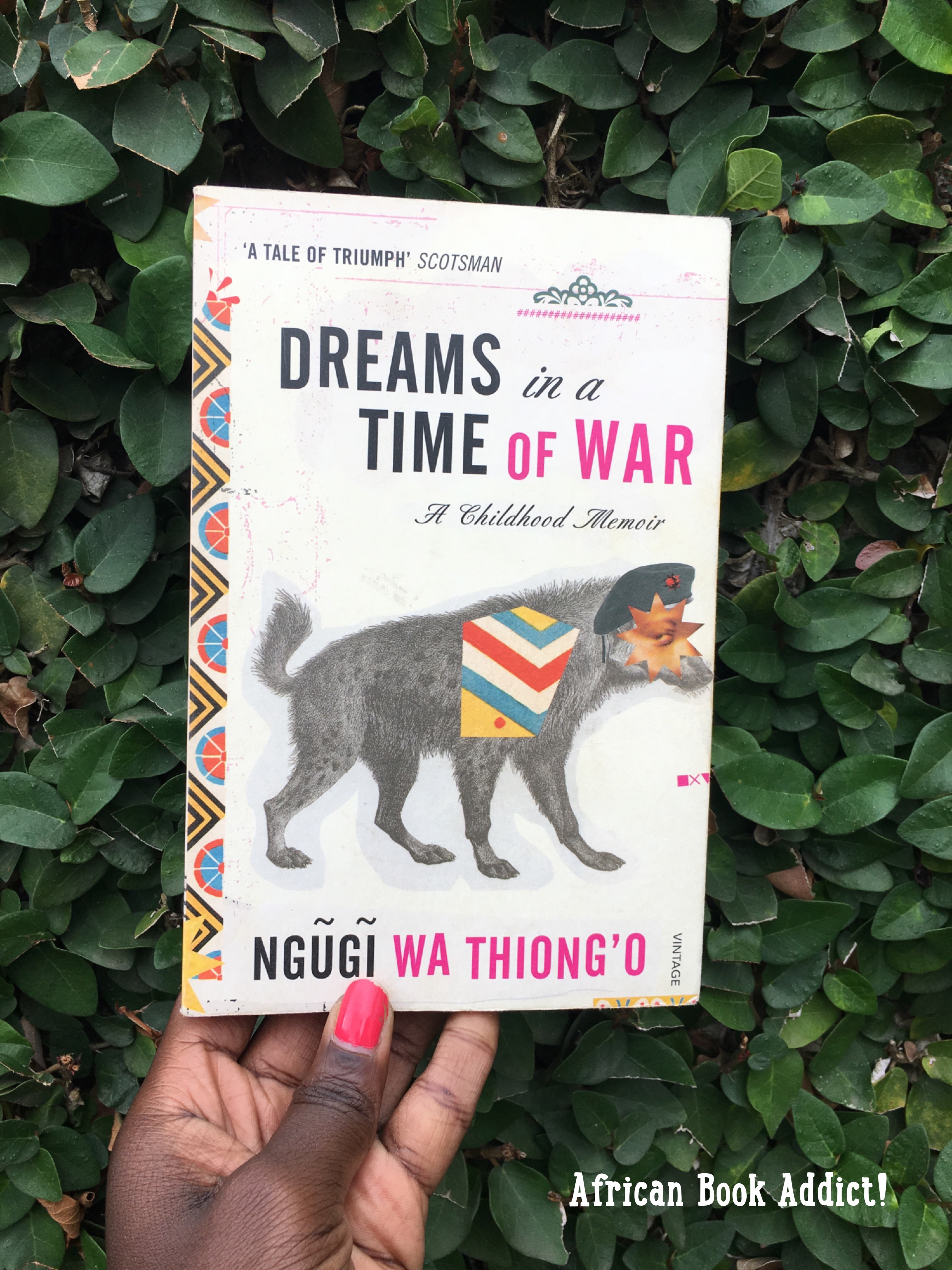
Don’t you just love the book cover? Ngūgī wa Thiong’o ‘s book was a very touching memoir – Ngūgī is a man I truly respect. I plan on reading the second volume of his memoirs – In the House of the Interpreter: A Memoir later this year :).

beyond-the-horizon

Beyond the Horizon by Amma Darko is a compulsory read for an African Studies class I’m currently taking. This book is laden with domestic violence and the main character- Mara, is extremely naive, so it was initially quite a frustrating read. Its a shame that Amma Darko does not get enough shine for her writing. Expect reviews soon!

Other books I’ve read from January till now:

January 12th 2015: We Should All Be Feminists (eBook) by Chimamanda N. Adichie

January 18th 2015: You Can’t Keep A Good Woman Down by Alice Walker

January 28th 2015: A Deeper Love Inside: The Porsche Santiaga Story by Sister Souljah 

February 1st 2015: Wife Type: Her take on real love and healthy relationships (eBook) by Sheri Gaskins (on Goodreads)*

February 3rd 2015: The Palm-Wine Drinkard by Amos Tutuola 

February 16th 2015: Sula by Toni Morrison

February 27th 2015: Not That Kind of Girl: A Young Woman Tells You What She’s “Learned” by Lena Dunham (on Goodreads)*

March 22nd 2015: Dreams in a Time of War: A Childhood Memoir by Ngūgī wa Thiong’o

March 31st 2015: Beyond the Horizon by Amma Darko

I’m currently on my 10th book:  The Trouble with Nigeria which is a very short, almost history-like book by Chinua Achebe. Since Nigeria recently had their elections, which have been peaceful thus far (thank God!), I thought this would be a good read for the times.

What are y’all currently reading?

2015 New Releases To Anticipate!

2013 and 2014 were great years for African and Black Literature. 2015 promises to be pretty amazing as well! Some great books have already been released – like Issa Rae’s The Misadventures of Awkward Black Girl ; Walter Mosley’s Inside A Silver Box ; Ayesha H. Attah’s Saturday’s Shadows, just to name a few!

Check out the blurbs of some African, Black (African-American) and Caribbean novels I’m really exited about:

UnderUnder the Udala Trees the Udala Trees by Chinelo Okapranta
(Release date: September 2015)

Inspired by Nigeria’s folktales and its war, Under the Udala Trees is a deeply searching, powerful debut about the dangers of living and loving openly.

Ijeoma comes of age as her nation does; born before independence, she is eleven when civil war breaks out in the young republic of Nigeria. Sent away to safety, she meets another displaced child and they, star-crossed, fall in love. They are from different ethnic communities. They are also both girls. When their love is discovered, Ijeoma learns that she will have to hide this part of herself. But there is a cost to living inside a lie. As Edwidge Danticat has made personal the legacy of Haiti’s political coming of age, Okparanta’s Under the Udala Trees uses one woman’s lifetime to examine the ways in which Nigerians continue to struggle toward selfhood. Even as their nation contends with and recovers from the effects of war and division, Nigerian lives are also wrecked and lost from taboo and prejudice. This story offers a glimmer of hope — a future where a woman might just be able to shape her life around truth and love.  Acclaimed by Vogue, the Financial Times, and many others, Chinelo Okparanta continues to distill “experience into something crystalline, stark but lustrous” (New York Times Book Review).

[This will be her sophomore novel. Check out my book review of her debut short stories collection: Happiness, Like Water]


 The Lost Child by Caryl Phillips

(Release date: March 2015)

Caryl Phillips’s The Lost Child is a sweeping story of orphans and outcasts, haunted by the past and fighting to liberate themselves from it. At its center is Monica Johnson—cut off from her parents after falling in love with a foreigner—and her bitter struggle to raise her sons in the shadow of the wild moors of the north of England. Phillips intertwineThe Lost Childs her modern narrative with the childhood of one of literature’s most enigmatic lost boys, as he deftly conjures young Heathcliff, the anti-hero of Wuthering Heights, and his ragged existence before Mr. Earnshaw brought him home to his family.
The Lost Child is a multifaceted, deeply original response to Emily Bronte’s masterpiece, Wuthering Heights. A critically acclaimed and sublimely talented storyteller, Caryl Phillips is “in a league with Toni Morrison and V. S. Naipaul” (Booklist) and “his novels have a way of growing on you, staying with you long after you’ve closed the book.” (The New York Times Book Review) A true literary feat, The Lost Child recovers the mysteries of the past to illuminate the predicaments of the present, getting at the heart of alienation, exile, and family by transforming a classic into a profound story that is singularly its own.

[Phillips is a well-known British-Kittian writer. This book is already out on the shelves!]


The Book of PhoenixThe Book of Phoenix by Nnedi Okorafor

(Release date: May 2015)

The Book of Phoenix is a unique work of magical futurism. A prequel to the highly acclaimed, World Fantasy Award-winning novel, Who Fears Death, it features the rise of another of Nnedi Okorafor’s powerful, memorable, superhuman women.

Phoenix was grown and raised among other genetic experiments in New York’s Tower 7. She is an “accelerated woman”—only two years old but with the body and mind of an adult, Phoenix’s abilities far exceed those of a normal human. Still innocent and inexperienced in the ways of the world, she is content living in her room speed reading e-books, running on her treadmill, and basking in the love of Saeed, another biologically altered human of Tower 7.

Then one evening, Saeed witnesses something so terrible that he takes his own life. Devastated by his death and Tower 7’s refusal to answer her questions, Phoenix finally begins to realize that her home is really her prison, and she becomes desperate to escape.

But Phoenix’s escape, and her destruction of Tower 7, is just the beginning of her story. Before her story ends, Phoenix will travel from the United States to Africa and back, changing the entire course of humanity’s future.


Blackass by A. Igoni Barrett

(Release date: July 2015)

Furo Wariboko – born and bred in Lagos – wakes up on the morning of his job interview to discover he has turned into a white man. As he hits the streets of Lagos running, Furo finds the dead ends of his life open out wondrously before him. The world, it seems, is his oyster — except for one thing: despite his radical transformation, his ass remains robustly black…

Funny, fierce, inventive and daringly provocative — this is a very modern satire, with a sting in the tail.

[A. Igoni Barrett’s sophomore novel, Love is Power or Something Like That was quite popular in 2013! I’m excited for the book cover art of Blackass to be released soon!]


Falling in Love with Hominids by Nalo Hopkinson

(Release date: August 2015)

Nalo Hopkinson (Brown Girl in the Ring) has been widely hailed as a highly significant voice in CaribbFalling In Love with Hominidsean and American fiction. She has been dubbed “one of our most important writers,” (Junot Diaz), with “an imagination that most of us would kill for” (Los Angeles Times), and her work has been called “stunning,” (New York Times) “rich in voice, humor, and dazzling imagery” (Kirkus), and “simply triumphant” (Dorothy Allison).

Falling in Love with Hominids presents over a dozen years of Hopkinson’s new, uncollected fiction, much of which has been unavailable in print. Her singular, vivid tales, which mix the modern with Afro-Carribean folklore, are occupied by creatures unpredictable and strange: chickens that breathe fire, adults who eat children, and spirits that haunt shopping malls.

How to be Drawn by Terrance Hayes

(Release date: March 2015)

A dazzling new collection of poetry by Terrance Hayes, the National Book Award–winning author of ‘Lighthead’How To Be Drawn

In How to Be Drawn, his daring fifth collection, Terrance Hayes explores how we see and are seen. While many of these poems bear the clearest imprint yet of Hayes’s background as a visual artist, they do not strive to describe art so much as inhabit it. Thus, one poem contemplates the
principle of blind contour drawing while others are inspired by maps, graphs, and assorted artists. The formal and emotional versatilities that distinguish Hayes’s award-winning poetry are unified by existential focus. Simultaneously complex and transparent, urgent and composed, How to Be Drawn is a mesmerizing achievement.


The Star Side of Bird Hill: A Novel by Naomi Jackson

(Release date: June 2015)

Two sisters are suddenly sent from their home in Brooklyn to Barbados to live with their grandmother, in this stunning debut novel.The Star Side of Bird Hill

This lyrical novel of community, betrayal, and love centers on an unforgettable matriarchal family in Barbados. Two sisters, ages ten and sixteen, are exiled from Brooklyn to Bird Hill in Barbados after their mother can no longer care for them. The young Phaedra and her older sister, Dionne, live for the summer of 1989 with their grandmother Hyacinth, a midwife and practitioner of the local spiritual practice of obeah.

Dionne spends the summer in search of love, testing her grandmother’s limits, and wanting to go home. Phaedra explores Bird Hill, where her family has lived for generations, accompanies her grandmother in her role as a midwife, and investigates their mother’s mysterious life.

This tautly paced coming-of-age story builds to a crisis when the father they barely know comes to Bird Hill to reclaim his daughters, and both Phaedra and Dionne must choose between the Brooklyn they once knew and loved or the Barbados of their family.

Jackson’s Barbados and her characters are singular, especially the wise Hyacinth and the heartbreaking young Phaedra, who is coming into her own as a young woman amid the tumult of her family.


The Fishermen by Chigozie Obioma

(Release date: April 2015)

In a Nigerian town in the mid 1990’s, four brothers encounter a madman whose mystic prophecy of violence threatens the core of their close-knit family. Told from the point of view of nine year old Benjamin, the youngest of four brothers, The Fishermen is the Cain and Abel-esque story of an unforgettable childhood in 1990’s Nigeria, in the small town of Akure. When their strict father has to travel to a distant city for work, the brothers take advantage of his extended absence to skip school and go fishing. At the ominous, forbidden nearby river, they meet a dangerous local madman who persuades thThe Fishermene oldest of the boys that he is destined to be killed by one of his siblings. What happens next is an almost mythic event whose impact-both tragic and redemptive-will transcend the lives and imaginations of its characters and its readers. Dazzling and viscerally powerful, The Fishermen never leaves Akure but the story it tells has enormous universal appeal. Seen through the prism of one family’s destiny, this is an essential novel about Africa with all of its contradictions-economic, political, and religious-and the epic beauty of its own culture. With this bold debut, Chigozie Obioma emerges as one of the most original new voices of modern African literature, echoing its older generation’s masterful storytelling with a contemporary fearlessness and purpose.
*Chigozie Obioma also has a Tumblr campaign (Abulu Sightings) that is associated with this novel. On his Tumblr blog, photos of derelict and demented people throughout Africa are showcased, in the attempt to raise awareness of their predicament to the attention of African governments. Social change through literature – this is a very bold project! Check it out – HERE.*

What new releases are you anticipating? Please do share! 
A Deeper Love Inside: The Porsche Santiaga Story by Sister Souljah

Date Read: January 28th 2015

Published: 2012

Publisher: Emily Bestler Books/ Washington Square Press (Simon & Schuster, Inc)

Pages: 432

Sister Souljah porsche

The Blurb

At last, mega-bestselling author Sister Souljah delivers the stunning sequel to The Coldest Winter Ever that fans have been eagerly waiting for. Frighteningly fierce, raw, and filled with completely unpredictability, this coming-of-age adventure is woven with emotional intensity.

A Deeper Love Inside is written in the words of Porsche Santiaga, Winter’s sharp-tongued, quick-witted younger sister. Porsche worships Winter. A natural born hustler, Porsche is also cut from the same cloth as her father, the infamous Ricky Santiaga.

Passionate and loyal to the extreme, Porsche refuses to accept her new life in group homes, foster care and juvenile detention after her wealthy family is torn apart. Porsche- unique, young and beautiful – cries as much as she fights and uses whatever she has to reclaim her status.

Unselfishly, she pushes to get back everything that ever belonged to her loving family. In A Deeper Love Inside, readers will encounter their favorite characters from The Coldest Winter Ever, including Winter and Midnight. Sister Souljah’s soulful writing will again move your heart and open your eyes to a shocking reality.

◊◊

Review – ★★★★ (4 stars)

This was a fun read! It was a bit slow in the beginning or first 150 pages, but it got better. I read The Coldest Winter Ever about 10 years ago and all I remember is that it was ahhh-mazing! With that said, A Deeper Love Inside: The Porsche Santiaga Story is not a sequel – this book has very little to do with Winter, Porsche’s older sister.

This book is a coming-of-age and cautionary tale that focuses on how ghetto-born, 10 year old Porsche Santiaga, coped with being sent to juvy (juvenile detention) after her family was separated by the arrest of her father- Ricky Santiaga who was a notorious drug lord from Brooklyn, New York. After spending about 2 years in juvy and forming some key friendships (The Diamond Needles) that positively influenced her life, she successfully escapes juvy with some members of the Diamond Needles and soon learns many, many, many lessons about love and life through her painful adventures.

Love is the reason behind all of Porsche’s actions- whether good or bad. She was striving to bring her separated family back together, only to realize that life outside of juvy had really changed and maybe the familial love disappeared…

Sister Souljah is the only urban fiction author I’ve read and I respect her writing sooo much. Unfortunately, books in the Urban Literature or Urban Fiction genre are not given the same respect as other literary genres. But these are stories that need to be read to possibly help end the sad cycles of drug abuse, senseless killings, alcoholism, teenage pregnancies, the spread of HIV/AIDS, etc in the Black community. There is so much to say about this book and I don’t want to give away any spoilers…but I’m glad it ends on a positive, uplifting note. I love the fact that Porsche heals and found real love in Elisha, who loved and appreciated her deeply- a love she had been craving and working hard for, to no avail from her sister and mother.

I gave this 4 stars because the beginning was quite slow and almost made me want to give up. Also, The Coldest Winter Ever and Souljah’s memoir, No Disrespect were more exciting reads compared to this book. But I highly recommend this! It’s a relevant narrative.

Other well-known Urban Fiction writers:

Sapphire (author of PUSH which was adopted into the film, ‘Precious’), Teri WoodsZane (her books are a blend of urban fiction & erotica), Nina FoxxKimberla RobyK’wanOmar Tyree (author of the popular book, Flyy Girl), Eric Jerome DickeyDonald Goines.

*Check out this great Youtube video by Tiffany (TiffReads) for an extensive discussion on Urban Fiction, for other recommendations and to learn more about the genre if you are interested – HERE(This video was part of the February #ReadSoulLit Photo/Booktube Challenge on social media, organized by Didi of Brown Girl Reading)*

★★★★ (4 stars) – Great book. Highly recommend!

Purchase A Deeper Love Inside: The Porsche Santiaga Story on Amazon