Sweet Medicine by Panashe Chigumadzi

Date Read: June 3rd 2016

Published: 2015

Publisher: Blackbird Books

Pages: 203

sweet medicine

The Blurb

Sweet Medicine is the story of Tsitsi, a young woman who seeks romantic and economic security through ‘otherworldly’ means. The story takes place in Harare at the height of Zimbabwe’s economic woes in 2008.

โ—Šโ—Š

Review โ€“ โ˜…โ˜…โ˜… (3 stars)

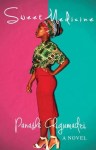
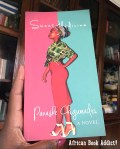
Sweet Medicine is a good debut! Don’t you love the book cover? It’s one of the reasons I just had to have this book. In between reading, I watched interviews and talks on YouTube that featured Panashe, where she spoke on racism in South Africa (where she was raised. She’s originally from Zimbabwe), feminism and the makings of an online magazine she founded – Vanguard Magazine, which is a womanist platform for young black women in South Africa speaking to the intersectionality of queer politics, Black Consciousness and pan-Africanism. Panashe is simply an amazing inspiration, and she’s only 25!

Set in present day Zimbabwe, Tsitsi – the main character, seems to be a victim of the economic crisis in Zimbabwe. Throughout this novel, she does all she can to achieve economic and romantic stability through ways that seriously contradict her staunch Christian upbringing. I must say – it was hard not to judge Tsitsi while reading this novel. Her forbidden relationship with Mr. Zvobgo (a rich man who’s recently divorced from his wife) was uncalled for, yet understandable, I guess? Unfortunately, just like Tsitsi in Sweet Medicine, many young women find themselves at the mercy of rich men as they try to survive in the midst of economic crises. This novel tackles several dichotomies of dilemmas Tsitsi and other ordinary women (even with university degrees) suffer thanks to the terrible economic states of their nations, like – desperation versus true love; spirituality versus worldliness; feminism versus patriarchy; tradition verses modernity; poverty versus abundance, and much more.

Sweet Medicine might be one of the few African novels Iโ€™ve read, where I can confidently say is written for Africans โ€“ Zimbabweans to be exact. Panashe unapologetically throws readers into Zimbabwean slang & Shona and into the happenings of Zimbabweโ€™s economic crisis โ€“ as if we are natives! Initially, Sweet Medicine was a little challenging for me to read as it took me a while to adjust to the writing style and the myriad of Shona expressions and phrases blended into the dialogue. But once I got the hang of it, I enjoyed the measured suspense of Tsitsi and Mr. Zvobgo’s undulating relationship issues, as well as the glimpses of Zimbabwean life Sweet Medicine fed me.

If you get the chance to read Sweet Medicine, just immerse yourself into the atmosphere of 2008 Zimbabwe for about 200 pages. Cringe at the silly interactions and exchanges between Tsitsi and her super bold sister-friend, Chiedza. Appreciate Tsitsiโ€™s relationship and her tortuous quandary of wanting to live a comfortable life (and provide for her family) with the man of her dreams versus wanting to honor God and her mother. And when youโ€™re done, go back and admire the ultra-chic book cover which I believe, embodies Tsitsiโ€™s persona. Sweet Medicine made for a decent summer read! I recommend this โ€“ especially to readers who’ve been longing to read a contemporary African novel, written for us โ€“ Africans.

P.S: I have an extra, brand new copy of Sweet Medicine which I will be giving away- amongst other goodies during my hosting the second and last give-away of the year. Stay tuned! ๐Ÿ™‚

โ˜…โ˜…โ˜… (3 stars) โ€“ Good book. I recommend it, I guess.

IMG_4283

Purchase Sweet Medicine on Amazon

Homegoing by Yaa Gyasi

Date Read: July 16th 2016

Published: 2016

Publisher: A.A Knopf

Pages: 305

Yaa Gyasi

The Blurb

A novel of breathtaking sweep and emotional power that traces three hundred years in Ghana and along the way also becomes a truly great American novel. Extraordinary for its exquisite language, its implacable sorrow, its soaring beauty, and for its monumental portrait of the forces that shape families and nations, Homegoing heralds the arrival of a major new voice in contemporary fiction.

โ—Šโ—Š

Review – โ˜…โ˜…โ˜…โ˜…โ˜… (5 stars)

Yaa Gyasi’s debut – Homegoing, is historical fiction at its best. I honestly thought Chimamanda Adichieโ€™s Americanah hit home for me back in 2013 when I read it. But Homegoing IS home. Homegoing is about my home. I never thought Iโ€™d read a book that perfectly articulates the dynamics of being Ghanaian-American. The only book Iโ€™ve read that somewhat touches on the identity complexities of being Ghanaian by blood and American (or British) by birth, was Powder Necklace by Nana Ekua Brew-Hammond (another awesome Ghanaian-American writer). I might have to re-read Powder Necklace and review it on this platform soon!

Homegoing was an emotional read – throughout! I started reading during the wake of the horrific Alton Sterling and Philando Castile police shootings of early July, so you can imagine how haunting these real life events paralleled with this particular historical fiction, which focuses on the legacy of slavery in America and Ghana. Homegoing follows two half sisters โ€“ Effia and Esi who live in 18th century Ghana and the generations after them, making Effia and Esi the matriarchs of dual lineages. Effia becomes the wench (not wife) of the British governor of Cape Coast Castle (a slave castle here in Ghana) and is the matriarch of the Ghanaian line of the family; while Esi, who is kept as a slave in the dungeons of this same Cape Coast Castle where Effia resides with the governor, is the matriarch of the American line of the family. Homegoing alternates between the descendants of the two sisters, chronologically from 18th century Ghana to present day (after the millennium), in both Ghana and the US. As with most books of the historical fiction genre, a family tree is provided on the first page of the novel which makes following the two lineages and the different family members pretty easy.

To be honest, I donโ€™t think itโ€™s possible to read Homegoing without harboring some resentment for the insanity white folks forced people of African descent to endure. From the events of the Trans-Atlantic slave trade, to the injustice and discrimination black folks faced in the American south as slaves, to the Anglo-Ashanti wars in Ghana, to present day racial tensions and disregard for black bodies, are all legacies of slavery. I truly admire how Gyasi manages to personalize slavery and its effects through the use of character development in each chapter. In every chapter, readers witness how each generation got some inheritance of slavery – be it through mass incarceration, the need to pass as white, lynching, colorism, the fragmenting of families and so much more.

As much as the terrors white folks caused black people are highlighted in Homegoing, I appreciate Gyasi for not letting Africans off the hook for being complicit in the slave trade. Unfortunately, the role African nations played in enabling slavery are  rarely addressed. All the ethnic wars, kidnapping of innocent people and trading of human beings in exchange for goods from the British, Dutch and Portuguese were all selfish, contributing factors to the slave trade and the inhumane effects they still manifest. While reading Homegoing, I kept thinking about Maya Angelouโ€™s autobiography – All Godโ€™s Children Need Traveling Shoes and her valid feelings of anger and disappointment she expressed after visiting the Elmina Castle (a Portuguese slave castle here in Ghana) in Cape Coast, Ghana back in the 1970โ€™s. I understood her anger, as she was a descendent of our people who were captured and sold to the Europeans. As upsetting as the slave trade was, I applaud Gyasi for using Homegoing as a way for opening up conversations on the obscure relationship between Africans and African-Americans today, thanks to our disturbed past.

Gyasiโ€™s ability to seamlessly weave Ghanaian and African-American histories into this story was very ambitious and exciting to read! I was impressed with the plethora of themes, actual historical events and icons that made realistic cameos in this novel. Don’t get me wrong – Homegoing is not rigid with historical facts. It’s very much a holistic novel with issues like interracial relationships, sharecropping, racial passing, lynching, homosexuality, mental illness, abelism, colorism and so much more, embedded into the storyline with respect to the times in which the characters live. Real historic icons and happenings like Yaa Asantewaa of Ejisu, The Asantehene, the civil rights movement & non-violent resistance headed by Dr. Martin Luther King Jr., the Fugitive Slave Act of 1850, the Harlem heroin epidemic of the late 1960’s and others are all impressively packed into this novel of 305 pages!

I enjoyed most of the chapters and characters in Homegoing. But my favorite character was Marjorie. I like to believe Marjorieโ€™s chapter is Yaa Gyasi – fictionalized. Marjorie was born in Ghana and raised in the US, just like Yaa Gyasi. In Marjorieโ€™s chapter, I loved how the character articulates how she doesnโ€™t identify fully as Ghanaian or ‘Black American’ which is sometimes used synonymously with the ambiguous term – โ€˜akataโ€™ by some Africans. I especially loved that Marjorie found joy in reading books by writers of African descent,

Her work was in African and African American literature, and when Marcus asked her why she choose those subjects, she said that those were the books that she could feel inside her. (pg. 295)

Is Marjorie me? That quote is basically the essence of why I created African Book Addict! It was refreshing to read Majorie’s chapter, as I completely understood her identity struggles. While my life story is a little different from Majorie’s/Yaa Gyasi’s, reading a character with a similar background as yours is deeply gratifying. You begin to realize that there are others like you in the world; that you’re not alone in your confusion as to where you call home; that your convictions on your ever evolving identities are valid.

While discussing Homegoing with other book lovers here in Accra, I realized there were some minor inaccuracies in the novel. But I didn’t mind the minor inaccuracies others felt the need to point out. I did however find the ending of this phenomenal book a bit corny. Marcus’s chapter should have ended with a bang – as all the other chapters did! Regardless, Homegoing was emotional and heartbreaking, yet exhilarating to read. I hope Yaa Gyasi makes a trip to Ghana soon or adds Accra to her book tour. I’d love a good ole’ chat with a fellow Ghanaian-American and of course, for my copy of the book to be graced with her signature!

I’d like to extend a special thank you to my new friend – Trish Tchume and publishers A. A Knopf  for my copy of the book.  Homegoing is definitely one of my top 5 favorite books of this year. Don’t be surprised when it is required reading in schools soon.

โ˜…โ˜…โ˜…โ˜…โ˜… (5 stars) โ€“ Amazing book, I loved it. Absolutely recommend!

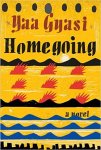
My copy of Homegoing before and after reading.

P.S: I’ve typed all of the quotes I highlighted while reading and I’m open to sending anyone who’s interested, the PDF file of the compiled quotes via email. Some of the quotes, notes and suggested readings I highlighted would make for amazing book club discussions ๐Ÿ™‚

Purchase Homegoing on Amazon

Mini Reviews | Some Love, Some Pain, Sometime & Letter to My Daughter

Hey everyone!

Last year, thanks to finals week, I wasn’t able to review the books I read by legendary mothers – J. California Cooper and Maya Angelou.ย Below are mini reviews of two books written by two brilliant, African-American literature pioneer writers.

Some Love, Some Pain, Sometime: stories by J. California Cooper
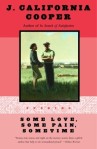
J. California CooperDate Read: December 26th 2015

Published: 1996

Publisher: Anchor Books / Doubleday

Pages: 273


The Blurb

Whether through her stories or her legendary readings, J. California Cooper has an uncanny ability to reach out to readers like an old and dear friend. Her characters are plain-spoken and direct: simple people for whom life, despite its ever-present struggles, is always worth the journey.

In Some Love, Some Pain, Sometime, Cooper’s characteristic themes of romance, heartbreak, struggle and faith resonate. We meet Darlin, a self-proclaimed femme fatale who uses her wiles to try to find a husband; MLee, whose life seems to be coming to an end at the age of forty until she decides to set out and see if she can make a new life for herself; Kissy and Buddy, both trying and failing to find them until they finally meet each other; and Aberdeen, whose daughter Uniqua shows her how to educate herself and move up in the world.

These characters and others offer inspiration, laughter, instruction and pure enjoyment in what is one of J. California Cooper’s finest story collections.

Review โ€“ โ˜…โ˜…โ˜… (3 stars)

I discovered J. California Cooper back in 2013. But the announcement of her passing in 2014 had me wishing I’d read her work earlier. After readingย Some Love, Some Pain, Sometime, I realized I had really been missing out on Ms. Cooper’s yummy ways of storytelling! As I was reading the stories in this collection, I felt as if I was chatting with a good friend in my living room. Cooperโ€™s stories have a juicy, gossipy-feel that make for an exciting, yet comforting read!

My favorite stories were:

‘Femme Fatale’ย – In this story, readers are invited into Darlin’s life as she tries to find herself. After losing both parents and her beloved grandmother, Darlin does all she can to be happy and to be loved by a good man, while in the process grooming herself to be a ‘femme fatale’.ย This story was an emotional rollercoaster and I loved how it ended. J. California Cooper puts a lot of sass into this story!

‘Sure Is a Shame’ย 

You know, it’s a fact and I seen it, sometimes when you think you taking a bite out of life, chewing hard on it, life be done taken a bite out of you and done already swallowed. Sho is a shame, sho isย (pg. 159).ย 

This is a cautionary tale on the consequences ofย taking the little things and good people for granted. It was a long-winded story, but also a wake up call and good reminder to appreciate each day in life, as well as the people placed in it.

Most of the characters inย Some Love, Some Pain, Sometimeย are either 50 years and older or they grow well into old age as they recollect different events of their lives.ย All the stories have an element of self-help to them, as J. California Cooper drops lots of wisdom on how to live a fulfilling life, through the characters in the stories. But I wished some of the protagonists were younger and that there was more variety to the stories in this collection. Honestly, I can only remember about 3 stories out of this collection. I found the rest of the stories redundant, predictable and quite simple – without much depth. With that said, I still look forward to reading some of J. California Cooper’s full novels – like Family and The Wake of The Windย in the near future. Definitely read this if you’re in the mood for a chatty, comforting collection of stories!

โ˜…โ˜…โ˜… (3 stars) โ€“ Good book. I recommend it, I guess.

IMG_4552

Purchaseย Some Love, Some Pain, Sometime onย Amazon


Letter to My Daughter (ebook) by Maya Angelou
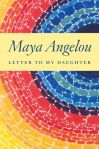
Letter_to_My_DaughterDate Read: November 27th 2015

Published: September 2008

Publisher: Random House

Pages: 166


The Blurb

Dedicated to the daughter she never had but sees all around her, Letter to My Daughter reveals Maya Angelouโ€™s path to living well and living a life with meaning. Told in her own inimitable style, this book transcends genres and categories: guidebook, memoir, poetry, and pure delight.

Here in short spellbinding essays are glimpses of the tumultuous life that led Angelou to an exalted place in American letters and taught her lessons in compassion and fortitude: how she was brought up by her indomitable grandmother in segregated Arkansas, taken in at thirteen by her more worldly and less religious mother, and grew to be an awkward, six-foot-tall teenager whose first experience of loveless sex paradoxically left her with her greatest gift, a son.

Whether she is recalling such lost friends as Coretta Scott King and Ossie Davis, extolling honesty, decrying vulgarity, explaining why becoming a Christian is a โ€œlifelong endeavor,โ€ or simply singing the praises of a meal of red riceโ€“Maya Angelou writes from the heart to millions of women she considers her extended family.

Like the rest of her remarkable work, Letter to My Daughter entertains and teaches; it is a book to cherish, savor, re-read, and share.

Review โ€“โ˜…โ˜…โ˜…โ˜… (4 stars)

Maya Angelou is one of the writers who got me truly interested in African-American literature and reading in general, back when I was 13 years old. When I was younger, I wasn’t particularly excited about the ‘classics’ I was forced to read, like – Black Beauty, David Copperfield, Oliver Twist, To Kill A Mockingbird, Little Women, The Catcher in the Rye,ย Ann of Green Gables, just to name a few. I appreciated those books, but I didn’t deeply connect with the characters of the novels. When my mother suggested for me to start reading Maya Angelou’s autobiography series which she owned in her bookshelf (my mother is an original bookworm. Me and my siblings will inherit a whooole library of books!), I started with –ย I Know Why The Caged Bird Sings. Angelou’s storytelling grasps all of your attention with her vivid descriptions, poetic writing style and punches of wisdom in each chapter of her work. *sigh* I’m still bitter that she passed away on my birthday in 2014. I really wanted to meet her or just be in her presence at a literary event.

Letter to My Daughter is my sixth read from Maya Angelou’s work and I believe it’s a timeless gem of essays!

My favorite essays were:

‘Accident, Coincident, or Answered Prayer’ – This story was very familiar, as I’ve read a similar version of the account in Angelou’s final book in her autobiography series – Mom & Me & Momย (2013). In ‘Accident, Coincident, or Answered Prayer,’ย Maya Angelou takes readers back to when she dated a physically abusive man and the (emotional, physical) pain it caused her life as a young woman. To think Angelou could have died in the serious brawl she describes in this essay is horrifying. However her fierce mother – Vivian Baxter, is the real MVP of this account as her love and fearless nature save Angelou. In this account, readers ultimately learn that Maya Angelou believed in the power of prayer.

‘Violence’

Too many sociologist and social scientists have declared that the act of rape is not a sexual act at all, but rather a need to feel powerful… The sounds of the premeditated rape, the grunts and gurgles, the sputtering and spitting, which commences when the predator spots and then targets the victim, is sexual. The stalking becomes, in the rapist’s mind, a private courtship, where the courted is unaware of her suitor, but the suitor is obsessed with the object of desire. He follows, observes, and is the excited protagonist in his sexual drama… I am concerned that the pundits, who wish to shape our thinking and, subsequently, our laws, too often make rape an acceptable and even explainable social occurrence… We must call the ravening act of rape, the bloody, heart-stopping, breath-snatching, bone-crushing act of violence, which it is. The threat makes some female and male victims unable to open their front doors, unable to venture into streets in which they grew up, unable to trust other human beings and even themselves. Let us call it a violent unredeemable sexual act… (pages 39-41).

This is an excerpt from ‘Violence,’ย one of the powerful (and self-explanatory) essays from this collection which is ever so relevant to us today in 2016. I wonder what Maya Angelou would make of the several, deeply upsetting rape cases that seem to be pushed under the rug today – especially the terrible Stanford rape case. Angelou picks readers’ brains and questions society’s complacency in combatting violent acts against women. This was a compelling, necessary essay.

Mother Maya Angelou can do no wrong in my eyes! This collection of essays is uplifting and familiar if you’ve read any of her autobiographies. Even if you aren’t familiar with her work, this is nevertheless a riveting collection to start with, as readers can get a feel of her storytelling, essays and poetry. Maya Angelouย was a well of wisdom who touched many lives through her wonderful words – she will always be one of my favorites!

P.S: Has anyone seen the Maya Angelou Documentary yet –ย Maya Angelou: And Still I Riseย ? It was released June 7th of this year!

โ˜…โ˜…โ˜…โ˜… (4 stars) โ€“ Great book. Highly recommend!

IMG_4553

I hope to purchase the physical copy ofย Letter to My Daughter soon!ย Above is my Mom’s super old Maya Angelou collection from our personal library. I have two books left to read from this pile ๐Ÿ™‚

Purchase Letter to My Daughter by Maya Angelou on Amazon
The Star Side of Bird Hill by Naomi Jackson

Date Read: June 14th 2016

Published: 2015

Publisher: Penguin Press

Pages: 304

The Star Side of Bird Hill

The Blurb

After their mother can no longer care for them, young Phaedra and her older sister, Dionne, are exiled from Brooklyn to Bird Hill in Barbados to live with their grandmother Hyacinth, a midwife and practitioner of the local spiritual practice of obeah.

Dionne spends the summer in search of love, testing her grandmother’s limits, and wanting to go home. Phaedra explores Bird Hill, where her family has lived for generations, accompanies her grandmother in her role as a midwife, and investigates their mother’s mysterious life.

When the father they barely know comes to Bird Hill to reclaim his daughters, both Phaedra and Dionne must choose between the Brooklyn they once knew and loved or the Barbados of their family.

โ—Šโ—Š

Review โ€“ โ˜…โ˜…โ˜… (3 stars)

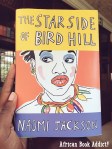
I bought The Star Side of Bird Hill late last year for 2 reasons: I absolutely adored the super chic, sassy cover art (designed by an amazing contemporary Caribbean artist from Barbados – Sheena Rose) and I just had to support Naomi Jackson, as she’s an alum of Williams College – Middlebury’s (my alma mater) sister liberal arts school!

The Star Side of Bird Hill is a decent coming-of-age story that focuses on Barbadian-American sisters – Dionne (16 years old) and Phaedra (10 years old) as they learn new things about their family, culture and even themselves during their summer vacation in Bird Hill, Barbados. I really appreciated Jackson’s easy-going and descriptive writing style in this novel. Her vivid descriptions of Barbados definitely made this a great summer read! I felt as if I was with the characters during the lively carnival and on the sandy, pristine beaches against the backdrop of the serene sunsets. I could even hear the voices of both Dionne and Phaedra during their dialogues – that’s how thorough Jackson’s descriptions were!

But I kept wondering if The Star Side of Bird Hill was considered a YA (Young Adult) novel because it was surprisingly a heavy read. Tough issues like depression, mental illness, death, divorce, suicide, homosexuality, bi-cultural upbringing, Christianity, voodoo etc are all tackled in this book. I must say, Dionne and Phaedra’s grandma – Hyacinth, is the real MVP of this novel. I was in awe of her strength, courage and emotional stability given the series of unexpected, unfortunate incidents that occur at Bird Hill. It seemed as if Naomi Jackson was paying homage to the women of Bird Hill by showcasing the amazing strength the Barbadian women possess.

While reading, I sensed some similarities in this storyline to Haitian writer,  Edwidge Danticat’s novel Breath, Eyes, Memory – even though Danticat takes the themes of mother-daughter relationships, depression, sexual assault and suicide up a notch! I wanted to gift one of my friends who is of Grenadian heritage with this book, as I initially thought she’d easily relate to Caribbean/Caribbean-American storyline, but I’ve been having second thoughts since the story becomes super depressing for a good 100 pages. I wasn’t really blown away by The Star Side of Bird Hill when I finished the book. I enjoyed how most incidents and issues were sort of resolved by the end, but The Star Side of Bird Hill is not more than 3.5 stars for me. I do look forward to whatever Naomi Jackson writes next though!

โ˜…โ˜…โ˜… (3 stars) โ€“ Good book. I recommend it, I guess.

IMG_4282

Purchase The Star Side of Bird Hill on Amazon

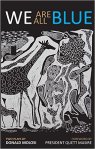
We Are All Blue by Donald Molosi

Date Read: July 5th 2016

Published: 2015

Publisher: The Mantle

Pages: 128

We Are All Blue

The Blurb

We Are All Blue (Botswana) is a collection of two plays โ€“ Blue, Black and White & Motswana: Africa, Dream Again โ€“ by the actor and playwright Donald Molosi, including an introduction by Quett Masire, former president of Botswana.

Blue, Black and White (2011), the longest running one-man show in Botswanaโ€™s history, was the first-ever Botswana play staged off-Broadway in New York City, where Molosi won a best actor award. BBW is about the countryโ€™s first democratically-elected president, Sir Seretse Khama, and his interracial, transformative marriage. Winner of several awards, the play has been performed around the world.

Motswana: Africa, Dream Again is the story of Botswana and its people as they transition from a British colony to an independent state. The play premiered off-Broadway in 2012 where it won an award at the United Solo Festival, the worldโ€™s largest solo theatre festival. Written, directed, and performed by Molosi, the play has been performed across the U.S. and is on tour in Botswana and South Africa.

โ—Šโ—Š

Review โ€“โ˜…โ˜…โ˜…โ˜… (4 stars)

Donald Molosi is a brilliant playwright. What better way to learn about Botswana than by reading a play? The last time I read a play set in Africa was Ola Rotimi’s Our Husband Has Gone Mad Again, back in high school. Reading We Are All Blue was refreshing and I learned a GREAT deal about Botswana from this creative collection of two short plays.

The first play entitled, Blue, Black & White takes readers to a classroom, where young students are learning about pre-independence Botswana (or Bechuanaland, as the British called it) and Botswana’s founding father – Sir Seretse Khama’s controversial marriage to his British wife, Ruth Williams. The title of this play is actually the colors of Botswana’s flag: blue represents water, which is considered the lifeline of the desert nation; black represents the majority black population; the white strips represent the white citizens with whom the Motswana want to live in harmony with.

Botswana

Botswana’s blue, black and white National flag

The play simultaneously educates the students in their classroom as well as the reader of the Khama love story, Botswana’s road to independence and the importance of being inclusive as an African nation. I found this play to be oh soo cute! I loved all the characters (students) and the side conversations they had with their annoyingly domineering teacher.

Reading about history can be boring and tedious. But this play definitely informs Motswana (Motswana – citizen of Botswana) and others – both of African and non-African descent, on some facts about Botswana’s first president and the challenges the nation overcame in order to be as inclusive of all people as possible. The film – A United Kingdom directed by Amma Asante (yes, the Ghanaian-Brit film director!) based on Sir Seretse Khama and Lady Ruth’s disputed interracial romance, has been selected to open the 60th BFI London Film Festival in October! It should be showing in cinemas by November. I will definitely keep an eye out for that!

The second play entitled, Motswana: Africa, Dream Again is essentially a play on what it means to be Motswana (again, Motswana means, a citizen of Botswana). In this play, the protagonist – Boemo, is sooo woke! Boemo is a thirty year old member of parliament who seems annoyingly conscious (to everyone else) of his identity as Motswana and as an African. As a child of the new generation, he identifies more with being Pan-African than identifying solely as Motswana,

My mind and my knowledge of myself are formed by the victories that are the jewels in our African crowns, the victories we earned from Lagos to Juba, from Dimawe to Sophiatown, as the Ashanti of Ghana as the Berbers of the Sahara, as the Swahili of Tanganyika. Being part of all these people, and in the knowledge that none dare contest that assertion, I shall claim that I am African. And I am a Motswana (page 80).

Motswana: Africa, Dream Again is super short and straight to the point in its criticisms and depiction of post-colonial Botswana and what it means to call yourself an African today. I truly appreciate the Pan-African nature of this play. It erases the borders the colonial masters drew around us and simply articulates the importance of celebrating all African nationalities and identities – be it Namibian, Ugandan, Chadian, Ethiopian, Burkinabรฉ, Moroccan or Africans from the diaspora – as ONE,

I want to believe that a common ancestry is what binds us as Africans. I often imagine a common ancestor holding all Africans fiercely and warmly inside her womb… (page 96).

I always thought my first read from Botswana would be by Bessie Head, but Donald Molosi beat her to it! I’m eager to see Molosi perform live on stage one day, as he’s primarily an actor. I especially love that he got his undergrad degrees (in Political Science and Theatre) from Williams College – Middlebury’s (my alma mater) sister liberal arts school! So many young people of African descent doing amazing things. Read We Are All Blue if you want to enjoy a collection of entertaining, historical plays on Botswana and on Africa as a whole. This collection is inspiring.

โ˜…โ˜…โ˜…โ˜… (4 stars) โ€“ Great book. Highly recommend!

Purchase We Are All Blue on Amazon 


This review is in collaboration with the 2016 Writivism Festival in Kampala, Uganda (August 22nd – 28th 2016). I’d like to give a special thank you to Bwesigye Bwa Mwesigire and the crew over at #Writivism2016 for sending me an e-copy of We Are All Blue.๐Ÿ™‚

Poetry | bone & Teaching My Mother How To Give Birth

Hey everyone! In my review of salt. by Nayyirah Waheed, I listed a bunch of contemporary poets and my keen interest to enjoy their works in the near future. Yrsa Daley-Ward and Warsan Shire were on that list and I finally read their collections (e-books) a couple of months ago.

Below are two mini reviews of the poetry collections by two popular poets grabbing peoples’ attention in 2016.

bone by Yrsa Daley-Ward 

boneDate Read: April 12th 2016

Published: June 2014

Publisher: CreateSpace Independent Publishing

Pages: 136


The Blurb

Bone. Visceral. Close to. Stark.


Review โ€“โ˜…โ˜…โ˜…โ˜… (4 stars)

bone is a brilliant collection of poems. I enjoyed reading the long poems in this collection, as they read like short stories and were packed with lots of suspense and emotion!

Most of the poems in bone have recurring themes of death, sex, family, relationships and Christianity. Yrsa Daley-Ward blends her West Indian (Jamaican) and West African (Nigerian) cultures beautifully in this collection, especially with her references to foods like Jollof rice, stereotypical Black woman mannerisms like eye-rolling and sucking of teeth etc.

Some of my favorite quotes:

Loving someone who hates themselves is a special kind of violence. A fight inside the bones. A war within the blood. (pg. 12)


If you were married to yourself could you stay with yourself? My house would be frightening and wild. (pg. 53)

Even though some of the poems read like short stories, there were healing elements to them that I really appreciated. The poems liberate you… They almost reminded me of – Nayyirah Waheed’s collection salt. bone definitely hit home and made me realize and appreciate how difficult and different peoples’ lives can be. This was an eye-opening read. Please don’t sleep on Ysra Daley-Ward!

โ˜…โ˜…โ˜…โ˜… (4 stars) โ€“ Great book. Highly recommend!

Purchase bone by Yrsa Daley-Ward on Amazon


Teaching My Mother How To Give Birth by Warsan Shire 

Warsan shire

Date Read: March 16th 2016

Published: December 2011

Publisher: Flipped Eye Publishing

Pages: 38


The Blurb

What elevates Teaching My Mother How To Give Birth, what gives the poems their disturbing brilliance, is Warsan Shire’s ability to give simple, beautiful eloquence to the veiled world where sensuality lives in the dominant narrative of Islam; reclaiming the more nuanced truths of earlier times – as in Tayeb Salih’s work – and translating to the realm of lyric the work of the likes of Nawal El Saadawi. As Rumi said, “Love will find its way through all languages on its own”; in Teaching My Mother How To Give Birth – Warsan’s debut pamphlet, we witness the unearthing of a poet who finds her way through all preconceptions to strike the heart directly.


Review โ€“โ˜…โ˜…โ˜…โ˜… (4 stars)

Somali-Brit poet – Warsan Shireโ€™s writing is biting, abrupt and shocking. Most of the poems in Teaching My Mother How To Give Birth have recurring themes of immigrant life, being a refugee, war, death, sex, relationships, womanhood, Islam (almost similar to the themes in Somali-Brit – Diriye Osman’s short stories collection, Fairytales For Lost Children). The first set of poems in this collection were pretty wild and literally had my heart racing. When I finished reading this collection back in March, I craved more because this collection was way too short. Iโ€™m definitely looking forward to Shireโ€™s new collection of poems entitled, Extreme Girlhood- which is set to be published this Fall!

Some of my favorite quotes:

Conversations About Home (at the Deportation Center)

โ€ฆNo one leaves home unless home is the mouth of a shark. Iโ€™ve been carrying the old anthem in my mouth for so long that thereโ€™s no space for another song, another tongue or another language.

I know a few things to be true. I do not know where I am going, where I have come from is disappearing, I am unwelcome and my beauty is not beauty here. My body is burning with the shame of not belonging, my body is longing. I am the sin of memory and the absence of memory. I watch the news and my mouth becomes a sink full of blood. The lines, the forms, the people at the desks, the calling cards, the immigration officer, the looks on the street, the cold settling deep into my bones, the English classes at night, the distance I am from home. But Alhamdulilah of all of this is better than the scent of a woman completely on fire, or a truckload of men who look like my father, pulling out my teeth and nails, or fourteen men between my legs, or a gun, or a promise, or a lie, or his name, or his manhood in my mouth.


Birds

Sofia used pigeon blood on her wedding night.

Next day, over the phone, she told me

how her husband smiled when he saw the sheets, 

that he gathered them under his nose, 

closed his eyes and dragged his tongue

over the stain.

She mimicked his baritone, how he whispered

her name – Sofia, 

pure, chaste, untouched. 

We giggled over the static…

I knew Warsan Shire was a talented poet back in 2013 and was aware of all the accolades sheโ€™s been awarded over the years. Thanks to my 2016 Reading Goals to incorporate more poetry into my reading challenge, I decided to finally give Shireโ€™s poetry a try and I must say – Iโ€™ve been blessed by her work!

After Beyoncรฉโ€™s (visual) album โ€“ Lemonade was released back in April, I realized a lot of people were finally paying more attention to Warsan Shireโ€™s amazing work. Before Beyoncรฉโ€™s Lemonade album, I didnโ€™t really hear people (more specifically- not fellow Africans) talk much about Warsan Shire. I made a Facebook status about this observation and it gathered quite a few comments:

IMG_3920

I respect that everyone has their own preferences when it comes to literary works, but I’ve realized that we (Africans) tend to only celebrate the celebrated. Once a big celebrity from the US or UK praises someone from our continent for their craft, all of a sudden we (Africans) start taking notice of the person and are suddenly proud to have them as African (whichever country they hail from). These are just my observations! Anyways, the Facebook post later inspired the four Nigerian women of Not Your African Clichรฉ Podcast  to talk about Warsan Shire, Chimamanda Adichie, Beyoncรฉโ€™s album Lemonade and the importance of us supporting artists from our continent. I was invited to join the ladies on the podcast to discuss these topics and so much more! Check out the short description of the episode below:

“Although late to the โ€ช#โ€ŽLemonade dissection game, the ladies of NYAC discuss a less explored running theme in Beyonceโ€™s last two albums โ€“ her collaborations with brilliant African writers; Chimamanda Adichie on self-titled Beyoncรฉ and Warsan Shire on Lemonade. Joined by book blogger extraordinaire and longtime listener/supporter Darkowaa (@AwoDeee), we talk about our favorite tracks off the Lemonade album, the pros and cons of being featured in such high profile work, the limited visibility and reach African works of art have in Africa, and what it takes for African artistry to gain a wide following.”

https://soundcloud.com/not-your-african-cliche-podcast/nyac-s1-episode-12-african-artists-western-collaborators-and-lemonade

Please listen to this episode if you have 59 minutes to spare! If you want to just dive right into the topics, you can start listening from 18 minutes 52 seconds – but I highly recommend you listen to the whole episode, it was a great discussion! Feel free to join the discussion with your comments! Also, don’t forget to subscribe to Not Your African Clichรฉ Podcast on iTunes, Soundcloud and follow them on Twitter (@NYACpodcast) as well!

All in all, I truly enjoyed and learned a lot from the works of Yrsa Daley-Ward (above on the left) and Warsan Shire (above on the right). Their poetry makes me proud to be a black woman. I’ll surely be purchasing the physical copies of these books to add to my bookshelf soon ๐Ÿ™‚

โ˜…โ˜…โ˜…โ˜… (4 stars) โ€“ Great book. Highly recommend!

Purchase Teaching My Mother How To Give Birth by Warsan Shire on Amazon

Saturdayโ€™s Shadows by Ayesha H. Attah

Date Read: February 27th 2016

Published: January 2015

Publisher: World Editions

Pages: 352

Saturday's Shadows

The Blurb

The protagonists of Saturdayโ€™s Shadows experience the fine line between sanity and madness as they try to find and hold on to love in the volatile world of 1990s West Africa. After a seventeen-year military dictatorship, a country tries to find itโ€™s footing while the members of the middle-class Avoka family lurch towards destruction. They live in a politically complex climate, a time so tenuous that the country could easily dip back into its military past.

ย โ—Šโ—Š

Review โ€“ โ˜…โ˜…โ˜… (3 stars)

Saturdayโ€™s Shadows is a multi-voice novel about the Avoka family in an unnamed West African country. Readers meet Theo – the head of the Avoka family, who is working on the president โ€“ Dr. Karamoh Saturdayโ€™s memoir and might be caught up in dangerous political risks. His wife is Zahra, who works in the farming industry but is pre-occupied with re-living her past love life with an old flame. And there’s Kojo, their only child who is struggling to keep up with schoolwork at the prestigious International Secondary School. Atsu, the Avoka familyโ€™s house help is straight out of the village and is busy balancing learning to read and write English while trying to stay out of trouble with a suspicious man who admires her.

Saturdayโ€™s Shadows is a decent novel and Ayesha H. Attah does an amazing job with character development. Character development is a huge strength of Ayesha Harruna Attahโ€™s and I remember truly enjoying the character development of characters like Sugri and Akua-Afriyie in Harmattan Rain back in 2014. My favorite character in Saturdayโ€™s Shadows is Kojo. He is such a witty, hilarious, typical teenage boy with insecurities and worries of growing up. I was always happy to read his chapters in this novel as he finds young love and struggles with bullies and Math at school. My least favorite character in this novel is Kojoโ€™s mother – Zahra. She’s such selfish mother and wife! Throughout the book, she only lives to satisfy her own wants and needs, which put her health and marriage at risk. Theo Avokaโ€™s chapters are intriguing as well. He gives the novel a political feel, which is a different dimension to the family-oriented theme of this novel.

Because this story takes place in an unnamed West African nation, the different characters have various names of West African origin. For example, some characters have Nigerian names like Kunle and Ngozi ; Ghanaian names like Atsu and Kojo ; Senegalese names like Ndeye and Diouf. This may seem trivial, but I really loved how there was a cute blend of West African names in this novel! But it took me 2 months to finish Saturdayโ€™s Shadows โ€“ I started it a day after Christmas and ended up taking a break from the book when I got to page 260 or so. I think I was just craving a story that was more fast-paced and exciting. Why did all the good action have to happen on page 300, almost towards the end? After I picked this up again in February, I found the storyline to be a bit predictable. I’m a huge fan of Ayesha H. Attahโ€™s work, but this book wasnโ€™t as exciting for me as Harmattan Rain. Definitely read this book if you enjoy character development and a family themed story!

โ˜…โ˜…โ˜… (3 stars) โ€“ Good book. I recommend it, I guess.

Check out some photos from the Saturday’s Shadows book reading I attended back in 2015 – here.

Ayesha H. Attah is working on a new novel called One Hundred Wells of Salaga! Read more about it – here. I’m excited for it!!

IMG_3141

Purchase Saturday’s Shadows on Book Depository

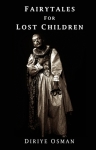
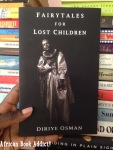
Fairytales For Lost Children by Diriye Osman

Date Read: January 7th 2016

Published: September 2013

Publisher: Team Angelica Press

Pages: 156

Diriye Osman

The Blurb

Fairytales For Lost Children is narrated by people constantly on the verge of self-revelation. These characters – young, gay and lesbian Somalis – must navigate the complexities of family, identity and the immigrant experience as they tumble towards freedom. Using a unique idiom rooted in hip-hop, graphic illustrations, Arabic calligraphy and folklore studded with Kiswahili and Somali slang, these stories mark the arrival of a singular new voice in contemporary fiction.

โ—Šโ—Š

Review โ€“ โ˜…โ˜…โ˜…โ˜…โ˜… (5 stars)

*sigh*

Is it too early to already know my favorite book of the year? Fairytales For Lost Children just might be the best book Iโ€™ve read this year. I read two stories a day from this collection, to adequately absorb everything in little bits. I even smoothed the velvet-textured book cover against my cheeks after reading some of the stories (no, Iโ€™m not a weirdo… maybe a little haha). And when I was done reading Fairytales For Lost Children, I wanted more. I need Diriye Osman to write a full novel soon!

This collection of short stories is raw, erotic, sassy, vivid, devastating and most importantly, liberating. These stories are set in modern day Somalia, Kenya and London. The characters of these stories just want to be loved for who they are. They desire to live their lives free from hate, criticism, and scrutiny, while trying to understand the intersectionalities of their own identities.

There are eleven stories in this collection and I loved how Diriye Osman precedes each story with his beautiful artwork, which visually summarizes each tale. Osman also incorporates lots of Neo-Soul (my ultimate favorite music genre) and old school Hip-Hop music into the stories. He refers to Meshell Ndegeocelloโ€™s 2002 soul album, Comfort Woman in about three of the stories, so I just had to purchase that album after I read this collection! Osman also blends languages like Somali, Arabic and Swahili into these stories, which make them feel authentic. I deeply enjoyed each and every one of the stories (which is rare for a short stories collection โ€“ there are always one or two stories I donโ€™t care for) but my faves were:

Shoga‘ โ€“ This tale was pretty explicit but entertaining and heartbreaking at the same time. A displaced seventeen year old Somali boy lives with his grandmother, Ayeeyo, in Kenya. He falls in love with Boniface – the domestic help who is a refugee from Burundi. After enjoying many nights of listening to Bob Marley, smoking marijuana and sleeping with Boniface in his quarters, this seventeen year old later has to deal with the consequences of his pleasures by facing his grandmother โ€“ before her time is up.

Earthling‘ โ€“ This is a story that follows Somali-Brit – Zeytun, who suffers from psychosis and deeply desires love from her family – more so, from her sister. Her only family and support system is her girlfriend, Mari, who admirably stands by Zeytun and aids in her mental and emotional healing. The love exhibited between this lesbian couple was eye-opening and comforting to me.

Your Silence Will Not Protect You‘ โ€“ This story is preceded by Diriye Osmanโ€™s artwork that actually looks like a portrait of himself (he’s the man on the book cover by the way!), so Iโ€™m assuming this tale is loosely based on his personal story. Osman boldly narrates the series of events that lead to him coming out to his family, and how he boldly deals with the pain of rejection.

The Other (Wo)man‘ โ€“ Iโ€™ve never read a story like this before. Yassin is a young, twenty-two year old Somali man living in London, pursuing his art degree and is ready to start dating. He meets a middle-aged, British-Jamaican man who works as an army pilot on a dating website (Gaydar) and they go on a couple of dates. But one night, Yassin realizes that the British-Jamaican man’s fetishes not only offend him, but actually push him to maybe trying something he never thought he’d consider. This coming-of-age tale had me sooo worried. But I loved observing Yassin as he strived to understand his ever evolving identities.

My favorite quote from ‘The Other (Wo)man‘ as Yassin takes a walk towards Peckham Rye:

He felt his sense of Somaliness slipping away from him and he was afraid of letting it go, afraid of the moral, psychological and social anarchy its loss threatened to create within him. But at the same time, what was he really hanging onto? A sense of social allegiance? But wouldn’t he be automatically excluded from his community because of his sexual orientation wherever his own allegiance lay? He didn’t belong to just one society: he was gay, Somali, Muslim, and yet all these cultural positions left him excluded… He was Somali first, Muslim second, gay third. But perhaps that hierarchy was only a matter of timing: born Somali, raised Muslim, discovered gay. And now he was venturing out into the world without a sense of his place within it and this frightened him. Yet he realized that he couldn’t mourn what was lost but instead had to consider what was to be gained. He knew he would never belong but did he really want to? (pg. 137)

This collection of short stories is probably the best LGBTQ-themed African fiction out there. I totally understand why Diriye Osman won The Polari First Book Prize back in 2014. Osmanโ€™s writing style is bold and fearless and I believe this collection is a priceless gem among the myriad of African fiction novels around. Please read this if you get the chance! And try not to judge the characters in the stories; just immerse yourself in the different happenings of the tales and learn from them. These stories speak volumes on being true to yourself, following your heart and the universal human need to love one another, regardless of sexual orientation, race, occupation, religion. Fairytales For Lost Children must have been liberating to write and I truly admire Diriye Osman as a storyteller and visual artist. Readers around the world will find solace in this work of art โ€“ I definitely did! I look forward to reading more of Osmanโ€™s work in the future. Iโ€™m sure whatever he writes next would be as fierce as this collection.

โ˜…โ˜…โ˜…โ˜…โ˜… (5 stars) โ€“ Amazing book, I loved it. Absolutely recommend!

IMG_3573
  • Also!! Read Diriye Osman’s essay published in The Huffington Post (2014): To Be Young, Gay and African
  • I really enjoyed this conversation between Diriye Osman and Another Africa, where they discuss Osman’s background, musical influences and his creative process, difficulties he faced in writing this collection, future projects and so much more!

Other Somali writers I plan on reading in the future (click on their names to check out their Goodreads profiles and their collection of work): Nuruddin FarahAyaan Hirsi Ali, Warsan Shire (Somali-British), Ladan Osman (Somali-American), Nadifa Mohamed (Somali-British).

Purchase Fairytales For Lost Children on Amazon