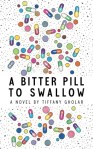
A Bitter Pill To Swallow by Tiffany Gholar

Date Read: February 15th 2017

Published: 2016

Publisher:ย Blurb Books

Pages: 315

The Blurb 

Winner of the 2016 Chicago Writers Association Book of the Year Award for Fiction, Non-Traditionally Published.

On the edge of the Chicago medical district, the Harrison School for Exceptional Youth looks like a castle in a snow globe. Janina has been there since she was ten years old, and now she’s fourteen. She feels so safe inside its walls that she’s afraid to leave.
Devante’s parents bring him there after a tragedy leaves him depressed and suicidal. Even though he’s in a different place, he can’t escape the memories that come flooding back when he least expects them.
Dr. Gail Thomas comes to work there after quitting her medical residency. Frustrated and on the verge of giving up on her dreams, she sees becoming a counselor as her last chance to put her skills to the test.
When he founded the school, Dr. Lutkin designed its unique environment to be a place that would change the students’ lives. He works hard as the keeper of other people’s secrets, though he never shares any of his own.
But everything changes late in the winter of 1994 when these four characters’ lives intersect in unexpected ways. None of them will ever be the same.

โ—Šโ—Š

 Review โ€“ โ˜…โ˜…โ˜…โ˜… (4 stars)

A Bitter Pill To Swallow is a young adult novel set in 1994 Chicago that closely follows three characters as they battle with various stresses life brought them. Devante is a young black high school student, suffering from intense PTSD; Janina is a quirky young black high school student, who has been diagnosed with some features of schizotypal personality disorder; Dr. Gail Thomas is a determined young black women who is finally a medical resident after taking a break from her residency program, due to family issues. All three characters have their own bitter pills to swallow and eventually meet at a therapeutic boarding school- The Harrison School, run by a kind and gentle psychiatrist, Dr. Lutkin.

Each chapter alternates between the three characters’ or Dr. Lutkin’s point of view; no, it’s not confusing – Gholar does a great job at allowing the story to flow quite nicely. The characters have their own storylines, which eventually merge towards the end, making this an absorbing, suspenseful read. Dr. Gailโ€™s chapters were bold and readers see black girl magic at work in her character. In my opinion, sheโ€™s the heroine of this novel โ€“ youโ€™ll have to get your copy to find out why!

The Harrison School is not your average therapeutic boarding school. It is an ideal environment for anyone โ€“ not just students who battle with mental illness. Tiffany Gholarโ€™s palpable descriptions of various rooms decorated in tones like amethyst purples, sapphire blues and emerald greens as well as descriptions of students having their own comfy bedrooms with medical staff always on call, made me wish this sanctuary actually existed. Since Tiffany Gholar is an artist (she designed the four different book covers for this novel), writer and interior designer, trust and believe that her descriptions are impressively vivid and vibrant. Vivid descriptions + great storytelling sprinkled with suspense made this an enjoyable read.


Tiffany Gholar’s A Bitter Pill to Swallow is a reminder of why we need to support more Indie writers. I would give this novel 5 stars, but the words ‘crazy’ and ‘normal’ were over-used for a story of this nature. Maybe the use of these words were intentional, but it made me a bit uncomfortable. One theme thatโ€™s constant in this novel is the theme of mental health awareness. Each character is dealing which his/her own stresses that have an effect on their mental and emotional health. From reading the blurb, one may think this novel is super heavy and dark, but it’s not at all. Readers will encounter a blossoming romance, crazy pharmaceutical politics, issues surrounding race, funny commentary on various students and events. Be prepared to enter a time-capsule as you travel back to 1994 when singer Tevin Campbell, Digable Planets (hip hop group) and the film ET were still popular. The novel isn’t bogged down with excessive depressing happenings – trust me on this one!

Lately, there is more and more talk in the Black community around mental health and โ€˜self-careโ€™ to the point where itโ€™s even (unfortunately) commercialized. Black/African communities rarely used to speak on the issue of mental health because they/we think everything can be prayed away. But I strongly believe seeking help through psychotherapy or finding a counsellor can be the first step towards healing – Devante, Janina, Dr. Gail and Dr. Lutkin are proof of this! I hope this novel gets the attention of various middle and high schools because Gholarโ€™s sensitive writing is a great tool for discussing various personal issues, with young adults of color.

Special thanks to Tiffany Gholar for sending me the Dr. Gail Thomas edition of the book!

 โ˜…โ˜…โ˜…โ˜… (4 stars) โ€“ Great book. Highly recommend!

Purchase A Bitter Pill To Swallow on Amazon
Poetry | soft magic. & Questions for Ada

Hey everyone! At the end of my review ofย salt. by Nayyirah Waheed, I listed a bunch of contemporary poets and expressed my keen interest in reading their work in the near future. Poets – Upile Chisalaย and Ijeoma Umebinyuo were on that list and I finally purchased their collections (for my birthday last year) and enjoyed them at the beginning of this year. Below are mini reviews of their respective poetry collections.

(this is African Book Addict!’s 100thย post by the way!)

soft magic. byย Upile Chisala

Date Read: January 7thย 2017

Published: Septemberย 2015

Publisher:ย CreateSpace Independent Publishing

Pages: 122


The Blurb

soft magic. is the debut collection of prose and poetry by Malawian writer, Upile Chisala. This book explores the self, joy, blackness, gender, matters of the heart, the experience of Diaspora, spirituality and most of all, how we survive. soft magic. is a shared healing journey.


Reviewย โ€“ย โ˜…โ˜… (2 stars)

soft magic.ย is a decent collection, Upile (who is a young storyteller and ‘artivist’ from Malawi) has done well. I liked thatย soft magic. was healing and self-helpish, but this collection is more of a 2.5 stars rating, for me. It’s hard to rate and review a poetry collection you aren’t really fond of, because poetry is so personal to the poet and his/her journey – who am I to have an opinion on anyone’s journey?

This collection could have benefitted from more editing- the typos were quite annoying to spot. I hate to compare (especially since Upile recently went on a rant on Twitter about how discouraging it can be when people compare African writers to Chimamanda Adichie) but in my opinion, some of the poems felt like a knock-off from ‘salt.’ Also, I felt Upile overused the word ‘darling’ in this collection. I rolled by eyes so hard at every poem (which is about 80% of them) where ‘darling’ appeared; there are so many other words of endearment that could have been used in this collection. On a lighter note, I do appreciate how pro-black this collection is. The poems that expressed Upile’s unapologetic pride for her heritage and blackness were the most powerful.

My favorite poems:

being this ebony.
having this name.
carrying this language in my mouth.
there were times when I only wanted
to blend in
to sit unnoticed,
un-special,
but blending in is fading out


here we are,
black and in love with ourselves
and they spite us for it

Even though this short poetry collection is very pro-black, I wouldn’t highlyย recommend it. I just didn’t find the poems compelling or wholesome. Like I stated before – it is difficult to rate and review a poetry collection, because poetry is very personal to the poet and his/her journey. But you never know – give this collection a try, we all have different tastes! Upile recently published a new collectionย called Nectar, which I hope is a bit more polished than soft magic. I might purchase Nectar in the near future but until then, I will continue to enjoy Upile’s thoughtful commentary on Twitter and her lovely photos on Instagram.

โ˜…โ˜… (2 stars) โ€“ Thumbs down.

Purchase soft magic. on Amazon


Questions for Ada byย Ijeoma Umebinyuo

Date Read: January 27thย 2017

Published: Augustย 2015

Publisher:ย CreateSpace Independent Publishing

Pages: 216


The Blurb

The artistry of Questions for Adaย defies words, embodying the pain, the passion, and the power of love rising from the depths of our souls.ย  Ijeoma Umebinyuoโ€™s poetry is a flower that will blossom in the spirit of every reader as she shares her heart with raw candor.ย  From lyrical lushness to smoky sensuality to raw truths, this tome of transforming verse is the book every woman wants to write but canโ€™t until the broken mirrors of their lives have healed. In this gifted authorโ€™s own wordsโ€”โ€œI am too full of life to be half-loved.โ€ย  A bold celebration of womanhood.

Review โ€“ย โ˜…โ˜…โ˜…โ˜…โ˜… (5 stars)

THIS collection right here is pure gold. Questions for Ada by Nigerian poet – Ijeoma Umebinyuo, is full of strength, vulnerability and pride. Every word in these poems is heavy with meaning and purpose. These poems show you that all your emotions are valid and must be felt. Many poetry collections published nowadays feel lazy and words just seem to be thrown onto the pages. But Questions for Ada is a collection that was carefully crafted with love and full awareness of self. I’ve dog-eared sooo many of the pages in this book because the poems truly resonated withย me. I found myself reflecting after reading a couple of poems at a time. I love when a piece of writing makes you reflect on your life and society and allows you to think about them critically.ย Ijeoma did the damn thing with this poetry collection!

My favorite poems:

Your mother was your first mirror.
tell me,
didn’t she carry herself well enough
to make you feel like a God?
(pg. 16)

Freedom-

Your feminism
wears a wrapper,
cooks for her husband
changed her surname
(pg 33)

you are not alive
to please the aesthetic
of colonized eye
(pg. 117)

You asked your father
how you should say your name.
He said if they cannot say your name
then they must try,
but you will not soften it,
you will not break the magic apart,
you will not be ashamed of it.
(pg. 160)


Questions for Ada –

Ada, are you in love? Yes.

Is being in a relationship hard work? Yes

Do you write love poems for your lover?

Every day.

Does you lover believe in you?

Yes, but sometimes I fear my lover does not

comprehend her light.

What do you do on those days?

I bathe her, I play some Jazz,

I fed her, I weep for her.

Describe her in a sentence.

Her eyes carry strength,

her words scratch, she speaks love.

Ada, are you in love? Yes.

Is being in a relationship hard work? Yes.

Who is your lover? Myself.

(pg. 78)

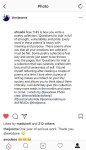
If I could quote all the poems in this collection, I would – but I have to respect the writer’s copyright terms! Please purchase the book to enjoy the rest! A couple of weeks ago, AFREADA featured Questions for Adaย in their weekly #AFREADS recommendations on Instagram and used my short review fromย Goodreads as the caption for the post. I was elatedย to see that Ijeoma appreciated my words (which don’t even do this collection’s excellence justice).

I had to screenshot this before it got deleted ๐Ÿ™‚

Questions for Ada by Ijeoma Umebinyuo is beautiful work. I like to believe her target audience is women of color/ black women in Africa and the Diaspora; the poems speak on blackness, womanhood, relationships, brokenness, Africa, Diaspora, heritage, loving thyself and others. But I wholeheartedly recommend this collection for everyone to experience these poems, even if you aren’t a woman or a person of color – you would still appreciate Ijeoma’s artistry and even learn something about yourself. We’re only in the month of May and I’ve already re-read the whole collection for a second time; I plan onย re-visiting and mulling over certain poems throughout the year.

If you don’t plan on reading any poetry this year, please endeavor to add Questions for Ada to your 2017 reads! And if you’re not really a fan of poetry, be assured that this collection will make you understand the beauty of poetry, as a pure literary form.

โ˜…โ˜…โ˜…โ˜…โ˜… (5 stars) โ€“ Amazing book, I loved it. Absolutely recommend!

Purchase Questions for Ada on Amazon

There Are More Beautiful Things Than Beyoncรฉ by Morgan Parker

Date Read: ย February 22nd 2017

Published: February 14th 2017

Publisher:ย Tin House Books

Pages: 80

The Blurb

There Are More Beautiful Things Than Beyoncรฉ uses political and pop-cultural references as a framework to explore 21st century black American womanhood and its complexities: performance, depression, isolation, exoticism, racism, femininity, and politics. The poems weave between personal narrative and pop-cultural criticism, examining and confronting modern media, consumption, feminism, and Blackness.

This collection explores femininity and race in the contemporary American political climate, folding in references from jazz standards, visual art, personal family history, and Hip Hop. The voice of this book is a multifarious one: writing and rewriting bodies, stories, and histories of the past, as well as uttering and bearing witness to the truth of the present, and actively probing toward a new self, an actualized self. This is a book at the intersections of mythology and sorrow, of vulnerability and posturing, of desire and disgust, of tragedy and excellence.

ย โ—Šโ—Š

Review โ€“ โ˜…โ˜…โ˜… (3 stars)

Morgan Parkerโ€™s There Are More Beautiful Things Than Beyoncรฉ was one of the top poetry collections released this year that I was eager to read. I have been following Parker for a while and I love this short documentary (from 2015) that explores a bit of Parkerโ€™s life as a writer and her relationship with Brooklyn, NY. Iโ€™m simply a fan of any black woman writer with a unique, quirky character – hence my love for Morgan Parker.

There Are More Beautiful Things Than Beyoncรฉ is more of a 3.5 stars book for me though. Initially, I wished Beyoncรฉ wasn’t Parkerโ€™s muse because it made the poems that were named after her (Beyoncรฉ) seem trivial and nonsensical. BUT, after meditating on select poems, I realize Parker uses the poems as political commentary on the criticism Beyoncรฉ has received over the years, and how these criticisms spill over into how society views black women as a whole.

This collection explores Black American womanhood, performance, oppression, loneliness, power, sexuality and mental health – but in a whiny way. I like to believe Parker wrote this collection targeting (black) women, millennials and true poetry lovers as her audience. To be honest, only a few of these poems will actually stick with me. I think I’d love this collection more if they were read out to me, maybe at a reading and with some background to the randomness of it all. Don’t get me wrong, these poems are well-thought-out and layered with lots of (black) pop culture references, but the wordiness of it all could go over your head if your mind isn’t alert while reading.

Above is a screenshot (from my Kindle app) of one of the poems that’s oh-so relevant to the times, which I especially loved โ€“13 Ways of Looking at a Black Girl’. The haphazard display of the words spilled unto the pages, in and of itself, is telling of how society regards black women. Are words like โ€˜thick, diva, nappy, flawless, loud, sex, wifey, chocolate, sassy, carefree, strong, exotic, slutโ€™ accurate depictions of how people view black women? From whose lens are black women regarded in these ways? (please click on the image above to get a closer glimpse of the poem).

Iโ€™m in awe of the artistry of There Are More Beautiful Things Than Beyoncรฉ, but most poems may seem abstract and meaningless to the oblivious reader of the times. I wouldnโ€™t highly recommend this collection to anyone who isnโ€™t a hardcore poetry fiend, but I personally admire this body of work for its eccentric nature.

โ˜…โ˜…โ˜… (3 stars) โ€“ Good book. I recommend it, I guess.

Purchase There Are More Beautiful Things Than Beyoncรฉ on Amazon

The January Children by Safia Elhillo

Date Read: December 14th 2016

Published:ย March 1st 2017

Publisher: University of Nebraska Press

Pages: 80

!important;margin:0!important;" />

The Blurb

The January Children depicts displacement and longing while also questioning accepted truths about geography, history, nationhood, and home. The poems mythologize family histories until they break open, usingย them to explore aspects of Sudanโ€™s history of colonial occupation, dictatorship, and diaspora.ย Several of the poems speak to the late Egyptian singer Abdelhalim Hafez, who addressed many of his songs to the asmaraniโ€”an Arabic term of endearment for a brown-skinned or dark-skinned person. Elhillo explores Arabness and Africanness and the tensions generated by a hyphenated identity in those two worlds.

No longer content to accept manmade borders, Elhillo navigates a newย and reimaginedย world. Maintaining a sense of wonder in multiple landscapesย and mindscapesย of perpetually shifting values, sheย leads the reader through a postcolonial narrative that is equally terrifying and tender, melancholy and defiant.

โ—Šโ—Š

Review โ€“ โ˜…โ˜…โ˜… (3 stars)

Safia Elhillo is a Sudanese-American poet based in the U.S and I believe The January Children gives readers some insight into what it’s like to be Sudanese and an American. In this collection, the narrator is constantly grappling with her complex identities and it’s evident in poems like,

republic of the sudan ministry of interior passport & immigration general directorate alien from sudanese origin passcard‘ (yes, this is the title of the poem):

at the khartoum office a veiled woman made the card in microsoft paint told me my arabic was [not bad for a foreigner you can barely hear the accent] i board the plane with grandma’s voice crackling through the phone [come home again soon] my blue passport made me American place of birth maryland usa

& in the months since my last visit syrup settle back to coat my r’s i am ambiguous browngirl

i feel american

& in new york [but your english is so good you can barely hear the accent]

mama still speaks to me in arabic but we eat with fork & knife we play adbelhalim but mostly motown to remind mama of those swaying eighties nights in the garden before it turned to dust before the old country crumbles & mama came here to give me the blue passport & last time i was home a soldier stopped the car asked where i was from laughed when i said here

The narrator has conflicting ideas of home, belonging, family, immigration, perceptions of beauty and so much more. All of these issues are juxtaposed with the narrator’s obsession with Egyptian musician – Abdelhalim Hafez, and his provoking lyrics. For most of this collection, the narrator obsesses over Hafez’s skin color, his perceptions of beauty and his singing voice. I found it weird how the narrator was fascinated with this famous Arabic musician who has been dead since 1977; but she finds meaning in her fascination with Hafez and confides in him on the things that keep her up at night – like not feeling Sudanese enough and/or feeling lost.

The January Children is a very unique poetry collection. Most of the poems lack punctuations, so it takes a while to read each poem to decipher full sentences and the meanings of them. Every word (especially the few Arab words and their translations) in this collection gave the poems profound meaning – which was interesting, yet a bit overwhelming as it takes a while to understand what some of the poems are actually about. Hints of magical realism in some poems provided sprinkles surprise and added to the slightly daunting nature of the collection (for me).

What I appreciated most about this collection was that I got some insight into African-Arab life and how African-Arabs perceive other Africans and Arabs. When I read Minaret by Sudanese writer- Leila Aboulela, I yearned (but to no avail) for commentary on the realities of being African-Arab. I’m glad this collection shed some light into this complex, very unique identity through the tensions the narrator faces. Even though The January Children is complicated and not the easiest poetry collection to read, Elhillo shows immense talent of capturing emotion in a somewhat abstract way. I think I prefer seeing and listening to Safia Elhillo performing her poems. From all the YouTube videos I’ve watched of her performing at various events, it’s absolutely breathtaking and inspiring to see and hear Elhillo speak her words, with mighty conviction.

NOTE: Reading the Forward of this collection by Kwame Dawes is imperative if you want to totally understand and appreciate this collection.

Thanks to Netgalley via University of Nebraska Press for this e-ARC. The January Children will be published and in stores in 3 days! March 1st 2017 ๐Ÿ™‚

โ˜…โ˜…โ˜… (3 stars) โ€“ Good book. I recommend it, I guess.

Purchase The January Children on Amazon

Lizard & Other Stories by Marcelle Mateki Akita

Date Read: December 27th 2016

Published: December 18th 2016

Publisher: Marcelle Mateki Akita

Pages: 63

The Blurb

Follow the stories of five young characters who try to make sense of loss, sex and sexuality in Lizard & Other Stories. Marcelle Mateki Akita explores how topics such as broken family and romantic relationships, sexual violence and masturbation impact a young girl and womanโ€™s development. The collectionโ€™s short stories and flash fiction focus on girls and women of Ghanaian and mixed heritage. Written in an imaginative and sobering style, Lizard & Other Stories will unsettle and surprise you.

โ—Šโ—Š

Review โ€“ โ˜…โ˜…โ˜… (3 stars)

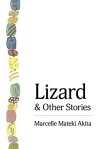
How cute is the cover art of Lizard & Other Stories? The beads are truly attractive! Lizard & Other Stories is the good debut of short stories by reader, researcher and co-founder of Afrikult. (a literary platform that discusses, explores and celebrates the diversity of African literature) – Marcelle Mateki Akita. The collection consists of five stories that focus mainly on girls and women of Ghanaian or mixed heritage. The stories in this collection are vivid, bold and told in a calm manner. Once I started reading, I was drawn into Marcelleโ€™s comfy, calm writing style, which allowed me to get to know the characters at relatively good paces. Some issues explored in this collection are: coming of age, religion, family, sexuality, (domestic) violence, naivety and betrayal.

What makes this collection special is the ambiguous nature of all the stories. If you read this collection more than once โ€“ which I highly encourage, you will realize that there are various interpretations and extra, juicy details you probably missed during the first reading. When I got the chance to discuss Lizard & Other Stories with Marcelle during Christmas break, I realized I interpreted the stories, especially the final one, entitled Kwesi, in a completely different way than she did. It takes talent to pull that off, even if itโ€™s never a writersโ€™ intention to give stories various meanings. Another thing thatโ€™s great about this collection is the unpredictability of the stories. I felt really cozy while reading the first story, entitled Ama, until the story took an unexpected turn and left a sour taste in my mouth. From the way the stories commence to their finality are polar opposites, which was refreshing!

I wouldโ€™ve been more satisfied with these stories if the characters were developed a little further for readers to fully understand their actions. Also, some passages in this collection seemed overly descriptive, which isnโ€™t my preference when reading short stories and flash fiction. But I must say, the vivid descriptions certainly allow one to picture exactly what is being observed, which was appreciated.

If you want to indulge in bold, unpredictable stories written in a calm voice, definitely look into reading this collection! I eagerly look forward to Marcelleโ€™s future projects โ€“ a novel soon, maybe? Pretty please?

Special thanks to Marcelle, for the free copy of Lizards & Other Stories, in exchange for an honest review ๐Ÿ™‚


To get a feel of her writing, check out Marcelle’s story that was published by AFREADA last year – Cassava’s Finest

Read more of Marcelle’s work on her websiteShe posts wonderful musings of the mind and soul every Monday and 100 word stories every Wednesday.

โ˜…โ˜…โ˜… (3 stars) โ€“ Good book. I recommend it, I guess.

Purchase Lizard & Other Stories on Amazon

2016 Recap & My Top 5!

Hey everyone!

I hope the holiday season has been relaxing for you all. 2016 is almost over and it’s time for a recap of the year! I ended up reading 24 books this year. The break down of my 2016 reading experience is as follows:

Average books read per month: 2 books

e-books read: 11 books (wow! I didn’t realize this, even though I really dislike e-books)ย 

African literature: 17 books

Caribbean literature: 2 books

African-American literature: 3 books

Other: 2 booksย (these are non-African/non-diaspora books. I read books written by โ€“ Rupi Kaurย and Tim LaHaye).

19 women writers ; ย 5 men writers


Top 5 favorite books of 2016

  1. Fairytales for Lost Children by Diriye Osman
  2. Homegoing by Yaa Gyasi
  3. Disgrace by J.M. Coetzee
  4. So The Path Does Not Die by Pede Hollist
  5. Breath, Eyes, Memory by Edwidge Danticat

These books took a toll on my emotions the most! If youโ€™ve read my reviews for these books, you know exactly why they’re my top 5 of the year. Definitely look into reading these 5 books if you haven’t already!

Reviews for books read this year are in the Book Reviews section of the book blog.ย [Missing reviews (6 of them) will be posted in 2017].

What were your top 5 favorite books of 2016?


Favorite bookish events / images of the year:

Also:


2016 Reading Goals round up:

At the beginning of the year, I set 4 reading goals and I believe I’ve achieved most of them!

  • I planned to read a wider array of African novels:ย I ended up reading wonderful books from 10 African countries: Botswana, Sierra Leone, Uganda, Sudan, Ghana, Somalia, Nigeria, South Africa, Cรดte d’Ivoire and Zimbabwe. (All reviews are in the book reviews section of the book blog)
  • I also set out to read more poetry:ย I wasn’t a big fan of poetry prior this goal, but I ended up reading 5 poetry collections and seriously enjoyed them! I hope to continue reading and feeling the words of many more great contemporary poets in the years ahead.
  • I wanted to broaden my horizon and read 1 African romance novel and/or 1 African thriller:ย Thanks to Ankara Press, I was sent 2 African romance novels in exchange for honest reviews. With regards to an African thriller, I read Tendai by Boakyewaa Glover which is actually of the science-fiction genre, but felt like a thriller to me! (watch out for the review in 2017). So maybe I kinda sorta missed the mark on the African thriller goal?
  • My final goal was to give backย by hosting 2 or 3 giveaways this year: I achieved this by officially hosting 2 international giveaways and gave away 3 books in total (plus a cute African City tote bag to hold books!).

It’s truly rewarding to see that I have reached my goals, especially with my hectic (dental) school schedule. I always had these goals at the back of my mind and slowly tried to achieve them on a daily monthly basis. I’m proud of these achievements!

Were you able to achieve some of your 2016 Reading Goals?ย 

[Don’t beat yourself up if you weren’t able to – its definitely not that serious and you can still achieve them in 2017!]

Total books read in 2016

Iโ€™m truly grateful to everyone who frequents this book blog and for the great discussions (agreements, disagreements and recommendations) we have in the comments section. I really appreciate the support and love shown here from you all. This year, I’ve enjoyed discovering lots of new book blogs + book lovers and hope to connect with more in the future! Here’s to more great years of reading ahead, for all of us. ๐Ÿ™‚ ย 

As the Crow Flies by Vรฉronique Tadjo

Date Read: October 27th 2016

Published: 2001

Publisher: Heinemann (African Writers Series)

Pages: 106

veronique

The Blurb

An illicit love affair that turns sour is the starting point in this lyrical and moving exploration of the human heart.

Vรฉronique Tadjo weaves together a rich  tapestry of voices to tell stories of parting and return, suffering, healing and desire.

Like a bird in flight, the reader travels across a borderless landscape composed of tales of everyday existence, news reports, allegories and ancestral myths, becoming aware in the course of the journey of the interconnection of individual lives. A new consciousness of the links between self and other, today’s society and that of future generations is revealed as the key to creating a more just world and more understanding and fulfilling relationships, for ‘love is a story that we never stop telling’. 

Translated from French by Wangลซi wa Goro.

โ—Šโ—Š

Reviewโ€“ โ˜…โ˜…โ˜…โ˜… (4 stars)

As the Crow Flies was originally written in French by Vรฉronique Tadjo who was born in Paris and raised in Cรดte d’Ivoire – a Francophone, West African country. Kenyan academic, writer and translator – Wangลซi wa Goro, who contributed to African Love Stories: an anthology and also translated Ngลซgi wa Thiong’o’s novel – Matigari, (which I loved!) translated this work of art as well. I’m grateful to Wangลซi wa Goro, because without her superb skills of interpreting and transforming this work into English, some of us would really be missing out on some awesome texts!

But I have to admit – this novella is not for everyone. On the first page, as if to caution the reader, Tadjo writes: “Indeed, I too would have loved to write one of those serene stories with a beginning and an end. But as you know only too well, it is never like that.” With that, I knew As the Crow Flies would be different.

Some readers may have issues with the format of this book, which is full of fragmentation and changing points of view between several voices. It’s made up of several (interconnected) poems, prose and observations. I read this novella as if I was on the back of a bird in the air (a crow, if you may), watching various people and situations in their various settings – in Abidjan (the economic capital of Cรดte d’Ivoire) and anonymous Western countries. I believe writers would absolutely love the unique, heartfelt, lyrical anecdotes Tadjo spills onto the pages. It’s actually difficult to review this book since it sporadically touches on many different issues, like: desire, homesickness, (unrequited) love, immigration, poverty, privilege, and so much more. But almost anything and everything that can be humanly felt and observed, are portrayed in this book.

Some of my favorite anecdotes / poems/ observations:

XLVI

I need to feel the heat and sweat running down my back, feel warm nights humming with insects, the dust and the mud. At home, life sprouts everywhere. You have nowhere to hide. You can never forget that there is still much to be done.

(pg. 62)

I especially loved this one below:

LIV

I think of my country, far away, and my eyes open beyond space.

In this vast city, words travel fast. I am bombarded with ideas. I see myself in that large conference room listening keenly to writers from Africa – Angola, Ghana, Uganda, Kenya, Nigeria… One of the speakers proclaims:

‘It is our duty to understand our place in the history of humanity. An African literature cannot exist until the day we liberate ourselves from the arrogant criticism of the West.’

(pg. 72) 

LXIX

I remember. A day like no other. The air was mild. I had not eaten breakfast; just had a cup of coffee and my belly was empty.

I remember. His scent filled my nostrils. His sweat made my mouth salty. I lapped up his force and energy, and discovered how famished my desire was…

(pg. 87)

As the Crow Flies is a super short novella – it’s about 106 pages. I would advise readers to devour it in one sitting in order to experience, observe and feel everything this book has to offer at once. Thanks to school work, it took me over a month to complete it. But I’m glad I pushed through and finished it despite the discombobulated format which was initially confusing but truly wonderful by the time I finished reading.

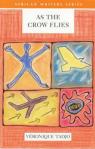
With the increasing popularity of contemporary African novels, I feel like lovers of African literature are forgetting about the books of the African Writers Series, which were published since 1962 by Heinemann. Books in this series have been translated into English from French, Zulu, Swahili, Gikuyu, Portuguese, Afrikaans, Luganda, Arabic, Sesotho. Yes, some of the books in this series may be printed in (silly) small fonts; yes, some books in this series may have unappealing book covers. But books of the African Writers Series are timeless and will always be true African classics, just like As the Crow Flies.

โ˜…โ˜…โ˜…โ˜… (4 stars) โ€“ Great book. Highly recommend!

img_6010

Purchase As the Crow Flies by Vรฉronique Tadjo on Amazon

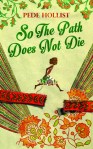
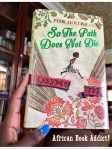
So The Path Does Not Die by Pede Hollist

Date Read: June 30th 2016

Published: 2014 (originally published by Langaa Press, 2012)

Publisher: Jacaranda Books

Pages: 352

pede hollist

ย The Blurb

Long after Fina has left Sierra Leone for America, memories of a broken initiation still haunt her. She longs to return, to find her grandmother and right the path that has been set for young girls centuries past. Her journey from the streets of Freetown to Washington echo with the tensions, ambiguities, and fragmentation of the diaspora. Fina’s inner turmoil and feelings of ‘otherness’, persist as she travels further from home. Ultimately, the broken path of her childhood brings Fina back to Sierra Leone, to a life she had never imagined for herself.ย So the Path Does Not Die is a tender and gently observed novel exploring attitudes towards female circumcision, and a beautifully rendered novel, from an exciting new voice in African literature.

โ—Šโ—Š

Review โ€“ โ˜…โ˜…โ˜…โ˜…โ˜… (5 stars)

Is it me, or were there not enough people talking about this fascinating book back in 2014 when it was published? I was introduced to Pede Hollist’s writing when his short story – Foreign Aid was shortlisted for the 2013 Caine Prize. Back then, it was great to see a Sierra Leonean on the shortlist for a change. And I really hope more writers from Sierra Leone are brought to the spotlight soon!

So The Path Does Not Die is fundamentally a story of love and the belongingness of people and place. Finaba’s (or later known as ‘Fina’ by her adopted family) life revolves around her interrupted FGM (female genital mutilation)/ initiation process in her village. In the novel, the deadly practice of FGM is a coming-of-age event where a girl finally becomes a woman and ‘belongs’ to the people of the village. Finaโ€™s parents loathed this practise but her grandma strongly supported it. After Finaโ€™s family is shunned from their village due to an abominable act by her father to save Fina from this deadly practise, they move to Freetown (Sierra Leone’s capital) with heaps of curses on their heads.

In Freetown, Fina endures hardships in all aspects of her life – family problems, university struggles, ethnic group discrimination (as sheโ€™s Fulani which is known to be in the minority), just to name a few. When Fina finally escapes Sierra Leone to the United States, though she matures beautifully and becomes relatively successful thanks to her determination to be happy and independent, she faces a new set of struggles: immigration woes, Africans vs. African-Americans vs. Caribbean concerns, the myth of the American dream and cultural alienation. For some reason, all the painful lessons Fina experiences seem to be tied back to the night of her interrupted initiation process. She somehow feels she does not ‘belong’, even when she finally finds true love. To Fina, Sierra Leone seems to be the only place where she thinks she would feel valued; a place where she feels she’d be ‘on the right path’ in life.

Initially, Pede Hollistโ€™s storytelling gave me a Chinua Achebe vibe as the story starts off with a folktale. Hollist’s writing style is rhythmic, simple, and accurate in all the nuances he captures and I was satisfied with how this story came full circle by the end! I was a bit skeptical on how Pede Hollist would accurately write and speak for Fina in this book, as he is a man and would probably portray a man better. But I was impressed by his careful attention to consciously writing Fina’s character in a way that spoke on many feminist issues.

So The Path Does Not Die had me thoroughly entertained and I shamelessly giggled at all the intense dramatic happenings that occurred in this story! Some of the depictions of certain cultural groups portrayed in this novel may seem stereotypical, but I believe Hollist executes these depictions with finesse and in a jovial manner. This novel actually reminded me of Chimamanda Adichie’s Americanah, as there are several side stories of the people Fina encounters in this story. Some characters include: Sidebe – a diamonds trader; Aman – Fina’s African-American best friend; Cammy – Fina’s Trinidadian fiancรฉ; Mawaf – a child soldier’s wife, just to name a few. The socio-political backgrounds and commentary on these characters are all so layered and beautifully tied into Fina’s personal story of trying to find happiness, while being true to herself. I absolutely adore how this book is a cultural melting-pot of Black peoples’ (African, African-American and Caribbean) similarities, differences and the connection they all have to the African continent.

I learned a great deal about Sierra Leone from this novel! You would think us West Africans would know more about our fellow brethren on this coast, but I really had no clue. I jotted down a lot of the cultural references, ethnic groups, native foods, languages, national costumes, native names and natural resources from Sierra Leone. I particularly liked that this novel wasn’t grim with the horrors of FGM, but rather acted as a conduit for speaking against the horrible act, while commenting on other tough Sierra Leonean economic, cultural and social issues as well. Reading dialogue in Trinidadian patois and Sierra Leonean Krio as well as recognizing various West African mannerisms and sayings, made this novel all the more enjoyable, as various happenings and conversations really came to life! Don’t you just love when you learn about our world through a good, entertaining story?

I encourage anyone who is looking for a captivating book on Sierra Leone and the Diaspora to pick this up! I eagerly look forward to Pede Hollist’s future projects and I definitely plan on reading more books published by Jacaranda Books!

โ˜…โ˜…โ˜…โ˜…โ˜… (5 stars) โ€“ Amazing book, I loved it. Absolutely recommend!

img_4485

Purchase So The Path Does Not Die by Pede Hollist on Amazon