Long time, no blog! (more on that at the end of the blog post)
I never thought I’d ever make a blog post on books written by my own friends. Since 2014, I’ve been blogging about books written by Black authors I either have para-social relationships with online, or who are acquaintances. This year, three of my Ghanaian friends published their debuts, and I couldn’t be more proud of them!
#ReadGhanaian🇬🇭
The Kelewele Connection by Kwatemaa Tweneboah
Synopsis
What starts out as a quick trip to the kelewele joint on campus, leads two kelewele lovers to discover a connection like no other.
Afriyie just wanted to get some kelewele to munch while she enjoyed a movie in her room but is disappointed when she doesn’t get the exact kind she loves. Her disappointment turns into a pleasant impromptu ‘date’ with the guy who offers to share the last bit of kelewele he bought.
Nana Yaw never shares his kelewele. Never. So when he catches himself offering to do just that with the cute girl he’s been spying for the past few weeks, he knows this is a connection he cannot ignore.
They don’t have much time till Afriyie has to go back to resume her studies in Edinburgh but the connection they share is too strong to ignore. Will their brief time together be all they have or will their instant spark turn into something long-lasting?
One of my favorite and smartest bookish friends – Abena Kwatemaa Karikari, (or better known as @BookwormInGH on her Bookstagram and Booktube channel) wrote a book with one of her good friends – Nana Adwoa Tweneboah Amponsah-Mensah. Their joint pen name is Kwatemaa Tweneboah. These two friends love reading and writing romance and also co-host a bookish romance podcast called 2 Hearts In A Pod.
Even though Abena and Nana Adwoa separately have their work published in a number of anthologies, The Kelewele Connection is their debut self-published novel under their joint pen name. Not only will readers of romance love this book, but I have a feeling food lovers (especially plantain/kelewele lovers) will enjoying reading this novel as well!
Kwatemaa Tweneboah (Nana Adwoa on the left & Abena Kwatemaa on the right) on a panel at Pa Gya! discussing their debut, in October
The book cover is very endearing – the natural hair, the skin tones of the characters and even the bowl of spiced plantain. I’m sure Kwatemaa Tweneboah have more books up their sleeve, waiting to be published. In fact, they have a Christmas novelette in the works called A Kelewele Christmas! Stay tuned!
A story about God, a spear and an angel’s thirst for unruly power.
Not forgetting, the return of Earth’s greatest saviour.
Head to the first page and I’ll meet you inside.
I normally do not review or highlight religious novels – mostly because I know people of ALL religions read this book blog. No discrimination here. But I would be remiss if I didn’t highlight God’s Spear by my good friend, Jeffrey Bones. I had the privilege of reading the book back in April of this year, when it was in its final editing stages.
Jeffrey Bones at his book launch in September
Without giving away any spoilers, God’s Spear is a 60 page graphic novel that follows an angel’s quest for power via a spear. I enjoyed the dialogue between the characters, as well as the gradual rise of suspense towards the end. The writing is pretty descriptive, which allows readers to use their imagination to visualize the text and interpret the storyline through their own understanding.
God’s Spear is suitable for readers of all ages; readers who appreciate animation would especially love the illustrations in the book! As with any graphic novel, the illustrations pleasantly augment the reading experience, as we actually get a glimpse into Jeffrey Bones’ (and the illustrator’s) vision for the characters we experience.
Purchase God’s Spear by contacting Jeffrey Bones for a copy
No One Dies Yet by Kobby Ben Ben
Synopsis
A genre-breaking novel from a powerful new African voice.
2019. The Year of the Return. It has been exactly 400 years since the first slave ships left Ghana for America. Ghana has now opened its doors to Black diasporans, encouraging them to return and get to know the land of their ancestors.
Elton, Vincent, and Scott arrive from America to visit preserved sites from the transatlantic slave route, and to explore the country’s underground queer scene. Their activities are narrated by their two combative guides: Kobby, their guide to Accra’s privileged circles; and Nana, the voice of tradition and religious principle.
The pair’s tense relationship sets the tone for what becomes a shocking and unsettling tale of murder that is at times funny, at times erotic, yet always outspoken and iconoclast.
Last but not least, No One Dies Yet was published in August via Europa Editions. This book has been featured in so many of my ‘New Books to Anticipate‘ posts, so we are all elated that it’s finally out in the world! It will be published in the US in February of 2024.
No One Does Yet is a big book (over 380 pages) that’s basically the embodiment of Kobby’s complex, inspiring mind. Trust and believe that as soon as I finish this book, the review will be up. From my discussions with Kobby on the inspiration behind the book, one of the ideas behind the novel is slightly akin to an article another friend of mine wrote during Ghana’s Year of Return celebrations, in 2020.
Me and Kobby with an ARC of his book, back in January
African Book Addict will be 10 years old in 2024! Time flies. I plan on setting up a series of posts and (maybe) events to celebrate the 10 years. Stay tuned (and keep your fingers crossed because [traditional] blogging is quite challenging nowadays).
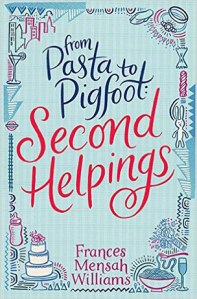
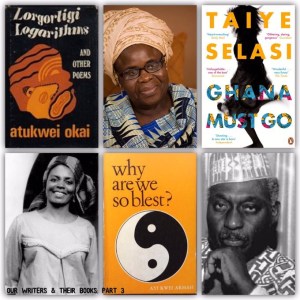
Any fans of Frances Mensah Williams’ work in the house? I’ve been slowly working my way through some compelling Black Brit reads and Williams’ work has been on my radar for a hot minute! Frances Mensah Williams is a Ghanaian-British author of many books. If you remember, back in 2017 she was one of the 80+ Ghanaian writers highlighted in the 3-part series I did on Ghanaian writers and their books. Her latest novel – Imperfect Arrangements, was published back in March and from the synopsis, this novel looks juicy and satisfying!
In the sun-soaked capital of Ghana best friends Theresa, Maku and Lyla struggle with the arrangements that define their relationships.
Ambitious, single-minded Theresa has gambled everything to move with her loving husband Tyler from London to cosmopolitan Accra. But when shocking developments threaten their plans, they also expose the hidden cracks in her fairytale marriage.
Feisty Maku is desperate for professional recognition – and her dream white wedding. But how long can she wait for her laid-back partner Nortey to stop dreaming up pointless projects from the comfort of his local bar and stand up to his family?
Churchgoing Lyla married Kwesi in haste, and six years later she is desperate for a child. But while she battles a vicious mother-in-law, and her growing attraction to the mysterious Reuben, her husband has bitten off more than he can chew with his latest mistress.
Facing lies, betrayal, and shattered illusions, each couple must confront the truth of who they have become and the arrangements they have enabled. Against the backdrop of a shifting culture, each woman must decide what – and who – she is willing to sacrifice for the perfect marriage.
••
I had the honor of chatting with Williams about her novels, the first book she read by a Ghanaian writer, Black writers who influence her work and more. Enjoy!
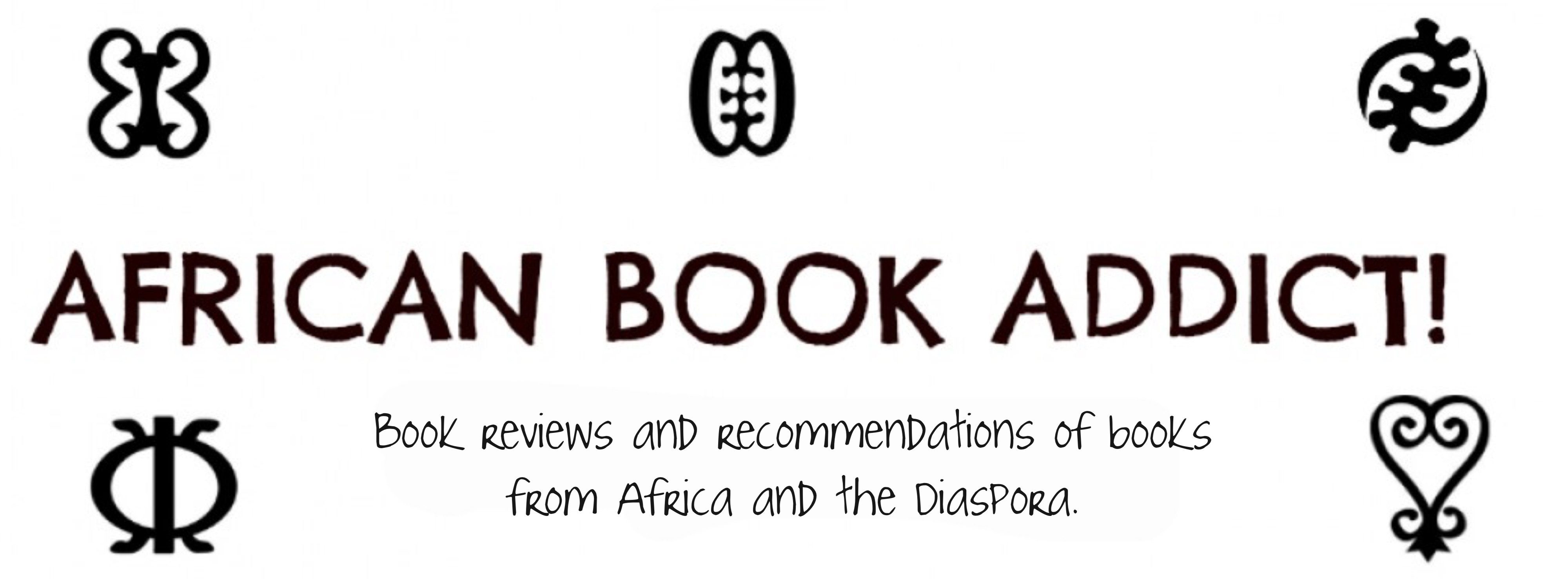
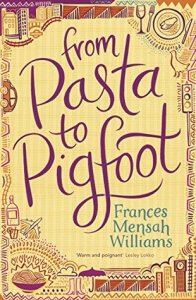
I recently purchased From Pasta to Pigfoot, and I know there is a sequel called From Pasta to Pigfoot: Second Helpings. I’m eager to read your latest novel, Imperfect Arrangements, which was published back in March of this year. How long have you been a writer and what other books have you written?
FMW:I’ve been writing for as long as I can remember; from the early scribbles of my teen years to writing careers books and then, eventually, writing novels.
I’m so pleased you bought From Pasta to Pigfoot! It’s my first novel and very special to me. I wrote the initial draft years ago when I was living and working in Ghana. I wanted to explore the contemporary diaspora experience with the character of Faye Bonsu, a Black British Londoner and pasta fanatic, who’s torn between the culture she’s grown up with and the Ghanaian culture she’s supposed to connect with. Her story mirrors so many of the challenges young Britons of African descent face, and I wanted to depict how navigating between two cultures can be painful, illuminating and occasionally hilarious. In the novel, Faye gets the chance to visit Ghana and discovers that understanding your history can give you the confidence to choose your future.
There is indeed a sequel – From Pasta to Pigfoot: Second Helpings. This picks up Faye’s story three years after the end of the original book. Hoping to escape from her suddenly complicated life and revive her wilting romance, Faye returns to sunny Ghana for what she hopes will be the time of her life. But life doesn’t always offer second chances and when disaster strikes, she is forced to confront the biggest question of her life and to make a choice that comes with consequences she will have to live with forever. I really enjoyed writing this book because Faye’s experiences are so relatable: the boyfriend who never seems ready to commit, the merciless boss who makes you struggle for promotion, the mother-in-law that drives everyone crazy, the bridezilla you love but want to kill – and the struggles we face when we’re trying to have it all!
I read an excerpt of Imperfect Arrangements, in the form of a short story, on AFREADA. In the excerpt, Theresa is at the hospital and she’s shocked to find out that she’s pregnant. By the end of the story, I really wanted to indulge in the lives of the three best friends – Theresa, Maku and Lyla. Why was it important for you to write this story that focuses on three best friends who struggle with the arrangements that define their relationships?
FMW: I first had the idea for Imperfect Arrangements when I was living in Ghana and found myself fascinated by the many arrangements that passed as marriage. As is the case in every part of the world, a perfect relationship really doesn’t exist, and when you layer cultural expectations onto the strains of any relationship, the pressure it brings will reveal the truth.
In Imperfect Arrangements, I chose to write about best friends Theresa, Maku and Lyla because I wanted to celebrate the importance of sister-friends and depict an honest account of the complexity of relationships, both romantic and between best friends. I wanted to explore the joy and pain of relationships, particularly with the added pressures of cultural expectations and norms, and to tell the story from the perspectives of both the women and the men in their lives. Unusually, we also see the story unfold from the viewpoints of the three men in the relationships.
Did you learn anything about yourself while writing Imperfect Arrangements? What about your previous novels – especially From Pasta to Pigfoot and From Pasta to Pigfoot: Second Helpings?
FMW:That is an interesting question! I think I learned a lot as a writer while working on Imperfect Arrangements. The story takes place over one year and is structured in layers – every three months – with the action unfolding through the eyes of each person in the three couples. It was quite a challenge to keep the story moving at pace while ensuring that the characters grew into rounded and realistic people. The three women are very different to each other and, much as they love one another, they also experience the frustration and irritation that we all feel with our besties – loving them, but still keeping it honest and real!
I think this is a story that no-one can read without examining their own relationships and friendships. Although the three couples face different challenges, their situations reflect what so many people grapple with: lies, betrayal, adultery, interfering families, stagnant careers, and more.
Writing From Pasta to Pigfoot was an interesting journey for me; seeing Ghana through the eyes of Faye and depicting her struggles to connect both aspects of her cultural identity. Having myself mostly grown up outside Africa, although Faye and I are very different personalities, I could empathise with her feelings and her dilemma about where to call home.
Some writers dislike being ‘pigeon-holed’ and labelled as ‘African writer’ or ‘Black writer.’ How do you prefer to be identified as a writer? Who do you write for and do you think your novels can be categorized under one genre?
FMW: This is something I get asked a lot. There’s so much debate what constitutes ‘African’ writing and who gets to be called what or has the authority to tell which stories. Because of my heritage and some of the settings in my books, I’m often asked whether I consider myself to be an African writer, a diaspora writer or (sometimes with a slight tinge of disappointment) just a romance writer.
As far as I’m concerned, I’m just writing stories, but the publishing world likes to pigeonhole books for marketing purposes. Broadly, my books fall into the category of ‘commercial women’s fiction’ and for some people that’s enough. There are also those who describe it as ‘chick lit’, which doesn’t offend me, although I know many men who enjoy them, so I’m not sure that properly reflects the content.
For me, what really matters is that readers see my characters as more than simply their ethnicity. By setting Imperfect Arrangements in Ghana, one of my hopes is that it takes the conversation beyond the issue of race, as all the main characters are African. I also hope my books show that irrespective of our backgrounds, we all share the same desires for love of self, love of others, being seen and belonging. So, to answer your question, I’m an African woman and a writer, but I guess I’ve now reached the point where I leave the labelling to those who find it useful, while I focus on writing stories people can enjoy.
What have you been reading and loving lately? Who are some of your favorite Black writers and influencers of your work?
FMW: I enjoy many different types of books – a legacy from being a book addict as a child and reading anything which sounded halfway interesting that I could get my hands on in the local library. I love character driven stories with lots of dialogue: courtroom dramas, rom-coms, thrillers, murder mysteries, biographies, historical dramas – you name it.
My favourite Black writers include Dorothy Koomson, whose books I love, and Terri McMillan, whose books I read voraciously. If I’m honest, I’m probably not as widely read when it comes to African writers, but I’ve really admired the work of fellow Ghanaians, Yaa Gyasi and Ayesha Harruna Attah.
Dorothy Koomson
Yaa Gyasi
Terri McMillan
Ayesha Harruna Attah
In 2017, you were featured in my3-part series #GHat60 project, where I highlighted and celebrated over 80 writers of Ghanaian descent (which later became the#ReadGhanaianbook challenge, in 2019). Do you remember the first book you read by a Ghanaian writer? If so, what book was it and how was the experience?
FMW: I guess that would be probably be The Chocolate Run by Dorothy Koomson. I was attracted to the novel because her name was clearly Ghanaian, and I was desperate to discover Black writers who also wrote commercial, contemporary, women-driven novels. When I read The Chocolate Run, I was blown away by the realisation that there was indeed a market for books about serious issues written in a fun way, and featuring Black female protagonists who were firmly at the centre of the story, instead of at the margins.
Finally, why would you like us to read your latest novel – Imperfect Arrangements? What would you like reader to take away from the story?
FMW: I would love you to read Imperfect Arrangements firstly because – if I say so myself – it’s a great story! I love the characters and I want to take the reader on a roller coaster journey as they get to know the women and their partners. I want you to laugh, cry, grow very frustrated, and cheer! I want every reader to feel exactly what drives and motivates each of the six main protagonists, and to understand what makes them who they are and why the behave as they do.
I want the story of Imperfect Arrangements to provoke a conversation about the themes that arise in the novel: relationships in contemporary Ghana/Africa; myths and expectations confronted by the realities of marriage; friendship and sisterly love between women; the impact of culture on marriage and attitudes towards adultery and infertility in contemporary Ghana/Africa; the power of family versus the individual; the diaspora returnee experience; and the Black male perspective on relationships.
I also want readers to realise that love – whether it is love of self or love between friends or lovers – is the greatest gift of all.




 African Book Addict!