Date Read: June 21st 2017
Published: 2016
Publisher: Random House
Pages: 380
The Blurb
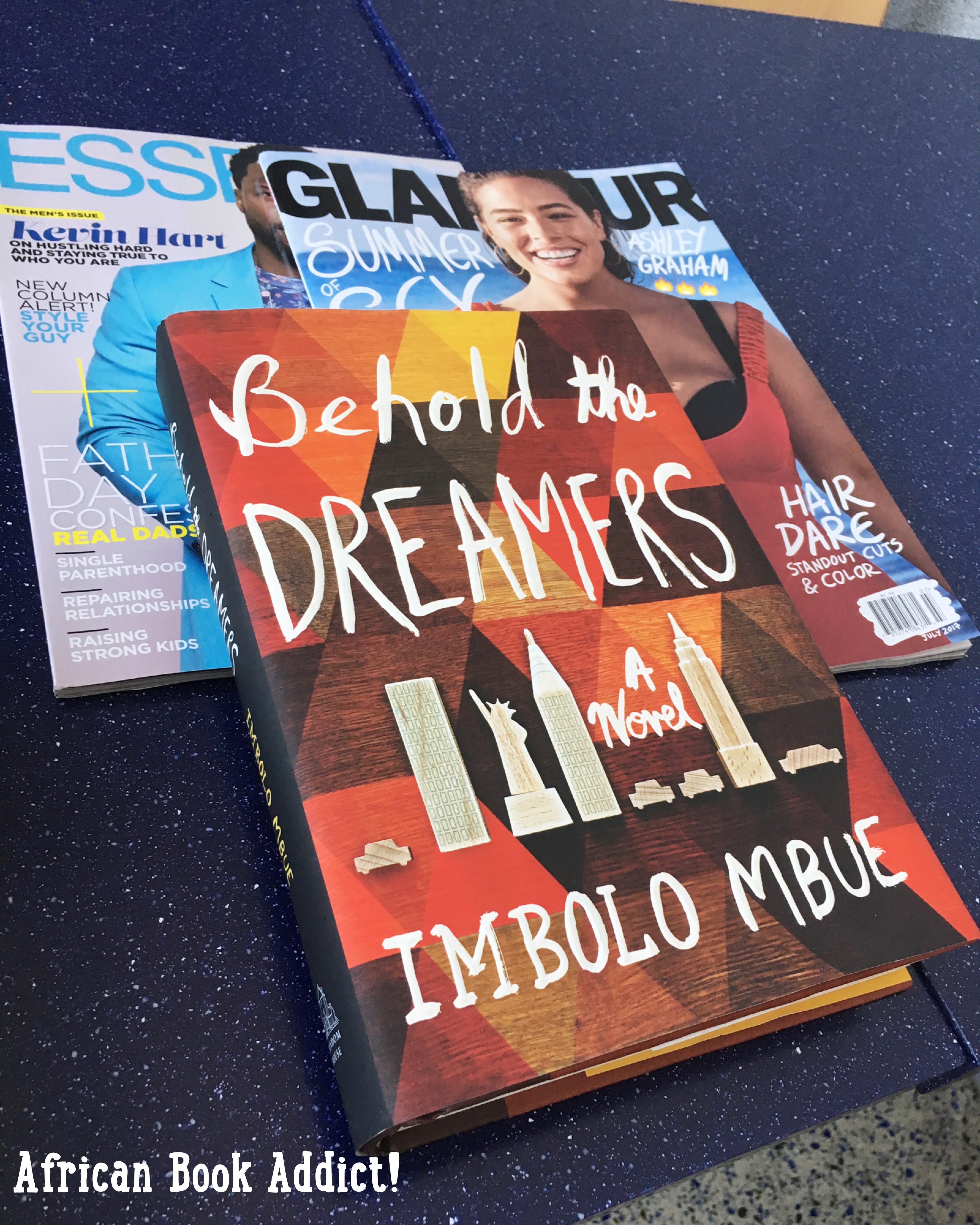
Jende Jonga, a Cameroonian immigrant living in Harlem, has come to the United States to provide a better life for himself, his wife, Neni, and their six-year-old son. In the fall of 2007, Jende can hardly believe his luck when he lands a job as a chauffeur for Clark Edwards, a senior executive at Lehman Brothers. Clark demands punctuality, discretion, and loyalty—and Jende is eager to please. Clark’s wife, Cindy, even offers Neni temporary work at the Edwardses’ summer home in the Hamptons. With these opportunities, Jende and Neni can at last gain a foothold in America and imagine a brighter future.
However, the world of great power and privilege conceals troubling secrets, and soon Jende and Neni notice cracks in their employers’ façades. When the financial world is rocked by the collapse of Lehman Brothers, the Jongas are desperate to keep Jende’s job—even as their marriage threatens to fall apart. As all four lives are dramatically upended, Jende and Neni are forced to make an impossible choice.
◊◊
Review – ★★★ (3 stars)
Before Behold the Dreamers was selected for Oprah’s Book Club, there was a lot of buzz surrounding the book last year, declaring it ‘book of the year’. I tried to keep an open mind while reading, but half-way through, I started to get agitated. If I hadn’t buddy-read this book with one of my favorite book lovers – Ifeyinwa, I would have put it down without finishing. Upon finishing the book, I felt Behold the Dreamers was a 2 stars novel, but Mbue’s succinct writing style made my reading experience quite fast and easy – which I appreciated, hence a rating of 3 stars. While this novel was frustrating for me to read, I must admit Mbue did a great job of making Behold the Dreamers a layered tale on identity, social class, marriage, immigration, patriarchy, mental illness and xenocentrism.
I didn’t expect the beginning of Behold the Dreamers to be focused on the Edwards family instead of the Jonga family. As I turned the pages waiting to experience more Jende and Neni, I realized I didn’t care about Cindy and Clark Edwards’s failing marriage and the ‘rich people problems’ they endured. In fact, reading about their stresses vicariously stressed ME out! The plot, which heavily involved the Edwards’ marital and monetary issues dragged on for too long. Since several pages were dedicated to the Edwards’ family drama, I could clearly picture what Clark, Cindy, Vincent and Mighty Edwards looked like and all their mannerisms. This may seem trivial, but I wish Mbue spent more time describing Jende, Neni and their son – Liomi’s physical features so I could at least picture them in my mind.
This novel could have been a solid 150 pages, sans the drama of the Edwards family. A part of me feels like the publishers heavily promoted this book because Jende and Neni put America on a pedestal. To me, Jende and Neni were almost portrayed as African caricatures who viewed the white man as superior, their master. This novel was initially supposed to be called ‘The Longings of Jende Jonga’ so why the change of title to ‘Behold the Dreamers’? I’m guessing the former title wouldn’t appeal to white readers. Perhaps the change in title to ‘Behold the Dreamers’ also meant more involvement of the Edwards family into the storyline, to appeal to white readers. But I must say, the title ‘Behold the Dreamers’ is quite fitting – because the Jongas were portrayed as dreamers indeed. Through the lens of Jende and especially Neni, EVERYTHING about America was good and they would do anything to become Americans,
In Limbe, Liomi and Timba would have many things they would not have had in America, but they would lose far too many things. They would lose the opportunity to grow up in a magnificent land of uninhibited dreamers… because while there existed great towns and cities all over the world, there was a certain kind of pleasure, a certain type of adventurous and audacious childhood, that only New York could offer a child. (pg. 362).
I became aggravated with how Jende and Neni often looked down on their country of origin/culture and revered America to the point where they didn’t see how desperate they were – especially Neni! Throughout most of this novel, Jende was more or less an ‘Uncle Tom’ in my eyes with how willingly subservient he acted towards the Edwards family,
‘So you think America is better than Cameroon?’ Clark asked, still looking at his laptop.
‘One million times, sir,’ Jende said. ‘One million times. Look at me today, Mr. Edwards. Driving you in this nice car. You are talking to me as if I am somebody, and I am sitting in this seat, feeling as if I am somebody.’ (pg. 44)
Neni (she got on my nerves, gosh! But my feelings softened towards her as she bears the brunt her family’s fate) would do anything just to remain in America and even started using her kids as a desperate justification to stay,
And Liomi was going to become a real American one day, she whispered in the darkness. He had taken so well to America, hardly missing anyone or anything in Limbe. He was happy to be in New York, excited to walk on overcrowded streets and be bombarded by endless noise. He spoke like an American and was so knowledgable in baseball and all the state capitals that no one who came across him would believe he was not an American but a barely legal immigrant child… They could never take him back to Limbe… He might become angry, disappointed and hostile, forever resentful towards his parents. (pg. 227)
While Behold the Dreamers was frustrating to read, I resonated and empathized with certain happenings, once the story shifted away from the Edwards family and focused more on the Jongas. Neni lecturing her son on the importance of education for us Africans/Black people struck a cord with me as it still holds true,
I’ve told you this, and I’ll keep on telling you: School is everything for people like us. We don’t do well in school, we don’t have any chance in this world. You know that, right? (pg. 68)
Jende’s lawyer warning him to steer clear of the police felt timely, especially with police brutality being a rampant occurrence nowadays. This novel was set between years 2008 – 2010 and its disheartening how 7 years later, we black folk – whether originally from Africa or Latin America, are constantly reminded of how the justice system doesn’t particularly value Black bodies,
The police is for the protection of white people, my brother. Maybe black women and black children sometimes, but not black men. Never black men. Black men and police are palm oil and water. You understand me, eh? (pg. 74)
Another aspect of the book that resonated with me was how some folks of the Diaspora (1st and 2nd generation Americans) identified. I remember having a chat with one of my cousins this summer in the States, and she confided in me about how she went through a phase where she actively distanced herself from her Ghanaian culture when she was younger. During this phase, she hated identifying with anything that had to do with Ghana or Africa. Shame plays a huge role in this novel. Mbue shows how some children of immigrants from Africa, who have no connection to their parents’ homeland (for various reasons – maybe the parents don’t have pride in their homelands themselves, like Neni and Jende) feel embarrassed and humiliated by their African roots,
When people asked where they were from, they often said, oh, we’re from right here, New York, America. They said it with pride, believing it. Only when prodded did they reluctantly admit that well, actually, our parents are Africans. But we’re Americans, they always added. Which hurt Fatou and made her wonder, was it possible her children though they were better than her because they were Americans and she was African? (pg. 358)
I read Behold the Dreamers back in June and its really been on my mind ever since. I’ve even been apprehensive about posting this book review because I feel my interpretation of this novel is quite judgmental as I’m interpreting the book’s happenings through my 1st generation privilege of never having experienced immigration ordeals. I recently discussed this novel with my parents and through our discussion, they made me aware of my Ghanaian-American privilege and encouraged me to try and accept Jende and Neni’s struggles as their (the characters’) truth and the truth of many Africans who strive to achieve the ‘American Dream’.
Reading and interpretation of text is highly subjective. The ways readers interpret and find meaning of books they read depends on their politics, morals, level of education, socio-economic status etc. I read this novel through a middle-class, 1st generation, pro-Africa/Black lens, so it was quite difficult for me to read and understand characters express self-hate and shame towards their African origins. Since Jende and Neni were of lower social class in Cameroon, was their xenocentrism of their country of origin justified? Most immigrants I know (of both lower and middle social classes) actually start deeply appreciating their countries of origin when they move to live in the States… but I do realize that for some folks, getting to America is truly their ultimate dream.
The ending of this novel felt realistic and made me appreciate Jende’s character evolution – flaws and all. While I disliked how Mbue perpetuates our self-hate through the characterization of Jende and (mostly) Neni, Behold the Dreamers strikes up conversation around immigration, identity and the need for African countries to better cater to their citizens (instead of us relying on living in Western nations to fulfill our dreams). In my opinion, this novel is popular because it perpetuates American nationalist views with African self-hate as a bi-product of it’s success.
Other compelling immigrant tales which I highly recommend over Behold the Dreamers are: So The Path Does Not Die by Pede Hollist, Americanah by Chimamanda N. Adichie, Minaret by Leila Aboulela, Beyond the Horizon by Amma Darko.
★★★ (3 stars) – Good book. I recommend it, I guess.
Purchase Behold the Dreamers on Amazon




 African Book Addict!