Blessings by Chukwuebuka Ibeh

Date Read: April 13th 2024

Published: February 2024

Publisher: Masobe Books

Pages: 250

The Blurb

‘Chukwuebuka Ibeh’s writing has a certain delicacy to it, so wonderfully observant, and so beautiful’ – Chimamanda Ngozi Adichie

When Obiefuna’s father witnesses an intimate moment between his teenage son and the family’s apprentice, newly arrived from the nearby village, he banishes Obiefuna to a Christian boarding school marked by strict hierarchy and routine, devastating violence. Utterly alienated from the people he loves, Obiefuna begins a journey of self-discovery and blossoming desire, while his mother Uzoamaka grapples to hold onto her favorite son, her truest friend.

Interweaving the perspectives of Obiefuna and his mother Uzoamaka, as they reach towards a future that will hold them both, Blessings is an elegant and exquisitely moving story of love and loneliness. Asking how we can live freely when politics reaches into our hearts and lives, as well as deep into our consciousness, it is a stunning, searing debut.

 ◊◊

Review  ★★★★ (4 stars)

My chest. My heart!


Just as much as my heart raced while reading Blessings, Ibeh endlessly repeats throughout this novel just how often Obiefuna- the main character, notices his own heart constantly beating against his chest – either out of fear, guilt, love, joy or pain.

This coming-of-age novel offers incredible nuance… and pain. There are quite a few characters to keep up with, but Ibeh’s level of detail and care for each character doesn’t make the reading experience arduous. Experiencing Obiefuna come into boyhood & manhood is a bittersweet journey. His experiences in secondary school were so typical of African boarding schools: traumatizing, maddening and rewarding- with the friends he made. His life in university felt a little less traumatizing, but so unfair in the end.

Uzoamaka – Obi’s Mom, is really a secondary character. To me, her role in the book, albeit a joint sorrowful and joyful one, was simply to portray her unconditional love for the son she ultimately regarded as a blessing. They had a sweet, tender relationship. I just wish her storyline was a bit more interwoven with Obi’s. When they were not interacting, it felt like her storyline didn’t really have much to do with the overall plot of the book.

What struck me most were the internal struggles Obiefuna faced when coming to terms with his sexuality; the deep regrets, the pain of simply being. Pain plays a huge role in this book, in my opinion! I found myself wanting to quickly finish the book just to relieve myself of the paaain! Ibeh’s writing hooks you from the first page to the last. I definitely see Chimamanda Adichie’s influence on his writing. It’s brave, measured, calm and exact.

While I loved this book, I did find the last chapters a bit didactic with the characters’ conversation around the 2014 anti-gay bill in Nigeria. I felt the characters were a bit cliché with their takes… I wanted a bit more there. It breaks my heart that Ghana is still pressing to pass an equally harmful, stupid anti-gay bill. It’s completely upsetting. 

 ◊◊

My favorite characters were:

  • Jekwu & Wisdom – Even though they didn’t really know Obiefuna fully, they somehow grounded him and offered him an awesome brotherhood.

  • Sparrow – Whew… my heart bleeds for him and I respect him so, so much. His character made me wonder: why do we tend to respect folks who don’t snitch? It’s painful to bear certain consequences alone, and Sparrow’s character really embodied this dilemma I just questioned.

  • Miebi – I liked the comfort he provided Obiefuna during university… but the trajectory of his storyline made him appear a bit phony in my eyes. Great guy though (?).

Characters I hated:

  • Senior Papilo – Whenever I saw this character’s name on the page, I felt sick to my stomach. He’s a terror, a sadist, an abuser/groomer and a piece of shit.
  • Senior Kachi – He’s a hypocrite, a user; another piece of shit.
  • The Chaplain – Sigh… this man is a fear-monger, yet suffering the same things he preached against. Tragic.

 ◊◊

Congrats to Chukwuebuka Ibeh on this brave work. Given the African continent’s irrational and dangerous stance on same-sex relationships, I wonder if this book could have been originally published in Nigeria and not the US/UK. Food for thought…

This is definitely a 4.5 stars read!

★★★★ (4 stars) – Great book. Highly recommend!

(pre-order) Purchase Blessings on Amazon
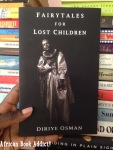
Fairytales For Lost Children by Diriye Osman

Date Read: January 7th 2016

Published: September 2013

Publisher: Team Angelica Press

Pages: 156

Diriye Osman

The Blurb

Fairytales For Lost Children is narrated by people constantly on the verge of self-revelation. These characters – young, gay and lesbian Somalis – must navigate the complexities of family, identity and the immigrant experience as they tumble towards freedom. Using a unique idiom rooted in hip-hop, graphic illustrations, Arabic calligraphy and folklore studded with Kiswahili and Somali slang, these stories mark the arrival of a singular new voice in contemporary fiction.

◊◊

Review – ★★★★★ (5 stars)

*sigh*

Is it too early to already know my favorite book of the year? Fairytales For Lost Children just might be the best book I’ve read this year. I read two stories a day from this collection, to adequately absorb everything in little bits. I even smoothed the velvet-textured book cover against my cheeks after reading some of the stories (no, I’m not a weirdo… maybe a little haha). And when I was done reading Fairytales For Lost Children, I wanted more. I need Diriye Osman to write a full novel soon!

This collection of short stories is raw, erotic, sassy, vivid, devastating and most importantly, liberating. These stories are set in modern day Somalia, Kenya and London. The characters of these stories just want to be loved for who they are. They desire to live their lives free from hate, criticism, and scrutiny, while trying to understand the intersectionalities of their own identities.

There are eleven stories in this collection and I loved how Diriye Osman precedes each story with his beautiful artwork, which visually summarizes each tale. Osman also incorporates lots of Neo-Soul (my ultimate favorite music genre) and old school Hip-Hop music into the stories. He refers to Meshell Ndegeocello’s 2002 soul album, Comfort Woman in about three of the stories, so I just had to purchase that album after I read this collection! Osman also blends languages like Somali, Arabic and Swahili into these stories, which make them feel authentic. I deeply enjoyed each and every one of the stories (which is rare for a short stories collection – there are always one or two stories I don’t care for) but my faves were:

Shoga‘ – This tale was pretty explicit but entertaining and heartbreaking at the same time. A displaced seventeen year old Somali boy lives with his grandmother, Ayeeyo, in Kenya. He falls in love with Boniface – the domestic help who is a refugee from Burundi. After enjoying many nights of listening to Bob Marley, smoking marijuana and sleeping with Boniface in his quarters, this seventeen year old later has to deal with the consequences of his pleasures by facing his grandmother – before her time is up.

Earthling‘ – This is a story that follows Somali-Brit – Zeytun, who suffers from psychosis and deeply desires love from her family – more so, from her sister. Her only family and support system is her girlfriend, Mari, who admirably stands by Zeytun and aids in her mental and emotional healing. The love exhibited between this lesbian couple was eye-opening and comforting to me.

Your Silence Will Not Protect You‘ – This story is preceded by Diriye Osman’s artwork that actually looks like a portrait of himself (he’s the man on the book cover by the way!), so I’m assuming this tale is loosely based on his personal story. Osman boldly narrates the series of events that lead to him coming out to his family, and how he boldly deals with the pain of rejection.

The Other (Wo)man‘ – I’ve never read a story like this before. Yassin is a young, twenty-two year old Somali man living in London, pursuing his art degree and is ready to start dating. He meets a middle-aged, British-Jamaican man who works as an army pilot on a dating website (Gaydar) and they go on a couple of dates. But one night, Yassin realizes that the British-Jamaican man’s fetishes not only offend him, but actually push him to maybe trying something he never thought he’d consider. This coming-of-age tale had me sooo worried. But I loved observing Yassin as he strived to understand his ever evolving identities.

My favorite quote from ‘The Other (Wo)man‘ as Yassin takes a walk towards Peckham Rye:

He felt his sense of Somaliness slipping away from him and he was afraid of letting it go, afraid of the moral, psychological and social anarchy its loss threatened to create within him. But at the same time, what was he really hanging onto? A sense of social allegiance? But wouldn’t he be automatically excluded from his community because of his sexual orientation wherever his own allegiance lay? He didn’t belong to just one society: he was gay, Somali, Muslim, and yet all these cultural positions left him excluded… He was Somali first, Muslim second, gay third. But perhaps that hierarchy was only a matter of timing: born Somali, raised Muslim, discovered gay. And now he was venturing out into the world without a sense of his place within it and this frightened him. Yet he realized that he couldn’t mourn what was lost but instead had to consider what was to be gained. He knew he would never belong but did he really want to? (pg. 137)

This collection of short stories is probably the best LGBTQ-themed African fiction out there. I totally understand why Diriye Osman won The Polari First Book Prize back in 2014. Osman’s writing style is bold and fearless and I believe this collection is a priceless gem among the myriad of African fiction novels around. Please read this if you get the chance! And try not to judge the characters in the stories; just immerse yourself in the different happenings of the tales and learn from them. These stories speak volumes on being true to yourself, following your heart and the universal human need to love one another, regardless of sexual orientation, race, occupation, religion. Fairytales For Lost Children must have been liberating to write and I truly admire Diriye Osman as a storyteller and visual artist. Readers around the world will find solace in this work of art – I definitely did! I look forward to reading more of Osman’s work in the future. I’m sure whatever he writes next would be as fierce as this collection.

★★★★★ (5 stars) – Amazing book, I loved it. Absolutely recommend!

IMG_3573
  • Also!! Read Diriye Osman’s essay published in The Huffington Post (2014): To Be Young, Gay and African
  • I really enjoyed this conversation between Diriye Osman and Another Africa, where they discuss Osman’s background, musical influences and his creative process, difficulties he faced in writing this collection, future projects and so much more!

Other Somali writers I plan on reading in the future (click on their names to check out their Goodreads profiles and their collection of work): Nuruddin FarahAyaan Hirsi Ali, Warsan Shire (Somali-British), Ladan Osman (Somali-American), Nadifa Mohamed (Somali-British).

Purchase Fairytales For Lost Children on Amazon