The Africa39 Anthology!

The Africa 39 project is an anthology of stories/extracts from the most promising 39 authors under the age of 40 from Sub-Saharan Africa and the diaspora. Africa 39 will finally be launched TOMORROW, October 12th 2014 at a festival in UNESCO’s World Book Capital in Port Harcourt, Nigeria!

The selected authors of the Africa39 anthology are believed to have the potential and the talent to define the trends that will mark the future development of literature in a certain language or region.

Some of these authors are: Chimamanda Ngozi Adichie (Nigeria), Okwiri Oduor (Kenya), Nana Ekua Brew-Hammond (Ghana/USA), Igoni Barrett (Nigeria), Sifiso Mzobe (South Africa), Dinaw Mengestu (Ethiopia), Hawa Jande Golakai (Liberia), Monica Arac de Nyeko (Uganda), Recaredo Silebo Boturu (Equitorial Guinea), Edwige- Renée Dro (Cote d’Ivoire), Stanley Onjezani Kenani (Malawi), Zukiswa Wanner (Zambia/South Africa/Zimbabwe) among others!

africa39cover

I pre-ordered the book on Amazon so I should receive my copy pretty soon. I really hope the book will be available in Ghana- hopefully at the EPP book shop in East Legon, Accra. EPP actually has lots of new African Literature books in stock, so maybe Africa39 will arrive here soon!

I’m excited to read stories from authors of different sub-Saharan African countries that aren’t very popular in the African Literature scene- like Liberia, Malawi, Zambia, Cape Verde, Equatorial Guinea among others! 🙂

For more information on Africa39, read – here.

Currently Reading

I recently finished reading ‘The Spider King’s Daughter’ by Chibundu Onuzo and I loved it! A review will be posted soon!

*sigh* But (dental) school is in session and I know my reading will slow down. I’ve already surpassed by reading goal for this year- which was 12 books. Right now I’m on book 15, so at least I was able to complete my reading challenge!

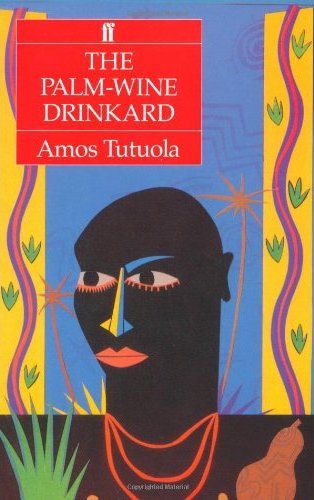
I’m currently reading: The Palm-Wine Drinkard by Amos Tutuola

palm wine drinkard (1)

This is a small book (about 125 pages). So hopefully it won’t take me ages to finish reading and will also be a fun distraction from my school workload 🙂

African Book Covers! (showcase 2)

Welcome to showcase 2 of the Book Covers Series!

The showcase below is part two of some of my favorite African book covers. African book covers are all very unique! The cool art work of these covers either pushed me to purchase the books, or are still encouraging me to purchase them in the near future. Check out African Book Covers showcase 1 – here!

Stay tuned for showcase 3, which will feature some great Caribbean book covers.

Enjoy! 🙂

More book covers! 

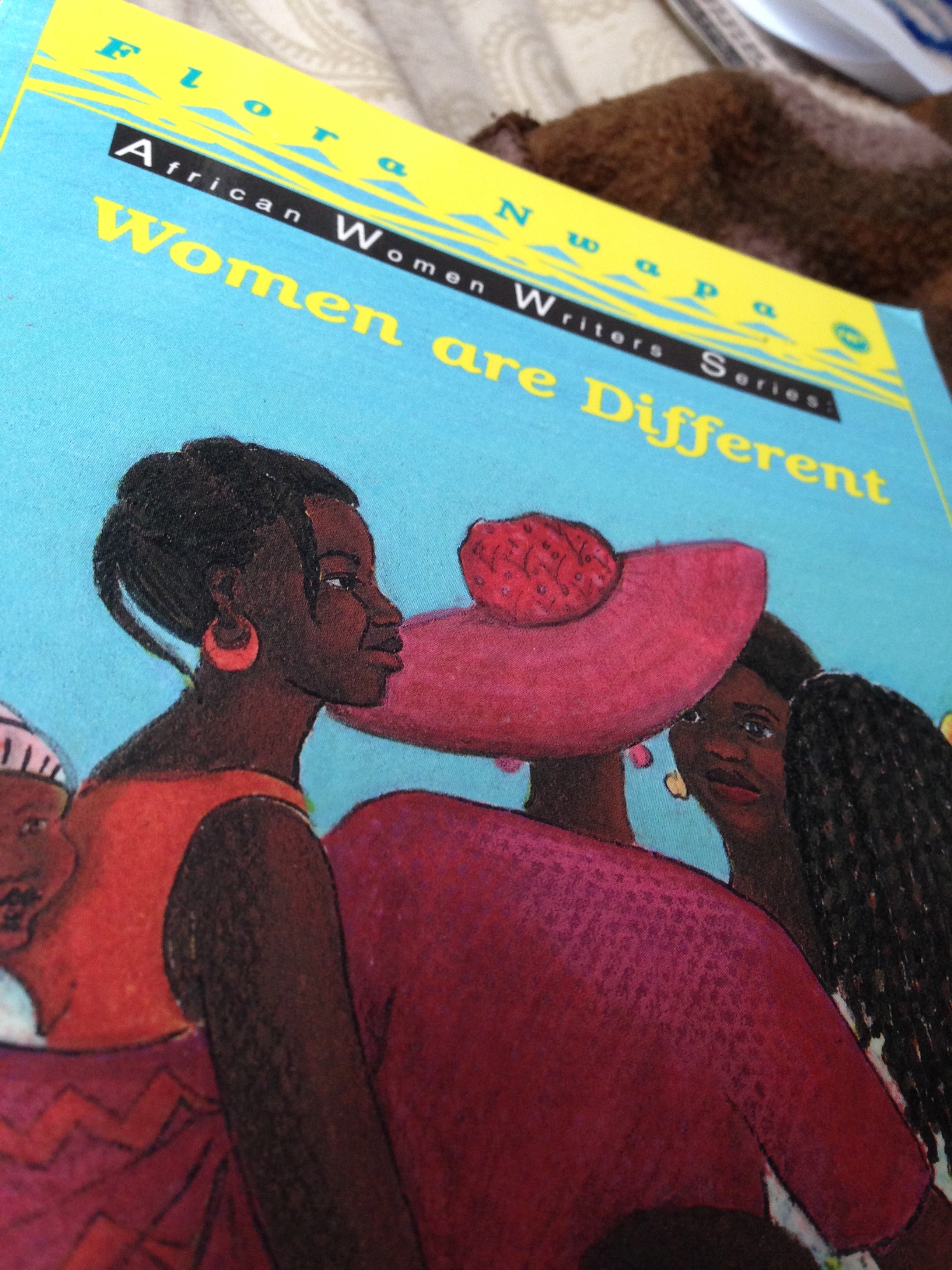
Women Are Different by Flora Nwapa

Date Read: June 10th 2014

Published: 1992

Publisher: Africa World Press (African Women Writers Series)

Pages: 138

The Blurb

Women are Different is the moving story of a group of Nigerian women, from their schooldays together through the trials and tribulations of their adult lives. Through their stories we see some of the universal problems faced by women everywhere: the struggle for financial independence and a rewarding career, combined with the need to bring up a family, often without a man.

◊◊

Review – ★★ (2 stars)

This book was quite painful to read… the details of the storyline were superfluous, Nwapa’s writing style wasn’t great and there were too many characters to keep track of in the book. Furthermore, there were spelling and grammatical errors in my copy of the book (I have the African Women Writer Series- First Africa World Press, edition 1992).

I love that Flora Nwapa sought out to enlighten readers on the lives of Nigerian women from the 1940’s to the 1970’s- after the Biafran war, but I did not enjoy the writing style. It was written in third-person, but quite shabbily. The sentence structures were very simple and I felt like I was reading a child’s novel.

I will commend Nwapa for raising various issues women faced in Nigeria, like: arranged marriages, child marriages, poverty, the importance of girl-child education, prostitution, spinsterhood, betrayed love etc. Nwapa portrayed all of these issues through the lives of Dora, Rose, Agnes and Comfort from their high school days to their late motherhood days. The girls’ different personalities and opinions on life were basically a microcosm of the opinions and lives of other women in Nigeria. I enjoyed Comfort’s character the most, as she was vivacious and fearless- typical of Nigerian women!

But several parts of the novel were dragged out. For example: the food strike in the girls’ secondary school went on for about ten pages; Dora complaining to Rose about her wayward daughter’s failed marriage dragged on for another ten pages; Agnes’ prostitute daughter’s plight went on forever as well.

The girls’ lives did not end up how they wished it would romantically, but they were quite successful, strong women by the end of the novel.

I initially wanted to purchase Nwapa’s popular novel, Efuru but after reading this simple book that took me 18 days to complete, I think I will pass. I love African literature and I admire Flora Nwapa for being one of the pioneering African women writers, but unfortunately I do not recommend this book.

BUT!! Another African literature book blogger, Mary Okeke, loved this novel! Check out her positive review of Women Are Differenthere.

★★ (2 stars) – Thumbs down. I do not recommend this.

IMG_5964

Purchase Women Are Different on Amazon

African Book Covers! (showcase 1)

Let’s be honest, we ALL judge books by their covers! The cover of a book can either dissuade or persuade anyone into reading it. African book covers in particular are all very unique. Here are 20 of some of my favorite African book covers. The cool art work of these covers either pushed me to purchase the books, or are still encouraging me to purchase them in the near future. This is showcase 1 of my Book Covers Series :).

This post is inspired by Bookshy, the creator of africanbookcovers.tumblr.com and bookshybooks.blogspot.co.uk. Several diverse African book covers are beautifully showcased and celebrated on her blogs. They are a lovely ode to African literature!

 More book covers!

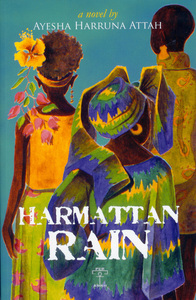
Harmattan Rain by Ayesha H. Attah

Date Read: February 10th 2014

Published: 2008

Publisher: PER ANKH

Pages: 434

Harmattan-Rain

The Blurb

Harmattan Rain follows three generations of women as they cope with family, love and life. A few years before Ghana’s independence, Lizzie-Achiaa’s lover disappears. Intent on finding him, she runs away from home. Akua Afriyie, Lizzie-Achiaa’s first daughter, strikes out on her own as a single parent in a country rocked by successive coups. Her daughter, Sugri grows up overprotected. She leaves home for university in New York, where she learns that sometimes one can have too much freedom. In the end, the secrets parents keep from their children eventually catch up with them

◊◊

Review – ★★★★ (4 stars)

Once I finally gave this book a chance, I really enjoyed it! I started Harmattan Rain in October of 2013, but put it down after reading 30 pages or so. I found the beginning a bit slow so I just took a break and came back to it in February.

Harmattan Rain focuses on three generations of Ghanaian women in a family: Lizzie-Achiaa, Akua Afriyie and Sugri. Readers experience Ghana (mostly the capital, Accra) through these characters from 1954- before independence, to the early 2000’s. We learn about Ghana’s political unrest during the coup d’etat era and witness the evolution of Ghanaian politics. Ayesha Harruna Attah does a great job of weaving Ghana’s history into the storyline in a simple, clear way, without being politically biased.

The novel is divided into three parts, so readers have the opportunity to delve deep into the lives of each character and their storyline. Ayesha Harruna Attah effortlessly develops each character and their storyline to the point where all three storylines are meshed together perfectly. As the novel takes us from one generation to the next, readers witness family cycles, past mistakes and habits continuing. It was refreshing to go through the realistic ups and downs of these ladies’ lives: Lizzie-Achiaa- the brave matriarch of the family runs away from her village to find her lost lover and also tries to pursue her nursing career in Accra; Akua Afriyie- Lizzie’s rebellious first child struggles with being a single parent and strives to find happiness through her art; Sugri- Akua Afriyie’s only daughter, a brilliant but sheltered girl, learns hard lessons of life as she goes away to college in the US.

My favorite part of the novel is part three, which focuses on Sugri. I could identify with Sugri more, as she attended an international high school, went to university abroad and experienced being ‘different’ outside of Ghana. She may be a little naive, but her growth and strength by the end of the novel was inspiring! Ayesha Harruna Attah seems to be a shy person from some interviews I’ve seen, so I was pleasantly surprised when I was reading this book because she’s a powerful writer with an unexpected creative imagination. Harmattan Rain is a great debut for Ayesha Harruna Attah and I can’t wait to read her next novel!

Check out a sneak peek of her second novel, Saturday’s Shadows to be launched this Fall – here!

★★★★ (4 stars) – Great book. Highly recommend!

Purchase Harmattan Rain on Amazon

Currently Reading

I just finished Leila Aboulela’s book “Minaret”. I wasn’t really impressed with how the story concluded, but a review on that book will be coming soon.

I’m currently reading: Sozaboy: A Novel in Rotten English

sozaboy

The book is written in pidgin english, so it flows differently. But I’m enjoying it so far 🙂

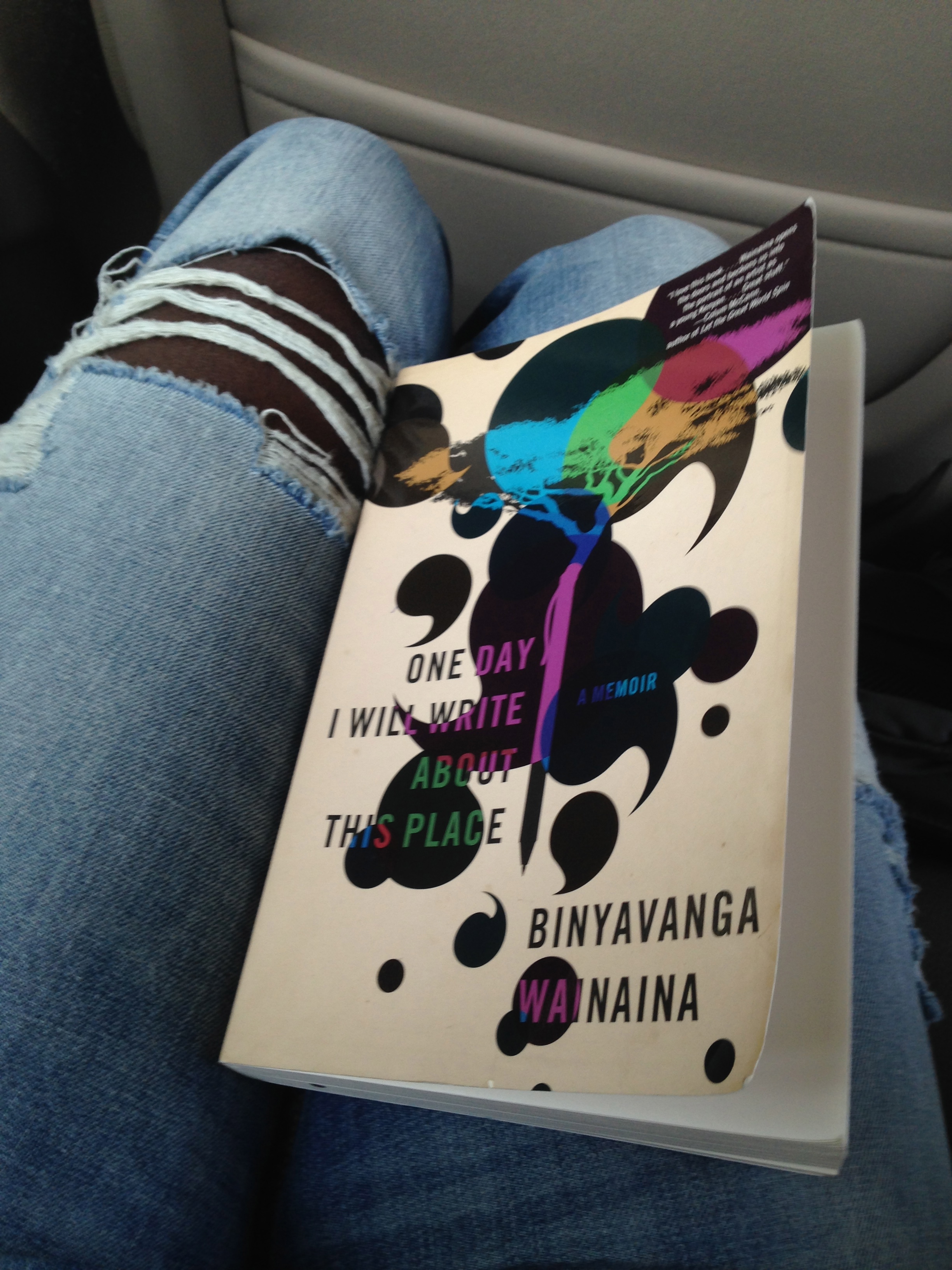
One Day I Will Write About This Place: A Memoir by Binyavanga Wainaina

Date Read: April 16th 2014

Published: 2011

Publisher: Graywolf Press

Pages: 272

9781555975913_p0_v1_s260x420

 The Blurb 

Binyavanga Wainaina tumbled through his middle-class Kenyan childhood out of kilter with the world around him. This world came to him as a chaos of loud and colorful sounds: the hair dryers at his mother’s beauty parlor, black mamba bicycle bells, mechanics in Nairobi, the music of Michael Jackson—all punctuated by the infectious laughter of his brother and sister, Jimmy and Ciru. He could fall in with their patterns, but it would take him a while to carve out his own.

In this vivid and compelling debut memoir, Wainaina takes us through his school days, his mother’s religious period, his failed attempt to study in South Africa as a computer programmer, a moving family reunion in Uganda, and his travels around Kenya. The landscape in front of him always claims his main attention, but he also evokes the shifting political scene that unsettles his views on family, tribe, and nationhood.

Throughout, reading is his refuge and his solace. And when, in 2002, a writing prize comes through, the door is opened for him to pursue the career that perhaps had been beckoning all along. A series of fascinating international reporting assignments follow. Finally he circles back to a Kenya in the throes of post-election violence and finds he is not the only one questioning the old certainties.

Resolutely avoiding stereotype and cliché, Wainaina paints every scene in One Day I Will Write About This Place with a highly distinctive and hugely memorable brush.

 ◊◊

Review – ★★★★★ (5 stars)

This is an amazing memoir. I loved every bit of it!! I’ve watched and listened to several interviews featuring Wainaina, so when I was reading this book I read it in his voice and it made my reading experience even more enjoyable! I loved how Wainaina took us through his life as a child, his secondary school years, university life to present day. I loved how he portrayed his relationship with his sister- Ciru to the point where I almost thought they were twins. I loved the grace of his mother. I appreciated the struggles he faced in finding himself while in university in South Africa. I loved the way he played with sounds and words throughout the book – ‘kimay’! I loved the pop culture references – from Lauryn Hill’s afro, to OutKast’s wardrobe, Lionel Richie’s teeth and Brenda Fassie’s tumultuous spotlight in the media.

Before reading One Day I Will Write About This Place, I scanned through Goodreads reviews and saw that readers found the memoir a bit choppy and overall, not an enjoyable read. In the beginning of the memoir, the writing style may seem ‘choppy’ because we are encountering the young, immature, happy-go-lucky, very jovial Binyavanga. The ‘choppy’ writing style is only symbolic, as we read through the mind of a young, somewhat scatter-brain, privileged boy who just enjoyed reading books, imagining random patterns in the sky and day-dreaming. Which youngster isn’t like this anyway? This memoir is anything but ‘choppy’ and once readers get passed encountering Wainaina’s hilarious boyhood antics, the reading experience gets better with every page.

I learned a lot about Kenya and the ethnic group issues they face, especially during election times. It was familiar to me, as Ghana and other African nations unfortunately face similar ethnic group discrimination as well. Overall, it was refreshing to learn about Kenya from a middle-class, male standpoint, instead of the village life stories many African novels are based on.

One Day I Will Write About This Place is an overall insightful, hilarious book. My love for Wainaina grew after he came out to the world earlier this year as being homosexual. I was proud of him, as one must live their truth! Wainaina was also recently honored in Times Magazine as one of the 100 most influential people in the world.

In January 2014, Wainaina wrote a Lost Chapter from One Day I Will Write About This Place which is an essay where he tells his mother he is a homosexual. Check it out on Africa Is A Country here.

★★★★★ (5 stars) – Amazing book, I loved it. Absolutely recommend!

IMG_4628

Purchase One Day I Will Write About This Place: A Memoir on Amazon