And the 2014 Caine Prize winner is… Okwiri Oduor!

A big congratulations to Kenya’s Okwiri Oduor for winning the 2014 Caine Prize for African Writing!!

Okwiri Oduor is the 15th winner of the Caine Prize, which is recognized as Africa’s leading literary award for short stories.

The winner was announced last night at a dinner held at the Bodleian Library in Oxford, England for all the shortlisted candidates.

Okwiri Oduor won the £10,000 prize for her short story, ‘My Father’s Head’. In the short story, the narrator deals with the loss of her father and tries to recollect buried memories of him. Even though the story is laden with issues of loneliness, mourning and sadness, its actually quite moving and has a courageous outlook on loss/death. Oduor is currently working on her debut novel and I can’t wait to read more of her work in the near future!

Okwiri-oduor-caine-prize-review-father-head-e1399954921586

 Read ‘My Father’s Head’ by Okwiri Oduor – here 

Every Day Is For The Thief by Teju Cole

Date Read: June 26th 2014

Published: March 25th 2014 (originally published in Nigeria by Cassava Republic Press in 2007)

Publisher: Random House Publishing Group

Pages: 176

9780812995787_p0_v2_s260x420

The Blurb

A young Nigerian living in New York City goes home to Lagos for a short visit, finding a city both familiar and strange. In a city dense with story, the unnamed narrator moves through a mosaic of life, hoping to find inspiration for his own. He witnesses the “yahoo yahoo” diligently perpetrating email frauds from an Internet café, longs after a mysterious woman reading on a public bus who disembarks and disappears into a bookless crowd, and recalls the tragic fate of an eleven-year-old boy accused of stealing at a local market. 

Along the way, the man reconnects with old friends, a former girlfriend, and extended family, taps into the energies of Lagos life—creative, malevolent, ambiguous—and slowly begins to reconcile the profound changes that have taken place in his country and the truth about himself.
In spare, precise prose that sees humanity everywhere, interwoven with original photos by the author, Every Day Is For The Thief is a wholly original amalgamation of fiction, memory, art, and travel writing. Originally published in Nigeria in 2007, this revised and updated edition is the first time this unique book has been available outside Africa. You’ve never read a book like Every Day Is For The Thief because no one writes like Teju Cole.

◊◊

 Review – ★★★★ (4 stars)

“Every day is for the thief, but one day is for the owner” is a Yoruba proverb that Teju Cole adopted to capture the essence of this travelogue, Every Day Is For The Thief. The protagonist of this travelogue is a Nigerian born, now naturalized American psychiatry student who lives in New York. His calm demeanor gives the book a progressive, logical flow as readers hear his thoughts. I actually read the book thinking the protagonist was Teju Cole himself… just because readers are not given much detail on the protagonist- like his name, his stature or his age. Since the novel isn’t plot driven, each chapter is a vignette where the nameless protagonist discusses different experiences of his trip to Lagos during his Christmas vacation.

A lot of the Nigerian experiences and adventures Cole writes about are common in Ghana, but not as severe! The corruption heavily practiced by the police, the hustle and bustle of the city with zooming okadas (motorcycles) on pot-holed roads, the regular power outages, the wide social and economic disparities and increased armed robbery cases in the suffering economy are all prevalent in Ghana as well.

Certain parts of the book wowed me: the widespread of internet frauds conducted in Internet cafes by ‘yahoo yahoo’ boys, the burning of a child thief in a car tire, the gangs that roam the streets of Lagos demanding thousands of naira while being ever-ready to maim citizens were pretty wild! These incidents may seem exaggerated and fictitious but I believe these things actually occur in Lagos, since I’ve heard similar stories from some Nigerian friends. After reading this novel, non-Nigerians may think twice before visiting Lagos because it was written as if Nigerians are always living on the edge of danger!

I loved how the protagonist was a ‘returnee’ as he had been away from Lagos for fifteen years. He sort of returned to Lagos as a stranger with his assimilated Western ways (of democracy). This allowed him to share his shock in the craziness and delight in being back home with a wide array of readers- both foreign and fellow Africans. The protagonist’s fluid identity will help readers unfamiliar with Nigeria to take in Lagos from an insider, yet outsiders’ lens.

This is a suitable book for anyone who would love to learn about the rambunctious nation of Nigeria! Teju Cole expertly discusses and simplifies some of the complex issues the country faces such as corruption, government issues, the oil sector, the health sector etc. Some people may be even more apprehensive about visiting the nation after reading jaw-dropping descriptions, but I’m still keen on visiting Nigeria- Abuja to be precise!

★★★★ (4 stars) – Great book. Highly recommend!

IMG_6302

Purchase Every Day Is For The Thief on Amazon

And the 2014 Caine Prize winner is…

In less than a week, the 2014 Caine Prize winner will be announced!

For those who are not familiar, the Caine Prize for African Writing, which was first awarded in 2000 is an award “open to writers from anywhere in Africa for work published in English. Its focus is on the short story, reflecting the contemporary development of the African story-telling tradition” (source).

Some notable winners of the Caine Prize include:

  • Leila Aboulela, from Sudan (2000)– author of novels Minaret, Lyrics Alley amongst other works. 
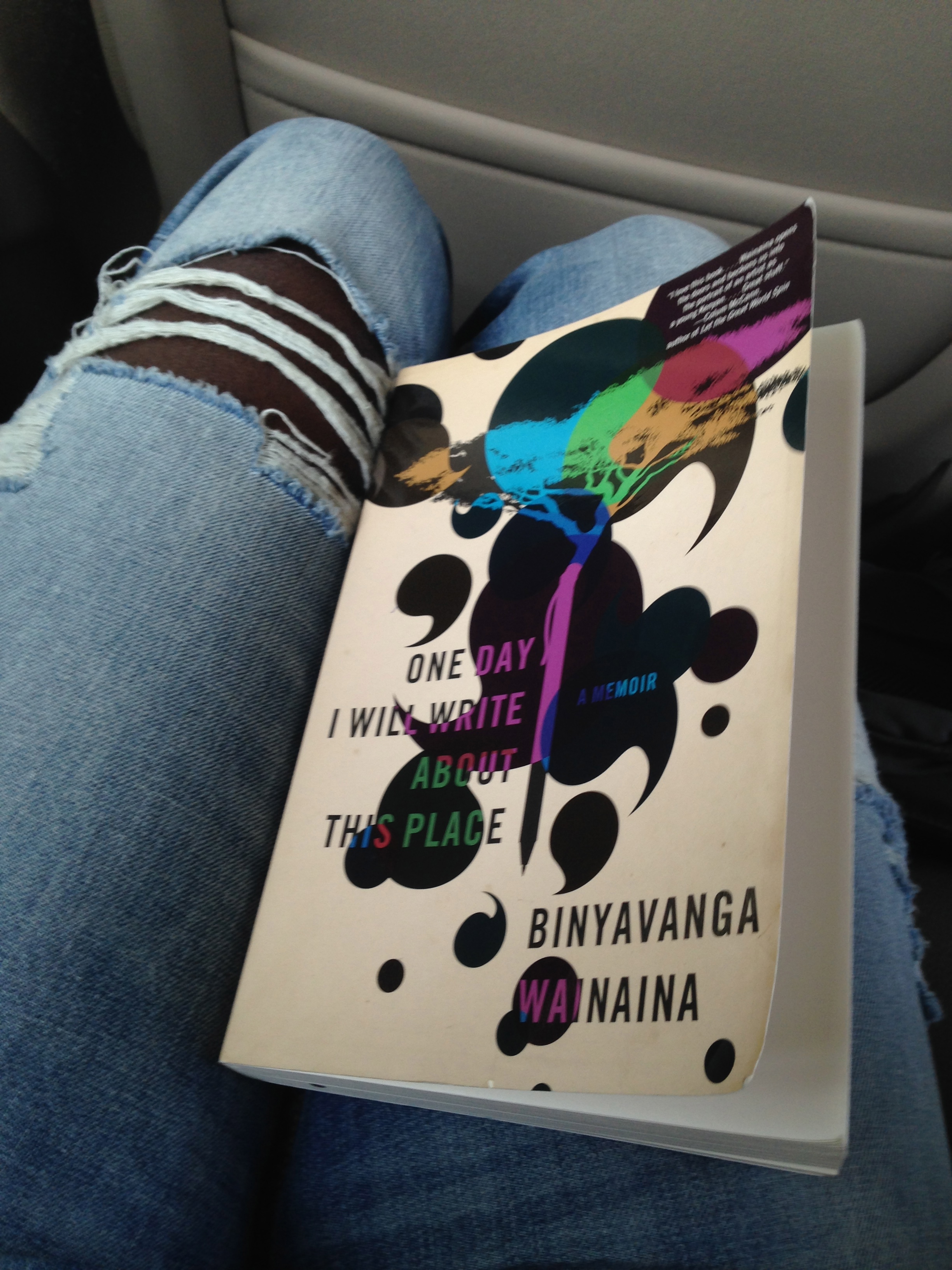
  • Binyavanga Wainaina, from Kenya (2002)– founding editor of Kwani?, author of One Day I Will Write About This Place and other essays such as “How To Write About Africa” found in various literary magazines.
  • Yvonne A. Owuor, from Kenya (2003)– author of the novel, Dust.
  • E.C Osondu, from Nigeria (2009) – author of novel, Voice of America: stories.
  • NoViolet Bulawayo, from Zimbabwe (2011) – author of novel, We Need New Names. 

This year, the Caine Prize shortlist comprises of five amazingly talented young writers with unique short stories (L -> R):

caineprizeauthors-770x375
  • Diane Awerbuck, from South Africa. Read her story “Phosphorescence” here. Listen to the story here.
  • Tendai Huchu, from Zimbabwe. He’s also the author of novel, The Hairdresser of Harare (on my To-Read List!). Read his short story “The Intervention” here. [I couldn’t find the audio for Huchu’s story!] 
  • Efemia Chela, from Ghana/Zambia. Read her story “Chicken” here. Listen to the story here.
  • Billy Kahora, from Kenya. Read his story “The Gorilla’s Apprentice” here. Listen to the story here.
  • Okwiri Oduor, from Kenya. Read her story “My Father’s Head” here. Listen to the story here.

(The biographies for the shortlisted candidates can be found – here)

It was refreshing to see a Ghanaian on this year’s shortlist. Since I’m Ghanaian I’m naturally rooting for Efemia Chela. Her short story “Chicken” is a coming-of-age narrative. The story consists of three vignettes. In the first vignette, the protagonist who is at an awkward stage in her life- in her twenties, reflects on her extended African family and the meal they shared commemorating her successful graduation from university. Chela’s description of food in this story is so vivid, it makes your mouth water!

In the second vignette of the story, the protagonist gives an account of a recent sexual encounter (with a female). In the third vignette she tries to decide what path she is to take in life- whether to become a lawyer as her parents suggest or to follow where her heart leads. Chela’s writing style is heavily descriptive, but not a drag at all! I appreciated her unique style of narrating. It suited the awkward, twenty something year old coming-of-age theme!

Which story is your favorite? Who do you think will win the Caine Prize this year?

The winner will be announced on the 14th of July in Oxford, England. Good luck to all the shortlisted candidates!

Voice of America: Stories by E.C Osondu

Date Read: April 30th 2014

Published: October 25th 2011

Publisher: Harper Perennial

Pages: 216

VOA

The Blurb

E.C. Osondu is a fearless and passionate new writer whose stories echo the joys and struggles of a cruel, beautiful world. His characters burst from the page—they fight, beg, love, grieve, but ultimately they are dreamers. Set in Nigeria and the United States, Voice of America moves from the fears and dreams of boys and girls in villages and refugee camps to the disillusionment and confusion of young married couples living in America, and then back to bustling Lagos.
Written with exhilarating energy and warmth, the stories of Voice of America are full of humor, pathos, and wisdom—an electrifying debut from a winner of the Caine Prize for African Writing.

◊◊ 

Review – ★★ (2 stars)

I bought Voice of America: Stories because Osondu’s story “Waiting” won the Caine Prize in 2009 and I found it very touching. I wanted to read more of his work and I’m satisfied with my overall reading experience of this book.

But most of the short stories (set in both USA and Nigeria) were lackluster. I found issues like childless marriages, arranged marriages, kidnappings and fraud cliché with the plethora of African novels on the market on immigrant experience in the West. I’m used to short stories being extraordinary, shocking, disheartening, exhilarating- not simply okay, as with this collection of short stories.

My favorite story was:

“A Letter From Home”- a hilarious letter that a nagging Nigerian mother writes to her adult son in the United States, demanding extra monetary support and discussing the future bride she found for him.

Other stories had hilarious bits as well, but were still quite lackluster for me. Voice of America: Stories is a pleasant read, but not on my highly recommended list.

★★ (2 stars) – Thumbs down. I do not recommend this.

Purchase Voice of America: Stories on Amazon

Currently Reading

I just finished Maya Angelou’s book “Mom & Me & Mom”. Maya Angelou never disappoints! A review on that book will be coming soon.

I’m about to start:

37775

This is book 12 for my Goodreads 2014 Reading Challenge 🙂

“New Wave of African Writers With an Internationalist Bent” – NY Times

Are positive changes in African nations giving rise to the increasing number of writers and readers of African literature?

Read the New York Times article by Felicia R. Lee, where she discusses the increasing popularity of African literature in the United States.


What do you think: Are African writers and African novels in vogue now?

Lucy by Jamaica Kincaid

Date Read: May 22nd 2014

Published: September 4th 2002

Publisher: Farrar, Straus and Giroux

Pages: 164

lucy

The Blurb

Lucy, a teenage girl from the West Indies, comes to North America to work as an au pair for Lewis and Mariah and their four children. Lewis and Mariah are a thrice-blessed couple–handsome, rich, and seemingly happy. Yet, almost at once, Lucy begins to notice cracks in their beautiful facade. With mingled anger and compassion, Lucy scrutinizes the assumptions and verities of her employers’ world and compares them with the vivid realities of her native place. Lucy has no illusions about her own past, but neither is she prepared to be deceived about where she presently is.
At the same time that Lucy is coming to terms with Lewis’s and Mariah’s lives, she is also unravelling the mysteries of her own sexuality. Gradually a new person unfolds: passionate, forthright, and disarmingly honest. In Lucy, Jamaica Kincaid has created a startling new character possessed with adamantine nearsightedness and ferocious integrity–a captivating heroine for our time.

◊◊

Review –  ★★★★★ (5 stars)

Lucy is a quick read and was wonderfully written. I really enjoy Jamaica Kincaid’s style of writing – it is clean and simple yet laden with deep meaning. Lucy, the protagonist of the novel is a sorrowful, bitter person and I blame her abandoned upbringing and the love-hate relationship she has with her mother as the cause. The novel in general is full of misery – not only from the protagonist, but also from the family Lucy is working for (Mariah and Lewis).

Even after Lucy obtains all the things she once longed for – freedom to do as she pleases and to be away from home (a nameless Caribbean island) she still isn’t fully satisfied with life. The bond she forms with her friend Peggy and her romantic relationships with men don’t seem completely sincere in love. There is a deep void in Lucy’s life and I believe only her mother’s love can fill it but her mother was quite controlling and hostile to Lucy as a child. What kind of mother tells her daughter that she was named after Satan because she was a botheration from the moment she was conceived? And that ‘Lucy’ is the girl’s name for Lucifer? Crazy.

 This story could be seen as a sequel to Jamaica Kincaid’s novel, Annie John. There are a lot of similarities in the protagonists of the two stories. Kincaid seems to enjoy writing on mother-daughter relationships in these two novels… and they are both quite tragic! Kincaid’s ability to articulate emotions and feelings of joy, vulnerability, sorrow, pain and grief are very palpable in her novels. This is why I love her books and I highly recommend this one!

★★★★★ (5 stars) – Amazing book, I loved it. Absolutely recommend!
Purchase Lucy on Amazon

The Thing Around Your Neck by Chimamanda Ngozi Adichie

Date Read: April 2nd 2014

Published: June 1st 2010

Publisher: Knopf Doubleday Publishing Group

Pages: 240

Thing-Around-Neck-C_568173c

 The Blurb

In “A Private Experience,” a medical student hides from a violent riot with a poor Muslim woman whose dignity and faith force her to confront the realities and fears she’s been pushing away. In “Tomorrow is Too Far,” a woman unlocks the devastating secret that surrounds her brother’s death. The young mother at the center of “Imitation” finds her comfortable life in Philadelphia threatened when she learns that her husband has moved his mistress into their Lagos home. And the title story depicts the choking loneliness of a Nigerian girl who moves to an America that turns out to be nothing like the country she expected; though falling in love brings her desires nearly within reach, a death in her homeland forces her to reexamine them.

Searing and profound, suffused with beauty, sorrow, and longing, these stories map, with Adichie’s signature emotional wisdom, the collision of two cultures and the deeply human struggle to reconcile them. The Thing Around Your Neck is a resounding confirmation of the prodigious literary powers of one of our most essential writers.

◊◊

Review – ★★★★ (4 stars)

The Thing Around Your Neck is a pretty good collection of twelve short stories and a fast read. Adichie manifests her effortless artistry with words and I enjoyed the stories- hence my rating of 4 stars. Since most of my life experiences are American and Ghanaian, I could relate to a good number of the stories, as they are set in the US and Nigeria (Ghana’s anglophone West African brother nation).

But I was dissatisfied at how most of the stories had weak conclusions. I’ve read other short story collections and enjoyed them more, such as Happiness, Like Water by Chinelo Okparanta. Despite my slight disappointment, my favorite stories were:

“A Private Experience” – a touching tale of two young women from different religious backgrounds who take temporary refuge in an empty shop during a riot in Kano, Nigeria.

“The Shivering” – a modern story set on the Princeton University campus where two African students form a strong friendship, despite their different beliefs and sexualities.

“The American Embassy” – a disheartening tale of a woman trying to seek asylum in America after witnessing the murder of her baby son by armed robbers.

The rest of the stories were good, but again, their conclusions were not that great to me. Also, because I read Americanah before this book (in October 2013), I found some of the characters from both novels a bit similar.

My favorite quotes from The Thing Around Your Neck:

 “It is one of the things she has come to love about America, the abundance of unreasonable hope.” pg. 26

 She dated married men before Obiora- what single girl in Lagos hadn’t?” pg. 31

 “I remember now that I once saw you on the shuttle. I knew you were African but I thought you might be from Ghana. You looked too gentle to be Nigerian.” pg. 151 (Hahaa!)

“I was happy when I saw your picture…you were light-skinned. I had to think about my children’s looks. Light-skinned blacks fare better in America.” pg. 185

 I could discuss these quotes till Thy kingdom come. There’s so much to analyze from them to keep a conversation going for a while!

★★★★ (4 stars) – Great book. Highly recommend!

Purchase The Thing Around Your Neck on Amazon