The Fishermen by Chigozie Obioma

Date Read: June 4th 2015

Published: April 2015

Publisher: Little, Brown and Company

Pages: 304
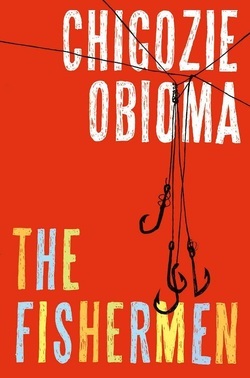
The Fishermen

ย The Blurb

In a Nigerian town in the mid-1990โ€™s, four brothers encounter a madman whose mystic prophecy of violence threatens the core of their close-knit family.

Told from the point of view of nine-year-old Benjamin, the youngest of four brothers, The Fishermen is the Cain and Abel-esque story of the unforgettable childhood in 1990s Nigeria, in the small town of Akure. When their strict father has to travel to a distant city for work, the brothers take advantage of his extended absence to skip school and go fishing. At the omnious, forbidden nearby river, they meet a dangerous local madman who persuades the oldest of the boys that he is destined to be killed by one of his siblings.

What happens next is an almost mythic even whose impact โ€“ both tragic and redemptive โ€“ will transcend the lives and imaginations of the bookโ€™s characters and its readers.

โ—Šโ—Š

Reviewโ€“ โ˜…โ˜…โ˜…โ˜…โ˜… (5 stars)

The Fishermen is a dark, haunting, mythical story about brotherhood, love and madness. Ikenna, Boja, Obembe and Ben are four of six children of the Agwu family in Akure, Nigeria. Ikenna, who is 15 years old is the leader of the pack. Boja is the adventurous 14-year-old, Obembe is the book smart 11-year-old and Ben โ€“ who is the innocent narrator of this lyrical tale, is 9 years old. Once their father is assigned to work at a new location of the Central Bank of Nigeria, quite far away from his home, disorder slowly overtakes this family. I believe the absence of the boysโ€™ father is the root of all the evil things that occur in this story. How crazy is it that the prophecy of the neighborhood madman Abulu, who the boys encounter on one of their forbidden fishing adventures to the Omi-Ala river, could be the catalyst for all the twists and turns that the Agwu family endures?

When you think things are getting better and the craziness of this story plateaus, something pops up! I feel like I know/knew Ikenna, Boja, Obembe and Ben – their love and brotherhood are so dear to me, I don’t know why! I felt helpless during many parts of this story. At certain parts I just had to close the book, sit stillโ€ฆ and pray. I desperately wanted to help Ikenna. I wanted to whisper into his ear and reassure him that his brothers loved him so much and that nobody was out to kill him. I wanted to goad Boja to have more patience with Ikenna since he (Ikenna) was going through a dark, miserable phase in his life where his faith and confidence were shaken.

Chigozie Obioma wrote about these boys in such a tender way that evoked lots of emotions in me. Obioma actually wrote this novel as a tribute to his own brothers and he discusses this more in interviews with Michigan Quarterly Review and Bookanista. I believe Obioma does a great job at painting the picture of a typical Nigerian household in The Fishermen. He captures classic Nigerian idiosyncrasies through the characters, for example: the way the boys’ mother would shout ‘Chineke!’ (which is an Igbo word that means ‘God!’) whenever she was startled; or how she would vigorously tie her wrapper whenever she was frustrated with the boys; or how their chauvinistic father would shout ‘my friend!’ whenever he was irritated and demanded quick responses from the boys and their mother. If you’ve ever watched a Nollywood film, you would definitely appreciate these entertaining gestures!

The power of Obioma’s lyrical writing style is augmented by his metaphors, which are mostly rooted in animism. This may seem corny, but trust me – it certainly works in making the characters and different incidents in the story feel too realโ€ฆ and every word counts! References to Chinua Achebeโ€™s novel Things Fall Apart, M.K.O Abiola โ€“ a popular Nigerian political figure, alongside other contemporary happenings (during 1997) made this all the more a satisfying and realistic read. I’m super proud of this author and I wish him nothing but more success! This has been the best book I’ve read all summer and maybe even this year.

Side note: After reading this book, Iโ€™ve had second thoughts about my desire to give birth to only boys โ€“ as if I even have a choice, am I God? haha. But I’ve come to the realization that raising boys (and children in general) is truly a challenge. Parental guidance is needed at all times!

The Fishermen needs more attention in the blogosphere! I’m still trying to digest some stuff from the book and I would love to discuss The Fishermen in detail with anyone who has already read it. Iโ€™m waiting for my Mom to finish reading the book so we can discuss the ending which slightly threw me off. I hope bookworms around the world catch on and rave about this book as much as they did Adichie’s Americanah. I expect The Fishermen to win some literary awards soon.

Chigozie Obioma definitely took fiction to another level with this book. Please, please pick this up if you get a chance!

โ˜…โ˜…โ˜…โ˜…โ˜… (5 stars) โ€“ Amazing book, I loved it. Absolutely recommend!

IMG_0634

Purchase The Fishermen on Amazon

2015 Summer Book Haul!

IMG_0826

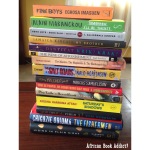
Hey everyone! Since May of this year, I have received the bulk of my book orders from the mail and I’d love to share some of them with you. Please click on the title to go read more about the book on Goodreads.

Tendai HuchuThe Maestro, the Magistrate and the Mathematician by Tendai Huchu 

I’ve read the first 15 pages of this and its decent thus far! I love a book on African (in this case, Zimbabwean) immigrant experiences abroad. But the font in the book is small, so reading this might take a while.


Saturday's Shadows Saturday’s Shadows by Ayesha Harruna Attah

I’m glad this book is thick! I can’t wait to enjoy this story which focuses on the Avoka family. Hopefully I’ll read Saturday’s Shadows before the year ends. Recommendation: check out Ayesha’s first novel- Harmattan Rain.


 Hiding in Plain Sight by Nuruddin Farah Farah

Hiding in Plain Sight is my first novel from Somalia. Nuruddin Farah has written several books and I hope to read more of his work in the future. The cover art is lovely if you see the physical copy. I love the iridescent details! This is on my 2016 *TBR list.


ย Some Love, Some Pain, Sometime: stories by J. California Cooperย 

J. California Cooper

I’ve heard and read nothing but great things about Ms Cooper. I hope I love her work as much as others do! Hopefully I can add her to my favorite African-American pioneer writers: Gwendolyn Brooks, Lorraine Hansberry, Maya Angelou, Richard Wright and Alice Walker.


 The Fishermen by Chigozie Obioma The Fishermen

*sigh* This tale on love, brotherhood and madness has been the best book I’ve read this summer… and maybe all year (expect the book review soon)! Please pick this up if you get the chance. Obioma took fiction to another level with this book.


ย nalo hopkinsonThe Salt Roads by Nalo Hopkinson

I’m not a huge fan of science-fiction, but Nalo Hopkinson seems pretty amazing from what I’ve read/heard. And her stories feature Afro-Caribbean folk, so I’m sure I’ll enjoy this!

ย 


Love is Power or Something Like That by A. Igoni Barrett igoni

I enjoy short stories and I look forward to reading this collection by half-Jamaican & half-Nigerian – A. Igoni Barrett. His latest novel, Blackass was released about two weeks ago!


Samuelsson_Yes-Chef_pbYes, Chef by Marcus Samuelsson

This is a memoir that I’m excited to read! I love Chef Marcus Samuelsson from the Food Network on television and I’d love to read more about his life, especially sinceย he is of Ethiopian heritage. Can’t wait.


Krik? Krak! by Edgwige Danticat Edwidge Danticat

I recently finished reading this short stories collection and I must say, it was a perfect summer read! Edwidge Danticat, who is well-known in the Caribbean Literature sphere ‘reps’ hard for Haiti – and I love it.

ย 


ย fine boysFine Boys by Eghosa Imasuenย 

How cool is the book cover art? I was sooo glad when I finally got my hands on this book! I had been searching for the physical copy since 2013 since it is only available on Kindle (I don’t prefer e-books). So when Imasuen came to Accra last month for a reading hosted by Writers Project Ghana, I  did not hesitate to attend the event, purchase the book and stand in line for it to be signed. #winning!


 My Brother by Jamaica Kincaid My Brother Jamaica Kincaid

Well-known Caribbean writer – Kincaid’s work is always a joy to read as she writes with palpable emotion. This is the third Kincaid novel I own – her books Annie John and Lucy are must reads! I love her writing style and learning more about Antigua from the characters in her novels. Oh, and her books are usually in large fonts, so that’s always wonderful.


MabanckouTomorrowTomorrow I’ll be Twenty by Alain Mabanckou

The cover art of this book made me buy it! Alain Mabanckou is a renowned Congolese writer and I’m curious to read on the twists and turns in this memoir-esque novel. His books are usually written in French; Tomorrow I’ll be Twenty or Demain J’Aurais Vingt Ans originally in French, was translated to English by Helen Stevenson. This novel has been compared to J.D Salinger’s The Catcher in the Rye which I loved when I was 13, so I should enjoy this too! This is high up on my 2016 TBR list.


The Wine of Astonishment by Earl Lovelace Earl Lovelace

Trinidadian author, Earl Lovelace is another big name in Caribbean literature. The Wine of Astonishment is a classic and I’m glad I finally own it. This is the first novel I own from the Caribbean Writers Series.

ย 


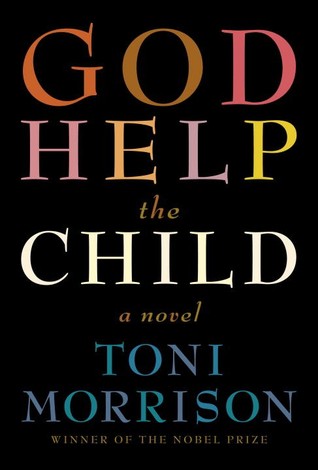
Toni MorrisonGod Help the Child by Toni Morrison

This is ToMo’s latest baby. I’ve seen lots of mixed reviews of this book on Goodreads, so I don’t know when I’ll get to it. Maybe in 2016? (Sula is the only ToMo I’ve read thus far. Meh).


Pig Tails ‘n Breadfruit by Austin Clarke Austin Clarke

Have you ever read a culinary memoir? Well, in Austin Clarke’s book Pig Tails ‘n Breadfruit ‘each chapter is devoted to a detailed description of the ritual surrounding the preparation of a particular native dishโ€”Oxtails with Mushrooms, Smoked Ham Hocks with Lima Beans, or Breadfruit Cou-Cou with Braising Beef.’ This is a (culinary) memoir of Austin Clarke’s childhood in Barbados. Clarke is a preeminent writer of the Caribbean and I’m ready to indulge – literally!


IMG_0825

Have you read any of these? What are you reading this summer? Please let me know!

*TBR : ‘to be read’

And the 2015 Caine Prize winner isโ€ฆ Namwali Serpell!

A big congratulations to Zambia’s Namwali Serpell for winning the 2015 Caine Prize for African Writing!!

Namwali Serpell is the 16th winner of the Caine Prize, which is recognized as Africaโ€™s leading literary award for short stories. The winner was announced last night at a dinner held at the Weston Library, Oxford, England for all the shortlisted candidates.

Namwali Serpell won the ยฃ10,000 prize for her short story, โ€˜The Sackโ€™. Initially I was miffed at how this year’s shortlist was more or less a dichotomy between South Africa and Nigeria, with one story from Zambia. Even though I was more in love with Elnathan’s story ‘Flying‘, I’m happy Zambia won this for once! I look forward to more of Serpell’s work in the future. Her short story, ‘The Sack’ can also be found in the Africa39 anthology which was published in October of last year (2014). Check out Africa39 to read more new short stories by young African writers, under the age of 39!

Namwali Serpell winner

 Read โ€˜The Sackโ€™ by Namwali Serpell – here

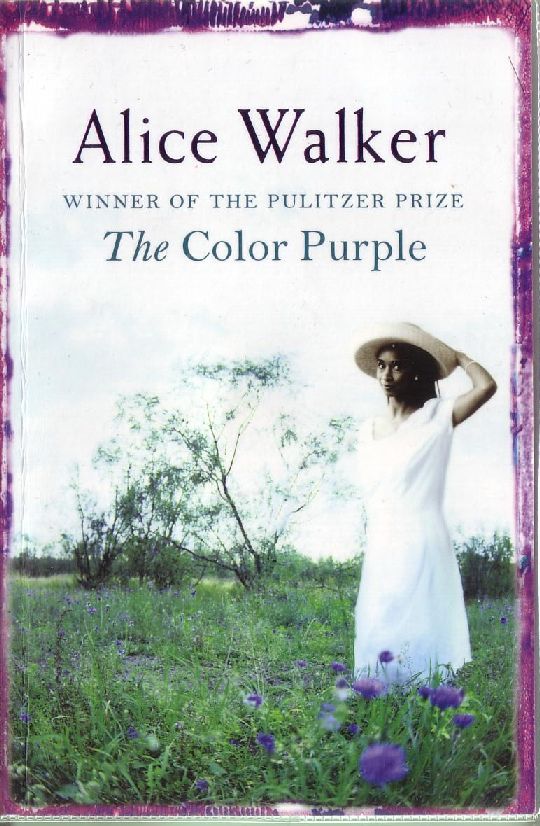
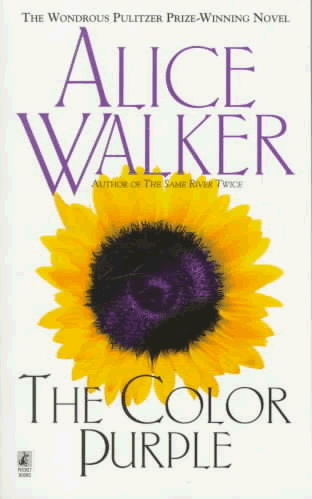
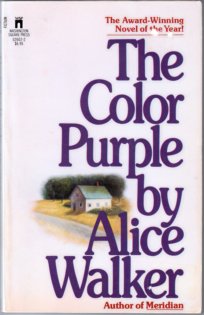
The Color Purple by Alice Walker

Date Read: June 10th 2015

Published: 1985

Publisher: Pocket Books/Washington Square Press

Pages: 295

TheColorPurple2

The Blurb

Life wasn’t easy for Celie. But she knew how to survive, needing little to get by.
Then her husband’s lover, a flamboyant blues singer, barreled into her world and gave Celie the courage to ask for more – to laugh, to play, and finally – to love.

ย โ—Šโ—Š

Review โ€“ โ˜…โ˜…โ˜…โ˜… (4 stars)

The Color Purple is an excellent book and it has won several awards: the Pulitzer Prize (1983), The National Book Award for Fiction (1983), National Book Critics Circle Award Nominee (1982); plus a (Steven Spielberg directed) movie adaptation starring Danny Glover, Whoopi Goldberg, Oprah Winfrey among others! But I think I would have been more blown away by this novel if I read it when I was younger. I’m sure the plot and some incidents from this book would have been quite traumatizing to me had I read this if I were 13 years old. Anyways, The Color Purple is my second Alice Walker novel of the year and I love love love her writing! Check out my review of her excellent short stories collection: You Can’t Keep a Good Woman Down.

The Color Purple is about the survival of Celie in the world, during the 1930’s over about forty years. This novel is in epistolary form where Celie and her sister Nettie write letters to each other. In the beginning of the novel, Celie mostly writes letters to God and these letters seem more like diary entries where Celie expresses her sincere feelings of joy and pain. Celie is a loving, kind, docile soul who wouldn’t even hurt an ant. She is initially perceived to be ugly, dumb and worthy of being abused by her โ€˜fatherโ€™. At the age of twenty Celie is married off to Mr. ____ to help raise his three children.

After she moves in with Mr. ____, Celie meets Shug Avery โ€“ her husbandโ€™s lover, and they eventually form a strong bond. Shugโ€™s sassiness and confidence begins to rub off on Celie and she starts to evolve into a brave, outspoken woman, still full of love in her heart. I believe Celieโ€™s transformation allows her to reap huge blessings for the many years of verbal, physical, mental and emotional abuse she endured during her childhood and marriage.

In my eyes, Celie was a lesbian. The sisterhood and love story between Celie and Shug Avery was very interesting to read โ€“ I always enjoy stories that feature same-sex relationships. The same-sex relationship in this story keeps The Color Purple very relevant, even in present day 2015. This book has a lot of characters with a lot of subplots, and I absolutely loved three characters:

Nettie: Celie seems to be everyoneโ€™s heroine, but my favorite character is Nettie โ€“ Celieโ€™s younger sister. Nettie is an intelligent, respectful, good-spirited woman. The love Nettie and Celie share is the driving force that pervades this novel. I gained a lot of appreciation for Nettie as she wrote Celie letters on the happenings of her missionary adventures in Africa with the โ€˜Olinkaโ€™ tribe (this is a fictional tribe). In the letters she wrote Celie, it is evident that Nettie is more educated than Celie, as she writes in standard English instead of vernacular/broken English as seen in Celieโ€™s letters.

Shug Avery: Shug is a mystery to me. Sheโ€™s the type of woman who makes men fall in love with her lustful ways of singing and crooning crowds, but would also have relations with a woman. Is Shug bisexual? Shug isnโ€™t the typical woman of her time. I loved Shugโ€™s ability to live her life as she pleased without allowing the publicโ€™s negative perception of her lifestyle to taint her confidence and goals.

Sofia: Sofia is Harpoโ€™s wife (Harpo is Mr. ____โ€™s oldest son / Celieโ€™s step-son). I have never read about any character like her before. She is crazy! Sofia is big, aggressive, abusive, brave, loud, rude, strong, wild, carefree! Sheโ€™s the type of woman that fixes the roof on a house. Sheโ€™s the type of woman that makes her husband weep! (No, not tears of joy). I enjoyed reading about Sofiaโ€™s boisterous ways and I was satisfied with her character development by the end of the novel.

Alice Walkerโ€™s ability to develop these characters so thoroughly made me forget that they were fictitious beings! This classic carries a lot of (heavy) themes that Iโ€™d love to discuss! But if I say more, I will surely give away some spoilers and that wouldnโ€™t be right. I recommend this to anyone who enjoys Alice Walkerโ€™s work, anyone who loves reading about African-Americans (of the South), anyone who appreciates feminism/womanism concepts, anyone who can stomach some pain, and anyone who simply desires to cuddle up with an uplifting book!

Given that The Color Purple was published over 30 years ago and it is such a classic, I observed that it has several lovely book covers!

(Check out the new and improved Book Covers Showcase section of the blog that features collages of colorful book covers from my favorite literature genres – HERE).


โ˜…โ˜…โ˜…โ˜… (4 stars) โ€“ Great book. Highly recommend!

This is another oldie but goodie from my Mom’s bookshelf. The Color Purple can be purchased on Amazon.

And the 2015 Caine Prize winner isโ€ฆ

Its that time of year again! In about two weeks, the 2015 Caine Prize winner will be announced!

For those who are not familiar, the Caine Prize for African Writing, which was first awarded in 2000 is an award โ€œopen to writers from anywhere in Africa for work published in English. Its focus is on the short story, reflecting the contemporary development of the African story-telling traditionโ€ (source).

Some notable winners of the Caine Prize include:

  • Leila Aboulela, from Sudan (2000)โ€“ author of novels Minaret, Lyrics Alley amongst other works. 
  • Binyavanga Wainaina, from Kenya (2002)โ€“ founding editor of Kwani?, author of novel, One Day I Will Write About This Place and the essay โ€œHow To Write About Africaโ€ found in various literary magazines.
  • Yvonne A. Owuor, from Kenya (2003)โ€“ author of the novel, Dust.
  • E.C Osondu, from Nigeria (2009) โ€“ author of the novel, Voice of America: stories.
  • NoViolet Bulawayo, from Zimbabwe (2011) โ€“ author of the novel, We Need New Names

This year, the Caine Prize shortlist comprises of five talented young writers with unique short stories (left to right):

caine prize for african writing 2015
  • Elnathan John (Nigeria) for โ€œFlyingโ€ in Per Contra (Per Contra, International, 2014)
    Shortlisted in 2013 for โ€œBayan Layiโ€
    Read “Flying”
  • Masande Ntshanga (South Africa) for โ€œSpaceโ€ in Twenty in 20 (Times Media, South Africa, 2014)
    Read “Space”
  • Namwali Serpell (Zambia) for โ€œThe Sackโ€ in Africa39 (Bloomsbury, London, 2014)
    Shortlisted in 2010 for โ€œMuzunguโ€
    Read “The Sack”
  • F. T. Kola (South Africa) for โ€œA Party for the Colonelโ€ in One Story (One Story, inc. Brooklyn, New York City, 2014)
    Read “A Party for the Colonel”
  • Segun Afolabi (Nigeria) for โ€œThe Folded Leafโ€ in Wasafiri (Wasafiri, London, 2014)
    Caine Prize winner 2005 for โ€œMonday Morningโ€
    Read “The Folded Leaf”

(The biographies for the shortlisted candidates can be found โ€“ here).

To be honest, I was a bit disappointed that this year’s countries shortlist was more of a dichotomy between Nigeria and South Africa. I expected a more diverse pool of stories to enjoy. But hey! Its the stories that matter, right?

I read Namwali Serpell’s story ‘The Sack‘, as it is one of the short stories in the Africa39 anthology that I own. I don’t know how I feel about her story…It’s a little confusing to me! From what I gather, the story is about the protagonist (I don’t know if this is a boy or girl) having nightmares about being killed, while the men he/she lives with use a young black orphan to go fishing and later debate whether the orphan should live with them or not. There also seems to be a feud between the men in the house, as one is elderly and seems to be sick and grumpy. Humph! If anyone has read the story and understands it, please do explain!

My favorite story so far is โ€˜Flyingโ€™ by Elnathan John. โ€˜Flyingโ€™ is how a short story should be: simple yet moving. The story is about Tachio โ€“ a JSS3 (9th grade) dorm leader of a refuge home/school, who believes he can fly once he falls asleep. This feeling of flying brings him peace and joy. He shares his joy of flying with his friend Samson, but is deemed mad. Once Tachio tells foul-mouthed Aunty Ketura, who is the founder of Kachiro Refuge Home, she appreciates his belief of flying and assumes Tachio was a bat, vulture or eagle in his past life. Since Tachio is the dorm leader, he frequently cleans Aunty Keturaโ€™s office and later finds the drawer where she keeps all the records of the boys and girls in the home. Finding out that some of his friends were initially found near trash cans, in market places and in toilets, makes Tachio (who was born in a hospital) feel like he has an edge over his classmates who have no idea of their origins. The story ends with the sudden death of Aunty Ketura, which shocks the whole school, especially Tachio. But the strange presence of a big brown chicken with a limp on their school compound gives Tachio solace, as he believes Aunty Ketura has been incarnated into this bird.

Elnathanโ€™s use of metaphors in comparing human appearances to animals gave the story some spice. I mostly appreciated how readers can get the full scope of Tachioโ€™s wavering feelings of being a dorm leader, wanting to be mischievous with his friends, to wanting to please Aunty Ketura, seeking advice and comfort from Aunty Ketura etc. Iโ€™m yet to read the last three stories on the shortlist, but โ€˜Flyingโ€™ is the most enjoyable story to me thus far. Itโ€™s simple, understandable and moving.

Which story is your favorite? Who do you think will win the Caine Prize this year?

The winner will be announced on the 6th of July at the Weston Library, Oxford, England. Good luck to all the shortlisted candidates!

The Housemaid by Amma Darko

Date Read: May 7th 2015

Published: 1998

Publisher: Heinemann (African Writerโ€™s Series)

Pages: 107

the housemaid

The Blurb

A dead baby and bloodstained clothes are discovered near a small village. Everyone is ready to comment on the likely story behind the abandoned infant. The men have one opinion, the women another. As the story rapidly unfolds it becomes clear that seven different women played their part in the drama. All of them are caught in a web of superstition, ignorance, greed and corruption.

โ—Šโ—Š

Review – โ˜…โ˜…โ˜… (3 stars)

I bought The Housemaid back in 2008, but finally gave this book a chance and finished reading it in May of this year. This is such a messy, messy story- but in a good way! This novel tells a story of how a poor family in a Ghanaian village decides to jilt a rich businesswoman in the city, by using their daughter – who becomes a housemaid, to attempt to steal this rich woman’s wealth. As usual, Amma Darko tackles a lot of social issues in this novel and this is why I respect her as a writer. Darko explores issues of socio-economic differences between the rich and the poor, city life versus village life, feminism, spinsterhood, gender roles, religious beliefs and superstition. I liked how the story was consummated at the end, even though this novel consists of a series of crazy events.

But I was a little disappointed with Amma Darkoโ€™s writing style in this novel. The writing was choppy and too colloquial for my liking. It was quite annoying to spot basic grammatical errors and the misusage of words like โ€˜yourโ€™ and โ€˜you’reโ€™ in some chapters. Nonetheless, the social issues addressed in this book made me appreciate the story. Amma Darko’s novel Beyond the Horizon is still a gem and a more meticulously written book than The HousemaidThe Housemaid is more of a 2.5 stars rating for me.

โ˜…โ˜…โ˜… (3 stars) โ€“ Good book. I recommend it, I guess.

Purchase The Housemaid on Amazon

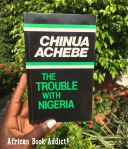
The Trouble with Nigeria by Chinua Achebe

Date Read: April 5th 2015

Published: 1983

Publisher: Heinemann

Pages: 68

Chinua Achebe

The Blurb

The eminent African novelist and critic, here addresses Nigeria’s problems, aiming to challenge the resignation of Nigerians and inspire them to reject old habits which inhibit Nigeria from becoming a modern and attractive country. In this famous book now reprinted, he professes that the only trouble with Nigeria is the failure of leadership, because with good leaders Nigeria could resolve its inherent problems such as tribalism; lack of patriotism; social injustice and the cult of mediocrity; indiscipline; and corruption.

โ—Šโ—Š

Review – โ˜…โ˜…โ˜…โ˜…โ˜… (5 stars)

โ€œThe trouble with Nigeria is simply a failure of leadershipโ€ฆThe Nigerian problem is the unwillingness or inability of its leaders to rise to the responsibility, to the challenge of personal example which are the hallmarks of true leadership.โ€ pg. 1

The title, The Trouble with Nigeria should actually be called ‘The Trouble with Africa’. In this short book, Achebe questions the motives of the leaders and citizens of Nigeria. Achebe systematically breaks this book into ten chapters, where he discusses the various problems Nigeria was facing in 1983. Some of these chapters are entitled: Tribalism, Indiscipline, Corruption, False Image of Ourselves, Social Injustice and the Cult of Mediocrity, amongst others.

This book is simply brilliant. It is short and straight to the point! Everyone should read this, especially African politicians and people in positions of power. But do African politicians read? A myriad of books in the African Literature genre mirror the happenings of society. Authors use their amazing talent and writing abilities to articulate the faults of our leaders and societies through their stories/fictitious characters. Do the leaders of our societies read these books to hear how the layman feels about the conditions of their nations? Do they care? Even though this book was written in 1983, most of the issues Achebe discusses hold true to Ghana, and other African countries as well- even in present day 2015. Corruption, indiscipline, tribalism, lack of patriotism, illiteracy and greed are killing administrations in several African nations. We honestly need to do better as a people and this book explains why with boldness, style and sharp wit. I loved this! Thank you Chinua Achebe.

My favorite quotes from The Trouble with Nigeria:

โ€œNigerians are what they are only because their leaders are not what they should be.โ€ pg. 10

โ€œA true patriot will always demand the highest standards of his country and accept nothing but the best for and from his people. He will be outspoken in condemnation of their short-coming without giving way to superiority, despair or cynicism. That is my idea of a patriot.โ€ pg. 16

โ€œLook at our collapsing public utilities, our inefficient and wasteful parastatals and state-owned companies… If you want electricity, you buy your own generator; if you want water, you sink your own bore-hole; if you want to travel, you set up your own airline. One day soon, said a friend of mine, you will have to build your own post office to send your letters!โ€ pg. 20 (Yes, this holds true to Ghana as well, especially issues of electricity *sigh*).

โ€œI must now touch, however briefly, on the grace undermining of national discipline which the siren mentality of Nigerian leaders fosters. In all civilized countries the siren is used in grave emergencies by fire engines, ambulances and the police in actual pursuit of crime. Nigeria, with its remarkable genius of travesty, has found a way to turn yet another useful invention by serious-minded people elsewhere into a childish and cacophonous instrument for the celebration of status.โ€ pg. 34 (Sadly, this is a daily occurrence in Ghana as well. Especially during rush hour).

โ€œMy frank and honest opinion is that anybody who can say that corruption in Nigeria has not yet become alarming is either a fool, a crook or else does not live in this country.โ€ pg. 37 (This guy was bold, sheesh!)

“Knowledgeable observers have estimated that as much as 60 percent of the wealth of its nation is regularly consumed by corruption. I have no doubt that defenders of our system would retort: Mere rumor! Where is the proof? No one can offer โ€˜satisfactoryโ€™ proof for the simple reason that nobody issues a receipt for a bribe or for money stolen from the public till.” pg. 41

โ˜…โ˜…โ˜…โ˜…โ˜… (5 stars) โ€“ Amazing book, I loved it. Absolutely recommend!

img_6478

Purchase The Trouble With Nigeria on Amazon

All Godโ€™s Children Need Traveling Shoes by Maya Angelou

Date Read: April 29th 2015

Published: 1991 (first published in 1986)

Publisher: Vintage Books

Pages: 208

Angelou1

 The Blurb

In 1962 the poet, musician, and performer Maya Angelou claimed another piece of her identity by moving to Ghana, joining a community of โ€œRevolutionist Returneesโ€ inspired by the promise of pan-Africanism. All Godโ€™s Children Need Traveling Shoes is her lyrical and acutely perceptive exploration of what it means to be an African-American on the mother continent, where color no longer matters but where American-ness keeps asserting itself in ways both puzzling and heartbreaking. As it build on the personal narrative of I Know Why The Caged Bird Sings and Gather Together In My Name, this book confirms Maya Angelouโ€™s stature as one of the most gifted autobiographers of our time.

 โ—Šโ—Š

Review – โ˜…โ˜…โ˜…โ˜… (4 stars)

All Godโ€™s Children Need Traveling Shoes is book five of Maya Angelou’s autobiography series. I read books one, two and three when I was younger; I’ll dig through my Mom’s old books and read book four soon! Check out the books in her autobiography series – here.

This autobiography takes place in Ghana (mostly Accra) in the 1960’s, shortly after Ghana’s independence in 1957. In All Godโ€™s Children Need Traveling Shoes, Maya Angelou joins a community of disenfranchised African-Americans/Negro Americans (they called themselves the ‘Revolutionist Returnees’) on their quest to explore, understand and aid the Motherland in any way they can. While in Ghana, Angelou finds a job as an administrator at the University of Ghana – Legon and at a local newspaper as a journalist. Angelou takes us through the different conversations and interactions she has with the kind-hearted Ghanaians during her stay. I loved how most Ghanaians made her feel at home; Ghanaians are very hospitable โ€“ especially to foreigners, and this book definitely highlights this fact. My country did me proud in this book! I was glad that Maya Angelou was living with a community of African-Americans, but mostly interacted with Africans throughout her stay in Ghana – there was a good balance.

An interesting part in the book is when Angelou and the other African-Americans protested in front of the American Embassy in Accra on the same day of the March On Washington, lead by Martin Luther King Jr in the United States. The purpose of the March On Washington and the simultaneous protest at the American embassy in Accra were to demand the equal rights of people of all colors, as well as desegregation in the United States. W.E.B DuBois was also in Ghana at the time – he gained Ghanaian citizenship and lived in Ghana during the latter part of his life. My favorite part of the book is when Malcolm X arrives in Ghana and Angelou along with the other ‘Revolutionist Returnees’ do their best to make him feel at home, arrange various talks for him around Accra and even pull some strings for him to meet President Kwame Nkrumah. The historical snapshots in this book are awesome! It was amazing to read about these iconic leaders being regular people while making history, through Angelou’s lens.

Angelou struggled a lot in this book with her identity and facing the facts of the past. It constantly angered her to recollect how Africans sold other Africans into slavery, giving rise to present day African-Americans and other people of African descent in the diaspora. Maya Angelou couldn’t even visit the Elmina Castle โ€“ which housed millions of slaves at the Cape Coast of Ghana, because the dehumanizing ordeals her ancestors endured at this historical venue prior the Trans-Atlantic journey nauseated her. I appreciated her quest to live and understand the ‘black experience’ in Africa – Ghana, which is a place where almost everyone is black. This is truly an informative, fun, fast read, as Angelou articulates her experiences with such ease and humor. This memoir ends on a satisfying note for me. I recommend this to anyone who appreciates Black history and those who wish to travel to the continent of Africa on the quest for his/her identity.

โ˜…โ˜…โ˜…โ˜… (4 stars) โ€“ Great book. Highly recommend!

My Mom’s lovely Maya Angelou collection above. These books are super old!

Purchase All God’s Children Need Traveling Shoes on Amazon