Disgrace by J.M. Coetzee

Date Read: February 8th 2016

Published: 1999

Publisher: Penguin Books

Pages: 220

disgrace coetzee


The Blurb

At fifty-two, Professor David Lurie is divorced, filled with desire, but lacking in passion. When an affair with a student leaves him jobless, shunned by friends, and ridiculed by his ex-wife, he retreats to his daughter Lucyโ€™s smallholding. Davidโ€™s visit becomes an extended stay as he attempts to find meaning in his one remaining relationship. Instead, an incident of unimaginable terror and violence forces father and daughter to confront their strained relationship โ€“ and the equally complicated racial complexities of the new South Africa.

โ—Šโ—Š

Review โ€“  โ˜…โ˜…โ˜…โ˜… (4 stars)

This book engrossed me from the first to the last page! I totally understand why J.M. Coetzee won several awards for this novel, including The Man Booker Prize and the Nobel Prize in Literature 4 years after the publication of this book AND even has a 2008 film adaptation of this book starring John Malkovich as the main character, Professor David Lurie. I need to find that film and watch it! I doubt it would be as good as the book, but it will definitely be worth the watch.

Professor David Lurie โ€“ the protagonist (who is portrayed as a white South African) rubbed me the wrong way from the beginning of this novel. We first encounter him in bed with a prostitute at a brothel he frequents in Cape Town. This prostitute for some reason decides to quite her job, and David starts searching for her, as he believes they share an intimate bond. Once she tells him off after he spotted her with her children walking about in town, he decides to find new sexual adventures elsewhere. Sooner than later, David finds interest in one of his undergraduate students โ€“ Melanie.

For some strange, sick reason, David believes Melanie is actually into him and he invites her to his home, makes her feel comfortable with some alcohol and sleeps with her. This happens several times during the semester, even though Melanie is clearly uncomfortable. When David is finally confronted with his inappropriate behavior by the academic board and Melanieโ€™s father, David (who is not really ashamed of this abominable affair) quits his job and travels to the countryside where his daughter, Lucy resides. Lucy isnโ€™t the same girl David knew her to be. She is overweight, slightly depressed and seems to be living in a trance as she resides on a farm, adjacent to Petrus โ€“ a black South African, who apparently is helpful to her.

The story takes a serious turn while David stays in the countryside with Lucy. Readers are rudely awakened by the violent, racially tense incidents that occur and the novel suddenly becomes dark and quite frightening. J.M. Coetzee does an incredible job at ceasing readersโ€™ attention and emotions from the beginning of this novel to the end. There are heavy themes of rape, racism, violence, depression, (white) guilt, animal rights issues, new generation versus old generation, abortion, shame, feminism, sexism, satyriasis, infidelity AND disgrace โ€“ all in this novel!

When I sat back and accessed how I felt about this book after I completed it, I concluded that there were double meanings and interpretations to the events that occur in the storyline. There are lots of complexities to unravel in this book. Disgrace would make for excellent discussions in book clubs and literature classes. I have so many opinions on David and his daughter Lucy – it was hard not to judge themโ€ฆ but Iโ€™ll keep my opinions to myself so I donโ€™t divulge too much of the storyline! This book definitely took a toll on my emotions and actually had me feeling offended and upset at some parts. Please be warned: if rape is a trigger for you, you might not want to read this novel.

Disgrace is excellent literary fiction, nonetheless. This was a great page-turner with intelligent, yet tender prose. I will surely read more Coetzee soon. Disgrace takes place in South Africa, but the myriad of sensitive themes addressed are certainly universal to humanity. I give this 4.5 stars. Please read this!

(I got Disgrace from a used book store [Ghana Book Trust] last summer. I found some other gems there too! Check out Challenge Update (summer); Currently Reading to see them).

โ˜…โ˜…โ˜…โ˜… (4 stars) โ€“ Great book. Highly recommend!

Purchase Disgrace on Amazon

Summer in Igboland (ebook) by Ifeanyi Awachie

Date Read: January 4th 2016

Published: July 1st 2015

Publisher: Pronoun

Pages: 73

Awachie

The Blurb

Ifeanyi Awachie, a Nigerian-American Yale University student, was tired of images of terrorism, corruption, and povertyโ€“ the only images Western media seemed to use to portray her birth country. So she went back to Nigeria for the first time in nineteen years to change the narrative.
Through Awachieโ€™s vivid photos and honest, poetic writing, Summer in Igbolandย presents contemporary Nigeria from a unique perspective. The book takes on everything from Nigerian nightlife to the politics of hair to vibrant foods to meeting extended family for the first time as an adult.
As intimate as a diary and as informative as a travel blog, Summer in Igbolandย is a story of finding fun, personal struggle, and most importantly, oneโ€™s roots in a country whose negative stories are often the most prominent. Explore it, and discover modern Nigeria through the eyes and voice of an adventurous, passionate first-generation Nigerian.

โ—Šโ—Š

Review โ€“ โ˜…โ˜…โ˜… (3 stars)

Ifeanyi Awachie, a rising senior of Yale at the time won a fellowship to conduct an independent study in Nigeria. The aim of the study was to use photography to challenge the negative stereotypes associated with Nigeria. Ifeanyi was born in Nigeria, left when she was eighteen months old and was raised in Atlanta, Georgia. She had never been back to Nigeria since her move to the United States, so this summer project was supposed to be a great way to connect with her heritage.

Summer in Igboland is a travelogue where Ifeanyi takes readers to different towns in Nigeria and discusses random happenings of the places she visits, while trying to gain a sense of belonging at the place of her birth. This was a fast and easy read! I enjoyed how the travelogue was written with a personal diary feel and that it wasn’t heavy with historical facts about Nigeria.

As Ifeanyi interacts with Nigeria natives and some relatives, she begins to feel her โ€˜Americannessโ€™ is a flaw, as her differences are very apparent, like: her American accent, her natural hair (she did not wear a weave as most young Nigerian women did), being a vegetarian (even though she hides this from her family) and her inability to speak the language – Igbo. She poses a lot of thought provoking questions with respect to her identity as she navigates her way through Nigeria. When people call her oyibo (which means ‘white person’) or make a fuss about her not speaking the language, she found that her own people tended to relegate her and made her feel less Nigerian. I could completely understand Ifeanyi feeling her Americanness was a flaw, especially with respect to sounding American and not being very fluent in the native language. Why is it that whenever people find that you are different from them, they tend to make you feel guilty for being different? Will we ever live in a world where differences are appreciated?

I particularly enjoyed the anecdotes on Ifeanyiโ€™s new love for fufu*. Before her trip to Nigeria, she detested fufu. Whenever she was forced to eat fufu as a young girl, she would take bites of it with a fork. Fork? WHO EATS FUFU WITH A FORK? is what I asked myself as I read this. In Ghana, when you don’t use your fingers to eat fufu, you simply use a spoon! But then it occurred to me that Nigerians eat fufu differently from Ghanaians – Ghanaian fufu is usually embedded in bowl of soup. Whereas, the dense pounded yam of Nigerian fufu is usually in a separate bowl from the preferred soup. Once I remembered these differences, I was able to understand why Ifeanyi used to eat fufu with a fork, I guess. Check out what Nigerian fufu looks like – here ; Check out what Ghanaian fufu looks like – here. (Nigerian readers, please correct me if I’m wrong with the fufu comparisons!)

Throughout her exploration of different types of fufu and soups, Ifeanyi even states some fufu facts she learned while in Nigeria:

  1. One does not eat fufu with utensils.
  2. One does not chew fufu โ€“ one simply swallows.

With respect to the latter, lots of people chew fufu โ€“ myself included! *sigh* I can write a whole thesis on this swallowing of fufu phenomenon but Iโ€™ll save that for another day. But it was cute to read on Ifeanyi’s love for a dish she initially disliked as I could completely relate to her fufu-eating experience.

Iโ€™m glad I read this ebook. I just wish some of the anecdotes were concluded in a more cohesive way. From the blurb, Ifeanyi wanted to change the negative stereotypes associated with Nigeria, but I didn’t really get that from this short ebook. Nevertheless, Summer in Igboland made me think back to the time when I first arrived in Accra at the age of 10 and how I now identify as Ghanaian as well as American. Reading books like Summer in Igboland affirm my love of reading books written by people of African descent / people of the Diaspora because you see yourself in these stories! You start to see and feel that your experience as African, African-American, Caribbean, Black – whatever your heritage or (bi-)cultural upbringing, are all valid. Please consider reading this book, I’d love to discuss it with other readers!

โ˜…โ˜…โ˜… (3 stars) โ€“ Good book. I recommend it, I guess.

Purchase Summer in Igboland on Amazon

Ankara Press: A New Kind of Romance – Two NEW stories!

I’d like to give a special thank you to the lovely ladies over at Ankara Press for reaching out to me and sending me two e-copies of the new additions to their African romance fiction collection. Ever since they launched as an imprint of Cassava Republic Press (Nigeria) in 2014, Iโ€™ve always wanted to read some of the stories so I couldnโ€™t pass up the opportunity!

Ankara Pressย aims at publishing a new kind of romance, for the modern African woman where stories are more grounded with a healthy thrill of fantasy. Stories published byย Ankara Press feature young, independent, ambitious African women who are unafraid to love, in African cities from Lagos to Cape Town. Their books challenge African romance stereotypes by portraying women who embrace their sexuality and are open to finding true love.

Mini reviews of the two ebooks are below:

The Seeing Place by Aziza Eden Walker

Date Read: March 1stย 2016The Seeing Place

Published: February 14th 2016

Publisher: Ankara Press

Pages: 171


Review โ€“ย โ˜…โ˜…โ˜… (3 stars)

I enjoyed this African romance/chic lit novel. The story takes place in Cape Town and Johannesburg and follows the growing relationship between caramel-colored beauty, Thuli and dark chocolate hunk, Andile. Andile works as a barman but is actually a talented actor, waiting for his next gig; Thuli works as a TV/Film producer. They meet at Andileโ€™s workplace โ€“ a bar, when Thuli sought refuge there after she twisted her ankle, trying to evade the rowdiness of a wild street party in Cape Town. They are instantly attracted to one another when their eyes meet and the story takes readers on a rollercoaster of incidents and emotions these characters endure.

The sex scenes in this story were surprisingly quite explicit (I ain’t complaining, haha) and I think readers should be 18 years or older to read this. The storyline was very fairytale-ish, as most romance books are. I donโ€™t know if the average South African woman would identify with Thuli, since her life seemed perfect, despite the โ€˜hardshipsโ€™ she faced as a child โ€“ does the average 28 year old South African woman drive a matte black Mercedes-Benz and own her own film producing company? All in all, I liked that I learned something from this novel (the importance of communication and being honest) at the end and it wasn’t a flippant tale โ€“ as most perceive romance novels to be. Aziza Eden Walker is a great writer! Her writing style was clear and vivid and I enjoyed her way with words. I give The Seeing Place 3.5 stars!

โ˜…โ˜…โ˜… (3 stars) โ€“ Good book. I recommend it, I guess.


Love Next Door by Amina Thula

Love Next DoorDate Read: Marchย 6thย 2016

Published: February 14th 2016

Publisher: Ankara Press

Pages: 152


Review โ€“ย โ˜…โ˜…โ˜… (3 stars)

Love Next Door is a cute story about Abongile (or Abby) and Kopano in Johannesburg, South Africa. Abby, an ambitious business analyst is finally independent and has moved into her new apartment in Johannesburg. Next door to her new apartment is school teacher and artist, Kopano. Once they meet outside Abby’s door as she struggles with hauling groceries into her new home, it is like at first sight and readersย follow the blooming love affair between Abby and Kopano.

This was a quick read and I loved how the author incorporated a lot of South African culture into the story, for example: Amina Thula enlightens readers on the negative and positive stereotypes surrounding Xhosa women and the Xhosa language peppered throughout the novel gave the story an authentic feel. I didnโ€™t even need a glossary at the end of the book as it was easy to infer the meanings of the various foreign words. The intimate moments between the main characters were milder than that of The Seeing Place, so I guess readers of all ages could enjoy this book. But the writing style wasnโ€™t as vivid as I had liked and the book could have been edited a little more closely. The ending was quite abrupt for meโ€ฆ or maybe I just didnโ€™t agree with how the characters seamlessly reconciled their love after all the ups and downs they endured. Perhapsย Love Next Door targets a younger, teenage audience as the tale was quite juvenile… or maybe the characters were a bit juvenile to me. On the whole, this book was well thought-out and I commend Amina Thula for writing this modern love story.

โ˜…โ˜…โ˜… (3 stars) โ€“ Good book. I recommend it, I guess.


Ankara Press Cover Artt

Image via http://www.ankarapress.com

How amazingly chic is the cover art?ย Onyinye Iwu (@only_onyi) designed the cover art for the novels published by Ankara Press and she does a lovely job at highlighting the vibrant colors of the Vlisco cloth, as well as portraying African women of all skin tones, shapes and sizes.

Iโ€™m fairly new to the African romance genre, but it would be cool for Ankara Press to explore:

  • Maybe having some stories written by men? Men write romance tales too! In the Valentineโ€™s Day Anthologyย 2015,ย (an anthology Ankara Press published last year, featuring writers like: Sarah Ladipo-Manyika, Eghosa Imasuen, Chuma Nwokolo and my favorite- Binyavanga Wainaina) men penned a good number of the stories. I’d love to read a romance novel from a man’s perspective and also see men on the book covers wearing amazing ankara fabric shirts!
  • It would also be cool to read a romance novel featuring characters in a same-sex relationship.
  • Do all romance novels have to end happily-ever-after? It would be interesting to read a tragic African love tale too.

Thank you again toย Ankara Press for the ebooks. I enjoyed the stories and look forward to reading more soon! Please do check out blurbs of the various stories published by Ankara Press at www.ankarapress.com.

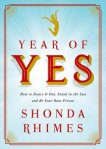
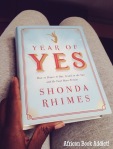
Year of Yes by Shonda Rhimes

Date Read: January 14th 2016

Published: November 2015

Publisher: Simon & Schuster

Pages: 311

Rhimes

The Blurb

In this poignant, hilarious and deeply intimate call to arms, Hollywoodโ€™s most powerful woman, the mega-talented creator of Greyโ€™s Anatomy and Scandal and executive producer of How To Get Away With Murder, reveals how saying Yes changed her life- and how it can change yours too.

โ—Šโ—Š

Review โ€“  โ˜…โ˜…โ˜…โ˜… (4 stars)

Who would have thought Shonda Rhimes’ sisterโ€™s six words: โ€˜You never say yes to anythingโ€™ during their Thanksgiving dinner preparations in 2013 would push her to a Year of Yes Challenge? Shonda Rhimes โ€“ television producer, writer and Hollywood powerhouse is a hard worker and used to drown herself in work to keep her two, super popular television shows –Greyโ€™s Anatomy and Scandal on ABC (television network). Work was Rhimes’ excuse to avoid attending interviews, red carpet events, speaking engagements and the like. Shonda Rhimes was just your typical introvert: focused on reading, writing and just sticking to herself without being in the spotlight. Her sisterโ€™s words pushed her out of her comfort zone to dare to say yes to everything and all the invitations that came her way. Through this challenge, she learned to become more comfortable with herself, to love herself more, to have less awkward conversations, to take her health seriously and to even speak at Dartmouth College – her alma mater, during commencement in 2014.

Year of Yes: How To Dance It Out, Stand In The Sun And Be Your Own Person was a relatively easy and entertaining page-turner. I finally understand the magic behind Rhimes’ badass career (in the book, she coins the word โ€˜badasseryโ€™ haha), especially after her Year of Yes challenge to herself. This was an inspiring read with lots of positive affirmations and quotes. Some of my favorite quotes were:

Lucky implies that I was handed something I did not earn, that I did not work hard for. Gentle reader, may you never be lucky. I am not lucky. You know what I am? I am smart, I am talented, I take advantage of the opportunities that come my way and I work really, really hard. Donโ€™t call me lucky. Call me badass. (pg. 181)

An awesome quote on what she wishes to achieve through her television shows:

The need to hear the words: ‘You are not alone’. The fundamental human need for one human being to hear another human being say to them โ€˜You are not alone. You are seen. I am with you. You are not aloneโ€™. I get asked a lot by reporters and tweeters why I am so invested in โ€˜diversityโ€™ on television. โ€˜Why is it so important to have diversity on TV?โ€™ they say. I really hate the word diversity. It suggests somethingโ€ฆ other. As if it is somethingโ€ฆspecial. Or rare. Diversity! As if there is something unusual about telling stories involving women, people of color and LGBTQ characters on TV. I have a different word: NORMALIZING. I’m normalizing TV. I am making TV look like the world looks. Women, people of color, LGBTQ people equal way more than 50 percent of the population. Which means it ain’t out of the ordinary. I am making the world of television NORMAL. I am normalizing television. You should get to turn on the TV and see your tribe. Your tribe can be any kind of person, anyone you identify with, anyone who feels like you, who feels like home, who feels like truth. (pg. 235)

I especially appreciated the commentary on the challenges of balancing motherhood and being a successful career woman. Having 3 successful shows on prime time television AND being a mother of 3 young girls are not easy feats! Rhimes constantly has to find balance when it comes to either being in the studio during writing and filming sessions or finding time to attend her daughtersโ€™ recitals and simply spending enough time with them at home. With more women in the workforce nowadays, I feel a lot of women readers who balance motherhood and their careers would identify with Rhimes’ hilarious and thoughtful discourse on finding balance.

I have been a faithful fan of Grey’s Anatomy since 2009, and the writing style of this book is quite similar to that of the show – chatty, funny and conversational. But one thing that bugged me about Year of Yes was how chatty Rhimes’ thought process was in the beginning of the book. It reminded me of the ever so annoying Dr. April Kepner character of Grey’s Anatomy and I was almost put to sleep at times by this. But all in all, I admire Rhimes and I can’t wait to see what other groundbreaking projects she has up her sleeve in the future. Even if you arenโ€™t a fan of her shows, please do read this โ€“ its a motivating, brave memoir by an incredible black woman. You might even want to try the Year of Yes challenge for yourself!

โ˜…โ˜…โ˜…โ˜… (4 stars) โ€“ Great book. Highly recommend!

FullSizeRender

Purchase Year of Yes on Amazon

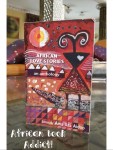
African Love Stories: An Anthology edited by Ama Ata Aidoo

Date Read: January 23rd 2016

Published: 2006

Publisher: Ayebia Publishing

Pages: 249

aidoo

The Blurb

African love stories? Is that not some kind of anomaly? This radical collection of short stories, most published in this edition for the first time, aims to debunk the myth about African women as impoverished helpless victims. With origins that span the continent, it combines budding writers with award-winning authors; the result is a melting pot of narratives from intriguing and informed perspectives.

These twenty odd tales deal with challenging themes and represent some of the most complex of love stories. Many are at once heart breaking yet heart warming and even courageous. In Badoe’s hilarious ‘The Rival’, we encounter a 14 -year-old girl who is determined to capture her uncle’s heart. His wife, she decided would just have to go. Mr. Mensah the uncle is all of sixty years old.

Crafted by a stellar cast of authors that includes El Saadawi, Ogundipe, Magona, Tadjo, Krog, Aboulela, Adichie, Oyeyemi, wa Goro, Atta, Manyika and Baingana, there is hardly any aspect of women’s love life untouched. From labour pains to burials, teenagers to octogenarians, and not to mention race-fraught and same-sex relationships, the human heart is all out there: beleaguered and bleeding, or bold, and occasionally triumphant.

โ—Šโ—Š

Review – โ˜…โ˜…โ˜…โ˜…โ˜… (5 stars)

I think I have a soft spot for anthologies. Anthologies help me discover new writers. African Love Stories: An Anthology is the second African womenโ€™s anthology Iโ€™ve enjoyed. In 2014, I reviewed Opening Spaces: Contemporary African Womenโ€™s Writing edited by Yvonne Vera (1999) and was thrilled by the diverse stories and cast of African women writers. I even took interest in the writers who were unfamiliar to me at the time, like Leila Aboulela and Lรญlia Momplรฉ.

I know what you were thinking when you saw the title, โ€˜African Love Storiesโ€™ – no, this is not a collection of sappy, romantic, unrealistic, happily-ever-after tales. African Love Stories: An Anthology is a collection of 21 contemporary short stories laden with breathtaking originality. The stories speak on: the issues inter-racial couples face, a womanโ€™s wrath when she discovers her lover is married, the lengths a village boy goes to rescue his wife-to-be, domestic violence, a child born out-of-wedlock who is scorned at her fatherโ€™s funeral, same-sex relationships, sisterhood, a motherโ€™s love, sacrifice and so much more. There are layered complexities in all 21 stories and the writers skillfully consummate each short tale such that readers ponder and cherish them, even days after enjoying the stories.

The women writers and the stories of this anthology span across the African continent โ€“ from Egypt to South Africa. Well-known authors such as: Nawal El Saadawi, Veronique Tadjo, Chimamanda N. Adichie, Leila Aboulela, Sindiwe Magona, Sefi Atta, Monica Arac de Nyeko, Helen Oyeyemi amongst others, are featured in the anthology. But I expected more diversity with respect to the countries represented in this collection. I didnโ€™t expect a lot of the stories (11 of them) to be written by Nigerian women – this is not a bad thing, donโ€™t get me wrong! I just wish there was a better mix of countries represented, as was in Opening Spaces: Contemporary African Womenโ€™s Writing edited by Yvonne Vera (1999). (Iโ€™m not comparingโ€ฆ but Iโ€™m comparing haha)

Anyways, I enjoyed all the stories from this collection (well, except two) and my faves were:

“Something Old, Something New” by Leila Aboulela (Sudan) โ€“ This is a story that chronicles the events that occur prior to a wedding between a young, muslim, dark-skinned Sudanese woman of the diaspora and a white, muslim man from Edinburgh. During their trip to Khartoum for the ceremony, several events occur that threaten their impending wedding. I really admire the calm manner of Aboulela’s storytelling, especially in this tale.

“The Rival” by Yaba Badoe (Ghana) โ€“ The Rival has got to be the most absurd story Iโ€™ve ever read! In this story, a wife tries her best to keep her marriage from falling apart by the twisted, affectionate love of her husbandโ€™s niece. Since when did nieces start falling for their uncles and dreaming of being the โ€˜madamโ€™ of the house? How awkward! Yaba Badoe created a masterpiece with this strange story.

“Tropical Fish” by Doreen Baingana (Uganda) โ€“ University student – Christine, finds herself sleeping with a British expat who exports fish to the UK. The story takes us through the inner thoughts of Christine as she tries to find herself โ€“ because she truly seems lost. I was disgusted and at times mad at Christine for tolerating the intolerable in this story. I loved how Doreen Baingana kept me on the edge of my seat while reading this! (I have Doreen Bainganaโ€™s novel Tropical Fish which this story is an excerpt from, and Iโ€™m excited to read it soon!)

“Needles of the Heart” by Promise Ogochukwu (Nigeria) โ€“ I enjoyed the easy, simple nature in the writing of this story. A woman marries a man who she discovers is a chronic abuser. She constantly finds herself making excuses for her husband, even while she suffers on hospital beds from his fury. The ending of the story had me wondering if the author actually condones domestic violence… This story is pretty scary, but holds a great message if you read in-between the lines.

The editor, Ama Ata Aidoo urges readers to enjoy this collection slowly:

Dear reader, it is highly recommended that you take these stories one at a time, so that you meet these African women properly and individually, and listen to them and their hearts: whether Sudanese, Kenyan, Ghanaian, Nigerian or Zimbabweanโ€ฆ (pg. xiv)

and I totally concur with her. I read these stories slowly and savored them. Why rush through such a rich anthology? Thatโ€™s no fun!

Even though this anthology was published in 2006 – about 10 years ago, I believe the content is ever so relevant to this day. I wholeheartedly recommend this collection to everyone. These contemporary stories may be set in countries in Africa, but the theme of love is universal to all!

โ˜…โ˜…โ˜…โ˜…โ˜… (5 stars) โ€“ Amazing book, I loved it. Absolutely recommend!

IMG_3007

Purchase African Love Stories: An Anthology on Amazon


GIVEAWAY ALERT!

February is the month of love, and Iโ€™d like to give away one brand new copy of this lovely anthology! Enter the giveaway below to stand a chance at winning African Love Stories: An Anthology. The winner will be announced a day after Valentineโ€™s Day โ€“ so you have about 10 days to try your luck!

a Rafflecopter giveaway

Giveaway TERMS & CONDITIONS:

  • Giveaway starts Feb 4th 2016 at 12am GMT & ends Feb 15th 2016 at 12am GMT (Greenwich Mean Time)
  • This is an international giveaway – it is open to everyone, worldwide.
  • You must be 18 years and older to participate in this giveaway.
  • The winner will be selected by Random.org, through Rafflecopter and will be notified by email.
  • The winner will have 48 hours to respond to the email before a new winner is selected.
  • If you are the lucky winner of the book, Darkowaa will be shipping your prize to you directly.
  • Once the winner is notified via email, providing shipping details will go to Darkowaa only and will only be used for the purpose of shipping the prize to the winner.
  • The item offered in this giveaway is free of charge, no purchase is necessary.
  • If there are any questions and concerns about this giveaway, please email: africanbookaddict@gmail.com

Good luck, everyone!

Update: This giveaway has ended. Thanks to those who participated! Congrats to the winner! 

salt. by Nayyirah Waheed

Date Read: October 2nd 2015

Published: September 2013

Publisher: Create Space Independent Publishing

Pages: 259

salt

The Blurb

(no blurb)

โ—Šโ—Š

Review โ€“ โ˜…โ˜…โ˜…โ˜…โ˜… (5 stars)

Who is Nayyirah Waheed? Where is she from? (I hear the Nigerians have claimed her already hahaa). These are the questions Iโ€™ve been asking myself and other lovers of her work ever since I finished this masterpiece called salt. Iโ€™ve searched almost everywhere on the internet, trying to figure out anything about her but there is absolutely no information on her. I guess this could be a good thing, so that Waheed’s work speaks for itself – and I must say, I was very fond of her beautiful way with words.

I’m not a big fan of poetry so I rarely indulge in it. But THIS book is a collection of words that can heal. salt is a super fast read, but the poems just make you sit and think. The poems gently speak on a mother’s love, knowing your worth, loving yourself, being kind/caring for yourself, immigration, mother Africa, colonization, black beauty and much more! This collection was one of my top 5 reads of last year and I will buy the paperback, just for keepsake because it is worth it! (salt. is usually on sale and sometimes free on Amazon Kindle, so keep an eye out for that if you don’t mind ebooks).

Below is one of my favorite poems from the collection:

i bleed

every month.

but

do not die.

how am i

not

magic

– lie (pg. 27)

After reading salt, I purchased Waheedโ€™s second collection of poems which was published in 2014, entitled nejma. nejma wasnโ€™t as refreshing and cohesive as salt, but nevertheless I believe Nayyirah Waheed has a gift with words. Definitely consider reading this collection of poems โ€“ it is full of original, brave, healing words. I promise, you will love yourself a little more after reading this!

Follow Nayyirah Waheed on Twitter for more excerpts from salt.@NayyirahWaheed

[There has been a new wave of talented poets taking the literary scene by storm. Some of these poets include: Warsan Shire, Alexandra Elle, Yrsa Daley-Ward, Phillip B. Williams, Ladan Osman, Rupi Kaur, Ijeoma Umebinyuo, Bilphena Yahwon(gold womyn), Upile Chisala just to name a few. I hope to enjoy some of these contemporary poets’ works in the future].

โ˜…โ˜…โ˜…โ˜…โ˜… (5 stars) โ€“ Amazing book, I loved it. Absolutely recommend!

Purchase salt. on Amazon

2015 Recap & My Top 5!

Hey everyone!

I hope the holiday season has been relaxing thus far. 2015 is almost over! I ended up reading 26 books this year (and I turned 26 years old this year too, haha. It’s a coincidence, I promise). The break down of my 2015 reading experience is as follows:

Longest book read: A Deeper Love Inside: The Porsche Santiaga Story by Sister Souljah – 432 pages.

Shortest book read: We Should All be Feminists by Chimamanda N. Adichieย ย – 32ย pages.

Screen Shot 2015-12-28 at 9.07.18 PMAfrican literature: 10 books

Caribbeanย literature: 2 books

African-American/Black literature: 11 books

Other:ย 3 books (these are non-African diaspora books. I read books written by – Mitch Albom, Lena Dunham, Jhumpa Lahiri)

14 women writersย ; 6 men writersย 

I read multiple books (two each) by the following authors: Amma Darko, Maya Angelou, Ngลซgฤซ wa Thiong’o, Alice Walker, Chinua Achebe and Nayyirah Waheed.ย 


Top 5 favorite books of 2015

  1. The Fishermen by Chigozie Obioma
  2. You Can’t Keep a Good Women Down by Alice Walker
  3. The Trouble with Nigeria by Chinua Achebe
  4. salt. by Nayyirah Waheed
  5. Dreams In a Time of War by Ngลซgฤซ wa Thiong’o

These books took a toll on my emotions the most! If you’ve read my reviews for these 5 books, you know exactly why they are my top 5! And didn’t I say The Fishermen would win many awards? So far Obioma’s debut novel was shortlisted for the Man Booker Prizeย (this is a big deal!) alongside other nominations, and won the 2015 Emerging Voices Award. There are probably more awards it’s won that I’m missing out! I’m not surprised by the success of The Fishermen, itย is well deserved – #iToldYouSo!

Reviews for all the books read this year are in the Book Reviews section of the book blog.ย [Some missing reviews (4 of them) will be posted in 2016].


I also attended quite a number of book readings, thanks to Writers Project of Ghana and some invitations I received to attend readings. Below are pictures of my favorite reading events this year:

In my 2014 recap, I mentioned that my favorite book for 2014 was Binyavanga Wainaina’s memoir, One Day I Will Write About This Place. I was elatedย to finally meet him when he came to Accra! Unfortunately, Binyavanga recently suffered from a series of strokes and is receiving medical care in India. I pray he has a speedy recovery, so we can all enjoy his fun-loving spirit soon. Let’s keep him in our prayers!


Finally, this year I joined in a partnership withย AFREADAย !

AFREADA is an online literary magazine, featuring original stories from emerging writers across the Continent.”

If you write short stories or you love photography, definitely submit your work to AFREADA! And if you are a lover of original, African short stories – visit the website! There are some lovely stories written by talented writers from all over the continent, as well as photo stories AND book reviews by me! Visit http://www.afreada.com, and thank me later.ย 

It has been a fulfilling year! What were your favorite books of 2015? And what were some of your fave bookish events? Please do share!

I’m truly grateful to everyone who frequents this book blog and for the great discussions (agreements, disagreements and recommendations) we have in the comments section. I also enjoyed commenting on various blogs as well! I really appreciate the support and love shown here from you all. I’m excited for all I have to share in 2016. God bless ๐Ÿ™‚

Pig Tails โ€˜n Breadfruit: A Culinary Memoir by Austin Clarke

Date Read: July 22nd 2015

Published: April 2000 (was re-released in 2014)

Publisher: The New Press

Pages: 248

Austin Clarke

The Blurb

Praised as โ€œmasterfulโ€ by the New York Times and โ€œuncommonly talentedโ€ by Publishers Weekly and winner of the 1999 Martin Luther King Jr. Achievement Award, Austin Clarke has a distinguished reputation as one of the preeminent Caribbean writers of our time. In Pig Tails โ€™n Breadfruit, he has created a tantalizing โ€œculinary memoirโ€ of his childhood in Barbados. Clarke describes how he learned traditional Bajan cookingโ€”food with origins in the days of slavery, hardship, and economic griefโ€”by listening to this mother, aunts, and cousins talking in the kitchen as they prepared each meal.

Pig Tails โ€™n Breadfruit is not a recipe book; rather, each chapter is devoted to a detailed description of the ritual surrounding the preparation of a particular native dishโ€”Oxtails with Mushrooms, Smoked Ham Hocks with Lima Beans, or Breadfruit Cou-Cou with Braising Beef. Cooking here, as in Clarkeโ€™s home, is based not on precise measurements, but on trial and error, taste and touch. As a result, the process becomes utterly sensual, and the authorโ€™s exquisite language artfully translates sense into words, creating a rich and intoxicating personal memoir.

โ—Šโ—Š

Review – โ˜…โ˜…โ˜… (3 stars)

Since today is Thanksgiving Day (in the U.S) and some of you will be feasting in honor of this day of giving thanks, I thought this would be the perfect time to post my review of the culinary memoir, Pig Tails ‘n Breadfruit and talk about food!

Barbados born, scholar and writer Austin Clarke takes readers on a ride to explore different Barbadian (or Bajan) foods and aspects of Barbadian culture in Pig Tails โ€˜n Breadfruit. It was insightful to read about the origins of various Bajan meals from the days of slavery and how people of different socio-economic backgrounds cooked differently with different ingredients (or as Clarke says ‘ingreasements’). Austin Clarkeโ€™s mother who was known to be a superb cook, is the real MVP of this memoir and she proudly cooked all the meals Clarke enjoyed sans measuring cup and cookbook:

Cooking food is not characterized by strict attention to ounces and grams, cups and liters. A pinch of this and a pinch of that added to a pot, at first by trial and error, and then perfected through history and constant usage, from one generation to the next, is the way I remember food being cooked… It is ironical to be suggesting a book about food cooked in Barbados, because in every self-respecting Barbadian household the woman (who does most of the cooking, whether she is wife, daughter or maid) would not be caught dead with a cookbook. To read a cookbook would suggest that she has not retained what her mother taught her; that she does not know how to cook; that she does not know how to take care of her manโ€ฆ (page 3).

Readers go back to Clarke’s childhood when he used to watch his mother and aunts cook meals like: Oxtails with mushrooms; โ€˜Priviledgeโ€™ (also known as โ€˜slave foodโ€™; contrived from a mixture of random foodstuff. Clarke actually had the privilege of eating this popular meal with the president of Barbados and other members of his cabinet during his stay at Duke University as a professor); โ€˜Cou-Couโ€™ (a doughy mรฉlange of cornmeal, okra, fish, peppers); โ€˜Pepperpotโ€™ (a stewed meat dish, spiced with cinnamon and peppers); โ€˜Swankโ€™ (a molasses & water drink) and โ€˜Pelauโ€™ (rice pilaf).

Meats like mutton, lamb, beef, chicken, flying fish and pork make up a large component of Bajan foods and every part of a pig is eaten โ€“ from the snout to the tail! Once Clarke moved to Canada to further his education (as a college student), and later to teach in various universities in the United States, he grew homesick and longed for these meals as well the Caribbean sun. From the way the scrumptious meals and the atmosphere of Barbados are described in this novel, who wouldn’t be homesick?

Clarke uses a lot of dialect in his writing as he expects readers to be familiar with the meanings of some dialect words. Even though this was a light read, the heavy use of dialect required me to concentrate in order to fully understand what Austin Clarke was writing, which was not easy as he usually went off on a tangent while he discussed the origins of foods. I think this book would have been more engaging for me if Clarke included pictures of the meals he discussed and maybe even some recipes. I found myself bugging some of my Caribbean friends with questions, as well as Googling and YouTubing most of the meals mentioned in this book. Pig Tails โ€˜n Breadfruit is an insightful book but not as engaging as I had anticipated. This is more of a 2.75 stars rating for me.

But I have a question: do African culinary memoirs exist? If they do, please let me know of some good ones! I would absolutely love to read an engaging culinary memoir/novel on Kenyan, Malawian, Ghanaian, Eritrean, Rwandan, South African, Ivorian, Liberian, Zambian, Congolese, Moroccan… AFRICAN food! There are so many different foods available on the continent, and we all use different cooking techniques and ingredients! I wish our foods were showcased more. Maybe the more we write on our own foods, the more our foods would be recognized and cooked worldwide.

Every time I watch Top Chef, the chefs mostly cook Asian (Korean, Thai, Japanese, Chinese), Italian, Greek, French and of course various American dishes. Back in 2012, on an episode from Season 5 of Top Chef, one of the chefs (Chef Carla Hall) made fufu* and the meal turned out looking far from the fufu us West Africans know it as haha! It would be great to have our foods taken seriously. In Pig Tails ‘n Breadfruit, Austin Clarke did an admirable job at revering the foods of his native land – Barbados. Maybe one day an African culinary memoir/novel (not just a recipe book) would be published and foods from the motherland would be put on a pedestal as well. I hope so. 

fufu* – Fufu is a West African dish that consists of pounded boiled yam, cassava, plantain or coco-yam tubers; usually pounded into a dough-like consistency and eaten with soup.

Happy Thanksgiving everyone! Eat an extra plate for me!

โ˜…โ˜…โ˜… (3 stars) โ€“ Good book. I recommend it, I guess.

IMG_1059

Purchase Pig Tails ‘n Breadfruit on Amazon