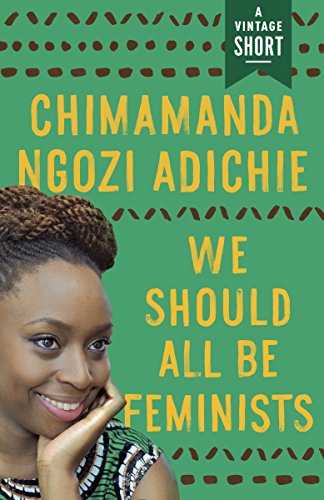
We Should All Be Feminists by Chimamanda Ngozi Adichie

Date Read: January 12th 2015

Published: July 2014

Publisher: Vintage Books

Pages: 23
Adichie Feminist

The Blurb

In this personal, eloquently-argued essay—adapted from her much-admired TEDx talk of the same name—Chimamanda Ngozi Adichie, award-winning author of Americanah, offers readers a unique definition of feminism for the twenty-first century, one rooted in inclusion and awareness. Drawing extensively on her own experiences and her deep understanding of the often masked realities of sexual politics, here is one remarkable author’s exploration of what it means to be a woman now—and an of-the-moment rallying cry for why we should all be feminists.

◊◊

Review– ★★★★ (4 stars)

Most of us know We Should All Be Feminists was first presented by Chimamanda Ngozi Adichie as a TED talk given in the United Kingdom at TEDxEuston in 2012. This talk became quite popular on YouTube, along with her first talk The Danger of a Single Story which she delivered in 2009. The essay We Should All Be Feminists became available to the public for purchase as an eBook in 2014 and I recently got a chance to purchase the eBook using my NookBook app.

Chimamanda Ngozi Adichie has a way of eloquently articulating complex issues by skillfully using simple words, and this is why I love her! Her essay/talk, We Should All Be Feminists is basically about her views on gender and how limited of a function society has made it. The term ‘feminist’ has had a bad rap for years, but Adichie proudly calls herself a feminist or better yet: A Happy African Feminist Who Does Not Hate Men and Who Likes to Wear Lip Gloss and High Heels for Herself and Not For Men”. In her essay, she compares how society has shaped the way girls and boys are raised and how problematic these ways can be. For example, she states that girls are taught to be likeable and not aggressive, while boys are taught to be strong, seldom showing emotion and fear.

The problem with gender is that it prescribes how we should be rather than recognizing how we are. Adichie believes we’d be happier and true to our identity if we didn’t have the weight of gender expectations on our shoulders. Men shouldn’t have to feign strength and (hyper) masculinity by always paying the bill for women or by stifling their emotions. Women shouldn’t feel invisible in the presence of men. Women shouldn’t feel shame or guilt whenever they desire to express anger or to simply state their noble opinions.

Adichie gives several examples of personal experiences and of other people she knows to further explain and prove her points on the problems of gender. I do not consider myself a ‘feminist’ and I don’t remember the last time I experienced prejudice because I am a girl, but I agree 100% with every single thing Adichie discusses in this essay. I think it will just take a long time for society to actually shift and become more flexible with the concept of gender and gender roles, but we will get there – one day.

My favorite quotes from We Should All Be Feminists:

 “Gender as it functions today is a grave injustice” pg. 12

“We do a great disservice to boys in how we raise them. We stifle the humanity of boys…. We teach boys to be afraid to fear, of weakness, of vulnerability. We teach them to mask their true selves, because they have to be, in Nigerian-speak – a hard man.” pg. 14

“A Nigerian acquaintance once asked me if I was worried that men would be intimidated by me. I was not worried at all- it had not occurred to me to be worried, because a man who will be intimidated by me is exactly the kind of man I would have no interest in.” pg. 14  [Girl, me too!]

“Some people ask: ‘Why the word feminist? Why not just say you are a believer in human rights, or something like that?’ Because that would be dishonest. Feminism is, of course, part of human rights in general- but to choose to use the vague expression human rights is to deny the specific and particular problem of gender.” pg. 18

“I was once talking about gender and a man said to me, ‘Why does it have to be you as a woman? Why not you as a human being?’ This type of question is a way of silencing a person’s specific experiences. Of course I am a human being, but there are particular things that happen to me in the world because I am a woman.” pg. 19

“Some people will say, Oh, but women have the real power: bottom power. (This is a Nigerian expression for a woman who uses her sexuality to get things from men.) But bottom power is not power at all, because the woman with bottom power is actually not powerful; she just has a good route to tap another person’s power.” pg. 20

This essay/talk is wonderful and I will surely read/listen to it again!

Watch the talk from the TEDxEuston event via YouTube below:

★★★★ (4 stars) – Great essay. Highly recommend!

Purchase We Should All Be Feminists (paperback) on Amazon

Happy New Year, everyone! I’m participating in the Goodreads 2015 Reading Challenge. Expect more reviews soon 🙂

2014 Recap & My Top 5!

If you’ve been following my book blog for some time, you would know that I participated in the Goodreads 2014 Reading Challenge and I pledged to read 12 books this year. Since I have a strong passion for African literature, as well as African-American and Caribbean literature, I challenged myself to indulge in books of those genres this year. I successfully surpassed my goal and ended up reading 15 books in 2014.

I started this blog because I needed to express my views on the books I read, especially with people around the world who have read some of these books. Over the years I’ve realized that simply discussing the issues of the books I read with friends doesn’t suffice for me, for many reasons. Writing reviews on this blog and expressing my opinions on the books I’ve read has beIMG_8741en fulfilling! It would be nice to actually discuss in detail the things I liked and disliked about the books, but I can’t include spoilers in my reviews – its always so tempting!

Check out all the books I read and reviewed this year in the Book Reviews section of the blog!

(note: I wasn’t able to finish reading Sozaboy: A novel in Rotten English by Ken Saro-Wiwa and The Palm-Wine Drinkard by Amos Tutuola. I just wasn’t feeling them at the time… And I think my ‘Currently Reading’ posts were jinxing my reading progress 😦 )

 Top 5 faves of my 2014 Reading Challenge

1. One Day I Will Write About This Place: A Memoir by Binyavanga Wainaina

2. Happiness, Like Water by Chinelo Okparanta

3. The Spider King’s Daughter by Chibundu Onuzo

4. Mom & Me & Mom by Maya Angelou

5. Harmattan Rain by Ayesha Harruna Attah

I plan on participating in the Goodreads 2015 Reading Challenge as well. I’d like to read more Caribbean novels next year, so we’ll see how that goes!

What were your favorite books of 2014?

IMG_1845

Thanks for all the support! See you in 2015 🙂

The Spider King’s Daughter by Chibundu Onuzo

Date Read: September 4th 2014

Published: 2012

Publisher: Faber and Faber Limited

Pages: 288

Spider King's Daughter cover

The Blurb

Seventeen-year-old Abike Johnson is the favourite child of her wealthy father. She lives in a sprawling mansion in Lagos, protected by armed guards and ferried everywhere in a huge black jeep.

A world away from Abike’s mansion, in the city’s slums, lives an eighteen-year-old hawker struggling to make sense of the world. His family lost everything after his father’s death and now he sells ice cream at the side of the road to support his mother and sister.

When Abike buys ice cream from the hawker one afternoon, they strike up a tentative and unlikely romance. But as they grow closer, revelations from the past threaten their relationship and both Abike and the hawker must decide where their loyalties lie.

 ◊◊

Review – ★★★★★ (5 stars)

Did you know that Chibundu Onuzo wrote The Spider King’s Daughter when she was 21 years old? I find that incredible! Her attention to detail of all the intricacies that could happen in a story involving two people are thoroughly explored, and I am very impressed! When I was reading this book, it felt like I was watching a Nigerian movie. The storyline is full of suspense, speculations and assumptions that could actually push this novel into the ‘thriller’ genre. The Spider King’s Daughter is a novel centered around two characters: Abike and Runner G.

Abike is a 17 year old spoiled brat, child of the Spider King- a mysterious, very wealthy man in Lagos. One day as she is chauffeured home from school, she spots a handsome hawker, Runner G, selling ice cream on the street. For days she tries to catch Runner G’s attention through her characteristic manipulative ways and finally starts a conversation with him on the street as she sits in her car. After some weeks, Abike and Runner G become friends and they spend their weekends together. Abike even invites this hawker, Runner G to her huge palace (againsts her father’s will) where they simply enjoy each others’ company and slowly fall in love. Their relationship seems to turn sour when Runner G starts to act strange around Abike, as others warn him of Abike’s true character.

Runner G is a street hawker who sells ice cream. He was not always a street hawker. He came from a middle-class home in the past. But after the death of his father- who was a lawyer, Runner G’s family fell into poverty. His mother is currently bed-ridden and depressed and he had to stop school and start hawking in order to pay his younger sister’s school fees. Runner G becomes Abike’s friend after she initiates conversation with him from her car in the street. He slowly falls in love with her, but later realizes she isn’t actually the person she portrays herself to be. Runner G hence starts to dig for information about Abike from her family members and her close friends who have nothing good to say about her. He later finds out that her lavish lifestyle, grâce à her father’s wealth, might actually be the reason why his family is in abject poverty.

The once cute-turned-dark love story between Abike and Runner G results in a truly unpredictable, shocking end, that pushes me to pity both Abike and Runner G.

The book was written from both Abike and Runner G’s perspectives- which was a bit confusing for me in the beginning. But it was great to see how two people could interpret an event or a day together in two completely different ways. Readers get to understand both Abike and Runner G’s thoughts and feelings towards the dynamic of their relationship and how possibly incompatible they actually are. I appreciated Onuzo’s commentary on hawker-life through Runner G’s character. It pushed me to actually put myself in their shoes and question the terrible economic disparities of our African nations.

Onuzo’s attention to detail was very impressive. Everything about this book, down to the smallest detail was great…it’s actually difficult to discuss this book without giving away spoilers. But I really really recommend this!

★★★★★ (5 stars) – Amazing book, I loved it. Absolutely recommend!

IMG_1333

Purchase The Spider King’s Daughter on Amazon

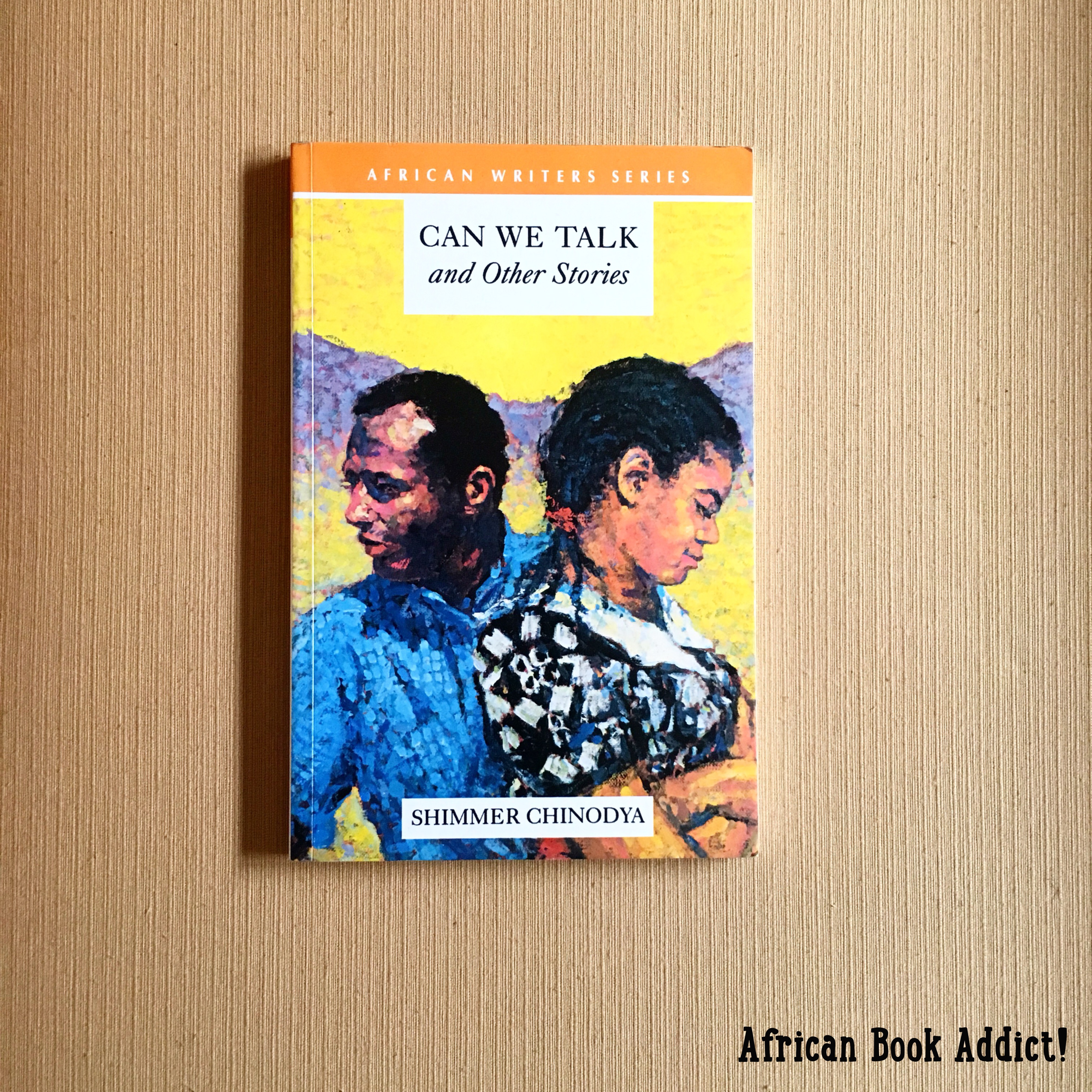
Can We Talk and Other Stories by Shimmer Chinodya

Date Read: November 22nd 2014

Published: 2001 (originally published by Baobab Books in 1998)

Publisher: Heinemann (African Writers Series)

Pages: 154

shimmer

 The Blurb

Opening with the puzzled and innocent view of a boy looking in on the adult world from outside, this collection follows the transition from childhood to adult life. Youthful desires for prosperity, love and a purpose in life are undermined by experiences of humiliation, compromise and a failure to communicate, in a process that reflects a wider disillusionment and decline in post-independence Zimbabwe. In the final story, cynicism turns to anger as the narrator, facing the breakdown of his marriage, challenges his audience to confront the inaction that leads to disappointment and the deep-seated loneliness and alienated at the root of our estrangements.

◊◊

Review – ★★★★ (4 stars)

This is a refreshing collection of 11 short stories and I’m glad I randomly spotted this at the bookstore! People, Chinua Achebe and Wole Soyinka are not the only legendary African Literature male novelists. Shimmer Chinodya is surely one of them- in my opinion! He is a wonderful poetic storyteller.

Can We Talk And Other Stories is a collection of stories that take readers through the transitions of boyhood to manhood. Various issues associated with coming-of-age such as confusion, fear, loneliness, depression, insecurity, alcoholism amongst others are tackled in these 11 short stories. It’s best to read these stories from the beginning to the end, as the stories are in chronological order with respect to the age of the main characters.

The novel starts off with a story of a precocious five year old boy, followed by tales of school life- in Zimbabwe and abroad, followed by stories of adult relationships and ends with a story of a forty-something year old man, lamenting his failed marriage called “Can We Talk”. “Can We Talk” was actually nominated for The Caine Prize for African Writing in year 2000- the year Leila Aboulela won the prize for her story “Museum”.

I enjoyed all the stories, mostly because they were different from the myriad of West African novels I usually read. I loved reading about Zimbabwe and admired Chinodya’s use of Shona (the principle language of Zimbabwe) in the text. The glossary at the back of the novel helped me translate some of the words used in the text, but even without the glossary I was able to understand the ideas conveyed in the stories. Chinoya’s use of alliteration, metaphors, repetition and other literature techniques were perfect in illustrating issues of love, confusion, guilt and loneliness. There is also a lot of humor in these stories- its not all depressing!

My favorite stories were:

“Brothers and Sisters” – A tale of a young man who suddenly becomes a staunch Christian and tries to convert everyone he interacts with to Christianity. He finally finds the love of this life, but when she finally reveals to him her true self, things take an interesting…exaggerated turn.

“Snow” – This is not a story per se…I wouldn’t call it a poem either. Its more like a collection of words. “Snow” more or less is a collection of words expressing different ideas and feelings about living in the West- from accents, to weather, food, international students, immigration etc. To get a gist of the text, here are two excerpts from pg. 59 & pg. 61:

‘White flesh white flesh. Blue eyes. Green eyes. Black eyes. Brown. Blonde hair. Brunette. Red. Black. Multivitamin smiles. Braced teeth. Sun-tan.

Food.

Foodfood foodfood foodfood.

French fried, fritters, frankfurters, fish, fillet, farina, falafels, figs, fennel, flax, Fanta, fruitbread.

Fat.

Fat fat fat.

Fudge-face, milk-nose, coke-lips, burger-bums, popcorn-belly, choc-cheeks, gum-teeth, cream-tongue, pizza-palate, Budweiser-chin, candy-kiss…’ (pg. 59)

‘Snow. Cold, loneliness. No legs, no laughter. Layers of loneliness packing into cakes of ice. The hard ice of longing. Cold and hard as pornography. Magazines splattered with blood-red flesh. Peep shows. Live.

Can the earth be so dead, so cruel? So white? Were shorts possible?

Oh, for a black face, for laughter, for warmth.’ (pg. 61)

I love this story because I’m currently obsessed with narratives on African life in the West/immigrant experiences. I especially love how “Snow” ends, because winter can truly get lonely and make any African miss home immensely! I simply understood and bonded with the collection of words and had fun reading it. Shimmer Chinodya is a wordsmith!

My only issue with this collection is that most of the stories were written from a male’s perspective. It would have been nice to have more than just one story (“Play Your Cards”) with a female voice.

But I will definitely be on the lookout for more Shimmer Chinodya books to purchase. I think I’d like to read his book- Chairman of Fools next.

My heart was glad after reading this novel. 🙂

★★★★ (4 stars) – Great book. Highly recommend!

IMG_0555 (1)

Purchase Can We Talk and Other Stories on Amazon

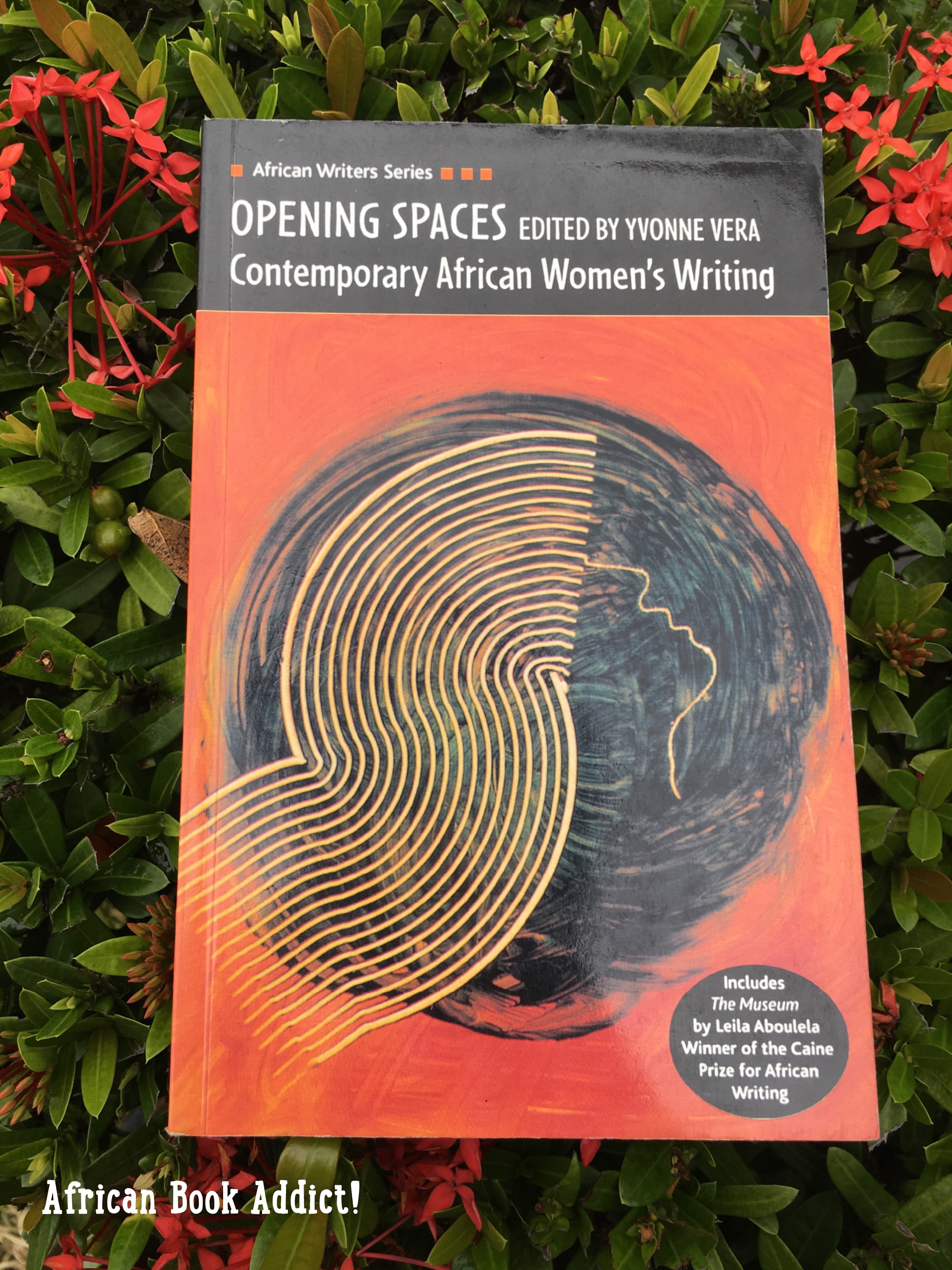
Opening Spaces: Contemporary African Women’s Writing edited by Yvonne Vera

Date Read: March 7th 2014

Published: 1999

Publisher: Heinemann (African Writers Series)

Pages: 186

yvonne vera

The Blurb

African women are seldom given the space to express their concerns, their ideas and their reflections about the societies in which they live.

 In situations where a good woman is expected to remain silent, literature can provide an important medium for the expression of deeply felt and sometimes shocking views. In this anthology the award-winning author Yvonne Vera brings together the stories of many talented writers from different parts of Africa. They act as witnesses to the dramas of private and public life. Their stories challenge contemporary attitudes and behavior, leaving no room for complacency.

Contributors include Ama Ata Aidoo, Veronique Tadjo, Farida Karodia, Lindsey Collen and Sindiwe Magona.

◊◊

Review – ★★★★ (4 stars)

This is a powerful collection of fifteen stories by African women writers from various countries such as: Zimbabwe, Ghana, South Africa, Mauritius, Nigeria, Mozambique, Sudan, Cote d’Ivoire, Mali, Namibia and Zambia. It was cool to read stories from countries that are not very active in the African literature scene- like Mauritius, Mali and Sudan.

These stories tackle the positives and negatives of being an African woman in their own unique ways. Some themes in the stories are: coming-of-age, motherhood, women empowerment, polygamy, abortion, death, political instability, faith and many more!

My favorite stories were:

‘The Museum’ by Leila Aboulela (Sudan) – This is the story that won the first Caine Prize in 2000! It’s a tale of the challenges a Sudanese girl- Shadia, faces as she is studying Mathematics in university in the United Kingdom. Despite the fact that she has a fiancé back home in Sudan, she starts to fall for fellow Scottish classmate- Bryan, who seems to be the brightest in the class. As Shadia and Bryan spend more time together, Aboulela teaches readers about the importance of religion (Islam). After Shadia and Bryan take a trip to a museum and Shadia is disappointed at how wrongly the West portrays Africa, I learned that Africa will always be where the heart is, for Africans living abroad.

‘The Power of a Plate of Rice’ by Ifeoma Okoye (Nigeria) – A hilarious tale of a single mother, who is a schoolteacher, struggling to keep her family alive. The principal of her school refuses to pay her salary while her children are sick and starving. This schoolteacher ends up doing something unpredictable which shocks her principal. This was a fun and easy read.

‘Stress’ by Lília Momplé (Mozambique) – A mistress of a rich married man sits in her luxurious apartment and spends her days staring out of her window, desperately desiring and fantasizing about her neighbor across the street. Meanwhile, this neighbor barely notices this mistress across the street as he struggles living as a deeply stressed schoolteacher. I enjoyed the unpredictability of the story’s ending!

‘The Barrel of a Pen’ by Gugu Ndlovu (Zimbabwe) – This was a heart-wrenching tale of two girls who spend their afternoon in a hotel. An unqualified nurse visits the girls in the hotel and executes an abortion on one of them. The gory descriptions of this story had me cringing. But I loved how the friendship between the two girls was strong enough to save a life.

This collection was published in 1999, but the stories, themes and the lessons learned are still relevant to readers today, in 2014. I recommend this!

★★★★ (4 stars) – Great book. Highly recommend!

Purchase Opening Spaces: Contemporary African Women’s Writing on Amazon

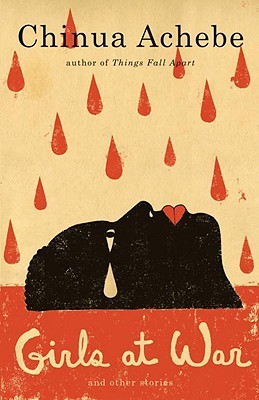
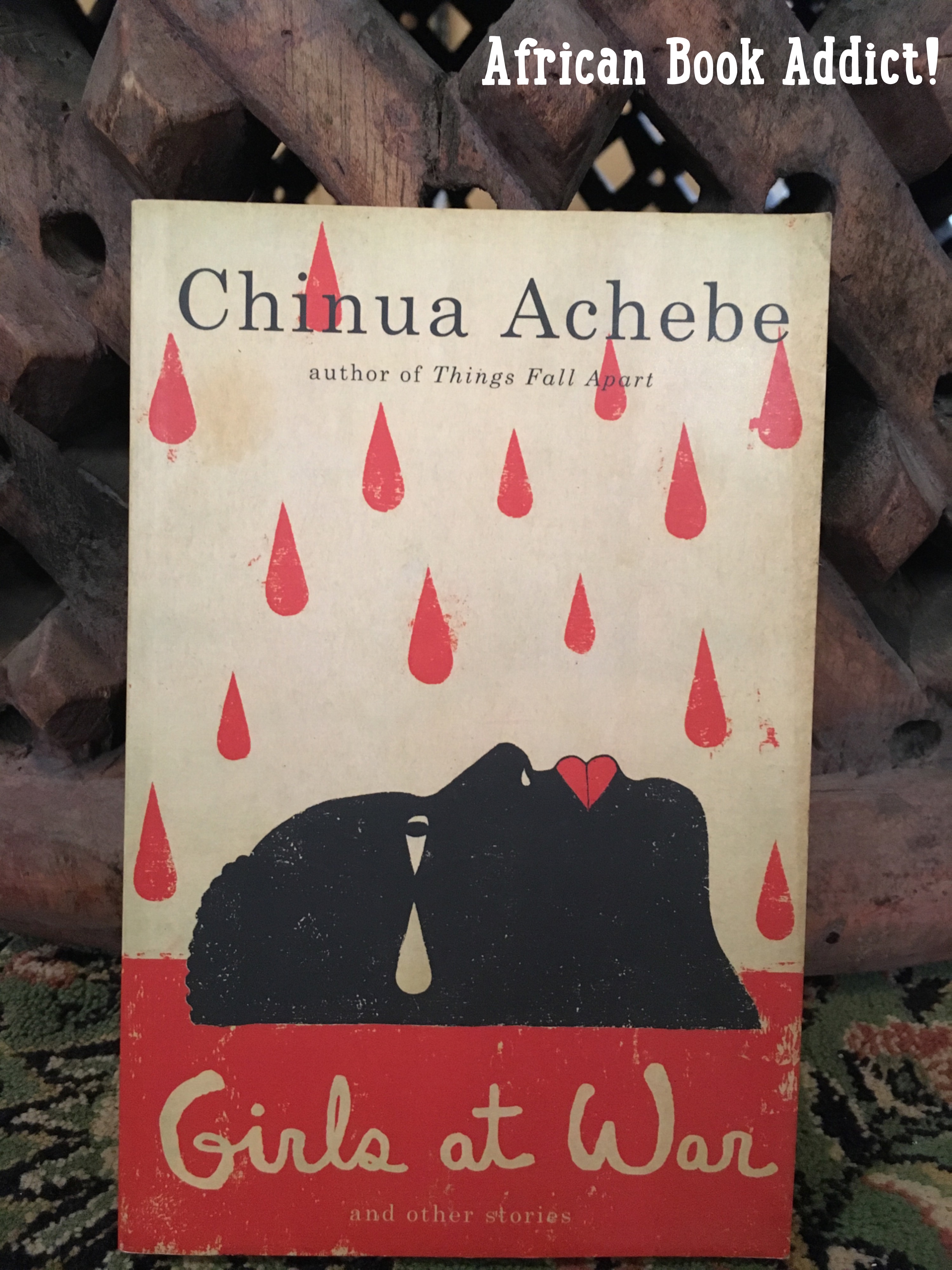
Girls at War and Other Stories by Chinua Achebe

Date Read: August 5th 2014

Published: September 1991

Publisher: First Anchor Books

Pages: 121

37775

The Blurb

Full of characteristic energy and authenticity, the stories in this classic collection capture the remarkable talent of one of the world’s most acclaimed writers and storytellers.

Here we read of an ambitious farmer who is suddenly shunned by his village when a madman exacts his humiliating revenge; a young nanny who is promised an education by her well-to-do employers, only to be cruelly cheated out of it; and in three fiercely observed stories about the Nigerian civil war, we are confronted with the economic ethnic, cultural and religious tensions that continue to rack modern Africa. Displaying an astonishing range of experience, Chinua Achebe deftly takes us inside the heart and soul of people whose pride and ideals must compete with the simple struggle to survive.

◊◊

Review – ★★★ (3 stars)

This is a decent collection of stories by Achebe.

My favorite stories were:

The Madman‘ – a tale of a once prominent man in a village who is humiliated by a vengeful madman. What a shameful but hilarious story!

Marriage is a Private Affair‘ – a story of a loving couple who are trying to convince their relatives of their forbidden love, as they are from different ethnic groups. I liked how Achebe wrote on the challenges of intermarriages between people of different ethnic groups especially as it is a problem we still face in Africa today.

Girls at War‘ – a tragic love story during the civil war in Nigeria. The story is centered on the short-lived romance between a militia girl and the Minister of Justice, living on the edge during the dangerous times of the civil war.

I don’t think I enjoyed reading this collection of short stories. Achebe’s writing style and storytelling manner were phenomenal as usual, but I wasn’t really interested in the subject matter of most of the stories. To be honest, I purchased the book because I loved the book cover design! And I must say, I still like the book cover design more than the stories, hahaa! But I do recommend this book- especially to the die-hard Chinua Achebe fans…this would be a fast read for you.

★★★ (3 stars) – Good book. I recommend it, I guess.

Purchase Girls at War and Other Stories on Amazon

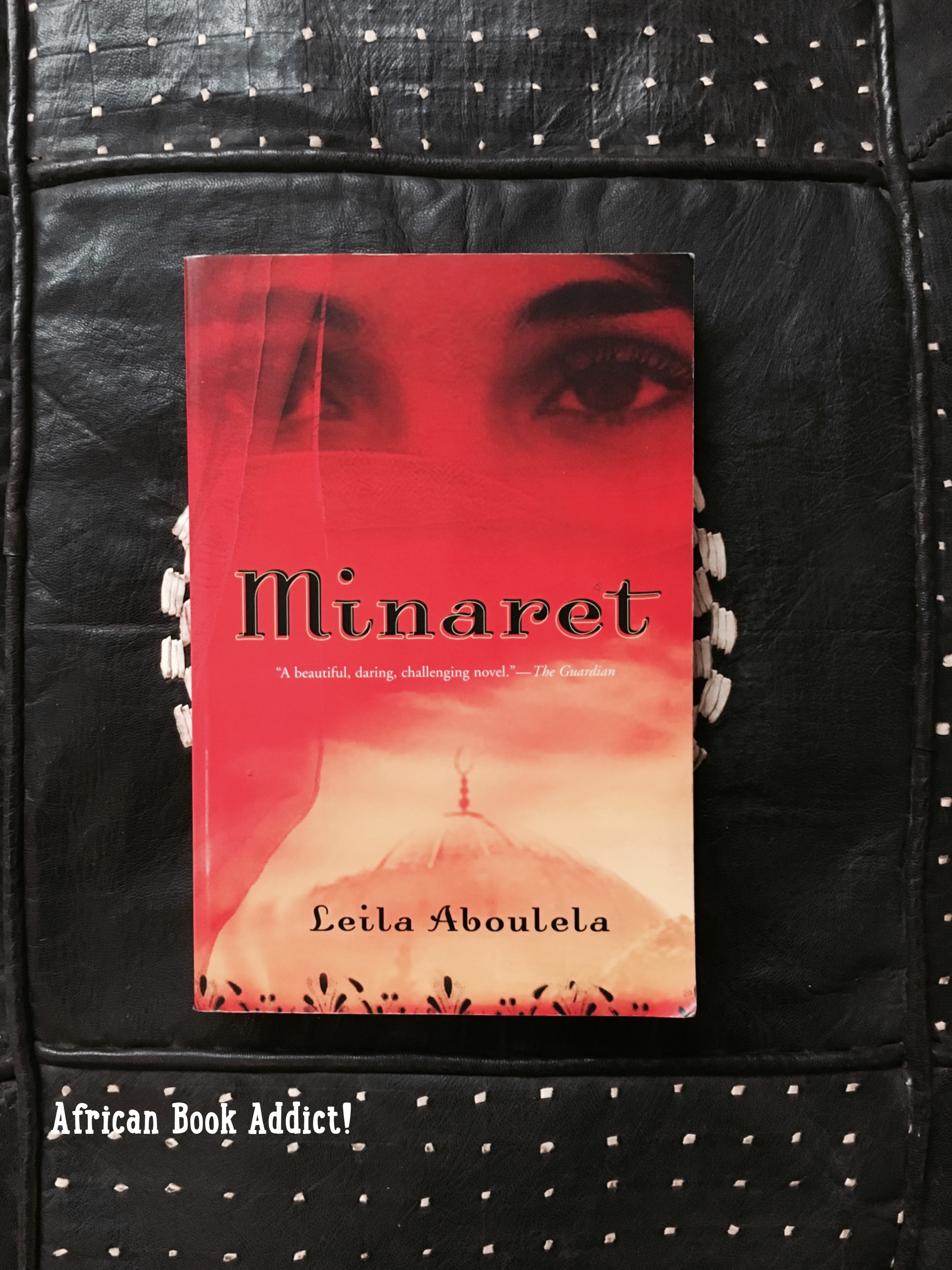
Minaret by Leila Aboulela

Date Read: July 21st 2014

Published: 2005

Publisher: Grove/Atlantic, Inc.

Pages: 288

minaret

The Blurb

With her Muslim hijab and down-turned gaze, Najwa is invisible to most eyes, especially to the rich Arab families whose houses she cleans in London. Twenty years earlier, Najwa, then an aristocratic Westernized Sudanese, could have never imagined this new life. She was a student at the University of Khartoum but her focus in life was on fashionable clothes, pop music, and parties. When a political coup forces Najwa’s family into exile in London, she soon finds herself orphaned and completely alone. For the first time in her life, Najwa turns to the solace and companionship among the women at the mosque, and when she adopts the hijab, she begins to see the world anew. Then Najwa meets Tamer, the intense, lonely younger brother of her employer and they find a common bond in her newfound faith and slowly, silently, begin to fall in love. Written with directness, simplicity and force, Minaret is a stunning and insightful novel about one woman’s journey toward spiritual peace.

◊◊

 Review – ★★★ (3 stars)

I loved Leila Aboulela’s short story ‘Museum‘ which won the first Caine Prize in 2000. I read ‘Museum‘ from the anthology, Opening Spaces – Contemporary African Women’s Writing and I thoroughly enjoyed it, mainly because Aboulela is Sudanese and writes about Khartoum. We rarely read or hear about Sudan in the African literature scene, so Leila Aboulela’s writing excites me!

I preferred reading the beginning of Minaret: Najwa was born into an upper-class Muslim family where her father worked with the president of Sudan, and her mother came from a rich family. Najwa and her twin brother who are very secular compared to other Muslim youth went to the best private schools of Khartoum and the best university in the nation. The family had several luxurious cars, superfluous food,  partied with their rich friends regularly and enjoyed vacations in several countries, including London where they owned a townhouse. Life was great for Najwa’s family.

Since all was well for Najwa and her family, she was very oblivious to the fact that Sudan was a very poor nation with majority of the citizens under the poverty line and with a government- which her father was associated with, that was very corrupt. Things turned upside down for Najwa and her family when Sudan faced a coup d’etat, hence her family- excluding her father, were forced to escape to their townhouse in London. The storyline cuts through 10-15 years later and after a series of unfortunate events, Najwa who was once a rich, secular university student becomes a lonely, poor housemaid. As a housemaid, Najwa finally starts to take Islam seriously by wearing a hijab and going to the Mosque to pray daily.

The storyline towards the middle of Minaret gets a bit annoying. Najwa (now a housemaid), who is now about 40 years old falling in love with Tamer – her employer’s son, was a bit strange to me. Why is this 40 year old in love with a 19 year old university student? I found Tamer to be very judgmental as he felt he was a better Muslim than everyone. Towards the middle of the story, I realized Najwa was a little too naiive for my liking. Her fate was very sad as she was orphaned quite early due to political instability in Sudan, but I didn’t find Najwa to be a strong Muslim woman I could learn from. Surely, she had her strengths- she had a calm spirit, she was meek, she was very kind and regarded others’ feelings. Throughout the novel, she was trying to grow spiritually and was trying to become a better Muslim, but by the end of the novel I didn’t really see the depth of her growth. The conclusion of the novel seemed incomplete as well since Najwa’s character seemed stagnant. It was as though she was content being a housemaid and did not aspire to do anything better with her life or even go back to Sudan. I was quite disappointed that Najwa did not want more for herself.

Leila Aboulela is a great writer. I loved the calmness and simplicity of her writing in this novel. This book made me appreciate the Muslim culture and the importance of women wearing hijabs and tobes. I just wish the love story between Tamer (the 19 year old) and Najwa was more realistic and didn’t take up 3/5ths of the storyline. But I still look forward to reading more of Aboulela’s books!

★★★ (3 stars) – Good book. I recommend it, I guess.

Purchase Minaret on Amazon

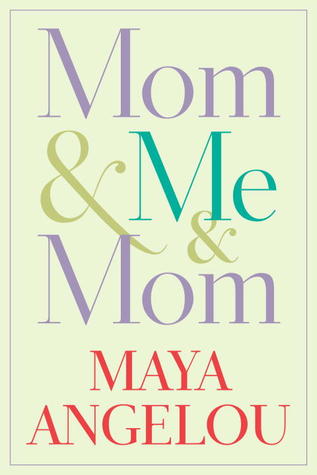
Mom & Me & Mom by Maya Angelou

Date Read: July 1st 2014

Published: April 2nd 2013

Publisher: Random House

Pages: 224

15798797

The Blurb

The story of Maya Angelou’s extraordinary life has been chronicled in her multiple bestselling autobiographies. But now, at last, the legendary author shares the deepest personal story of her life: her relationship with her mother.

For the first time, Angelou reveals the triumphs and struggles of being the daughter of Vivian Baxter, an indomitable spirit whose petite size belied her larger-than-life presence—a presence absent during much of Angelou’s early life. When her marriage began to crumble, Vivian famously sent three-year-old Maya and her older brother away from their California home to live with their grandmother in Stamps, Arkansas. The subsequent feelings of abandonment stayed with Angelou for years, but their reunion, a decade later, began a story that has never before been told. In Mom & Me & Mom, Angelou dramatizes her years reconciling with the mother she preferred to simply call “Lady,” revealing the profound moments that shifted the balance of love and respect between them.

Delving into one of her life’s most rich, rewarding, and fraught relationships, Mom & Me & Mom explores the healing and love that evolved between the two women over the course of their lives, the love that fostered Maya Angelou’s rise from immeasurable depths to reach impossible heights.

◊◊

 Review – ★★★★★ (5 stars)

In Mom & Me & Mom, Maya Angelou’s prose is very engaging and flows easily. Maya Angelou never disappoints me with her writing. This was a fast read and rather comforting as well!  Even though this book had several repeated incidences (such as Angelou initially addressing her mother as ‘Lady’ since having a mother figure was new to her because she had lived with her grandmother in the South before moving to California to live with her mother, The birth of Guy- Angelou’s only son, Angelou’s failed marriage, Angelou’s near death experience with an abusive lover etc) from her three autobiographies I Know Why The Caged Bird Sings, Gather Together In My Name, Singin’ and Swingin’ and Gettin’ Merry Like Christmas, this is a wonderful memoir centered around Maya Angelou and her mother- Vivian Baxter.

I love how the book is laden with pictures of Vivian Baxter, Maya Angelou and other loved ones during different occasions discussed in the book. A mother’s love is indeed a powerful thing! Maya’s mother’s love certainly made Maya Angelou into the phenomenal woman she was. Vivian Baxter was not a woman to mess with! She was always busy and was adored and respected by everyone in her hometown – even the police officers! She owned a gun, had a casino in Alaska, ran a boarding house in California and owned other businesses. She was a sharp businesswoman with a well of wisdom which guided and gave Maya Angelou sound direction.

Vivian Baxter was not a perfect woman but she was definitely a strong, stern, hip, inspirational, loving, jovial mother to her children (Maya and her son, Bailey). I loved reading about all the ups and downs Maya and her mother faced in their lives. Throughout the lessons Maya and her mother learned, readers also learn about the power forgiveness and survival with regards to mother-daughter relationships. Vivian Baxter was surely blessed with a daughter with impeccable memory, for Maya Angelou painted her mother in an admirable light. I will surely re-read Mom & Me & Mom again before the year ends.

★★★★★ (5 stars) – Amazing book, I loved it. Absolutely recommend!

Purchase Mom & Me & Mom on Amazon