LIT LINKS Mร‰LANGE V

Hey everyone!

I hope the month of February is treating everyone well. Over the weeks, Iโ€™ve been consuming great literature gems online. Below is a compilation of some of the LIT links I highly recommend you indulge in:


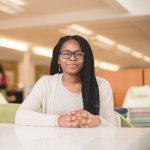
Raised by a single, independent mother, one young woman struggles with her familial inheritance and the relationship between self-sufficiency and social isolation.

(Image via Longreads viaย Klaus Vedfelt/Getty)

This isn’t the first time I’m mentioning Zoรซ’s name on this platform. In previous LIT Links posts, I highlighted her short story-ย Safe House, which wasย featured in AFREADA two years ago; she was also among the 75 Ghanaian writers highlighted in the GH at 60 | Our Writers & Their Books series, back in March.

Read My Secondhand Lonely and marvel at Zoรซ’s visceral, lucid writing. I hope she blesses us with a full novel or collection of short stories in the near future! Don’t be surprised when you seeย Zoรซ Gadegbeku’s name in lights soon.


  • AFREADA’s Valentine’s Day Short Story Collectionย – In case you’ve been living under a rock, AFREADA held a Valentine’s Day short story competition, where writers could submitย love/romance-related stories for a chance to winย ยฃ100! The competition is over now – as Valentine’s Day has passed (check out the winning story – HERE), but a bunch of the stories have been compiled into an ebook! Check out the breathtaking stories, for free – HERE.


  • Oldie but Goodie: Book review – African Love Stories: An Anthology edited by Ama Ata Aidoo. We’re still in the month of love! Two years ago, I reviewed this wonderful anthology on love stories, which was published in 2006. I gave the book 5 stars and encourage everyone to enjoy some love stories once in a while!


  • ย Market FiftyFour is a new platform that publishes and markets affordable audio and e-books in African languages! Marthe van der Wolf andย Melat G. Nigussie who are both Ethiopian, run Market FiftyFour.

Their first publication is entitled –ย Sheekadii Noloshayadaย (in English –ย The Story of Us), which is a a collection of short stories published in Somali byย Hanna Ali. I recently had the opportunity to read the English version of the collection by Ali and I’m excited to review it soon. I look forward to the future projectsย Market FiftyFour will be publishing and hope more stories are from the Horn of Africa are published, as stories from that region of the continent aren’t really popular in the mainstream literary sphere!

(Image via Market FiftyFour)


  • Listen to episode 14 of The Sankofa Book Club, where I was joined Co-founder – Akua, to discussed their December book – Questions For Ada by Ijeoma Umebinyuo. The Sankofa Book Club was featured on this platform last year, and it’s still a popular post!

I had lots of fun recording with Akua over the Christmas break on this phenomenal poetry collection. I’ve spoken ad nauseam about this collection as it was the BEST book I read in 2017. If you’re still wondering whether you should purchase Questions For Ada, what are you waiting for? Enjoy the episode!

https://soundcloud.com/the-sankofa-book-club/014-questions-for-ada-ft-darkowaa-adu-kofi


  • Libros Agency is an online bookstore and publishing agency based in Kenya, founded by Giovanni Patrick and Carly Gilbert. The aim of Libros Agency is ‘to have the unheard and unread stories of talented authors in the hands of ย yearning readers.’ They have a good selection of books in their online bookstore, which delivers books digitally. Check them out if you want to enjoy the unread stories of talented writers!

(Image via Libros Agency)


  • ย I hopeย Black History Month has been inspiring so far!ย If youโ€™re active on social media (Twitterย &ย Instagram), definitely follow the annualย #ReadSoulLitย photoย challenge which was curated by Didi ofย Brown Girl Readingย 4 years ago,ย with the aim of encouraging the love of books by African-American authors.

Check out Didi’s interview with Leslie Reese of blog –ย Folklore & Literacy, and read on how theย #ReadSoulLit photo challenge begun and why it’s important. Its not too late to join the photo challenge- it’s running till the end of Black History Month!


ยทยทยทยทยท

Check out:

LIT Links Mรฉlange I |ย LIT Links Mรฉlange II

LIT Links Mรฉlange III |ย LIT Links Mรฉlange IV

Freshwater by Akwaeke Emezi

Date Read: December 10th 2017

Published: February 2018

Publisher:ย Grove Press

Pages:ย 240

ย The Blurb

An extraordinary debut novel, Freshwater explores the surreal experience of having a fractured self. It centers around a young Nigerian woman, Ada, who develops separate selves within her as a result of being born โ€œwith one foot on the other side.โ€ Unsettling, heart-wrenching, dark, and powerful, Freshwater is a sharp evocation of a rare way of experiencing the world, one that illuminates how we all construct our identities.

Ada begins her life in the south of Nigeria as a troubled baby and a source of deep concern to her family. Her parents, Saul and Saachi, successfully prayed her into existence, but as she grows into a volatile and splintered child, it becomes clear that something went terribly awry. When Ada comes of age and moves to America for college, the group of selves within her grows in power and agency. As Ada fades into the background of her own mind and these altersโ€”now protective, now hedonisticโ€”move into control, Adaโ€™s life spirals in a dark and dangerous direction.

Narrated by the selves within Ada, and based in the authorโ€™s realities,ย Freshwaterย explores the metaphysics of identity and mental health, plunging the reader into the mystery of being and self.ย Freshwaterย dazzles with ferocious energy and serpentine grace, heralding the arrival of a fierce new literary voice.

โ—Šโ—Š

Review โ€“โ˜…โ˜…โ˜…โ˜… (4 stars)

Freshwater by Igbo and Tamil writer – Akwaeke Emezi, has to be the most anticipated debut of 2018. I received an Advanced Reader’s Copy (ARC) early December and devoured the book the weekend I received it. Even though Freshwater is highly anticipated worldwide, I’m curious and quite nervous to see how Nigerians and other African readers will take this novel.

If I had known this book was as evil, dark and sinful as it was, I probably wouldnโ€™t have bothered to read it. But now that I’ve marinated the story in my mind for a while, I can confidently declare that Freshwater is SO MUCH MORE than it’s insane level of lust and blasphemy. Freshwater is a dark, layered tale based in and out of the spiritual realm, which focuses on how past traumas deeply affect oneโ€™s well-being and mental health.

Ada (she/they) – the main character, has many selves. The selves within Ada are different gods or spirits who are birthed during different phases and traumas of her/their life. These gods are almost like her/their alter egos and they sustain her/their human body through protective and destructive means. Multiple Personality Disorder, Post Traumatic Stress Disorder, anxiety, suicide, panic attacks, rape (this was VERY difficult to read), lust, violence, sex (A LOT OF IT; it was unbelievable), self-injury, love, religion, strained family relations, sisterhood, immigration, homosexuality and gender fluidity are all explored in this complex debut.

In the beginning, reading Freshwater was frustrating. The story didn’t seem to make sense to me because I didnโ€™t know who was talking! There are many voices in this book and I wasn’t sure whether Ada, Asughara, Saint Vincent, brothersisters or Ala was speaking (these are all the names of the gods we encounter in the story). Thereโ€™s a certain rhythm to this debut which will only make sense if the reader has an open mind and patience. Some parts of this book still donโ€™t make sense to me and I feel some characters/gods didnโ€™t need to be introduced at all. But all in all, my weekend was well spent indulging in this extraordinary tale, even though it felt sinful at times. I was very fond of Emezi’s writing style which is accessible, calculated and not overly embellished.

For me, the most fascinating thing about Freshwater is the juxtaposition between God of Christianity versus the gods of the dark world. Adaโ€™s relationship with the two associations speak volumes on our (Africans/Black folks) relationship with religion and how it guides and/or controls our lives, whether it feels real or not… it’s hard to explain! I absolutely loved that Emezi explores the difficulties of loving and accepting oneself in this novel, through Ada’s character. As humans, we all have other selves within us – in the form of our blended temperaments, alter egos and moods; these are all explored in a scary, extreme way.

Freshwater is definitely not for everyone (for example: hardcore Christians who canโ€™t appreciate the art of the imagination that God blessed writers with), especially with how difficult it was to read. The book is laden with triggering incidents and the storyline has a non-linear trajectory, which may be confusing to some readers. It takes work to understand this type of novel, whose genre isnโ€™t even clearcut- I’d say Freshwater is a mix of sci-fi, mythicism, thriller and memoir, as parts of Emezi’s real life are part of the story. I donโ€™t think thereโ€™s a book out there like this. Akwaeke Emezi is a beast – no pun intended.

โ€ขโ€ข

Special thanks to Grove Press for the ARC.

[Side note: My rough thoughts on this book were initially posted on my Goodreads, where Akwaeke Emezi spotted it and gave me a shout out on Twitter + Instagram + in their newsletter. It was a pleasant surprise! ๐Ÿ™‚ ]

โ˜…โ˜…โ˜…โ˜… (4 stars) โ€“ Great book. Highly recommend!

Purchase Freshwater on Amazon

2018 READING INTENTIONS

New year, new set of reading intentions!

Instead of using the word โ€˜goalsโ€™, Iโ€™ll use the word โ€˜intentionsโ€™. Goals are focused on a specific achievement, while intentions are lived on a daily basis โ€“ which is how I intend my reading experience to be this year. My 2017 reading intentions were tough to adhere to, so this year I hope to set some reasonable intentions. I discussed my struggles with my 2017 reading intentions in the 2017 RECAP post.

Iโ€™ll continue to read what my mood calls for. I donโ€™t have a set number of African, Caribbean or African-American books to read nor do I have a specific number of books written by women or men Iโ€™d like to read either. I like to track books read each year via Goodreads, so entering the Goodreads Reading Challenge helps me do that. Every year I like to declare a goal of at least 18 books as a set point, just to help me gauge my reading experience for the year. I’ll probably read a fewer number of books this year  as (dental) SCHOOL life is very real at the moment. Iโ€™ll just be going with the flow โ€“ no need to make reading stressful. Reading isnโ€™t a race or competition โ€“ at least not for me.

Below are some intentions Iโ€™ll be considering during the year:

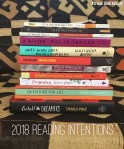
[Some of the books I enjoyed LAST YEAR (2017)]

  • To READ FOR AT LEAST 40 MINUTES A DAY. Life is quite hectic at the moment. I’m a 4th year dental student and will be in 5th year soon (its a 6 year program) so my nose always has to be in a textbook, in group-study discussions or on the ward/in the clinic completing requirements and attending to patients. But if I’m able to dedicate 40 minutes a day to just reading leisurely, I think that would keep me sane.

โ€ขโ€ข

  • To CATCH UP ON MY BOOK REVIEWS. I’ve incorporated interesting book chats and discussions onto this platform. I plan on continuing the book chats, but I must stay true to the essence of this book blog – which was initially (and still is) a book reviewing / book recommendations space. I have a growing backlog of book reviews from the previous years that I plan on posting throughout this year.

โ€ขโ€ข

  • To READ MORE GHANAIAN LITERATURE. Last March, during Ghana’s 60th Independence Anniversary, I showcased 75 Ghanaian writers and their books. It was a daunting, yet fulfilling mini project that I’m very proud of! As I was researching the writers and books for the project, I realized I had read just a handful of the books highlighted. As a Ghanaian, its important for me to read and celebrate the works of writers from my homeland. I hope to read at least 5 books by Ghanaian writers this year. Please join me in this challenge, if you can! Ghanaian literature is so underrated.

โ€ขโ€ข

  • To RE-READ BOOKS I LOVED IN THE PAST. Some readers don’t believe in re-reading books. We live in an age where the hype of new releases makes us forget the phenomenal books of earlier years. I personally don’t think books are meant to be read and forgotten. Books should be read, meditated on and read AGAIN whenever the need arises. So this year, I want to re-read at least 3 books I loved in the past (that haven’t been reviewed on this platform).

Hereโ€™s to a successful year of reading (with few reading slumps), for all of us!

Itโ€™s almost the end of the 1st month of 2018, have you figured out your reading intentions/goals yet? Please do share some!

2018 NEW RELEASES TO ANTICIPATE!

Happy New Year, everyone!

What books are you excited to read this year? Below are 56 new African, African-American and Caribbean books that look very promising. This is just a snippet of the books 2018 has to offer!

Please click on the images to read the blurbs and/or to purchase the books.

(this post contains Amazon affiliate links)

MORE books to look out for in 2018:

Image via Nylon

Well-Read Black Girl: Finding Our Stories, Discovering Ourselves

Yes! Glory Edim, aka – Well-Read Black Girl, is working on an anthology that will feature black women writers like – Zinzi Clemons, Nicole Dennis-Benn, Marita Golden, and Tayari Jones as they highlight the first time they saw themselves represented in literature. To be published by Random House.


Image via Simon & Schuster

I first encountered Bahamian writer – Janice Lynn Mather’s writing in the 2014 anthology, Pepperpot: Best New Stories From The Caribbean. Her short story- ‘Mango Summer’ was such a poetic, gentle and innocent tale on sisterhood and loneliness; with the abundance of mangoes being a humorous distraction to the heartfelt tale.

I loved her writing in ‘Mango Summer’ and eagerly look forward to this debut! To be published by Simon & Schuster, June 2018.


Image via Reader’s Digest 

She Would Be King by Wayรฉtu Moore

Wayรฉtu Moore is a writer of Liberian heritage and is the founder of One Moore Book, which is a children’s book publishing company that focuses on providing culturally sensitive and educational stories for children living in regions with low literacy rates and underrepresented cultures. Her debut – She Would Be King, reimagines the dramatic story of Liberiaโ€™s early years through three characters who share an uncommon bond. I can’t wait for the book cover to be revealed soon!! To be published by Graywolf Press, September 2018.


Image via Anissa Photography 

On The Come Up by Angie Thomas

If you loved The Hate You Give, you’ll probably love Angie Thomas’ second novel – On The Come Up! I hope the book cover is revealed soon. To be published by Balzer + Bray, May 2018.


Image via Ibi Zoboi

Pride by Ibi Zoboi

Haitian writer – Ibi Zoboi’s second novel, Pride is a love story inspired by Jane Austen’s Pride and Prejudice, set in Bushwick (Brooklyn, NY). To be published by Balzer + Bray, September 2018.


What new releases are you excited about? Please do share!

2017 Recap & My Top 5!

Hey everyone!

I hope the holiday season has been relaxing for you all. 2017 is almost over and itโ€™s time for a recap of the year! I ended up reading 28 books this year. The break down of my 2017 reading experience is as follows:

Average books read per month: 2 books 

Anthologies read: 3 books

Audiobooks ‘read’: 3 books

African literature: 10 books

Caribbean literature: 4 books

African-American literature: 13 books

Others: 1 book (this is a non-African/non-Diaspora book. Written by Cheryl Strayed).

20 women writers ;  5 men writers


Top 5 favorite books of 2017

  1. Questions for Ada by Ijeoma Umebinyuo
  2. Our Sister Killjoy by Ama Ata Aidoo
  3. Born On A Tuesday by Elnathan John
  4. Houseboy by Ferdinand Oyono
  5. Now We Will Be Happy by Amina Gautier

These were the most insightful, affirming and enjoyable books for me this year! School/life has been quite hectic this year, so I’m behind on book reviews. Expect the remaining book reviews in 2018, but in the meantime, I HIGHLY recommend these 5 books!

Reviews for books read this year are in the Book Reviews section of the book blog.

What were your top 5 favorite books of 2017?


Favorite bookish events / images of the year:


African Book Addict! FEATURES:

It’s been both overwhelming and exciting being recognized for all the hard work that goes into creating content for this book blog. Book blogging here at African Book Addict! is purely a hobby (as I’m currently a 4th year Dental Student – its a 6 year program), so receiving recognition and praise is always affirming and such a blessing.

Below is a list of the features and recognitions African Book Addict! has gained this year:

Also, special thanks to the authors who’ve contacted me to show their appreciation for reviews of their books that have been posted on this platform and/or AFREADA.

Image via novelscript Instagram stories


2017 Reading Intentions round up:

At the beginning of the year, I set 3 reading intentions. But I don’t think I’ve successfully achieved them all…

  • My first reading intention was to READ MY OWN DAMN BOOKS. Only 9 of the books I read this year had been on my bookshelf for a while. The rest of the books I’ve enjoyed were acquired THIS year! Is it possible for a moody book lover to restrict him/herself to just the books sitting on one’s bookshelf? It’s tough y’all!


  • The second reading intention was to PURCHASE LESS books this year. Well… I ended up purchasing about 30 books (discounted/ used books – chill out!) over the summer and many, many more for friends & family as gifts. I might have jinxed myself by setting this goal/intention for myself!  *shrug*


  • Lastly, I set out to buddy-read some novels with other book bloggers/ book lovers. I successfully read Behold The Dreamers with Ifeyinwa Arinze and we had a great conversation on the book as well! I had planned to read books with other bloggers – Osondu (of Incessant Scribble), Didi (of Brown Girl Reading) and Afoma (of Afoma Umesi). Osondu and I weren’t excited about the book we set out to read, so our buddy-read was unsuccessful; Didi and I were to read a debut that a writer had sent us – but we couldn’t get passed the first 50 pages, so we quit; Afoma and I also tried to read an ARC together this month, but the book is super slow… maybe we’ll continue to read it together in the new year. Buddy-reading has been challenging! I think I’ll talk more about this in the new year.

Were you able to achieve some of your 2017 Reading Intentions? 

[Donโ€™t beat yourself up if you werenโ€™t able to โ€“ its definitely not that serious and you can still achieve them in 2018!]

Total books read in 2017

Iโ€™m TRULY grateful to everyone who frequents this book blog and for the great discussions (agreements, disagreements and recommendations) we have in the comments section. I always appreciate the support and love shown here, from you all. This year, Iโ€™ve enjoyed discovering new book blogs, book lovers & Bookstagram accounts (Book Instagram) and I hope to connect with more in the future! Hereโ€™s to more great years of reading ahead, for all of us. ๐Ÿ™‚  


2017 Christmas Wish list

Hey everyone!

Christmas is right around the corner and I honestly have no business buying any new books, anytime soon! But a simple wish list wonโ€™t hurt, would it? Below are books Iโ€™d love Santa to drop into my imaginary Christmas stockings:

(not in order of preference; click titles to read the blurbs on Goodreads)

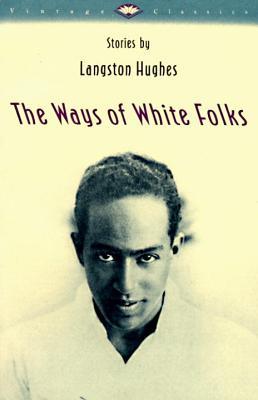
The Ways of White Folks by Langston Hughes

It’s been a while since I indulged in some Langston Hughes. The last time I enjoyed his work (poetry/ stories) was 5 years ago in college, for the myriad of American Studies, African American History and African American Literature classes I was taking. This short story collection is set in the 1920โ€™s and 30โ€™s โ€“ so you can be assured it explores racial tension between black and white folk and possibly tension within the black community. Is it me, or does Mr. Hughes look super hot on the book cover? I want it!


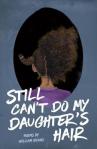
Still Can’t Do My Daughter’s Hair by William Evans

I never knew this collection even existed! I discovered this poetry collection and the author thanks to Black Book Quotes Bookstagram account, where Leila highlights a huge array of books by Black writers. How adorable is the cover art?! In this collection, Evans explores masculinity, fatherhood, family, and what it means to make a home as a black man in America today. Since this book is about 96 pages, I could easily read it via my Kindle app, but the cover art makes me want to buy the physical copy! It deserves a spot in my bookshelf.


Always Another Country: A Memoir of Exile and Home by Sisonke Msimang

If youโ€™ve read All your faves are problematic: A brief history of Chimamanda Ngozi Adichie, stanning and the trap of #blackgirlmagic via Africa Is A Country, Iโ€™m sure youโ€™d want to indulge in more of Msimang’s lucid writing. Jonathan Ball Publishers in South Africa released this memoir back in October of this year. Unfortunately, Sisonke Msimang hasnโ€™t sold the book rights outside South Africa yet, so its unavailable online at the moment. In Always Another Country, Msimang takes readers from Zambia to Kenya, Canada, the US and South Africa as she reflects on childhood jealousies, adult passions, motherhood and โ€˜what it means to be born into a life scored by history.โ€™ I want this book in my hands!


The House of Hunger by Dambudzo Marechera

The House of Hunger has been on my TBR for about 3 years. All the readers I know whoโ€™ve indulged in Marecheraโ€™s work claim him as an ultimate favorite. This novella portrays life in a Zimbabwean township and explores the lives of families living in black urban areas. Some readers have described this novella as โ€˜a masterpieceโ€™ and โ€˜one of the greatest Zimbabwean novels of our timeโ€™ while using words like โ€˜brutalโ€™, โ€˜sharpโ€™, โ€˜disturbingโ€™, โ€˜sublimeโ€™ to describe Marecheraโ€™s writing. I want to see/read what Iโ€™ve been missing out on! I hope to read this at some point in 2018.


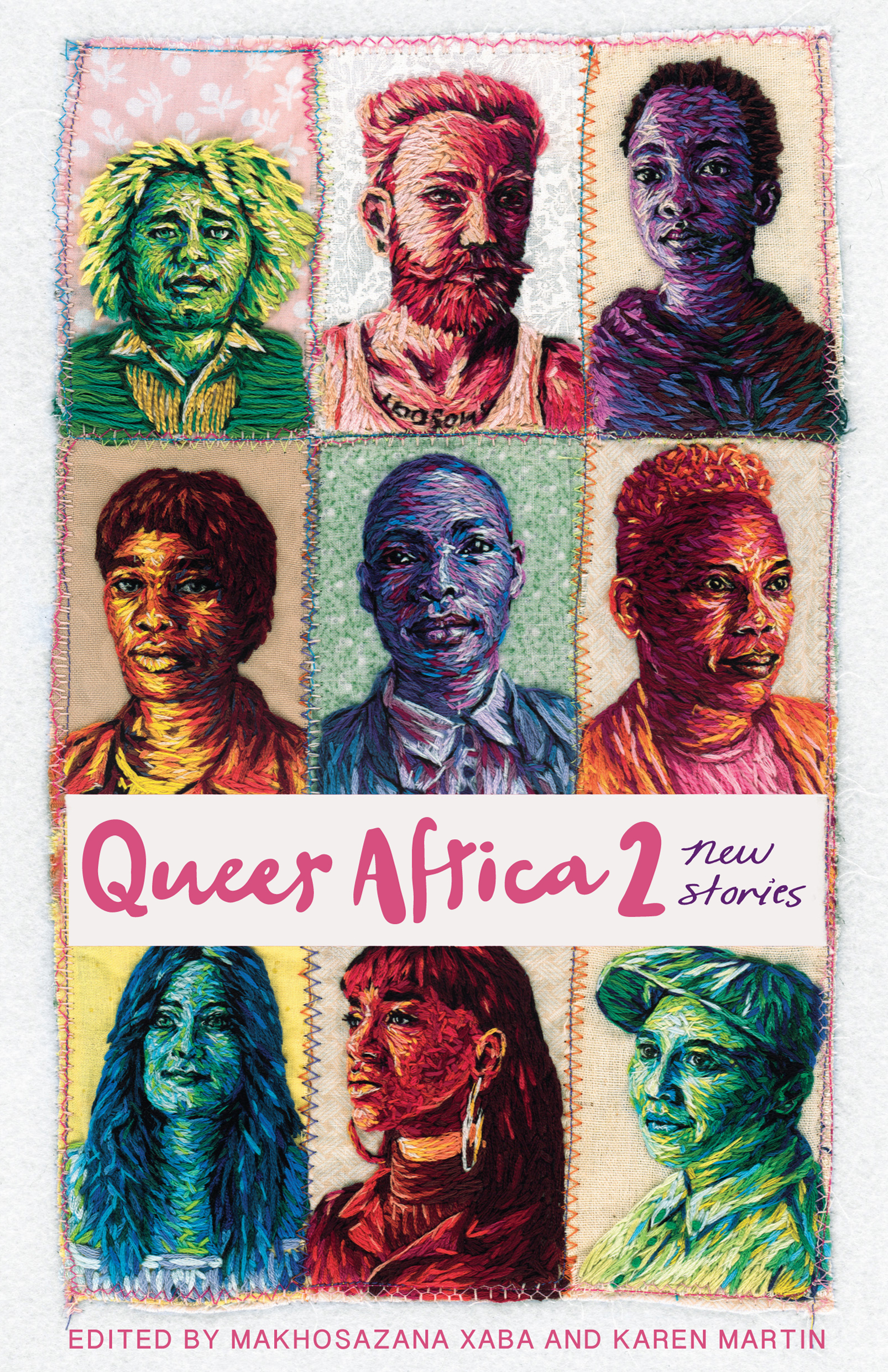
Queer Africa 2 edited by Makhosazana Xaba and Karen Martin

This anthology (pub. 2017) is the sequel to Queer Africa: New and Collected Fiction which found great success back in 2013. It consists of 25 stories by writers from Kenya, Nigeria, Rwanda, Sierra Leone, Somalia, South Africa, Uganda. The stories touch on โ€œdesire, disruption and dreams; others on longing, lust and love – a range of human emotions abound in lives of Africans and those of the Diaspora who identify variously along the long and fluid line of the sexuality, gender and sexual orientation spectrum in the African continent.โ€ I absolutely love the colorful needlework on the book cover! Last time I checked, this anthology was quite pricey. I hope my local library gets this book soon so I can experience the stories.


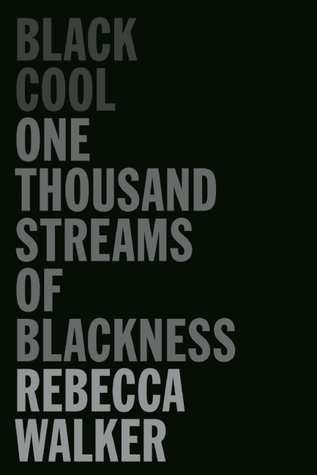
Black Cool: One Thousand Streams of Blackness edited by Rebecca Walker

Whether you like it or not, BLACK people have defined what it means to be cool โ€“ worldwide. Black Cool, which is edited by well-known feminist – Rebecca Walker (Alice Walker’s daughter), explores the emergence of black cool, through essays by Mat Johnson, bell hooks, Margo Jefferson and more. Henry Louis Gates forwards the anthology with historical context, where he connects past African elements to the current concepts of โ€˜coolโ€™. I’m mostly curious to know how the writers articulate the thousand streams of our blackness. Blackness embodies so many shades, cultures, countries, customs, beliefs. Blackness is surely NOT a monolith!


What books are on your Christmas wish list? Please share some titles!

Happy Holidays & Merry Christmas, everyone!

โ€ข Check out the 2016 Christmas wish list

What It Means When a Man Falls from the Sky by Lesley Nneka Arimah

Date Read: September 29th 2017

Published: 2017

Publisher: Riverhead Books

Pages: 232

The Blurb

A dazzlingly accomplished debut collection explores the ties that bind parents and children, husbands and wives, lovers and friends to one another and to the places they call home. 

In “Who Will Greet You at Home”, a National Magazine Award finalist for The New Yorker, A woman desperate for a child weaves one out of hair, with unsettling results. In โ€œWild,โ€ a disastrous night out shifts a teenager and her Nigerian cousin onto uneasy common ground. In “The Future Looks Good,” three generations of women are haunted by the ghosts of war, while in “Light,” a father struggles to protect and empower the daughter he loves. And in the title story, in a world ravaged by flood and riven by class, experts have discovered how to “fix the equation of a person” – with rippling, unforeseen repercussions. 

Evocative, playful, subversive, and incredibly human, What It Means When a Man Falls from the Sky heralds the arrival of a prodigious talent with a remarkable career ahead of her.

โ—Šโ—Šย 

Review โ€“โ˜…โ˜…โ˜…โ˜… (4 stars)

What It Means When a Man Falls from the Sky is out of this world – literally. I truly enjoyed Arimahโ€™s wild imagination and the finesse with which she created worlds I never knew could exist! This collection embodies what a short story collection should be: ORIGINAL, unpredictable and out-of-the-box.

The title of this collection alone stands out and encompasses the โ€˜out of this worldโ€™ theme of the stories. The 12 short stories follow Nigerians (mostly women) in Nigeria and the Diaspora. Arimah explores: abusive relationships between couples, as well as strained mother-daughter relationships; We get a glimpse of the Biafran war while a father tries to discuss violence with his daughter over Chess; We follow young Nigerian women of the Diaspora trying to find their place in the world; We witness childless women desperately creating children out of durable raw materials while two girls of different social classes express their love through uncertainty and weird, hateful actions.

I wanted to give this collection 5 stars, but I didnโ€™t care for some of the stories, especially the titular story. Furthermore, some storylines felt redundant with most charactersโ€™ relatives dead or dying, or something tragic always happening. These things recurring in most of the stories made the reading experience a bit morbid, so What It Means When a Man Falls from the Sky is really a 4.5 stars rating for me!

Nevertheless, I have a good number of favorites from this collection. My favorite stories were:

‘The Future Looks Good’ –  The ending of this story shook me. I felt a full range of emotions reading this story that briefly delves into the relationship between 2 sisters – Bibi and Ezinma, and their strained family relationship. The thin line between love and hate is wonderfully explored in this story!

‘Wild’ – While reading ‘Wild’, I felt like I knew Ada and Chinyere – the main characters of this story. Ada is a Diaspora kid who’s off to college soon. Her mother sends her to Nigeria to visit her cousin – Chinyere’s family for some time before school begins. Arimah explores women relationships in this story so expertly. We also get a glimpse into a troubled mother-daughter relationship that’s probably the cause of Chinyere’s illegitimate child. There’s a lot going on in this story and I loved every bit of it.

‘Windfalls’ – Arimah wrote this story as if the story belonged to the reader. It starts off like this:

‘The first time you fell, you were six. Before then, you were too young to fall and had to be dropped, pushed, made to slip for the sake of authenticity. You learned to fall out of self-preservation as your mother pushed too hard, dropped from too high a height. You have been living off these falls for years, sometimes hers, but mostly yours. A sobbing child garners more sympathy than a pretty but aging mother of one.’ (pg. 79)

From that first paragraph to the end of the story, my heart was so heavy from all the falling. ‘Windfalls’ is a warped story of an innocent daughter, who’s a pawn in the name of her mother’s thievery. This was excellent storytelling, from beginning to end.

‘Who Will Greet You At Home’ – I will never forget this story. The characters in this story are ordinary human beings, living in an extraordinary world. To be honest, this story was so weird to me as I skimmed through it when it was shortlisted for the Caine Prize this year. But once I gave this story a re-read, I definitely enjoyed and understood it better as a part of this collection! Have you ever heard of a baby made of silky, fibrous strands of hair, who only sucks/eats dirty hair? Ogechi – a childless woman who works at a hair salon, unknowingly creates a demon child and all hell breaks loose!

‘Glory’ – Glorybetogod or Glory (for short), thinks she’s bad luck. She’s almost 30 years old and she’s single as ever. She feels she’s wasted all the wonderful opportunities she’s had in the past and is basically at the point of suicide. This character – Glory, is hilarious. I didn’t know whether to pity her or laugh with her at her miserable life! She finally finds a (Nigerian) man and they start dating. But Glory isn’t sure if she wants to get married after she realizes she and her partner seem to be playing the same ‘game.’ Arimah explores the challenges of modern day relationships so well in this story. Social media and the way it influences how we date today gave this story extra relevance. I especially LOVED that the ending of this story was ambiguous. When executed well, I like short stories that end this way! You get to decide how it ends for yourself.

As Nigerians like to say – ‘Naija no dey carry last,’ they finish first and this collection shows the excellence of Nigerian storytelling. So please believe the hype – What It Means When a Man Falls from the Sky deserves all the praise, literary nominations and awards it’s received thus far. Reading this collection was an exciting experience and I have no doubts that Lesley Nneka Arimahโ€™s future debut novel will be EPIC.

โ˜…โ˜…โ˜…โ˜… (4 stars) โ€“ Great book. Highly recommend!

Purchase What It Means When a Man Falls from the Sky on Amazon

Book Chat | On Being ‘Well Read’ (part 2)

Welcome back to Part 2 โ€“ the final installment of this book chat!

โ€ขโ€ขโ€ข

When you hear the words – ‘well read’, what comes to mind? What does it mean to be ‘well read’?

From my observations over the years, I realized being ‘well read’ was synonymous with being knowledgable in the ‘Classics’ – which typically comprise the works of English writers like William Shakespeare, Charles Dickens, Jane Austen,ย Joseph Conrad, Charlotteย Brontรซ ; American writers like John Steinbeck, Harper Lee, Louisa May Alcott, Mark Twain, J.D. Salinger, F. Scott Fitzgerald ; Canadian writers like Margaret Atwoodโ€Ž, Lucy Maud Montgomery and a myriad of other books by WHITE writers.

Image via Arao Ameny’s Instagram

The concept of being ‘well read’ is very subjective and personal. In my opinion, there’s more to being ‘well read’ than being well-versed in the work of white writers or books we were forced to read in English Literature class.

I wanted to know how other readers defined being ‘well read’, so I asked some of my favorite readers and writers I follow and interact with via Twitter, Goodreads and Instagram. In this book chat, three of my favorite readers and writers will enlighten us on what it means to be ‘well read’, with some recommendations on which authors and/or books we should indulge in to be considered ‘well read’, per their views on the concept.

Enjoy!


Efo Dela is a book lover I frequently see at book readings and other bookish events here in Accra. He’s an avid reader and writesย poetryย as well. I always look forward to reading Efo’s (funny) opinions on Twitter, so I just had to include him in this conversation. Check out what being ‘well read’ means to him:

  • What does being โ€˜well readโ€™ mean to you?ย 

Being well read means being able to enjoy a wide spectrum of writing genres. For me good writing is good writing it doesn’t matter the genre. I will read it. I’ve found myself reading academic work unrelated to what I do just because the writing is good. I don’t know if it’s because I have an interest in many topics that I read so wide or if I have an interest in many things because I read wide.

  • Which books and/or authors should be on our reading lists, given your take on what it means to be โ€˜well readโ€™?

Born a Crime – Trevor Noah

Akata Witch – Nnedi Okarafor

Prey – Michael Crichton

The Last Day – Glenn Kleier

Teaching My Mother How to Give Birth – Warsan Shire

A Song of Ice and Fire (6 books) – George RR Martin

The Three-Body Problem – Cixin Liu

Go Tell it on the Mountain – James Baldwin

Ghana (the autobiography of Kwame Nkrumah) – Kwame Nkrumah

Catch 22 – Joseph Heller


Zaynab has a way of making reading look so sexy, via her photographs on Instagram, where she goes by – @bookminimalist.ย Zaynab, who is based in Nigeria, is a passionate reader and a popular Bookstagrammer (which is the Bookish community of Instagram) who promotes African literature through her photos and fearless commentary on the books she showcases. Check out her views on the concept of being ‘well read’:

  • What does being โ€˜well readโ€™ mean to you?

What it means to be well-read? Well read? I have to be honest this question gave me sleepless nights.

The week you sent the question I wrote: “it meant reading all genres; science fiction, romance, speculative fiction, etc. Reading your favourite genre alone or classics alone doesn’t make you a Well-read person.” ย I just realised how naive this answer was days later.

And then I swapped it to, Well-read means reading books from all corners of the world. North Africa, Indian Ocean African Islands, Middle East, reading books published in every region in the world. And this sounded too pompous, and very bombastic. Does this mean someone who lives in a village in Nigeria who doesn’t have access to some of these books is not well read?

And then minutes ago, it changed to reading at least 10 books on the ‘100 books you should read before you die’ list. Haha.

Now writing this, I suddenly had an epiphany, being well read should not only be about the number of books, or how many translated works you have read (even though I think this is important too), being well read is reading at a level in which you digest and absorb what youโ€™re reading and are able to incorporate it into your life. Reading in such a way that allows you to think and converse about the human experience intelligently.

Being well read means becoming a better human being from something you have read from Toni Morrison, from an anecdote you saw in Wole Soyinka’s book. Speaking out against corruption, bad governance after reading Achebe, realising your silence in the face of evil is cooperating with evil itself after reading Baldwin.

Speaking out against sexual assault, racism, after drowning yourself in Angelou. Ranting against those who kill intellectuals and writers after reading a Sontag. Speaking up for women who are hated by their community and families after read a Flora Nwapa.ย  Speaking up for children who lost their innocence after reading a Danticat.

Being well read means reading thoughtfully, by engaging with the world, breaking away from horrendous tradition and questioning dreadful established ideas.

This is what being well read means to me.

  • Which books and/or authors should be on our reading lists, given your take on what it means to be โ€˜well readโ€™?

I have more than 50 Books I have enjoyed reading this year but I am going toย mention the ones written by African women on this list (because they don’t get hyped enough):

Theย Kindness of Enemies by Leila Aboulela, Longthroat Memoirs,ย by Yemisi Aribisala, The Woman Next Door by Yewande Omotoso, Butterfly Fish by Irenosen Okojie and Kintu by Jennifer Makumbi.


Bwesigyeย Bwa Mwesigire is a powerhouse. I first encountered Bwesigye last year when I was in correspondence with him as theย Editorial and Partnerships Director for the Writivism Festival (a Kampala-based initiative that promotes African Literature). Since then,ย I always look forward to his passionate threads on Twitterย which mostly aim to decolonize the mind. He’s currently a graduate student of English Language and Literature at Cornell University. Enjoy his thoughts on the concept of being ‘well read’:

  • What does being โ€˜well readโ€™ mean to you?

This is a very hard question. It is hard because the response speaks volumes about the person answering it, than it does about anyone else, or about the idea of reading itself. Because I am a graduate student of English Language and Literature, this question is even more difficult to answer. Do I want to expose myself this way? While we were being told about preparing for our PhD Qualifying Exam, one of the three exams an English student does before they graduate, our instructor encouraged us to select books that make one sound ridiculous if they are English grads and have not read them.

We went through a confession moment where some members of our class mentioned the books they are embarrassed to say they havenโ€™t read because it is expected that everyone has read those books. You get the picture. If you are an English Major, or grad, surely, you have read Shakespeare, right? That type of thing. The greatest books. To use a more academic term, the canonical texts from various periods.

These books permeate the English language itself. New words have been created from them. There is another word I learnt late in life, and I canโ€™t pronounce with my Rukiga inflected accent. The word is โ€˜zeitgeistโ€™. The books that capture the โ€˜defining spirit or mood of a particular period of historyโ€™ are what some versions of well read expect one to have read. I am not a fan of English Literature in that way. In the way it is used as the standard, given its history of not only exclusion, but active dehumanisation and destruction of other ways of being, other literatures, other cultures.

Because in secondary school, when I studied Literature in English, we were forced to read Charles Dickens, the Bronte sisters, RL Stevenson, DH Lawrence, Jane Austen, Robert Bolt, Arthur Miller, Ernest Hemingway, and all those types of people, my experience of their work has become one of resentment. I after all attended secondary school in Uganda, a country that celebrates having attained independence in 1962 but still holds onto these colonial notions of what it means to be โ€˜well readโ€™.

Operating in what Mukoma wa Ngugi has called the โ€˜English metaphysical empireโ€™, where the language and the world it makes possible in oneโ€™s imagination, means that one canโ€™t run away from these writers, their books and their influence. The Strange Case of Jekyll and Hyde shows up in conversation as something whose meaning everyone listening, knows. And so, if one does not, they have to Google to understand it. To the colonised, in the metaphysical sense, familiarity with the English canon is one way to understand what it means to be โ€˜well readโ€™. Because most spaces in which we operate, (speaking from my position as an aspiring academic whose dominant language of engagement is English), are yet to be decolonised, it means that however much one hates the ways in which one experiences the English canon as violence, one canโ€™t wish away the fact that it is what dominates as the idea of being โ€˜well readโ€™. So in one way, the idea of being โ€˜well readโ€™ and what it instantly means is something I experience as violence.

Despite my positioning in the imperial and colonial structure that defines being โ€˜well readโ€™ in a Eurocentric and limited way, I am interested in small acts of subversion. Your question about what being โ€˜well readโ€™ means to me is an important subversive act because it centres me, as the one determining what being well read means. I am currently torn between an anti colonial approach and something else, for which I am still figuring out ways to define.

So, on one hand I will say, that for me being โ€˜well readโ€™ means being well versed with an alternative, a subversive archive. This anti colonial approach unfortunately focuses unduly on responding and countering the Eurocentric colonial and imperial framework. And so, being well read here would mean being familiar with the works of resistance to colonialism. This somewhat implies being familiar with the colonial archive to begin with. The binarism. To know black, you must know white, because black is the negation of white, type of thing (thank you Fanon for the language).

I am still thinking about a radical decentering of Europe and colonialism and imperialism. This would mean going beyond the resistance. The resistance is important for showing us that we matter, that we can write, that we have, and can create a counter-archive. What does it mean to be well read without the anxiety of creating a counter archive? What does the counter archive become when it is no longer countering the Eurocentric colonial and imperial archive? How would I understand being โ€˜well readโ€™ in that space where I am the centre and not necessarily the opposite of. What would being well read mean, in that space? I have no answer right now. Ultimately, being well read depends on how one is reading. What they are reading, may be not much as how they are reading. I mean, in 2017: some people read Conrad and miss all the colonial and imperialist bullshit in his work, so go figure.

  • Which books and/or authors should be on our reading lists, given your take on what it means to be โ€˜well readโ€™?

Jennifer Makumbiโ€™s Kintu. Kintu is important because it is the book and Makumbi, is the author that has pushed me into imagining what it could mean to centre ourselves in our work without an anxiety to write back to empire. What about our own worlds? What is there in our own worlds? Kintu is one clear example of an imagination that ultimately pays due homage to those who resisted and built a counter archive but is continuing from where they stopped by centering an archive that sees ourselves without reducing us to countering Europe.

Panashe Chigumadziโ€™s work, the non fiction and post Sweet Medicine fiction – (look out for her forthcoming books, arenโ€™t I privileged to have had a look at both), also take me to that world. Some of the essays in the non fiction book have been published online, and Small Deaths, a short story from the forthcoming fiction book was published in Transition. Panashe, perhaps, more than Makumbi acknowledges and deals head on with Imperialism and its continued violence, but from a centre where we are the subject, and without the anxieties of building a counter archive. In the new archive that was yesterdayโ€™s counter, and todayโ€™s centre, Panasheโ€™s work reminds us of the need to continue resisting an imperialism that mutates.

Everything bell hooks. I do not have to give reasons why. Do I?

And Audre Lorde. I know I also do not have to give reasons, just as bell hooks above.

I follow most of the people whose thoughts give me life and some of these arenโ€™t necessarily contained in books, but some are, people like Grace Musila, people like Dina Ligaga, people like Caroline Mose, people like Wandia Njoya, people like Mshai Mwangola, people like Keguro Macharia, and I just now realised all these are Kenyan, so I guess, follow the Kenyan public intellectuals of today, the ones who are on Twitter.


Special thanks to Leslie Reese, David DaCosta, Zahrah Nesbitt-Ahmed, Zaynab, Efo Dela & Bwesigye for taking the time to engage with us in this book chat series. It’s been enlightening! THANK YOU ๐Ÿ™‚