Currently Reading

I just finished Leila Aboulela’s book “Minaret”. I wasn’t really impressed with how the story concluded, but a review on that book will be coming soon.

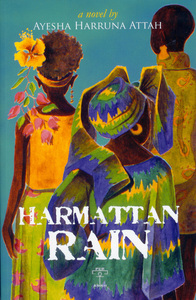
I’m currently reading: Sozaboy: A Novel in Rotten English

sozaboy

The book is written in pidgin english, so it flows differently. But I’m enjoying it so far 🙂

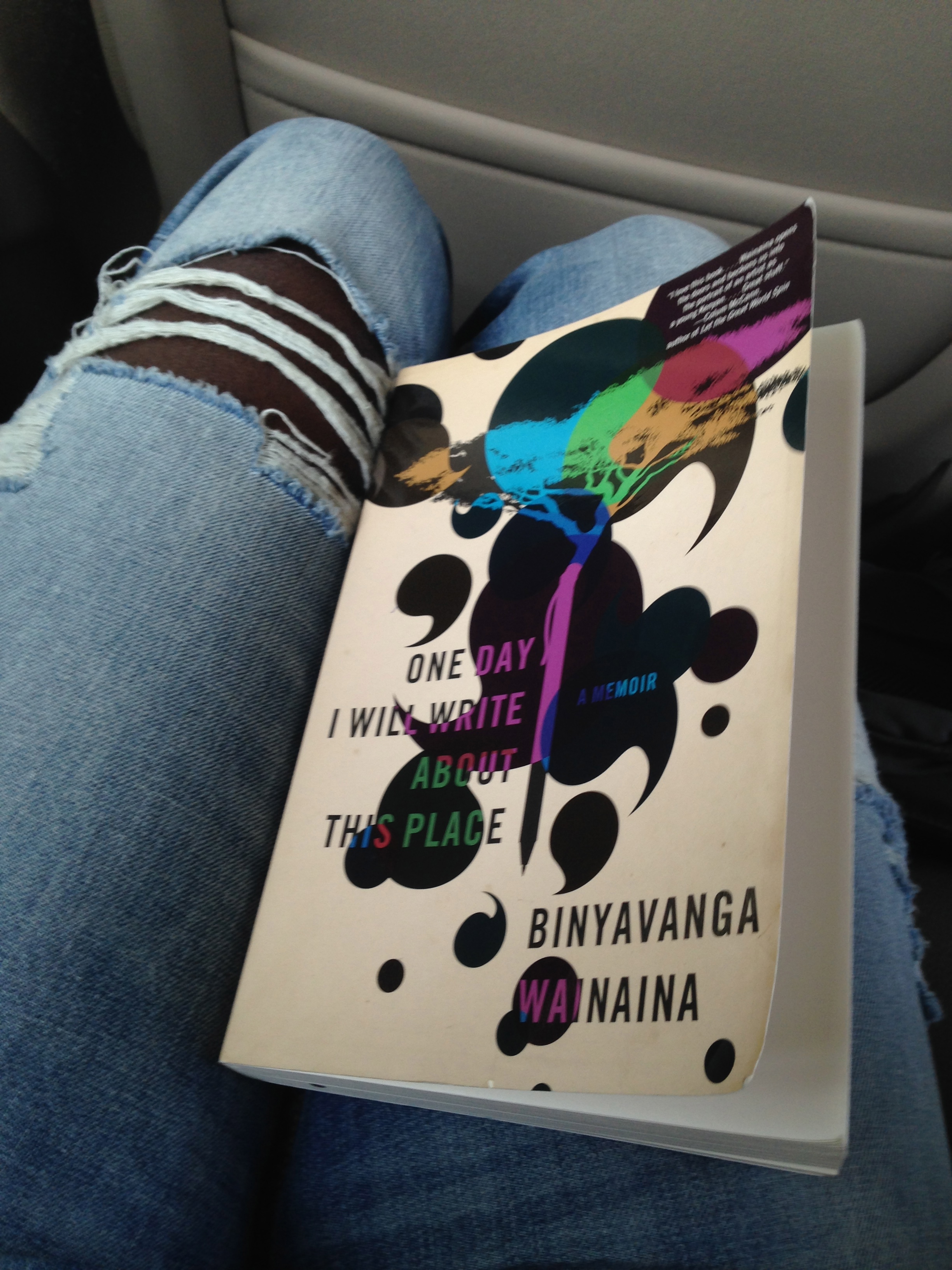
One Day I Will Write About This Place: A Memoir by Binyavanga Wainaina

Date Read: April 16th 2014

Published: 2011

Publisher: Graywolf Press

Pages: 272

9781555975913_p0_v1_s260x420

 The Blurb 

Binyavanga Wainaina tumbled through his middle-class Kenyan childhood out of kilter with the world around him. This world came to him as a chaos of loud and colorful sounds: the hair dryers at his mother’s beauty parlor, black mamba bicycle bells, mechanics in Nairobi, the music of Michael Jackson—all punctuated by the infectious laughter of his brother and sister, Jimmy and Ciru. He could fall in with their patterns, but it would take him a while to carve out his own.

In this vivid and compelling debut memoir, Wainaina takes us through his school days, his mother’s religious period, his failed attempt to study in South Africa as a computer programmer, a moving family reunion in Uganda, and his travels around Kenya. The landscape in front of him always claims his main attention, but he also evokes the shifting political scene that unsettles his views on family, tribe, and nationhood.

Throughout, reading is his refuge and his solace. And when, in 2002, a writing prize comes through, the door is opened for him to pursue the career that perhaps had been beckoning all along. A series of fascinating international reporting assignments follow. Finally he circles back to a Kenya in the throes of post-election violence and finds he is not the only one questioning the old certainties.

Resolutely avoiding stereotype and cliché, Wainaina paints every scene in One Day I Will Write About This Place with a highly distinctive and hugely memorable brush.

 ◊◊

Review – ★★★★★ (5 stars)

This is an amazing memoir. I loved every bit of it!! I’ve watched and listened to several interviews featuring Wainaina, so when I was reading this book I read it in his voice and it made my reading experience even more enjoyable! I loved how Wainaina took us through his life as a child, his secondary school years, university life to present day. I loved how he portrayed his relationship with his sister- Ciru to the point where I almost thought they were twins. I loved the grace of his mother. I appreciated the struggles he faced in finding himself while in university in South Africa. I loved the way he played with sounds and words throughout the book – ‘kimay’! I loved the pop culture references – from Lauryn Hill’s afro, to OutKast’s wardrobe, Lionel Richie’s teeth and Brenda Fassie’s tumultuous spotlight in the media.

Before reading One Day I Will Write About This Place, I scanned through Goodreads reviews and saw that readers found the memoir a bit choppy and overall, not an enjoyable read. In the beginning of the memoir, the writing style may seem ‘choppy’ because we are encountering the young, immature, happy-go-lucky, very jovial Binyavanga. The ‘choppy’ writing style is only symbolic, as we read through the mind of a young, somewhat scatter-brain, privileged boy who just enjoyed reading books, imagining random patterns in the sky and day-dreaming. Which youngster isn’t like this anyway? This memoir is anything but ‘choppy’ and once readers get passed encountering Wainaina’s hilarious boyhood antics, the reading experience gets better with every page.

I learned a lot about Kenya and the ethnic group issues they face, especially during election times. It was familiar to me, as Ghana and other African nations unfortunately face similar ethnic group discrimination as well. Overall, it was refreshing to learn about Kenya from a middle-class, male standpoint, instead of the village life stories many African novels are based on.

One Day I Will Write About This Place is an overall insightful, hilarious book. My love for Wainaina grew after he came out to the world earlier this year as being homosexual. I was proud of him, as one must live their truth! Wainaina was also recently honored in Times Magazine as one of the 100 most influential people in the world.

In January 2014, Wainaina wrote a Lost Chapter from One Day I Will Write About This Place which is an essay where he tells his mother he is a homosexual. Check it out on Africa Is A Country here.

★★★★★ (5 stars) – Amazing book, I loved it. Absolutely recommend!


IMG_4628

Purchase One Day I Will Write About This Place: A Memoir on Amazon

And the 2014 Caine Prize winner is… Okwiri Oduor!

A big congratulations to Kenya’s Okwiri Oduor for winning the 2014 Caine Prize for African Writing!!

Okwiri Oduor is the 15th winner of the Caine Prize, which is recognized as Africa’s leading literary award for short stories.

The winner was announced last night at a dinner held at the Bodleian Library in Oxford, England for all the shortlisted candidates.

Okwiri Oduor won the £10,000 prize for her short story, ‘My Father’s Head’. In the short story, the narrator deals with the loss of her father and tries to recollect buried memories of him. Even though the story is laden with issues of loneliness, mourning and sadness, its actually quite moving and has a courageous outlook on loss/death. Oduor is currently working on her debut novel and I can’t wait to read more of her work in the near future!

Okwiri-oduor-caine-prize-review-father-head-e1399954921586

 Read ‘My Father’s Head’ by Okwiri Oduor – here 

Every Day Is For The Thief by Teju Cole

Date Read: June 26th 2014

Published: March 25th 2014 (originally published in Nigeria by Cassava Republic Press in 2007)

Publisher: Random House Publishing Group

Pages: 176

9780812995787_p0_v2_s260x420

The Blurb

A young Nigerian living in New York City goes home to Lagos for a short visit, finding a city both familiar and strange. In a city dense with story, the unnamed narrator moves through a mosaic of life, hoping to find inspiration for his own. He witnesses the “yahoo yahoo” diligently perpetrating email frauds from an Internet café, longs after a mysterious woman reading on a public bus who disembarks and disappears into a bookless crowd, and recalls the tragic fate of an eleven-year-old boy accused of stealing at a local market. 

Along the way, the man reconnects with old friends, a former girlfriend, and extended family, taps into the energies of Lagos life—creative, malevolent, ambiguous—and slowly begins to reconcile the profound changes that have taken place in his country and the truth about himself.
In spare, precise prose that sees humanity everywhere, interwoven with original photos by the author, Every Day Is For The Thief is a wholly original amalgamation of fiction, memory, art, and travel writing. Originally published in Nigeria in 2007, this revised and updated edition is the first time this unique book has been available outside Africa. You’ve never read a book like Every Day Is For The Thief because no one writes like Teju Cole.

◊◊

 Review – ★★★★ (4 stars)

“Every day is for the thief, but one day is for the owner” is a Yoruba proverb that Teju Cole adopted to capture the essence of this travelogue, Every Day Is For The Thief. The protagonist of this travelogue is a Nigerian born, now naturalized American psychiatry student who lives in New York. His calm demeanor gives the book a progressive, logical flow as readers hear his thoughts. I actually read the book thinking the protagonist was Teju Cole himself… just because readers are not given much detail on the protagonist- like his name, his stature or his age. Since the novel isn’t plot driven, each chapter is a vignette where the nameless protagonist discusses different experiences of his trip to Lagos during his Christmas vacation.

A lot of the Nigerian experiences and adventures Cole writes about are common in Ghana, but not as severe! The corruption heavily practiced by the police, the hustle and bustle of the city with zooming okadas (motorcycles) on pot-holed roads, the regular power outages, the wide social and economic disparities and increased armed robbery cases in the suffering economy are all prevalent in Ghana as well.

Certain parts of the book wowed me: the widespread of internet frauds conducted in Internet cafes by ‘yahoo yahoo’ boys, the burning of a child thief in a car tire, the gangs that roam the streets of Lagos demanding thousands of naira while being ever-ready to maim citizens were pretty wild! These incidents may seem exaggerated and fictitious but I believe these things actually occur in Lagos, since I’ve heard similar stories from some Nigerian friends. After reading this novel, non-Nigerians may think twice before visiting Lagos because it was written as if Nigerians are always living on the edge of danger!

I loved how the protagonist was a ‘returnee’ as he had been away from Lagos for fifteen years. He sort of returned to Lagos as a stranger with his assimilated Western ways (of democracy). This allowed him to share his shock in the craziness and delight in being back home with a wide array of readers- both foreign and fellow Africans. The protagonist’s fluid identity will help readers unfamiliar with Nigeria to take in Lagos from an insider, yet outsiders’ lens.

This is a suitable book for anyone who would love to learn about the rambunctious nation of Nigeria! Teju Cole expertly discusses and simplifies some of the complex issues the country faces such as corruption, government issues, the oil sector, the health sector etc. Some people may be even more apprehensive about visiting the nation after reading jaw-dropping descriptions, but I’m still keen on visiting Nigeria- Abuja to be precise!

★★★★ (4 stars) – Great book. Highly recommend!

IMG_6302

Purchase Every Day Is For The Thief on Amazon

And the 2014 Caine Prize winner is…

In less than a week, the 2014 Caine Prize winner will be announced!

For those who are not familiar, the Caine Prize for African Writing, which was first awarded in 2000 is an award “open to writers from anywhere in Africa for work published in English. Its focus is on the short story, reflecting the contemporary development of the African story-telling tradition” (source).

Some notable winners of the Caine Prize include:

  • Leila Aboulela, from Sudan (2000)– author of novels Minaret, Lyrics Alley amongst other works. 
  • Binyavanga Wainaina, from Kenya (2002)– founding editor of Kwani?, author of One Day I Will Write About This Place and other essays such as “How To Write About Africa” found in various literary magazines.
  • Yvonne A. Owuor, from Kenya (2003)– author of the novel, Dust.
  • E.C Osondu, from Nigeria (2009) – author of novel, Voice of America: stories.
  • NoViolet Bulawayo, from Zimbabwe (2011) – author of novel, We Need New Names. 

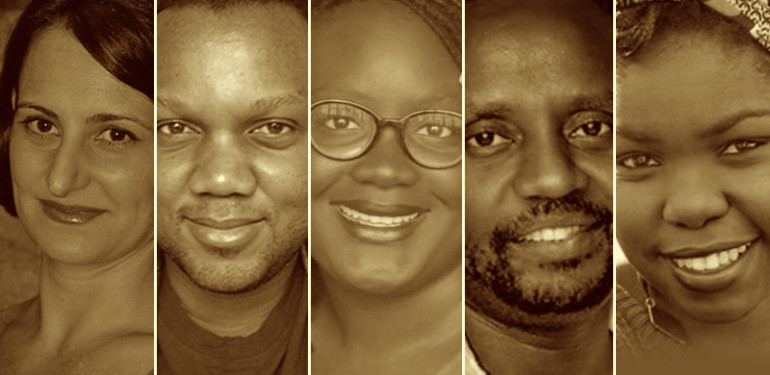
This year, the Caine Prize shortlist comprises of five amazingly talented young writers with unique short stories (L -> R):

caineprizeauthors-770x375
  • Diane Awerbuck, from South Africa. Read her story “Phosphorescence” here. Listen to the story here.
  • Tendai Huchu, from Zimbabwe. He’s also the author of novel, The Hairdresser of Harare (on my To-Read List!). Read his short story “The Intervention” here. [I couldn’t find the audio for Huchu’s story!] 
  • Efemia Chela, from Ghana/Zambia. Read her story “Chicken” here. Listen to the story here.
  • Billy Kahora, from Kenya. Read his story “The Gorilla’s Apprentice” here. Listen to the story here.
  • Okwiri Oduor, from Kenya. Read her story “My Father’s Head” here. Listen to the story here.

(The biographies for the shortlisted candidates can be found – here)

It was refreshing to see a Ghanaian on this year’s shortlist. Since I’m Ghanaian I’m naturally rooting for Efemia Chela. Her short story “Chicken” is a coming-of-age narrative. The story consists of three vignettes. In the first vignette, the protagonist who is at an awkward stage in her life- in her twenties, reflects on her extended African family and the meal they shared commemorating her successful graduation from university. Chela’s description of food in this story is so vivid, it makes your mouth water!

In the second vignette of the story, the protagonist gives an account of a recent sexual encounter (with a female). In the third vignette she tries to decide what path she is to take in life- whether to become a lawyer as her parents suggest or to follow where her heart leads. Chela’s writing style is heavily descriptive, but not a drag at all! I appreciated her unique style of narrating. It suited the awkward, twenty something year old coming-of-age theme!

Which story is your favorite? Who do you think will win the Caine Prize this year?

The winner will be announced on the 14th of July in Oxford, England. Good luck to all the shortlisted candidates!

Voice of America: Stories by E.C Osondu

Date Read: April 30th 2014

Published: October 25th 2011

Publisher: Harper Perennial

Pages: 216

VOA

The Blurb

E.C. Osondu is a fearless and passionate new writer whose stories echo the joys and struggles of a cruel, beautiful world. His characters burst from the page—they fight, beg, love, grieve, but ultimately they are dreamers. Set in Nigeria and the United States, Voice of America moves from the fears and dreams of boys and girls in villages and refugee camps to the disillusionment and confusion of young married couples living in America, and then back to bustling Lagos.
Written with exhilarating energy and warmth, the stories of Voice of America are full of humor, pathos, and wisdom—an electrifying debut from a winner of the Caine Prize for African Writing.

◊◊ 

Review – ★★ (2 stars)

I bought Voice of America: Stories because Osondu’s story “Waiting” won the Caine Prize in 2009 and I found it very touching. I wanted to read more of his work and I’m satisfied with my overall reading experience of this book.

But most of the short stories (set in both USA and Nigeria) were lackluster. I found issues like childless marriages, arranged marriages, kidnappings and fraud cliché with the plethora of African novels on the market on immigrant experience in the West. I’m used to short stories being extraordinary, shocking, disheartening, exhilarating- not simply okay, as with this collection of short stories.

My favorite story was:

“A Letter From Home”- a hilarious letter that a nagging Nigerian mother writes to her adult son in the United States, demanding extra monetary support and discussing the future bride she found for him.

Other stories had hilarious bits as well, but were still quite lackluster for me. Voice of America: Stories is a pleasant read, but not on my highly recommended list.

★★ (2 stars) – Thumbs down. I do not recommend this.

Purchase Voice of America: Stories on Amazon

Currently Reading

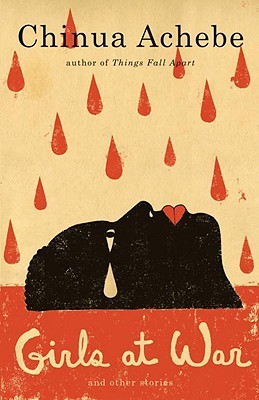
I just finished Maya Angelou’s book “Mom & Me & Mom”. Maya Angelou never disappoints! A review on that book will be coming soon.

I’m about to start:

37775

This is book 12 for my Goodreads 2014 Reading Challenge 🙂

“New Wave of African Writers With an Internationalist Bent” – NY Times

Are positive changes in African nations giving rise to the increasing number of writers and readers of African literature?

Read the New York Times article by Felicia R. Lee, where she discusses the increasing popularity of African literature in the United States.


What do you think: Are African writers and African novels in vogue now?