The Housemaid by Amma Darko

Date Read: May 7th 2015

Published: 1998

Publisher: Heinemann (African Writer’s Series)

Pages: 107

the housemaid

The Blurb

A dead baby and bloodstained clothes are discovered near a small village. Everyone is ready to comment on the likely story behind the abandoned infant. The men have one opinion, the women another. As the story rapidly unfolds it becomes clear that seven different women played their part in the drama. All of them are caught in a web of superstition, ignorance, greed and corruption.

◊◊

Review – ★★★ (3 stars)

I bought The Housemaid back in 2008, but finally gave this book a chance and finished reading it in May of this year. This is such a messy, messy story- but in a good way! This novel tells a story of how a poor family in a Ghanaian village decides to jilt a rich businesswoman in the city, by using their daughter – who becomes a housemaid, to attempt to steal this rich woman’s wealth. As usual, Amma Darko tackles a lot of social issues in this novel and this is why I respect her as a writer. Darko explores issues of socio-economic differences between the rich and the poor, city life versus village life, feminism, spinsterhood, gender roles, religious beliefs and superstition. I liked how the story was consummated at the end, even though this novel consists of a series of crazy events.

But I was a little disappointed with Amma Darko’s writing style in this novel. The writing was choppy and too colloquial for my liking. It was quite annoying to spot basic grammatical errors and the misusage of words like ‘your’ and ‘you’re’ in some chapters. Nonetheless, the social issues addressed in this book made me appreciate the story. Amma Darko’s novel Beyond the Horizon is still a gem and a more meticulously written book than The HousemaidThe Housemaid is more of a 2.5 stars rating for me.

★★★ (3 stars) – Good book. I recommend it, I guess.

Purchase The Housemaid on Amazon

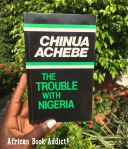
The Trouble with Nigeria by Chinua Achebe

Date Read: April 5th 2015

Published: 1983

Publisher: Heinemann

Pages: 68

Chinua Achebe

The Blurb

The eminent African novelist and critic, here addresses Nigeria’s problems, aiming to challenge the resignation of Nigerians and inspire them to reject old habits which inhibit Nigeria from becoming a modern and attractive country. In this famous book now reprinted, he professes that the only trouble with Nigeria is the failure of leadership, because with good leaders Nigeria could resolve its inherent problems such as tribalism; lack of patriotism; social injustice and the cult of mediocrity; indiscipline; and corruption.

◊◊

Review – ★★★★★ (5 stars)

“The trouble with Nigeria is simply a failure of leadership…The Nigerian problem is the unwillingness or inability of its leaders to rise to the responsibility, to the challenge of personal example which are the hallmarks of true leadership.” pg. 1

The title, The Trouble with Nigeria should actually be called ‘The Trouble with Africa’. In this short book, Achebe questions the motives of the leaders and citizens of Nigeria. Achebe systematically breaks this book into ten chapters, where he discusses the various problems Nigeria was facing in 1983. Some of these chapters are entitled: Tribalism, Indiscipline, Corruption, False Image of Ourselves, Social Injustice and the Cult of Mediocrity, amongst others.

This book is simply brilliant. It is short and straight to the point! Everyone should read this, especially African politicians and people in positions of power. But do African politicians read? A myriad of books in the African Literature genre mirror the happenings of society. Authors use their amazing talent and writing abilities to articulate the faults of our leaders and societies through their stories/fictitious characters. Do the leaders of our societies read these books to hear how the layman feels about the conditions of their nations? Do they care? Even though this book was written in 1983, most of the issues Achebe discusses hold true to Ghana, and other African countries as well- even in present day 2015. Corruption, indiscipline, tribalism, lack of patriotism, illiteracy and greed are killing administrations in several African nations. We honestly need to do better as a people and this book explains why with boldness, style and sharp wit. I loved this! Thank you Chinua Achebe.

My favorite quotes from The Trouble with Nigeria:

“Nigerians are what they are only because their leaders are not what they should be.” pg. 10

“A true patriot will always demand the highest standards of his country and accept nothing but the best for and from his people. He will be outspoken in condemnation of their short-coming without giving way to superiority, despair or cynicism. That is my idea of a patriot.” pg. 16

“Look at our collapsing public utilities, our inefficient and wasteful parastatals and state-owned companies… If you want electricity, you buy your own generator; if you want water, you sink your own bore-hole; if you want to travel, you set up your own airline. One day soon, said a friend of mine, you will have to build your own post office to send your letters!” pg. 20 (Yes, this holds true to Ghana as well, especially issues of electricity *sigh*).

“I must now touch, however briefly, on the grace undermining of national discipline which the siren mentality of Nigerian leaders fosters. In all civilized countries the siren is used in grave emergencies by fire engines, ambulances and the police in actual pursuit of crime. Nigeria, with its remarkable genius of travesty, has found a way to turn yet another useful invention by serious-minded people elsewhere into a childish and cacophonous instrument for the celebration of status.” pg. 34 (Sadly, this is a daily occurrence in Ghana as well. Especially during rush hour).

“My frank and honest opinion is that anybody who can say that corruption in Nigeria has not yet become alarming is either a fool, a crook or else does not live in this country.” pg. 37 (This guy was bold, sheesh!)

“Knowledgeable observers have estimated that as much as 60 percent of the wealth of its nation is regularly consumed by corruption. I have no doubt that defenders of our system would retort: Mere rumor! Where is the proof? No one can offer ‘satisfactory’ proof for the simple reason that nobody issues a receipt for a bribe or for money stolen from the public till.” pg. 41

★★★★★ (5 stars) – Amazing book, I loved it. Absolutely recommend!

img_6478

Purchase The Trouble With Nigeria on Amazon

All God’s Children Need Traveling Shoes by Maya Angelou

Date Read: April 29th 2015

Published: 1991 (first published in 1986)

Publisher: Vintage Books

Pages: 208

Angelou1

 The Blurb

In 1962 the poet, musician, and performer Maya Angelou claimed another piece of her identity by moving to Ghana, joining a community of “Revolutionist Returnees” inspired by the promise of pan-Africanism. All God’s Children Need Traveling Shoes is her lyrical and acutely perceptive exploration of what it means to be an African-American on the mother continent, where color no longer matters but where American-ness keeps asserting itself in ways both puzzling and heartbreaking. As it build on the personal narrative of I Know Why The Caged Bird Sings and Gather Together In My Name, this book confirms Maya Angelou’s stature as one of the most gifted autobiographers of our time.

 ◊◊

Review – ★★★★ (4 stars)

All God’s Children Need Traveling Shoes is book five of Maya Angelou’s autobiography series. I read books one, two and three when I was younger; I’ll dig through my Mom’s old books and read book four soon! Check out the books in her autobiography series – here.

This autobiography takes place in Ghana (mostly Accra) in the 1960’s, shortly after Ghana’s independence in 1957. In All God’s Children Need Traveling Shoes, Maya Angelou joins a community of disenfranchised African-Americans/Negro Americans (they called themselves the ‘Revolutionist Returnees’) on their quest to explore, understand and aid the Motherland in any way they can. While in Ghana, Angelou finds a job as an administrator at the University of Ghana – Legon and at a local newspaper as a journalist. Angelou takes us through the different conversations and interactions she has with the kind-hearted Ghanaians during her stay. I loved how most Ghanaians made her feel at home; Ghanaians are very hospitable – especially to foreigners, and this book definitely highlights this fact. My country did me proud in this book! I was glad that Maya Angelou was living with a community of African-Americans, but mostly interacted with Africans throughout her stay in Ghana – there was a good balance.

An interesting part in the book is when Angelou and the other African-Americans protested in front of the American Embassy in Accra on the same day of the March On Washington, lead by Martin Luther King Jr in the United States. The purpose of the March On Washington and the simultaneous protest at the American embassy in Accra were to demand the equal rights of people of all colors, as well as desegregation in the United States. W.E.B DuBois was also in Ghana at the time – he gained Ghanaian citizenship and lived in Ghana during the latter part of his life. My favorite part of the book is when Malcolm X arrives in Ghana and Angelou along with the other ‘Revolutionist Returnees’ do their best to make him feel at home, arrange various talks for him around Accra and even pull some strings for him to meet President Kwame Nkrumah. The historical snapshots in this book are awesome! It was amazing to read about these iconic leaders being regular people while making history, through Angelou’s lens.

Angelou struggled a lot in this book with her identity and facing the facts of the past. It constantly angered her to recollect how Africans sold other Africans into slavery, giving rise to present day African-Americans and other people of African descent in the diaspora. Maya Angelou couldn’t even visit the Elmina Castle – which housed millions of slaves at the Cape Coast of Ghana, because the dehumanizing ordeals her ancestors endured at this historical venue prior the Trans-Atlantic journey nauseated her. I appreciated her quest to live and understand the ‘black experience’ in Africa – Ghana, which is a place where almost everyone is black. This is truly an informative, fun, fast read, as Angelou articulates her experiences with such ease and humor. This memoir ends on a satisfying note for me. I recommend this to anyone who appreciates Black history and those who wish to travel to the continent of Africa on the quest for his/her identity.

★★★★ (4 stars) – Great book. Highly recommend!

My Mom’s lovely Maya Angelou collection above. These books are super old!

Purchase All God’s Children Need Traveling Shoes on Amazon

Excerpt from ‘Saturday’s Shadows’ by Ayesha H. Attah

If you were a fan of Harmattan Rain, you would probably love Ayesha Harruna Attah’s second novel, Saturday’s Shadows as well! I recently read an excerpt (8 pages) from the novel and so far, so good 🙂

Saturday's Shadows

Check out the synopsis of Saturday’s Shadows:

           A thin film exists between sanity and madness, learn the protagonists of Saturday’s Shadows, as they try to find and hold on to love in the volatile world of 1990s West Africa. After a 17-year military dictatorship, the members of the middle class Avoka family lurch towards destruction as their country is trying to find its footing. The father, Theo, is recruited to write the memoirs of the dictator-turned-president whom he both loathes and reveres. Zahra, matriarch of the Avoka household, rekindles an affair with an old lover and barely keeps her family and sanity together. Theo and Zahra’s son Kojo has just started the boarding school of his dreams but finds out sometimes dreams should remain dreams. Their help, Atsu, a recent transplant from the village, struggles to understand big city living with all its temptations—money, men, and lust—and a family in which the mother doesn’t possess a single domestic bone. The climate they live in is politically complex, a time so tenuous the country could easily dip back into its military past.

This multi-voiced novel not only paints a picture of these tumultuous changes, but also shows that tenderness can persist even when everything else is being rent apart. Influenced by Naguib Mahfouz’s Palace Walk and William Faulkner’s As I Lay Dying, Saturday’s Shadows allows its four characters to narrate how they will do almost anything to find themselves.

Read the excerpt from Saturday’s ShadowsHERE.

I purchased Saturday’s Shadows a couple of weeks ago from Vidya Bookstore in Osu, Accra. If you’re in Accra, try and pick it up! The book is also available on Amazon. Expect a review soon.

Check out my review of Harmattan Rainhere.

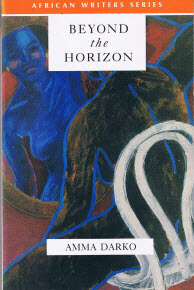
Beyond the Horizon by Amma Darko

Date Read: March 31st 2015

Published: 1995

Publisher: Heinemann (African Writers Series)

Pages: 140

beyond-the-horizon

The Blurb

Gazing at her naked body in the mirror, Mara reflects on her transformation from naïve Ghanaian village girl into a prostitute in a German brothel.

Mara has been deceived by her husband, Akobi, into coming to Europe to find a ‘Paradise’ but as the truth about Akobi and her new life unfolds she realizes she is trapped. The expectations of her family in Africa force her to remain, living a lie.

Beyond the Horizon is a gripping and provocative story of the plight of African women in Europe, and the false hopes of those they leave behind.

 ◊◊

Review – ★★★★ (4 stars)

Oh what a tragic novel this is! I don’t think Amma Darko gets the shine she rightfully deserves for this book or for her writing in general. Her novel – The Housemaid has been sitting on my bookshelf for years now. I’ll surely read it soon, as I hear its pretty amazing. With that said, Beyond the Horizon is a heart-wrenching masterpiece and a testament to some of the unfair effects of our patriarchal societies.

This is a story of a Ghanaian village girl – Mara, who enters into an arranged marriage with a man – Akobi, from the city who works at the Ministries. When Mara finally moves to the city to live in Akobi’s one bedroom shabby shelter, he constantly abuses her. Mara, who is meek, evergreen to city-life and quite stupid (that’s my opinion, sorry) cooks, cleans their home and even sells various items at the market to support Akobi while tolerating his beatings, sadistic sexual demands and sleeping on a mat on the concrete floor while Akobi enjoys his dried-grass mattress. In my eyes, Mara was Akobi’s slave.

With the help of a ‘connection’ man, Akobi travels to Europe with the intention of working to raise money to advance his social standings in the city. Akobi traveling to Europe brings honor to his village and Mara’s family as he is seen as a man of great prestige. Months after Akobi leaves for Europe, Mara attempts to modernize herself, in the attempt to make Akobi fall in love with her. To Mara’s surprise Akobi later arranges for her to join him in Europe and Mara is more than delighted since she never dreamed that stepping foot in Europe would ever be her fate. Once Mara arrives in Europe (Germany, to be exact) with the aid of the ‘connection’ man, readers witness the manipulative ordeals Mara endures in a foreign land that leave her stranded.

I’m glad I read this book even though Mara frustrated me deeply throughout the story. Mara had no sense of her worth and sadly, her fate was determined by her chosen husband – Akobi, who did not love her. Akobi was a terribly wicked, self-absorbed man who used Mara for everything that she was. I waited so long for Mara to retaliate, to come to her senses and run away, to stop fantasizing about her husband finally loving and appreciating her; but rather, she consistently endured Akobi’s verbal and physical abuse till almost the end of the novel.

Amma Darko skillfully weaves-in a lot of themes throughout this story that make this novel relevant to present day life. Some of these themes are: patriarchy, racism, colorism, domestic violence, pornography, sex exploitation, drug abuse, prostitution, the myths of living abroad (‘Europe is heaven’), immigration, feminism, womanhood, sisterhood (between Mara and Mama Kiosk in the city; between Mara, Vivian and Kaye in Germany), village life versus city life, modernity etc.

I gave Beyond the Horizon 4 stars because Amma Darko does a great job at pulling readers’ emotions with the rawness in her style of writing! She exposes readers to the horrible realities of the helpless victims of male sex exploitation with such expertise – you would think she was a surviving victim herself. But to be honest, I don’t think this book is for everyone. This is not the type of book you read for pleasure, or to relax and fill a void only enjoyable fictitious literary works satisfy you with. Beyond the Horizon is a depressing novel and wasn’t a fun read for me especially in the beginning as descriptions of domestic abuse were quite harsh. Towards the middle of the storyline, descriptions of (consensual and non-consensual) sexual encounters between Mara and Akobi and other characters in the book made me uncomfortable and slightly upset – for example:

“He was lying on the mattress, face up, looking thoughtfully at the ceiling when I entered. Cool, composed and authoritative, he indicated with a pat of his hand on the space beside him that I should lie down beside him. I did so, more out of apprehension of starting another fight than anything else. Wordlessly, he stripped off my clothes, stripped off his trousers, turned my back to him and entered me. Then he ordered me off the mattress to go and lay on my mat because he wanted to sleep alone.” pg.22

Please note: Men are generally painted as horrendous beings in this novel. I’m assuming Amma Darko wrote Beyond the Horizon as a feminist narrative because readers surely get a deep understanding of the power men hold in society, as they manipulate, deceive and use aggression in oppressing the rights of women – in this story and sometimes in reality.

Some provocative quotes from Beyond the Horizon:

“I mean, Akobi beat me a lot at home, yes, but somehow I identified beatings like this with home. That African men also beat their wives in Europe somehow didn’t fit into my glorious picture of European life.” pg. 73

“At first I didn’t understand, because here, we hear always that African people are hard workers and love work because God made them specially for the hard work of the world…” pg. 99 (this was how a white woman in Germany viewed Africans. My heart skipped a beat reading this).

“Why couldn’t I take control of my own life, since after all, I was virtually husbandless and, what did my husband care about a woman’s virtue? If I was sleeping with men and charging them for it, it was me giving myself to them. The body being used and misused belonged to me.” pg. 118 (it took Mara several years of beatings and coercions to finally realize she was in control of her own life. *sigh*).

As depressing as Beyond the Horizon is, it is definitely a relevant story that I believe everyone should read – even if reluctantly.

 ★★★★ (4 stars) – Great book. Highly recommend!

IMG_9762

Purchase Beyond the Horizon on Amazon

National Poetry Month 2015 – 3 poems

National (USA) Poetry Month is slowly coming to an end! In honor of this month dedicated to poetry, I’ve decided to showcase some of my favorite poems.

I’m not a huge poetry fan, but below are three poems: (one each) African-American, Caribbean and African poems that I love. Hope you enjoy!


African-American poem

In 2008 during my freshman year of undergrad (Middlebury College), my first year seminar class was on Urban Chicago (shout out to Prof. Will Nash!). We learned a lot about Chicago and read a lot of literature from there as well, including the works of Richard Wright, Ida B. Wells and Gwendolyn Brooks. The poem below was my favorite from Brooks. It’s speaks volumes on society’s warped perceptions of beauty and colorism even among children. Enjoy!


The Ballad of Chocolate Mabbie by Gwendolyn Brooks

It was Mabbie without the grammar school gates.

And Mabbie was all of seven.

And Mabbie was cut from a chocolate bar.

And Mabbie thought life was heaven.

The grammar school gates were the pearly gates,

For Willie Boone went to school.

When she sat by him in history class

Was only her eyes were cool.

It was Mabbie without the grammar school gates

Waiting for Willie Boone.

Half hour after the closing bell

He would surely be coming soon.

Oh, warm is the waiting for joys, my dears!

And it cannot be too long.

Oh, pity the little poor chocolate lips

That carry the bubble of song!

Out came the saucily bold Willie Boone.

It was woe for our Mabbie now.

He wore like a jewel a lemon-hued lynx

With sand-waves loving her brow.

It was Mabbie alone by the grammar school gates.

Yet chocolate companions had she:

Mabbie on Mabbie with hush in the heart.

Mabbie on Mabbie to be.


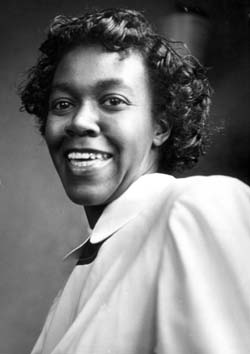
GBrooksGwendolyn Brooks was a Pulitzer Prize-winning poet, professor, and lived in Chicago all her life. This poem was taken from her collection of poems: A Street in Bronzeville (1945).


Caribbean poem: Saint Lucia

The next poem is one I recently stumbled upon by Saint Lucia native, Derek Walcott. I loved it’s calmness and reassurance. Enjoy!


Love After Love by Derek Walcott

The time will come

when, with elation

you will greet yourself arriving

at your own door, in your own mirror

and each will smile at the other’s welcome,


and say, sit here. Eat.

You will love again the stranger who was your self.

Give wine. Give bread. Give back your heart

to itself, to the stranger who has loved you


all your life, whom you ignored

for another, who knows you by heart.

Take down the love letters from the bookshelf,


the photographs, the desperate notes,

peel your own image from the mirror.

Sit. Feast on your life.

derekwalcottDerek Walcott is a Saint Lucian playwright and poet. In 1992 he received the Nobel Prize in Literature, amongst other awards throughout his successful career. Source: http://www.poemhunter.com/poem/love-after-love/ (accessed April 22nd 2015).


African poem: Uganda

My two friends from college – Harrison Kihonge, from Kenya and Motlatsi Nkhahle, from Lesotho used to call me ‘Lapobo’. It used to irritate me because I didn’t know whether ‘Lapobo’ was a compliment or an insult! I finally got them to tell me what ‘Lapobo’ meant and they told me it’s a name/term used in a poem they studied back at their respective United World College (UWC) high schools by Cliff Lubwa p’Chong. Enjoy!


The Beloved by Cliff Lubwa p’Chong

Lapobo,

Tall but not too tall,

Short but not too short,

Lapobo,

Her teeth are not as ash

Nor the colour of maize flour,

Her teeth are as white as fresh milk.

The whiteness of her teeth

When I think of her

Makes food drop from my hand.

Lapobo,

Black but not too black,

Brown but not too brown,

Her skin colour is just between black and brown.

Lapobo,

Her heels have no cracks,

Her palms are smooth and tender to touch,

Her eyes—Ho they can destroy anybody.

Lubwa p’Chong was a playwright and poet from Uganda. This poem can be read in a 1960’s anthology: Poems from East Africa edited by David Cook and David Rubadiri.

 I actually really love this poem! Now I know ‘Lapobo’ surely is not an insult. My friend Harrison Kihonge recently posted it on my Facebook wall, hence my access to the full poem.


What are some of your favorite African-American, Caribbean and/or African poems? Please do share!

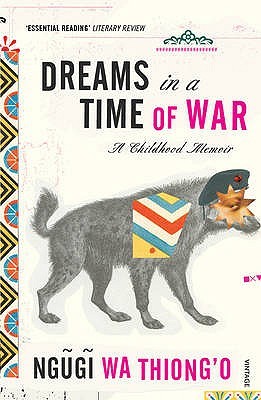
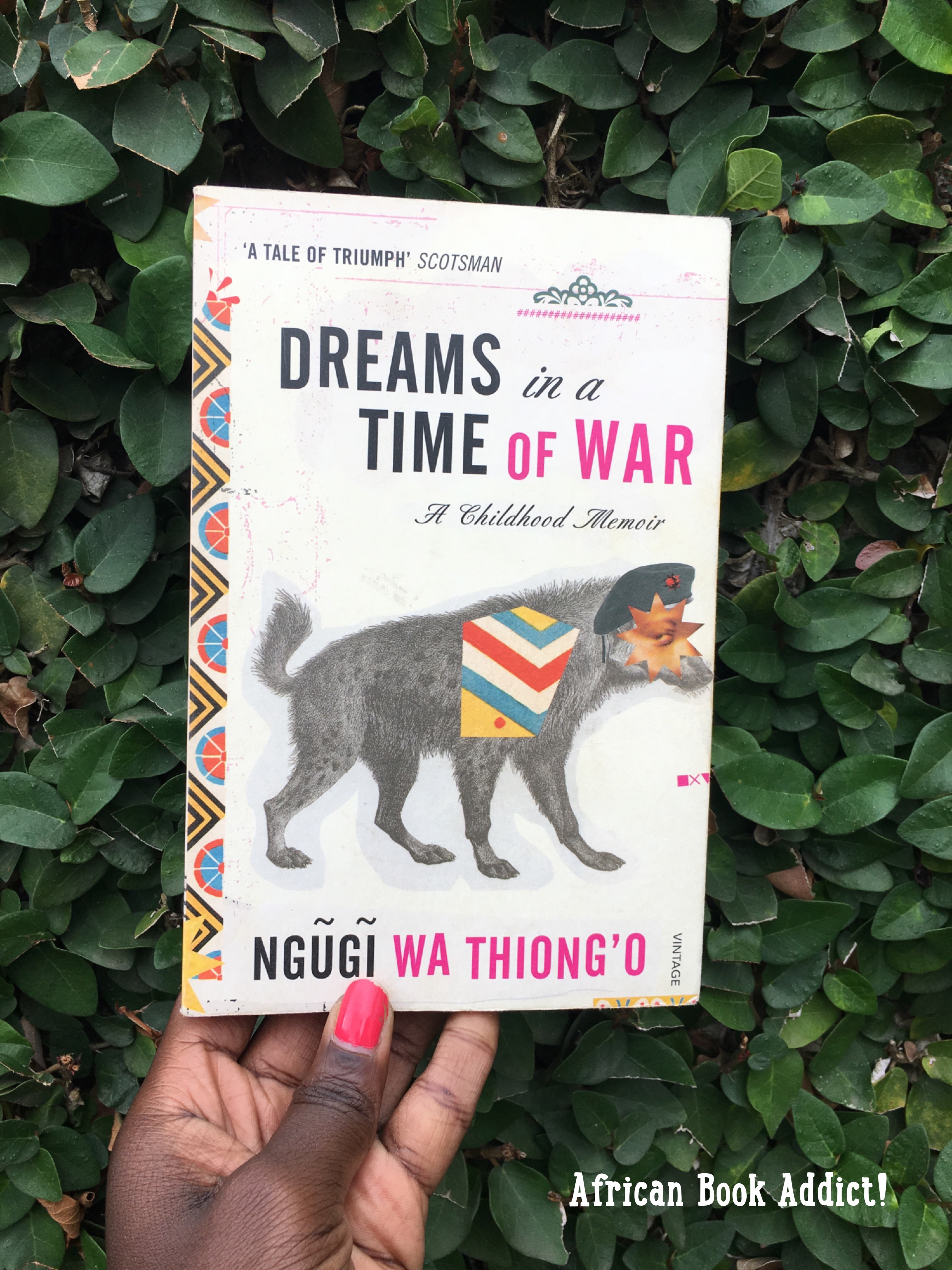
Dreams in a Time of War: A Childhood Memoir by Ngūgī wa Thiong’o

Date Read: March 22nd 2015

Published: 2010

Publisher: Vintage Books

Pages: 256

NgugiWaThiongo

The Blurb

Ngūgī wa Thiong’o is born the fifth child of his father’s third wife, in a family that includes twenty-four children to four different mothers. He spends his 1930s childhood as the apple of his mother’s eye, before attending school to slake what is considered a bizarre thirst for learning.

As he grows up, the wider political social changes occurring in Kenya begin to impinge on the boy’s life in both inspiring and frightening ways. Through the story of his grandparents and parents, and his brothers’ involvement in the violent Mau Mau uprising, Ngūgī deftly etches a tumultuous era, capturing the landscape, the people and their culture, and the social and political vicissitudes of life under colonialism and war.

◊◊

Review  ★★★★ (4 stars)

I didn’t think this book would have such an impact on me. I was a bit emotional by the end of the novel. Every time I read a Kenyan novel, I’m hungry to learn more about the country’s past. This is a very touching memoir. Ngūgī wrote this with such love and care and I admire him a lot – especially his family, which was headed by his resilient mother.

Kenya’s history plays a large role in this book, for obvious reasons. It’s as if Kenya was a separate character on its own, being abused by colonial masters (the British) while tolerating several ethnic group divisions and tensions from its fellow citizens. Commentary on the civil war, Jomo Kenyatta – Kenya’s founding father, Mbiyu Koinange – a highly educated politician and Kenyatta’s right hand man, Mau Mau guerrillas, the politics of the Kenyan educational system, the role of the Indians in Limuru etc are all discussed at length in this memoir. If you are not familiar with Kenyan history, prior knowledge is not necessarily needed to enjoy this book because Ngūgī does a great job at thoroughly explaining various historical events. I was thrilled to read on how Black Americans like Booker T. Washington (through Tuskegee University), Martin Luther King Jr. and Marcus Garvey supported and played vital roles in encouraging Kenyan independence. I loved how there was unity of all peoples of African descent in demanding their freedom from white rule.

Don’t worry- this memoir is not all about politics. Readers get insights into the dynamics of Ngūgī’s polygamous family and the effects the family structure had on him. Family members like his mother, Good Wallace (his older brother), Kabae (one of his half brothers who fought in World War II) were important in shaping Ngūgī into the man he is now, for various (polarizing) reasons. Family units play a huge role in the future of children and this memoir demonstrates this heavily.

Ngūgī’s dedication to following his dreams even during Kenya’s unstable state was truly admirable. He had a passion for learning and thanks to a pact he made with his mother, he vowed to pursue his education – even in the times of war. The vicissitudes of life Ngūgī and his family faced in Kenya during the 1940’s will encourage you to keep fighting to achieve any personal goals or dreams you have. It’s wonderfully inspiring.

I feel like I’m a member of Ngūgī’s family now that I’ve read this! The only problem I had with this book was that there were too many different names to keep up with. Try and read this book in a couple of days in order to keep track of all the names mentioned. If you haven’t read any of this great novelist’s books yet, this could be a great place to start. I absolutely recommend this. Please pick it up if you can!

 ★★★★ (4 stars) – Great book. Highly recommend!

Purchase Dreams in a Time of War: A Childhood Memoir on Amazon

Sula by Toni Morrison

Date Read: February 16th 2015

Published: 1982

Publisher: Plume

Pages: 192

Sula

The Blurb

This rich and moving novel traces the lives of two black heroines from their close-knit childhood in a small Ohio town, through their sharply divergent paths of womanhood, to their ultimate confrontation and reconciliation.

Nel Wright has chosen to stay in the place where she was born, to marry, to raise a family, and become a pillar of the black community. Sula Peace has rejected the life Nel has embraced, escaping to college, submerging herself in city life. When she returns to her roots, it is as a rebel and a wanton seductress. Eventually, both women must face the consequences of their choices. Together, they create an unforgettable portrait of what it means and costs to be a black woman in America.

◊◊

Review – ★★★ (3 stars)

Toni Morrison is a brilliant writer. Some bits of this novel were a bit dry and uninteresting, but Sula is a lovely story.

Sula Peace and Nel Wright were childhood friends from the same (fictional) town – the Bottom, in Ohio in the 1930’s. Nel came from a stable, strict household, while Sula was from a less strict household that did not seriously abide by social conventions. Despite Nel’s mother’s warnings, Nel constantly spent her time with Sula. They were inseparable, shared deep secrets (Chicken Little’s death) and were sometimes mistaken as sisters.

After high school, Sula decided to attend college in Nashville, while Nel immersed herself into motherhood, devoting her life to her husband and her three sons. When Sula returns to the Bottom, 10 years after she graduated, it was obvious that her relationship with Nel was not as intimate as before. Commentary from residents of the Bottom suggested that Sula had become a promiscuous woman who had affairs with married men, but Nel disregarded the gossip and continued to believe in the sisterhood they shared.

I really disliked Sula Peace. She was a selfish, wicked soul. Nel Wright was a bit more innocent and didn’t live for herself – I feel she lived for her husband, her kids, and Sula. I found the demise of Nel and Sula’s sisterhood predictable- especially given their similar YET very different character traits. Other characters like Eva (Sula’s one-legged grandmother), Hannah (Sula’s mother) and Shadrack help consummate the storyline in a way where readers learn life lessons from them. I loved Eva’s character- she symbolized a strong, resilient and almost heartless matriarch in my eyes.

Overall, it is Morrison’s unique writing style that made me appreciate this novel. Sula was not an exciting or extremely intriguing read for me. I’ll rummage through my Mom’s bookshelves and read another Toni Morrison soon. Maybe I’ll read The Bluest Eye or Tar Baby next.

★★★ (3 stars) – Good book. I recommend it, I guess.

Purchase Sula on Amazon