Cover Reveal + Q&A | The Deep Blue Between by Ayesha Harruna Attah

Hello everyone!

It’s been a very trying time, worldwide. I hope everyone is staying (home) safe and not allowing COVID-19 to get us down. Hopefully, all this chaos will subside sooner than later – let’s stay positive!


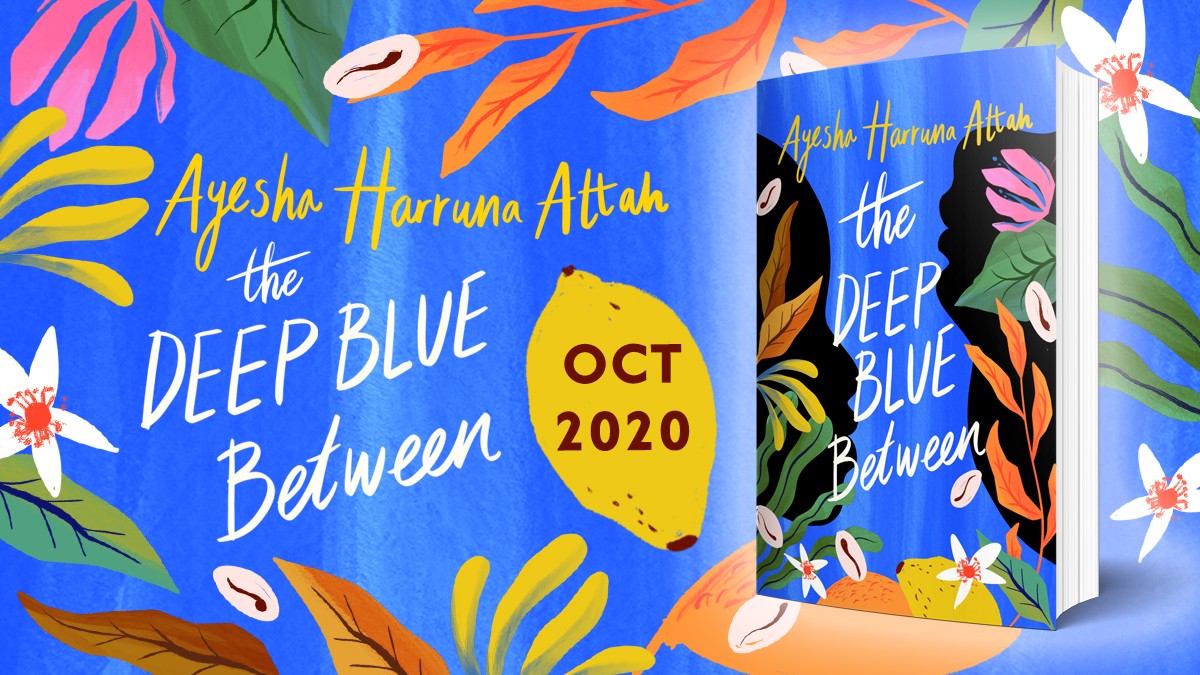
Anyone who frequents this book blog knows I admire the work of Ghanaian writer, Ayesha Harruna Attah. I’ve read (and reviewed) all of her books and I just really resonate with her writing – the subject matter, the writing style, the character-driven plots etc. In my annual post on New Books To Anticipate this year, I mentioned that she would be releasing a YA novel. Today, we are revealing the book cover of this new novel – The Deep Blue Between, which will be published by Pushkin Press in October 2020!

โ€ขโ€ข

Check out the synopsis for The Deep Blue Between below:

A sudden, brutal slave raid tears twins Hassana and Vitรณria apart, taking them far away from each other. Hassana goes to Accra, where she builds a new family and finds a place for herself in the political world; Vitรณria goes to Salvador, Bahia where she lives and works with a Priestess, worshipping the gods of the motherland.

But no matter the different obstacles and adventures they encounter, the sisters never forget one another. They remain bound together by their dreams, and slowly their fates begin to draw them back together.

Rich in historical detail, this epic, moving novel evokes a time of great change in West Africa, when slavery has been abolished but colonialism is taking hold, through the lives of two bold young women who are shaping their changing society.

[Cover design by Helen Crawford-White]

A TEEN FEMINIST EPIC OF LOVE, COURAGE AND DETERMINATION

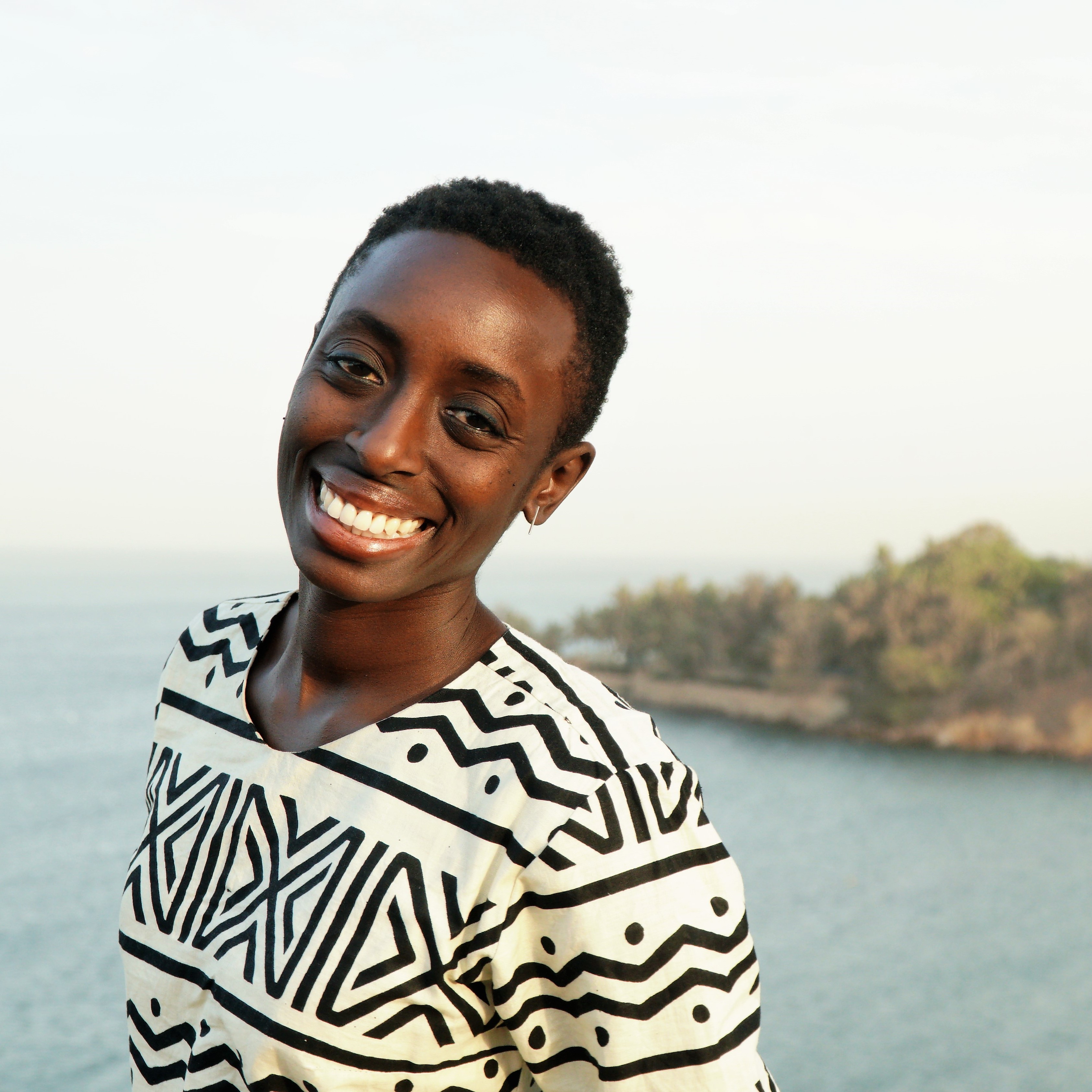
I connected with Ayesha for some insight into The Deep Blue Between. Enjoy our short book chat below, where she talks about the inspiration for her forthcoming novel and gives us a sneak-peek into the main characters!

(note โ€“ โ€˜AHAโ€™ represents Ayesha Harruna Attahโ€™s responses)

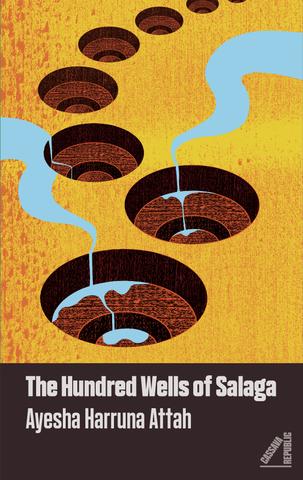
  • The Deep Blue Between is your 4th forthcoming novel, congratulations on this achievement! The book cover is so vibrant and glorious. It feels like yesterday that your 3rd novel, The Hundred Wells of Salaga was published. What was your inspiration for this new novel and how long did it take you to write?

AHA: Thank you! The Hundred Wells of Salaga was the direct inspiration for The Deep Blue Between. This new novel follows twins Hassana and Vitรณria after they are separated in a human caravan โ€“ the same one which sent Aminah to Kintampo and then on to Salaga. Hassana and Vitรณria are Aminahโ€™s little sisters! After writing The Hundred Wells of Salaga, I couldnโ€™t let go of the girls and had to find out what happened next. Since I knew the sisters well โ€“ or at least what they were like at age nine โ€“ the story poured out of me and I was able to complete a first draft of the book in five months.


  • From my knowledge of your previous novels, this is your first book in the (Young Adult) YA genre. Did this genre affect your approach in writing The Deep Blue Between? Does writing a YA novel target a specific audience?

AHA: Yes, it is my first YA book, but in my second novel Saturdayโ€™s Shadows, Kojo, one of the four protagonists, is a teenager. I had such a good time writing his character that I was excited for the chance to do so again, even if this time I was working with teenagers living in the 19th century. I let the girls guide me and just wrote the story. It was in rewriting that I started worrying about which parts might have been a stretch for a young adult reader.

Even though I wanted to write a book that teenage Ayesha would have loved to get lost in, I also know that when done well, even adults love YA!


  • What was the best part about writing Hassana and Vitรณriaโ€™s dynamic?

AHA: I think it was the magic of their journeys. It almost felt as if I were a medium. All I had to do was allow my senses to be open to let their stories in. I also especially loved researching the worlds of Accra, Lagos, and Bahia in the 1890s.


  • While reading Harmattan Rain, I saw bits of my life reflected in Sugriโ€™s character and in The Hundred Wells of Salaga, Wurcheโ€™s character traits mirrored some of mine. How much of your personal life is seeped into The Deep Blue Between?

AHA: My family is filled with twins, so I tried to tap into that energy to write The Deep Blue Between; even my last name โ€“ Attah โ€“ means twin. Although Hassana and Vitรณria are so different, itโ€™s inevitable that they both have parts of me. While I probably identify more with Vitรณriaโ€™s introversion, some of Hassanaโ€™s compulsions are totally mine!


  • Why would you like readers to indulge in your forthcoming, The Deep Blue Between? What would you like us to take away from the story?

AHA: I really enjoyed working on The Deep Blue Between and I hope the reader feels that sense of joy and wonder that kept me going as I wrote. Itโ€™s a fantastic story about the connection between people, and the unseen things that are at work in this strange world of ours โ€“ the strength of community and the power of dreams.
Special thanks to Elise Jackson, Poppy Stimpson (of Pushkin Press) + the rest of the team at Pushkin Press and Ayesha Harruna Attah for this wonderful Cover Reveal collaboration!

Pre-order The Deep Blue Between on Amazon


P.S: GHANAIAN readers – stay tuned for a giveaway of The Deep Blue Between, soon!

Check out my thoughts on Ayesha Harruna Attahโ€™s novels:

Harmattan Rain | Saturdayโ€™s Shadows | The Hundred Wells of Salaga 

#ReadGhanaian๐Ÿ‡ฌ๐Ÿ‡ญ Book chat with Ayesha Harruna Attah

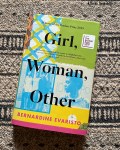
Girl, Woman, Other by Bernardine Evaristo

Date Read: February 22nd 2020

Published: May 2nd 2019

Publisher: Hamish Hamilton

Pages: 453

The Blurb

Teeming with life and crackling with energy โ€” a love song to modern Britain and black womanhood.

Girl, Woman, Other follows the lives and struggles of twelve very different characters. Mostly women, black and British, they tell the stories of their families, friends and lovers, across the country and through the years.

Joyfully polyphonic and vibrantly contemporary, this is a gloriously new kind of history, a novel of our times: celebratory, ever-dynamic and utterly irresistible.

ย โ—Šโ—Š

Review โ€“ โ˜…โ˜…โ˜…โ˜…โ˜… (5 stars)

Whew! It’s been a while since I read and reviewed a 5-star book. Girl, Woman, Other is probably really 4.5 stars, but I’m giving this novel 5 stars purely because of how this book made me feel. Yes, believe the hype!

Girl, Woman, Other is an inter-generational novel that follows 12 different characters in the UK. The book is divided into 5 parts, with each part containing 3 chapters/character storylines.

Part 1 follows – Amma, Yazz and Dominique; Part 2 follows Carole, Bummi and LaTisha; Part 3 follows Shirley, Winsome and Penelope; Part 4 follows Megan/Morgan, Hattie and Grace; Part 5 is the Epilogue (which I found a bit unnecessary). Each chapter in this book is dedicated to a character and the characters are mostly woman of color (either Black or bi- or multiracial), with one character being non-binary.

Readers follow characters through their lives, as their stories oscillate from past to present. All characters and stories are interconnected in such a fascinating way. Even in this book, readers see just how small the world is. Bernardine Evaristo’s sharp wit and ability to fabricate such nuanced characters, displaying all their idiosyncrasies is such an awesome feat! The writing style of this novel is unique. It’s so unique that you might need some patience getting used to it. Once I got acclimated to Evaristo not using punctuation marks, I was easily able to vividly hear the voices of the characters.

Having all 12 characters interconnected made this book so enjoyable for me! I’ve always been a sucker for inter-connected short stories (Edwidge Danticat does this well!) and family sagas. I felt like I was part of the wonderful community Evaristo created. Each character has her/their own set of issues and the icing on the cake for me was analyzing how each character viewed themselves, and others. I loved the way perspective and our views/opinions/feelings about people play a huge role in this book. Evaristo did an incredible job of showing us how the characters viewed themselves and others from different angles.

โ€ขโ€ข

Anyway, that’s enough gushing over how much I enjoyed Girl, Woman, Other, as a whole. Let’s now delve into 9 of the characters I loved/disliked.

NOTE – kindly tread lightly. I do my best not to include spoilers in my analysis of these characters. But also, just know that whatever I say here can’t even do the actual characters justice. You really get the full scope of the characters when you read the book!

Yazz: she’s the daughter of Amma Bonsu – a badass lesbian playwright and Ronald Quartey – a pissy, arrogant gay professor (sorry, but I hated his arrogance and self-hate). Yazz’s chapter was second in this book and really had me revved up to continue reading. She almost embodies the modern day enlightened teen. She’s a 19 year old super ambitious University student who is open-minded, opinionated, self-assured, woke (conscious of social issues and inequalities in the world) and not down with the bullshit. I had fun witnessing her trying to find herself and maintain a solid friend group, while dealing with her annoying, yet hilarious parents.

Dominique: poor Dominique! Her chapter was almost the most frustrating to read. Dominique is Amma’s bestie and the duo started a production company as young adults, while navigating their broke lives in London. She’s a lesbian of Caribbean heritage and from a family who disowns her after she comes out as a lesbian teen. Dominique follows an African-American woman to the States and almost loses herself. That’s all I’ll say on Dominique. I loved how her chapter shed light on abuse that happens within relationships and how oblivious the one being abused can be.

Carole: I think Carole’s character was complex. I liked Carole as I read her chapter, but when I read her mother’s chapter – Bummi, and even her school teacher’s chapter – Shirley, I realized how trash Carole actually was! I think she was a victim of her circumstances. As a young teen, Carole followed the wrong group of girls and had some unfortunate events happen in her life. She excels as an adult, but throws away her heritage. What made me dislike Carole was how negative she was. Her actions and views on innocent folks who had good intentions towards her were just off! I wonder if other readers saw her to be an opportunist… She’s a brilliant young lady, but the self-hate she displays was quite disappointing (but so real in many peoples’ lives today).

Bummi: what a woman! Bummi is Carole’s mother. Her chapter brought tears to my eyes – tears from feeling her pain, struggle and joy, all at once! Bummi is a heroine.

LaTisha: she’s Carole’s childhood friend, who isn’t the brightest of the bunch. As a teen and young adult, LaTisha’s dysfunctional family led her to fall into the arms of many men. I was shocked at how fertile she was and how dumb she was every time she slept with a man that lied to her. Like the great J. Cole once said: ‘Fool me one time shame on you; Fool me twice, can’t put the blame on you’. Given that LaTisha was fooled sooo many times, who is the fool here?

Shirley: she’s another one of Amma’s friends, but from childhood. Shirley’s a plain Jane teacher of high school students. She starts out teaching with a passion, but burns-out as the years go by. I personally think she has a perfect family – her loving husband, Lennox, is perfect for her (or so I thought….); her daughters are wonderful and Shirley’s parents are well-off pensioners with a beach house in Barbados. Like I said before, Shirley’s chapter made me see how ungrateful Carole was. But Shirley is a complainer! Her life really had no problems, but she saw problems with most things, which was hilarious and annoying at the same time. Oh, and she might be a closeted homophobe…

Winsome: she’s Shirley’s mother. Her chapter will make your jaw drop! What a wild, deprived, shameless woman! She’s the epitome of the Ghanaian phrase – ‘onipa yษ› badโ€™ which literally means ‘human beings are bad’ but actually means – ‘be weary of people/ you canโ€™t trust anyone’. Period. 

Morgan: They are the non-binary character, who was initially called Megan. I didn’t find their chapter convincing, to be honest. I didn’t like the flow of their storyline and found their eventual fame so random and misplaced.

Grace: she’s Morgan’s great-grandmother. I ended up loving Grace especially when she snapped out of her postpartum depression. Flossieโ€™s (Grace’s maid) unsympathetic attitude towards Grace was unfortunate, but so real! People are quick to judge other mothers, without knowing the misery and sadness mothers who’ve experienced multiple miscarriages, or just had zero luck in seeing their babies survive after 3 months. Grace’s chapter tackled tough motherhood issues so beautifully. Grace is definitely an MVP.

โ€ขโ€ข

I hope my brief discussion of some of the characters whetted your appetite to pick up this book! While there are a ton of characters in this book, their storylines are not hard to follow and appreciate. Bernardine Evaristo managed to make this novel modern and timeless and I really wish she didn’t have to share the 2019 Booker Prize with anyone.

This is an apt book to enjoy during International Women’s Day, which is today! Girl, Woman, Other is Evaristo celebration of Black British womanhood.

โ˜…โ˜…โ˜…โ˜…โ˜… (5 stars) โ€“ Amazing book, I loved it. Absolutely recommend!

Purchase Girl, Woman, Other on Amazon