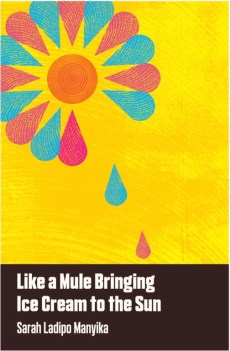
 Date Read: June 7th 2018
Published: April 1st 2016
Publisher: Cassava Republic Press
The Blurb
Morayo Da Silva, a cosmopolitan Nigerian woman, lives in San Francisco. Almost seventy-five, she has a zest for life and enjoys road trips in her vintage Porsche. But when Morayo has an accident, crushing her independence, she is prompted to reassess her relationships and recollect her past life and loves. A humorous, joyful read.
Review –★★★★ (4 stars)
Like A Mule Bringing Ice Cream To The Sun is a decent, really easy-going novella centered around 75 year old Dr. Morayo Da Silva, who’s a retired Literature professor. You’d never believe that Morayo is a senior citizen as she carries herself as if she’s in her 40’s – she dances, she enjoys music, she wants a tattoo, she has perfect memory, she has a healthy sexual appetite, she still drives her Porsche, she has lots and lots of books that occupy her time, she is childless (and not broken by it) – Morayo is basically old lady goals! There isn’t a major plot in this novella; readers simply follow Morayo through her life as she reminisces her past and enjoys her present.
I enjoyed getting to know Morayo through the other characters’ voices we encounter in the novella, like – a homeless woman, Reggie (who becomes a much needed companion for Morayo after her accident), Toussaint (a very talented Black chef), Sunshine (Morayo’s truly amazing friend who struggles with her Indian identity) and her ex-husband in Nigeria. The different voices gave the novella a good twist, as there were various perspectives on incidents that occur.
Some interactions and incidents in the novella felt unreal though, for example – when Morayo realizes her house underwent some renovations after her stay at the Home, she storms out of her house and speeds down the road (in her Porsche) as she cries and laments over the changes. That incident was super dramatic and felt unreal. Also, Morayo planning a clothing business with a homeless woman she usually saw on the street was sooo random and just not real to me. Because of this and other instances where I felt the text felt unrealistic, this novella is really a 3.5 stars rating for me.
While Like A Mule Bringing Ice Cream To The Sun portrayed how alone Morayo was, she was NOT lonely and miserable – which was refreshing! This book had me thinking about: aging, dependence versus independence (as a child and as a senior citizen), the disadvantages of not having children (to look after you and love you once you age), the advantages of not desiring children and being at peace with that decision, mental illness (Reggie’s wife – Pearl’s illness played an important role in this novella. I’d love to read a full novel on their marriage!), the sacrifices we make for the people we love.
I recommend this novella to anyone who wants to get comfy with a good book that isn’t necessarily plot-driven, but nonetheless delightful and easy-going. I’m grateful to Sarah L. Manyika for writing Dr. Morayo’s story in a fun yet insightful way, allowing us to think beyond our present; we won’t be young forever.
★★★★ (4 stars) – Great book. Highly recommend!
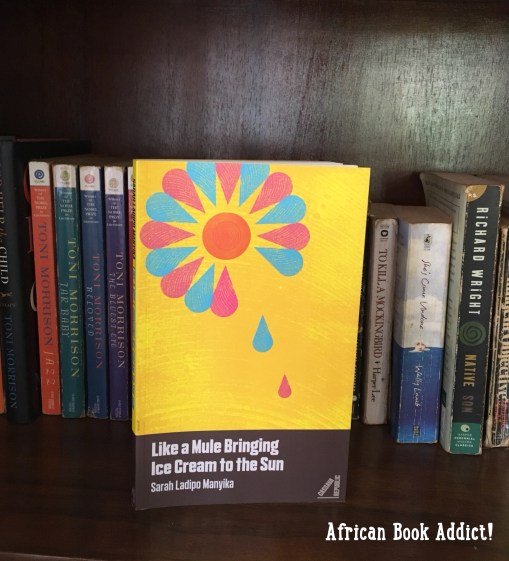
Purchase Like A Mule Bringing Ice Cream To The Sun on Amazon


 African Book Addict!