
Date Read: June 30th 2016
Published: 2014 (originally published by Langaa Press, 2012)
Publisher: Jacaranda Books
Pages: 352
The Blurb
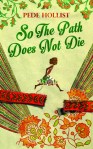
Long after Fina has left Sierra Leone for America, memories of a broken initiation still haunt her. She longs to return, to find her grandmother and right the path that has been set for young girls centuries past. Her journey from the streets of Freetown to Washington echo with the tensions, ambiguities, and fragmentation of the diaspora. Fina’s inner turmoil and feelings of ‘otherness’, persist as she travels further from home. Ultimately, the broken path of her childhood brings Fina back to Sierra Leone, to a life she had never imagined for herself. So the Path Does Not Die is a tender and gently observed novel exploring attitudes towards female circumcision, and a beautifully rendered novel, from an exciting new voice in African literature.
◊◊
Review – ★★★★★ (5 stars)
Is it me, or were there not enough people talking about this fascinating book back in 2014 when it was published? I was introduced to Pede Hollist’s writing when his short story – Foreign Aid was shortlisted for the 2013 Caine Prize. Back then, it was great to see a Sierra Leonean on the shortlist for a change. And I really hope more writers from Sierra Leone are brought to the spotlight soon!
So The Path Does Not Die is fundamentally a story of love and the belongingness of people and place. Finaba’s (or later known as ‘Fina’ by her adopted family) life revolves around her interrupted FGM (female genital mutilation)/ initiation process in her village. In the novel, the deadly practice of FGM is a coming-of-age event where a girl finally becomes a woman and ‘belongs’ to the people of the village. Fina’s parents loathed this practise but her grandma strongly supported it. After Fina’s family is shunned from their village due to an abominable act by her father to save Fina from this deadly practise, they move to Freetown (Sierra Leone’s capital) with heaps of curses on their heads.
In Freetown, Fina endures hardships in all aspects of her life – family problems, university struggles, ethnic group discrimination (as she’s Fulani which is known to be in the minority), just to name a few. When Fina finally escapes Sierra Leone to the United States, though she matures beautifully and becomes relatively successful thanks to her determination to be happy and independent, she faces a new set of struggles: immigration woes, Africans vs. African-Americans vs. Caribbean concerns, the myth of the American dream and cultural alienation. For some reason, all the painful lessons Fina experiences seem to be tied back to the night of her interrupted initiation process. She somehow feels she does not ‘belong’, even when she finally finds true love. To Fina, Sierra Leone seems to be the only place where she thinks she would feel valued; a place where she feels she’d be ‘on the right path’ in life.
Initially, Pede Hollist’s storytelling gave me a Chinua Achebe vibe as the story starts off with a folktale. Hollist’s writing style is rhythmic, simple, and accurate in all the nuances he captures and I was satisfied with how this story came full circle by the end! I was a bit skeptical on how Pede Hollist would accurately write and speak for Fina in this book, as he is a man and would probably portray a man better. But I was impressed by his careful attention to consciously writing Fina’s character in a way that spoke on many feminist issues.
So The Path Does Not Die had me thoroughly entertained and I shamelessly giggled at all the intense dramatic happenings that occurred in this story! Some of the depictions of certain cultural groups portrayed in this novel may seem stereotypical, but I believe Hollist executes these depictions with finesse and in a jovial manner. This novel actually reminded me of Chimamanda Adichie’s Americanah, as there are several side stories of the people Fina encounters in this story. Some characters include: Sidebe – a diamonds trader; Aman – Fina’s African-American best friend; Cammy – Fina’s Trinidadian fiancé; Mawaf – a child soldier’s wife, just to name a few. The socio-political backgrounds and commentary on these characters are all so layered and beautifully tied into Fina’s personal story of trying to find happiness, while being true to herself. I absolutely adore how this book is a cultural melting-pot of Black peoples’ (African, African-American and Caribbean) similarities, differences and the connection they all have to the African continent.
I learned a great deal about Sierra Leone from this novel! You would think us West Africans would know more about our fellow brethren on this coast, but I really had no clue. I jotted down a lot of the cultural references, ethnic groups, native foods, languages, national costumes, native names and natural resources from Sierra Leone. I particularly liked that this novel wasn’t grim with the horrors of FGM, but rather acted as a conduit for speaking against the horrible act, while commenting on other tough Sierra Leonean economic, cultural and social issues as well. Reading dialogue in Trinidadian patois and Sierra Leonean Krio as well as recognizing various West African mannerisms and sayings, made this novel all the more enjoyable, as various happenings and conversations really came to life! Don’t you just love when you learn about our world through a good, entertaining story?
I encourage anyone who is looking for a captivating book on Sierra Leone and the Diaspora to pick this up! I eagerly look forward to Pede Hollist’s future projects and I definitely plan on reading more books published by Jacaranda Books!
★★★★★ (5 stars) – Amazing book, I loved it. Absolutely recommend!
Purchase So The Path Does Not Die by Pede Hollist on Amazon

 ver to Mary Okeke’s blog over at –



 African Book Addict!