Summer in Igboland (ebook) by Ifeanyi Awachie

Date Read: January 4th 2016

Published: July 1st 2015

Publisher: Pronoun

Pages: 73

Awachie

The Blurb

Ifeanyi Awachie, a Nigerian-American Yale University student, was tired of images of terrorism, corruption, and povertyโ€“ the only images Western media seemed to use to portray her birth country. So she went back to Nigeria for the first time in nineteen years to change the narrative.
Through Awachieโ€™s vivid photos and honest, poetic writing, Summer in Igbolandย presents contemporary Nigeria from a unique perspective. The book takes on everything from Nigerian nightlife to the politics of hair to vibrant foods to meeting extended family for the first time as an adult.
As intimate as a diary and as informative as a travel blog, Summer in Igbolandย is a story of finding fun, personal struggle, and most importantly, oneโ€™s roots in a country whose negative stories are often the most prominent. Explore it, and discover modern Nigeria through the eyes and voice of an adventurous, passionate first-generation Nigerian.

โ—Šโ—Š

Review โ€“ โ˜…โ˜…โ˜… (3 stars)

Ifeanyi Awachie, a rising senior of Yale at the time won a fellowship to conduct an independent study in Nigeria. The aim of the study was to use photography to challenge the negative stereotypes associated with Nigeria. Ifeanyi was born in Nigeria, left when she was eighteen months old and was raised in Atlanta, Georgia. She had never been back to Nigeria since her move to the United States, so this summer project was supposed to be a great way to connect with her heritage.

Summer in Igboland is a travelogue where Ifeanyi takes readers to different towns in Nigeria and discusses random happenings of the places she visits, while trying to gain a sense of belonging at the place of her birth. This was a fast and easy read! I enjoyed how the travelogue was written with a personal diary feel and that it wasn’t heavy with historical facts about Nigeria.

As Ifeanyi interacts with Nigeria natives and some relatives, she begins to feel her โ€˜Americannessโ€™ is a flaw, as her differences are very apparent, like: her American accent, her natural hair (she did not wear a weave as most young Nigerian women did), being a vegetarian (even though she hides this from her family) and her inability to speak the language – Igbo. She poses a lot of thought provoking questions with respect to her identity as she navigates her way through Nigeria. When people call her oyibo (which means ‘white person’) or make a fuss about her not speaking the language, she found that her own people tended to relegate her and made her feel less Nigerian. I could completely understand Ifeanyi feeling her Americanness was a flaw, especially with respect to sounding American and not being very fluent in the native language. Why is it that whenever people find that you are different from them, they tend to make you feel guilty for being different? Will we ever live in a world where differences are appreciated?

I particularly enjoyed the anecdotes on Ifeanyiโ€™s new love for fufu*. Before her trip to Nigeria, she detested fufu. Whenever she was forced to eat fufu as a young girl, she would take bites of it with a fork. Fork? WHO EATS FUFU WITH A FORK? is what I asked myself as I read this. In Ghana, when you don’t use your fingers to eat fufu, you simply use a spoon! But then it occurred to me that Nigerians eat fufu differently from Ghanaians – Ghanaian fufu is usually embedded in bowl of soup. Whereas, the dense pounded yam of Nigerian fufu is usually in a separate bowl from the preferred soup. Once I remembered these differences, I was able to understand why Ifeanyi used to eat fufu with a fork, I guess. Check out what Nigerian fufu looks like – here ; Check out what Ghanaian fufu looks like – here. (Nigerian readers, please correct me if I’m wrong with the fufu comparisons!)

Throughout her exploration of different types of fufu and soups, Ifeanyi even states some fufu facts she learned while in Nigeria:

  1. One does not eat fufu with utensils.
  2. One does not chew fufu โ€“ one simply swallows.

With respect to the latter, lots of people chew fufu โ€“ myself included! *sigh* I can write a whole thesis on this swallowing of fufu phenomenon but Iโ€™ll save that for another day. But it was cute to read on Ifeanyi’s love for a dish she initially disliked as I could completely relate to her fufu-eating experience.

Iโ€™m glad I read this ebook. I just wish some of the anecdotes were concluded in a more cohesive way. From the blurb, Ifeanyi wanted to change the negative stereotypes associated with Nigeria, but I didn’t really get that from this short ebook. Nevertheless, Summer in Igboland made me think back to the time when I first arrived in Accra at the age of 10 and how I now identify as Ghanaian as well as American. Reading books like Summer in Igboland affirm my love of reading books written by people of African descent / people of the Diaspora because you see yourself in these stories! You start to see and feel that your experience as African, African-American, Caribbean, Black – whatever your heritage or (bi-)cultural upbringing, are all valid. Please consider reading this book, I’d love to discuss it with other readers!

โ˜…โ˜…โ˜… (3 stars) โ€“ Good book. I recommend it, I guess.

Purchase Summer in Igboland on Amazon

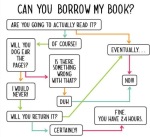
Book Chat :: Do you lend your books?

Hey everyone!

From time to time, I’d like to pick your brains on different topics that I think interest and affect all book lovers. Today, I’m really curious to know from you all: Do you lend your books to others?

FullSizeRender (2)

Image via EpicReads

Let’s chat, shall we?

There have been times when friends have NOT returned the books I lent them. To this day, one of my best friends still has one of my favorite books in her possession (I gave it to her back in 2009 and I eventually had to stop asking for the book back, since she didn’t seem to know where she put it -_-). Other friends who eventually returned books I lent, brought them back with either oil smudges on the pages, discombobulated book spines or limp-looking, torn paperback covers – basically, damaged books.

I feel very connected to the (physical) books I own – am I alone here? I’ve connected with various characters, places and incidents from the books I read. Some of my books have notes I jotted down on the pages, some passages are underlined and some pages are marked for future referencing and whatnot. So right now, I do not like to lend my books to anyone anymore (well, I do share my books with my Mom. She’s an original book lover, so she respects books! And I usually read her books, so its only fair to share mine too haha).

I’m learning to say ‘no’ to lending my books. But it’s not easy to say no – I don’t want a friend or family member to feel offended or think I’m being selfish for not wanting to lend them. Books shouldn’t be the cause of sour relations between individuals… but honestly, after all the bad experiences I’ve had with lending, I’d rather purchase the book of interest for a friend, instead of loaning my copy.

How about you all:

Do you let people borrow your books? Are you attached to the physical books you own? Have you had similar instances where loved ones misplace or ‘abuse’ your cherished books? How would you tell others that you don’t usually lend out your books?

I’d love to hear your opinions, experiences and tips on your book lending policy!


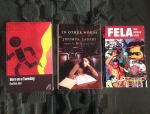
By the way, I’m currently (slowly) reading Jhumpa Lahiri’s latest novel: In Other Words. It’s very passionate thus far!

I also attended a book reading for Elnathan John last weekend (he was shortlisted twice for the Caine Prize) and I purchased his debut novel – Born On A Tuesday, as well as Fela: This Bitch of a Life by Carlos Moore which I spotted at the bookstore where the reading was being held (Vidya Bookstore; Accra). I hope to enjoy them during summer break!

IMG_3222

Image via my Instagram: @AwoDeee

Ankara Press: A New Kind of Romance – Two NEW stories!

I’d like to give a special thank you to the lovely ladies over at Ankara Press for reaching out to me and sending me two e-copies of the new additions to their African romance fiction collection. Ever since they launched as an imprint of Cassava Republic Press (Nigeria) in 2014, Iโ€™ve always wanted to read some of the stories so I couldnโ€™t pass up the opportunity!

Ankara Pressย aims at publishing a new kind of romance, for the modern African woman where stories are more grounded with a healthy thrill of fantasy. Stories published byย Ankara Press feature young, independent, ambitious African women who are unafraid to love, in African cities from Lagos to Cape Town. Their books challenge African romance stereotypes by portraying women who embrace their sexuality and are open to finding true love.

Mini reviews of the two ebooks are below:

The Seeing Place by Aziza Eden Walker

Date Read: March 1stย 2016The Seeing Place

Published: February 14th 2016

Publisher: Ankara Press

Pages: 171


Review โ€“ย โ˜…โ˜…โ˜… (3 stars)

I enjoyed this African romance/chic lit novel. The story takes place in Cape Town and Johannesburg and follows the growing relationship between caramel-colored beauty, Thuli and dark chocolate hunk, Andile. Andile works as a barman but is actually a talented actor, waiting for his next gig; Thuli works as a TV/Film producer. They meet at Andileโ€™s workplace โ€“ a bar, when Thuli sought refuge there after she twisted her ankle, trying to evade the rowdiness of a wild street party in Cape Town. They are instantly attracted to one another when their eyes meet and the story takes readers on a rollercoaster of incidents and emotions these characters endure.

The sex scenes in this story were surprisingly quite explicit (I ain’t complaining, haha) and I think readers should be 18 years or older to read this. The storyline was very fairytale-ish, as most romance books are. I donโ€™t know if the average South African woman would identify with Thuli, since her life seemed perfect, despite the โ€˜hardshipsโ€™ she faced as a child โ€“ does the average 28 year old South African woman drive a matte black Mercedes-Benz and own her own film producing company? All in all, I liked that I learned something from this novel (the importance of communication and being honest) at the end and it wasn’t a flippant tale โ€“ as most perceive romance novels to be. Aziza Eden Walker is a great writer! Her writing style was clear and vivid and I enjoyed her way with words. I give The Seeing Place 3.5 stars!

โ˜…โ˜…โ˜… (3 stars) โ€“ Good book. I recommend it, I guess.


Love Next Door by Amina Thula

Love Next DoorDate Read: Marchย 6thย 2016

Published: February 14th 2016

Publisher: Ankara Press

Pages: 152


Review โ€“ย โ˜…โ˜…โ˜… (3 stars)

Love Next Door is a cute story about Abongile (or Abby) and Kopano in Johannesburg, South Africa. Abby, an ambitious business analyst is finally independent and has moved into her new apartment in Johannesburg. Next door to her new apartment is school teacher and artist, Kopano. Once they meet outside Abby’s door as she struggles with hauling groceries into her new home, it is like at first sight and readersย follow the blooming love affair between Abby and Kopano.

This was a quick read and I loved how the author incorporated a lot of South African culture into the story, for example: Amina Thula enlightens readers on the negative and positive stereotypes surrounding Xhosa women and the Xhosa language peppered throughout the novel gave the story an authentic feel. I didnโ€™t even need a glossary at the end of the book as it was easy to infer the meanings of the various foreign words. The intimate moments between the main characters were milder than that of The Seeing Place, so I guess readers of all ages could enjoy this book. But the writing style wasnโ€™t as vivid as I had liked and the book could have been edited a little more closely. The ending was quite abrupt for meโ€ฆ or maybe I just didnโ€™t agree with how the characters seamlessly reconciled their love after all the ups and downs they endured. Perhapsย Love Next Door targets a younger, teenage audience as the tale was quite juvenile… or maybe the characters were a bit juvenile to me. On the whole, this book was well thought-out and I commend Amina Thula for writing this modern love story.

โ˜…โ˜…โ˜… (3 stars) โ€“ Good book. I recommend it, I guess.


Ankara Press Cover Artt

Image via http://www.ankarapress.com

How amazingly chic is the cover art?ย Onyinye Iwu (@only_onyi) designed the cover art for the novels published by Ankara Press and she does a lovely job at highlighting the vibrant colors of the Vlisco cloth, as well as portraying African women of all skin tones, shapes and sizes.

Iโ€™m fairly new to the African romance genre, but it would be cool for Ankara Press to explore:

  • Maybe having some stories written by men? Men write romance tales too! In the Valentineโ€™s Day Anthologyย 2015,ย (an anthology Ankara Press published last year, featuring writers like: Sarah Ladipo-Manyika, Eghosa Imasuen, Chuma Nwokolo and my favorite- Binyavanga Wainaina) men penned a good number of the stories. I’d love to read a romance novel from a man’s perspective and also see men on the book covers wearing amazing ankara fabric shirts!
  • It would also be cool to read a romance novel featuring characters in a same-sex relationship.
  • Do all romance novels have to end happily-ever-after? It would be interesting to read a tragic African love tale too.

Thank you again toย Ankara Press for the ebooks. I enjoyed the stories and look forward to reading more soon! Please do check out blurbs of the various stories published by Ankara Press at www.ankarapress.com.