2014 Recap & My Top 5!

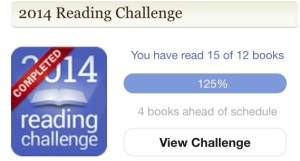
If you’ve been following my book blog for some time, you would know that I participated in the Goodreads 2014 Reading Challenge and I pledged to read 12 books this year. Since I have a strong passion for African literature, as well as African-American and Caribbean literature, I challenged myself to indulge in books of those genres this year. I successfully surpassed my goal and ended up reading 15 books in 2014.

I started this blog because I needed to express my views on the books I read, especially with people around the world who have read some of these books. Over the years I’ve realized that simply discussing the issues of the books I read with friends doesn’t suffice for me, for many reasons. Writing reviews on this blog and expressing my opinions on the books I’ve read has beIMG_8741en fulfilling! It would be nice to actually discuss in detail the things I liked and disliked about the books, but I can’t include spoilers in my reviews – its always so tempting!

Check out all the books I read and reviewed this year in the Book Reviews section of the blog!

(note: I wasn’t able to finish reading Sozaboy: A novel in Rotten English by Ken Saro-Wiwa and The Palm-Wine Drinkard by Amos Tutuola. I just wasn’t feeling them at the time… And I think my ‘Currently Reading’ posts were jinxing my reading progress 😦 )

 Top 5 faves of my 2014 Reading Challenge

1. One Day I Will Write About This Place: A Memoir by Binyavanga Wainaina

2. Happiness, Like Water by Chinelo Okparanta

3. The Spider King’s Daughter by Chibundu Onuzo

4. Mom & Me & Mom by Maya Angelou

5. Harmattan Rain by Ayesha Harruna Attah

I plan on participating in the Goodreads 2015 Reading Challenge as well. I’d like to read more Caribbean novels next year, so we’ll see how that goes!

What were your favorite books of 2014?

IMG_1845

Thanks for all the support! See you in 2015 🙂

The Spider King’s Daughter by Chibundu Onuzo

Date Read: September 4th 2014

Published: 2012

Publisher: Faber and Faber Limited

Pages: 288

Spider King's Daughter cover

The Blurb

Seventeen-year-old Abike Johnson is the favourite child of her wealthy father. She lives in a sprawling mansion in Lagos, protected by armed guards and ferried everywhere in a huge black jeep.

A world away from Abike’s mansion, in the city’s slums, lives an eighteen-year-old hawker struggling to make sense of the world. His family lost everything after his father’s death and now he sells ice cream at the side of the road to support his mother and sister.

When Abike buys ice cream from the hawker one afternoon, they strike up a tentative and unlikely romance. But as they grow closer, revelations from the past threaten their relationship and both Abike and the hawker must decide where their loyalties lie.

 ◊◊

Review – ★★★★★ (5 stars)

Did you know that Chibundu Onuzo wrote The Spider King’s Daughter when she was 21 years old? I find that incredible! Her attention to detail of all the intricacies that could happen in a story involving two people are thoroughly explored, and I am very impressed! When I was reading this book, it felt like I was watching a Nigerian movie. The storyline is full of suspense, speculations and assumptions that could actually push this novel into the ‘thriller’ genre. The Spider King’s Daughter is a novel centered around two characters: Abike and Runner G.

Abike is a 17 year old spoiled brat, child of the Spider King- a mysterious, very wealthy man in Lagos. One day as she is chauffeured home from school, she spots a handsome hawker, Runner G, selling ice cream on the street. For days she tries to catch Runner G’s attention through her characteristic manipulative ways and finally starts a conversation with him on the street as she sits in her car. After some weeks, Abike and Runner G become friends and they spend their weekends together. Abike even invites this hawker, Runner G to her huge palace (againsts her father’s will) where they simply enjoy each others’ company and slowly fall in love. Their relationship seems to turn sour when Runner G starts to act strange around Abike, as others warn him of Abike’s true character.

Runner G is a street hawker who sells ice cream. He was not always a street hawker. He came from a middle-class home in the past. But after the death of his father- who was a lawyer, Runner G’s family fell into poverty. His mother is currently bed-ridden and depressed and he had to stop school and start hawking in order to pay his younger sister’s school fees. Runner G becomes Abike’s friend after she initiates conversation with him from her car in the street. He slowly falls in love with her, but later realizes she isn’t actually the person she portrays herself to be. Runner G hence starts to dig for information about Abike from her family members and her close friends who have nothing good to say about her. He later finds out that her lavish lifestyle, grâce à her father’s wealth, might actually be the reason why his family is in abject poverty.

The once cute-turned-dark love story between Abike and Runner G results in a truly unpredictable, shocking end, that pushes me to pity both Abike and Runner G.

The book was written from both Abike and Runner G’s perspectives- which was a bit confusing for me in the beginning. But it was great to see how two people could interpret an event or a day together in two completely different ways. Readers get to understand both Abike and Runner G’s thoughts and feelings towards the dynamic of their relationship and how possibly incompatible they actually are. I appreciated Onuzo’s commentary on hawker-life through Runner G’s character. It pushed me to actually put myself in their shoes and question the terrible economic disparities of our African nations.

Onuzo’s attention to detail was very impressive. Everything about this book, down to the smallest detail was great…it’s actually difficult to discuss this book without giving away spoilers. But I really really recommend this!

★★★★★ (5 stars) – Amazing book, I loved it. Absolutely recommend!

IMG_1333

Purchase The Spider King’s Daughter on Amazon

Workshop & Reading with Kwei Quartey

On Saturday, Dec 20th, author Kwei Quartey had a workshop and reading session at Totally Youth in North Ridge, Accra which was hosted by Writers Project of Ghana. I only attended the book reading and it was fun! Kwei Quartey read excerpts from his 3 novels of the Inspector Darko Dawson crime series: “Wife of the Gods” , “Children of the Street” and his latest novel, “Murder at Cape Three Points”. After the book reading we asked Quartey questions and had short discussions on how he decides the themes of his books- which are mostly in the crime/mystery genre, his experience with good and bad book reviews and his future plans of the Darko Dawson series.

I’m not a big fan of the crime/mystery/thriller genre, but I love that the Darko Dawson series are based in various regions of Ghana. Readers who have never been to Ghana will definitely get a glimpse of the various sceneries, smells, accents, sounds etc of the nation. Kwei Quartey was truly pleasant, and he seems to really find joy in writing novels. Readers are not obliged to read the series in chronological order, but I think it’s best to do so. I’m particularly interested in picking up a copy of the second book in the series – “Children of the Street” which takes place in the slums of Accra (I think the Korle Bu area of Accra).

Ayesha Harruna Attah, author of “Harmattan Rain” (check out my review of that book – here) also attended the reading and I got to meet her! Her new book, “Saturday’s Shadows” is currently on sale in Europe and will be available for purchase in Ghana soon- I hope! I love meeting the authors of the books I adore/of African literature in general. I admire African writers and I will continue to support their work. I feel more connected to Ghana and Africa as a whole through their books and it’s a great feeling 🙂


Above are pictures of the reading session and shots of me and Kwei Quartey and Ayesha Harruna Attah.

Follow Writers Project of Ghana on Twitter if you are in Ghana, for more info on African author workshops/book readings etc, here -> @writersPG.


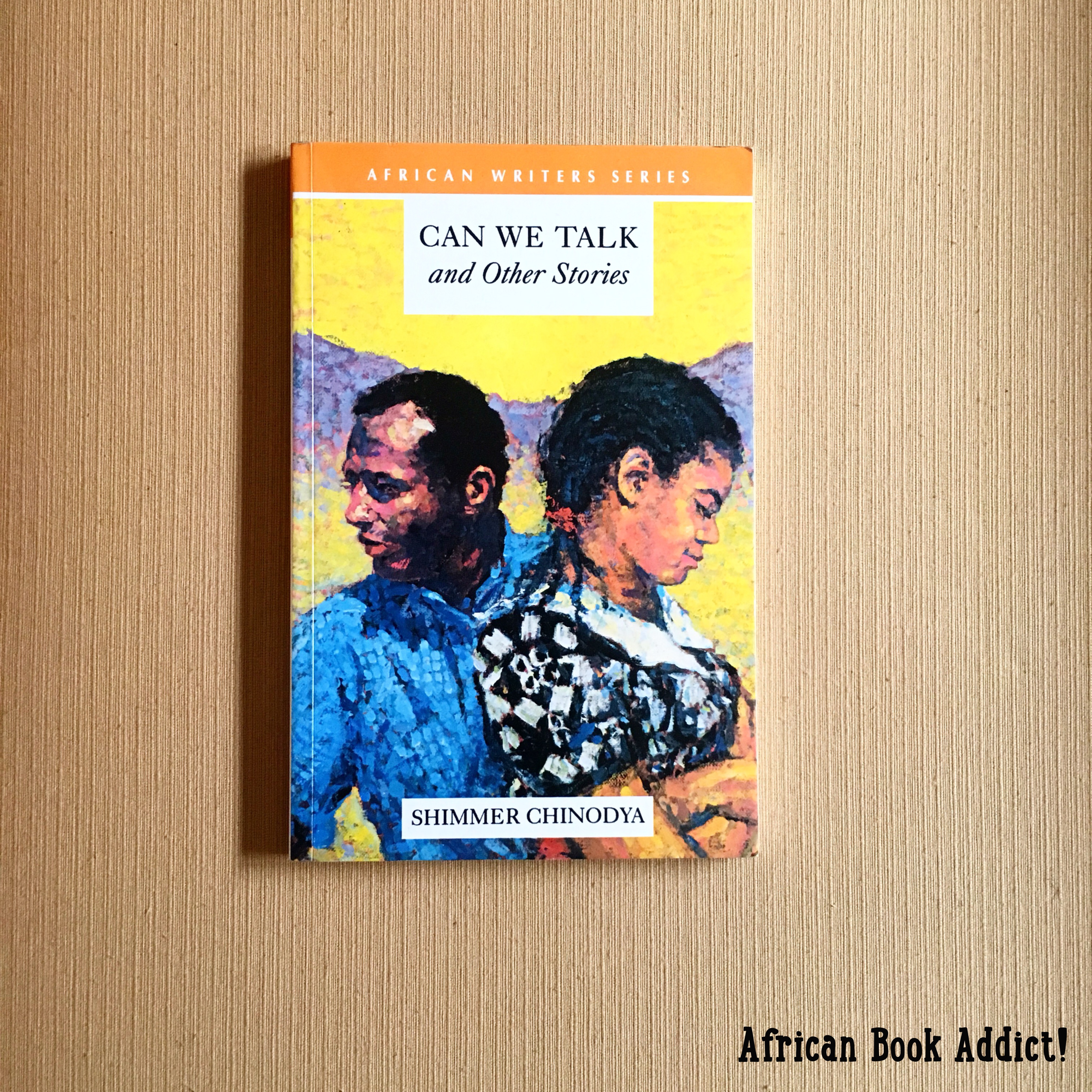
Can We Talk and Other Stories by Shimmer Chinodya

Date Read: November 22nd 2014

Published: 2001 (originally published by Baobab Books in 1998)

Publisher: Heinemann (African Writers Series)

Pages: 154

shimmer

 The Blurb

Opening with the puzzled and innocent view of a boy looking in on the adult world from outside, this collection follows the transition from childhood to adult life. Youthful desires for prosperity, love and a purpose in life are undermined by experiences of humiliation, compromise and a failure to communicate, in a process that reflects a wider disillusionment and decline in post-independence Zimbabwe. In the final story, cynicism turns to anger as the narrator, facing the breakdown of his marriage, challenges his audience to confront the inaction that leads to disappointment and the deep-seated loneliness and alienated at the root of our estrangements.

◊◊

Review – ★★★★ (4 stars)

This is a refreshing collection of 11 short stories and I’m glad I randomly spotted this at the bookstore! People, Chinua Achebe and Wole Soyinka are not the only legendary African Literature male novelists. Shimmer Chinodya is surely one of them- in my opinion! He is a wonderful poetic storyteller.

Can We Talk And Other Stories is a collection of stories that take readers through the transitions of boyhood to manhood. Various issues associated with coming-of-age such as confusion, fear, loneliness, depression, insecurity, alcoholism amongst others are tackled in these 11 short stories. It’s best to read these stories from the beginning to the end, as the stories are in chronological order with respect to the age of the main characters.

The novel starts off with a story of a precocious five year old boy, followed by tales of school life- in Zimbabwe and abroad, followed by stories of adult relationships and ends with a story of a forty-something year old man, lamenting his failed marriage called “Can We Talk”. “Can We Talk” was actually nominated for The Caine Prize for African Writing in year 2000- the year Leila Aboulela won the prize for her story “Museum”.

I enjoyed all the stories, mostly because they were different from the myriad of West African novels I usually read. I loved reading about Zimbabwe and admired Chinodya’s use of Shona (the principle language of Zimbabwe) in the text. The glossary at the back of the novel helped me translate some of the words used in the text, but even without the glossary I was able to understand the ideas conveyed in the stories. Chinoya’s use of alliteration, metaphors, repetition and other literature techniques were perfect in illustrating issues of love, confusion, guilt and loneliness. There is also a lot of humor in these stories- its not all depressing!

My favorite stories were:

“Brothers and Sisters” – A tale of a young man who suddenly becomes a staunch Christian and tries to convert everyone he interacts with to Christianity. He finally finds the love of this life, but when she finally reveals to him her true self, things take an interesting…exaggerated turn.

“Snow” – This is not a story per se…I wouldn’t call it a poem either. Its more like a collection of words. “Snow” more or less is a collection of words expressing different ideas and feelings about living in the West- from accents, to weather, food, international students, immigration etc. To get a gist of the text, here are two excerpts from pg. 59 & pg. 61:

‘White flesh white flesh. Blue eyes. Green eyes. Black eyes. Brown. Blonde hair. Brunette. Red. Black. Multivitamin smiles. Braced teeth. Sun-tan.

Food.

Foodfood foodfood foodfood.

French fried, fritters, frankfurters, fish, fillet, farina, falafels, figs, fennel, flax, Fanta, fruitbread.

Fat.

Fat fat fat.

Fudge-face, milk-nose, coke-lips, burger-bums, popcorn-belly, choc-cheeks, gum-teeth, cream-tongue, pizza-palate, Budweiser-chin, candy-kiss…’ (pg. 59)

‘Snow. Cold, loneliness. No legs, no laughter. Layers of loneliness packing into cakes of ice. The hard ice of longing. Cold and hard as pornography. Magazines splattered with blood-red flesh. Peep shows. Live.

Can the earth be so dead, so cruel? So white? Were shorts possible?

Oh, for a black face, for laughter, for warmth.’ (pg. 61)

I love this story because I’m currently obsessed with narratives on African life in the West/immigrant experiences. I especially love how “Snow” ends, because winter can truly get lonely and make any African miss home immensely! I simply understood and bonded with the collection of words and had fun reading it. Shimmer Chinodya is a wordsmith!

My only issue with this collection is that most of the stories were written from a male’s perspective. It would have been nice to have more than just one story (“Play Your Cards”) with a female voice.

But I will definitely be on the lookout for more Shimmer Chinodya books to purchase. I think I’d like to read his book- Chairman of Fools next.

My heart was glad after reading this novel. 🙂

★★★★ (4 stars) – Great book. Highly recommend!

IMG_0555 (1)

Purchase Can We Talk and Other Stories on Amazon
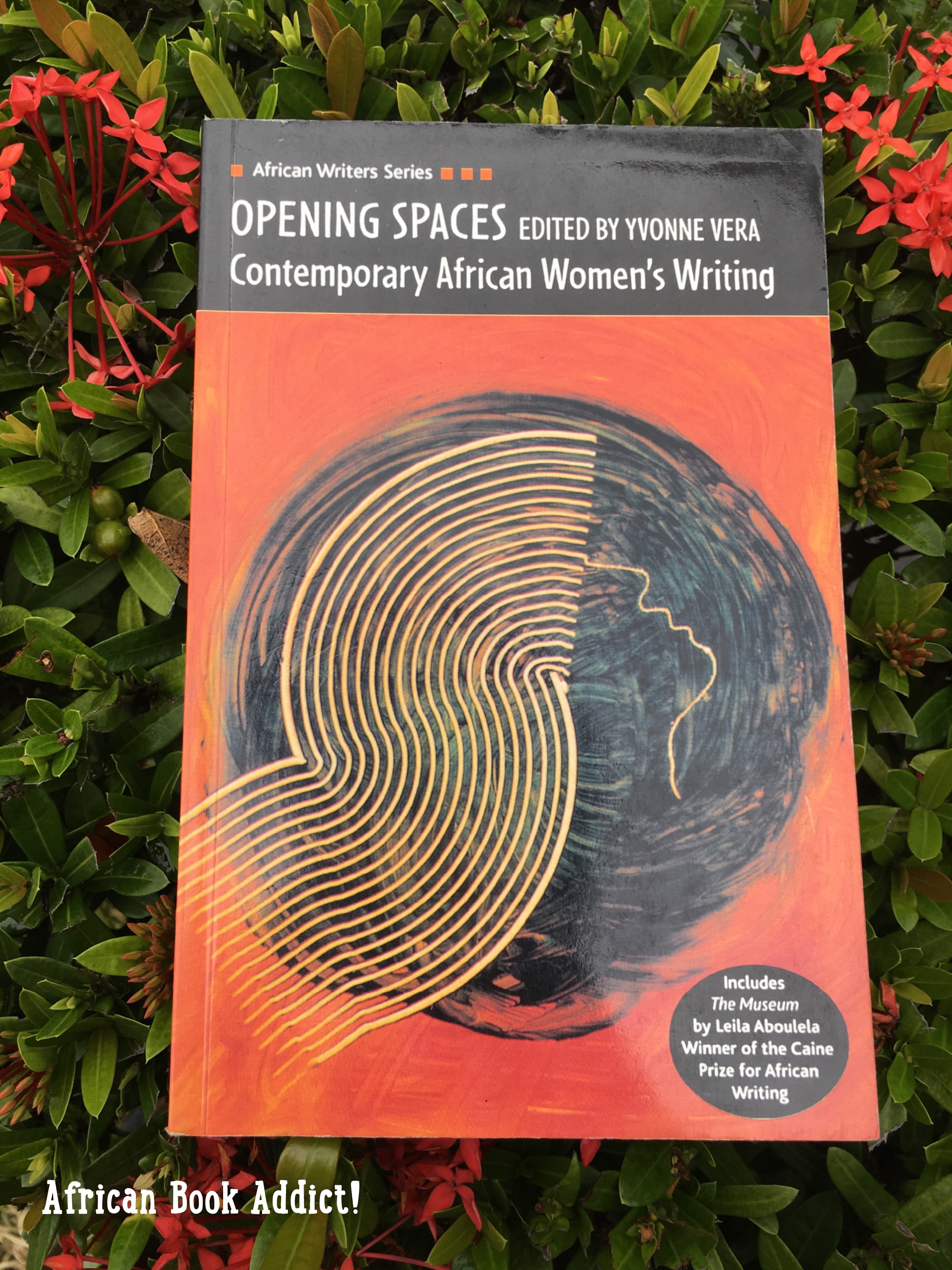
Opening Spaces: Contemporary African Women’s Writing edited by Yvonne Vera

Date Read: March 7th 2014

Published: 1999

Publisher: Heinemann (African Writers Series)

Pages: 186

yvonne vera

The Blurb

African women are seldom given the space to express their concerns, their ideas and their reflections about the societies in which they live.

 In situations where a good woman is expected to remain silent, literature can provide an important medium for the expression of deeply felt and sometimes shocking views. In this anthology the award-winning author Yvonne Vera brings together the stories of many talented writers from different parts of Africa. They act as witnesses to the dramas of private and public life. Their stories challenge contemporary attitudes and behavior, leaving no room for complacency.

Contributors include Ama Ata Aidoo, Veronique Tadjo, Farida Karodia, Lindsey Collen and Sindiwe Magona.

◊◊

Review – ★★★★ (4 stars)

This is a powerful collection of fifteen stories by African women writers from various countries such as: Zimbabwe, Ghana, South Africa, Mauritius, Nigeria, Mozambique, Sudan, Cote d’Ivoire, Mali, Namibia and Zambia. It was cool to read stories from countries that are not very active in the African literature scene- like Mauritius, Mali and Sudan.

These stories tackle the positives and negatives of being an African woman in their own unique ways. Some themes in the stories are: coming-of-age, motherhood, women empowerment, polygamy, abortion, death, political instability, faith and many more!

My favorite stories were:

‘The Museum’ by Leila Aboulela (Sudan) – This is the story that won the first Caine Prize in 2000! It’s a tale of the challenges a Sudanese girl- Shadia, faces as she is studying Mathematics in university in the United Kingdom. Despite the fact that she has a fiancé back home in Sudan, she starts to fall for fellow Scottish classmate- Bryan, who seems to be the brightest in the class. As Shadia and Bryan spend more time together, Aboulela teaches readers about the importance of religion (Islam). After Shadia and Bryan take a trip to a museum and Shadia is disappointed at how wrongly the West portrays Africa, I learned that Africa will always be where the heart is, for Africans living abroad.

‘The Power of a Plate of Rice’ by Ifeoma Okoye (Nigeria) – A hilarious tale of a single mother, who is a schoolteacher, struggling to keep her family alive. The principal of her school refuses to pay her salary while her children are sick and starving. This schoolteacher ends up doing something unpredictable which shocks her principal. This was a fun and easy read.

‘Stress’ by Lília Momplé (Mozambique) – A mistress of a rich married man sits in her luxurious apartment and spends her days staring out of her window, desperately desiring and fantasizing about her neighbor across the street. Meanwhile, this neighbor barely notices this mistress across the street as he struggles living as a deeply stressed schoolteacher. I enjoyed the unpredictability of the story’s ending!

‘The Barrel of a Pen’ by Gugu Ndlovu (Zimbabwe) – This was a heart-wrenching tale of two girls who spend their afternoon in a hotel. An unqualified nurse visits the girls in the hotel and executes an abortion on one of them. The gory descriptions of this story had me cringing. But I loved how the friendship between the two girls was strong enough to save a life.

This collection was published in 1999, but the stories, themes and the lessons learned are still relevant to readers today, in 2014. I recommend this!

★★★★ (4 stars) – Great book. Highly recommend!

Purchase Opening Spaces: Contemporary African Women’s Writing on Amazon